Physical Address
304 North Cardinal St.
Dorchester Center, MA 02124
Physical Address
304 North Cardinal St.
Dorchester Center, MA 02124

15th – 29th January, 2025
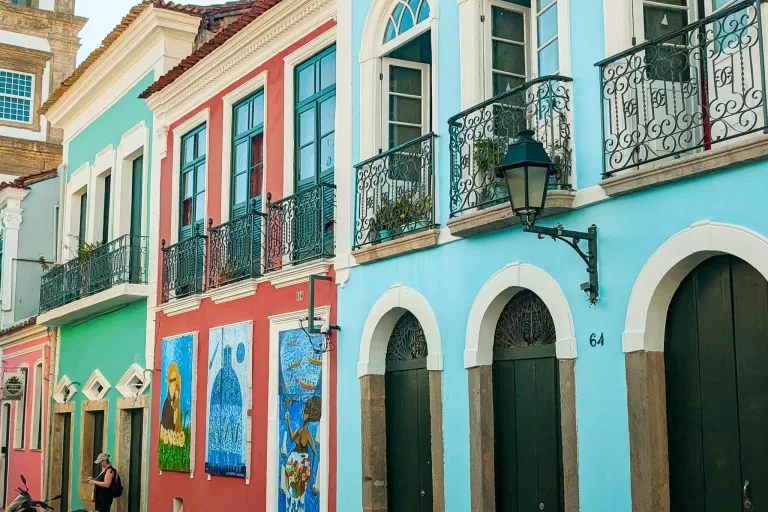
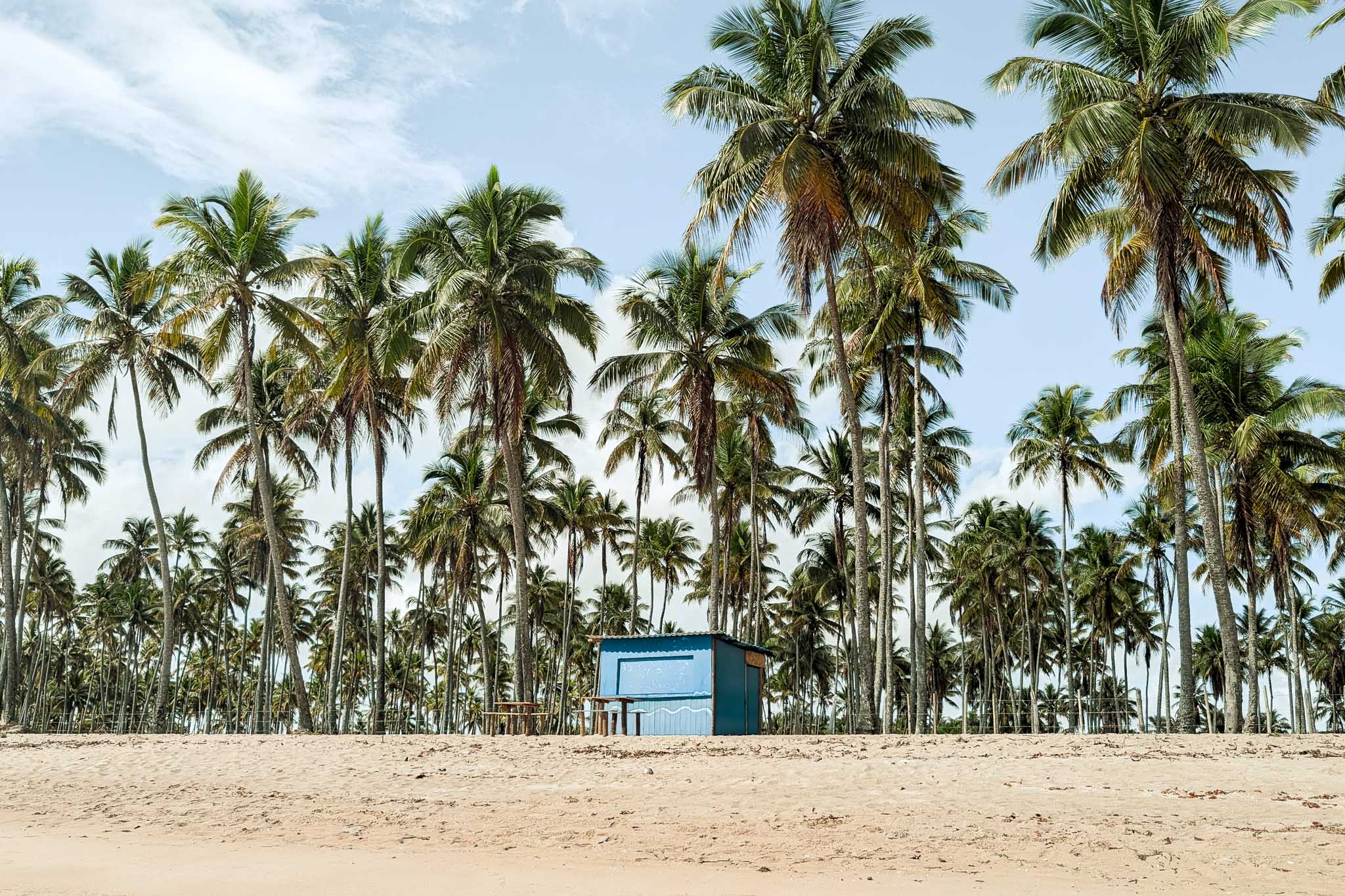
When Rachael and I think back to our time in Brazil, there’s an instant spark of magic we feel as one place in particular consistently emerges at the forefront of our retrospection. Don’t get me wrong, we have fantastic memories and stories from everywhere that we visited in Brazil, but this special place takes up valuable real estate in our hearts which are already full to the brim from 10 months of exploring South America. On the mid north coast in eastern Brazil is the state of Bahia, where the soul of Brazil is on full display for all the senses. Whether it’s in the vibrantly painted buildings, the unique cuisine, the exotic music or the way its people leave their impression, Bahia is an absolute cultural feast, and the beating heart of all things Brazil.
We started our journey through Bahia with an overnight bus from Belo Horizonte to Porto Seguro, Safe Harbour, the first landing place of the Portuguese in 1500. The trip only took us a brisk 20ish hours, and once we arrived we jumped on a ferry to cross the mouth of the river to the neighbouring town of Arraial d’Ajuda, Settlement of Help. Here we piled into what we thought was a completely packed colectivo that took us 4km into the centre of town, but it stopped frequently to allow more and more people to be sandwiched on board until we finally piled out in the town square. The town is quite a tourist destination, so it’s got the typical expensive restaurants and beach bars, as well as many hotels and resort type accommodation a little further from the main square, but it also has colourful little stores selling hammocks and souvenirs, as well as a nice old church at a great viewpoint of the coast. The beaches here were nicer than where we’d been further south, but the water was still pretty gross. The kind lady that owned the Airbnb we were staying at must have heard Rachael struggling with a bad flu, as she stopped us on our way out one morning to give Rachael some medicine she said she wasn’t using. It worked a treat and we were both very thankful.
At night, the town came alive with music, food stands and dozens of mobile cocktail bars as we listened to a band play classic rock songs in the square to a crowd of people dancing and singing along. We enjoyed a few caiparinhas and I ate a few espetinhos, which are skewers of nicely salted meat, usually beef rump, cooked over coals. These are one of the best street foods in Brazil and I would always jump at the opportunity to smash an espetinho should the occasion arise, which it frequently did. A sudden downpour cut the music short and the band and crowd scattered for shelter. Rachael and I found shelter beneath the awning of a kind man’s grilled haloumi stand, and we got chatting to him about places to visit further up the coast while eating some delicious cheese sticks.
Our next stop was only a mere 9 hour bus trip north, to a town very popular among Brazilians and foreign tourists alike, Itacaré. The town itself was quite small, with a very distinct tourist area and local area, but the touristy spots came alive at night with more mobile cocktail bars and restaurants blasting loud music. We got to see Capoeira here, which was really interesting. It is an Afro-Brazilian tradition created by African slaves brought to Brazil by the Portuguese during the slave trade, as a way to practice martial arts while being disguised as a dance. A circle is formed by all the participants, dressed in white, and a small band of hand drums and a string instrument called a birimbao plays music while all the participants waiting on the edge of the circle sing. Two people will cartwheel into the centre of the circle and begin to dance/fight each other with a series of sweeping leg kicks and open handed strikes, while rolls and other acrobatics are dispersed throughout. It’s sort of mutually agreed when the fight is over, and the two people in the centre sub out for another two on the edge of the circle, and so on. It’s obviously a very important part of Afro-Brazilian culture, as we saw many Capoeira schools all over the north of Brazil, and whenever we saw it performed in the street there was always a healthy mix of men and women, boys and girls of all ages and sizes. How we never saw anyone get absolutely clocked by a roundhouse kick to the jaw is incredible.
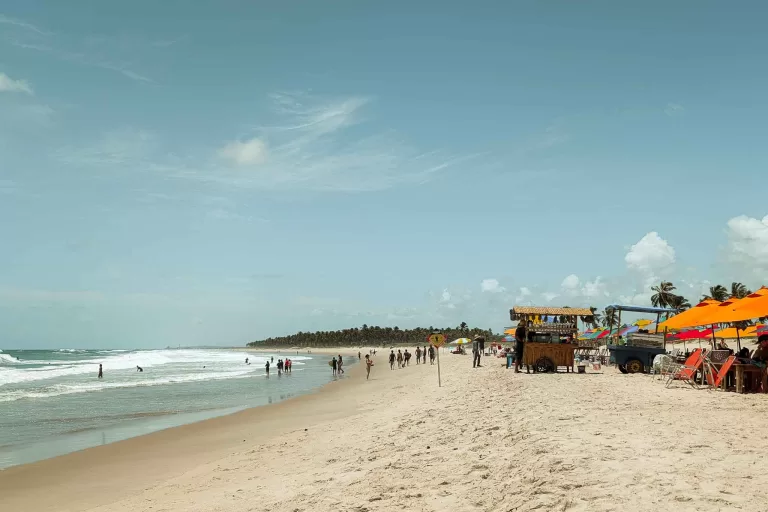
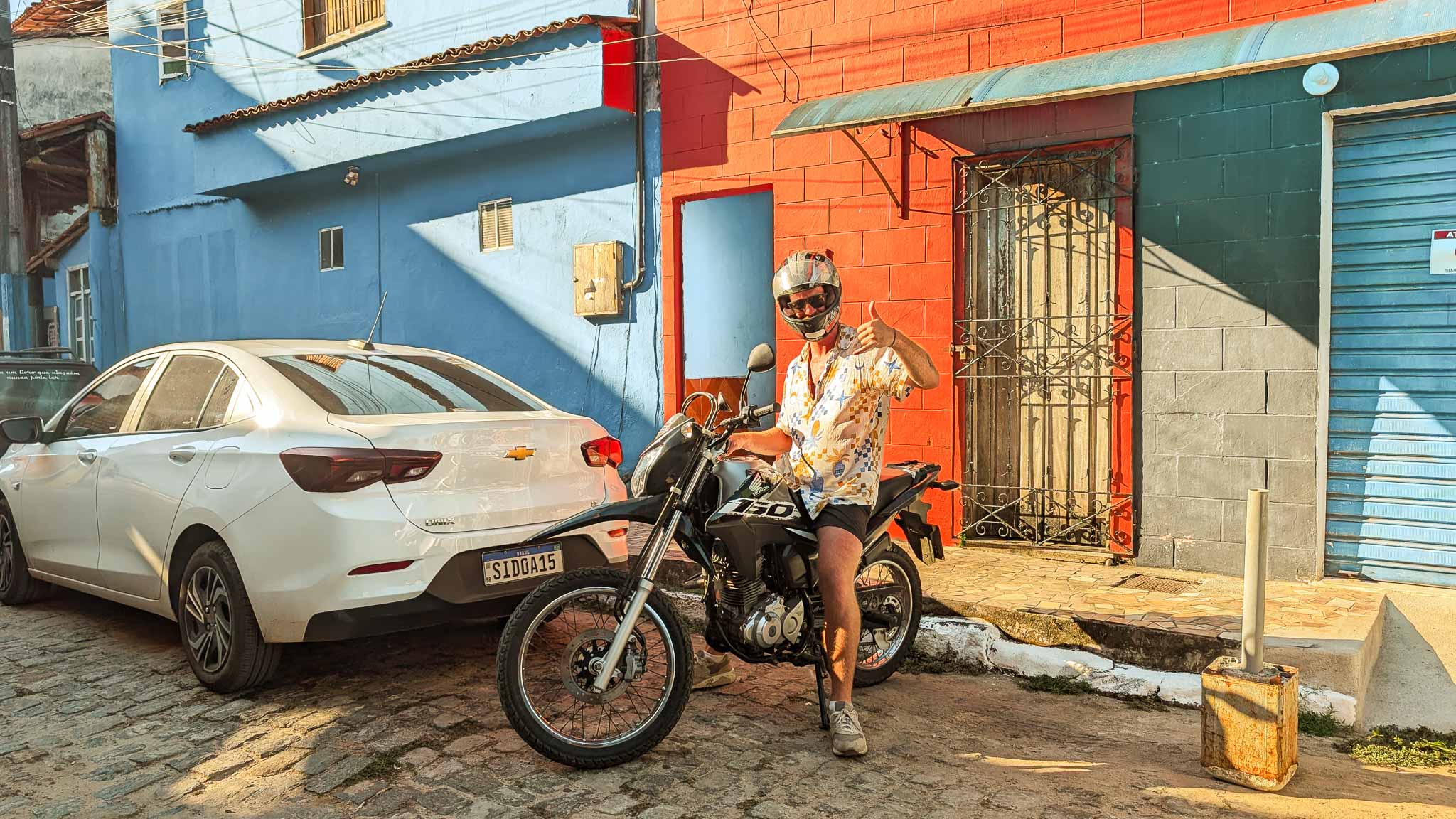
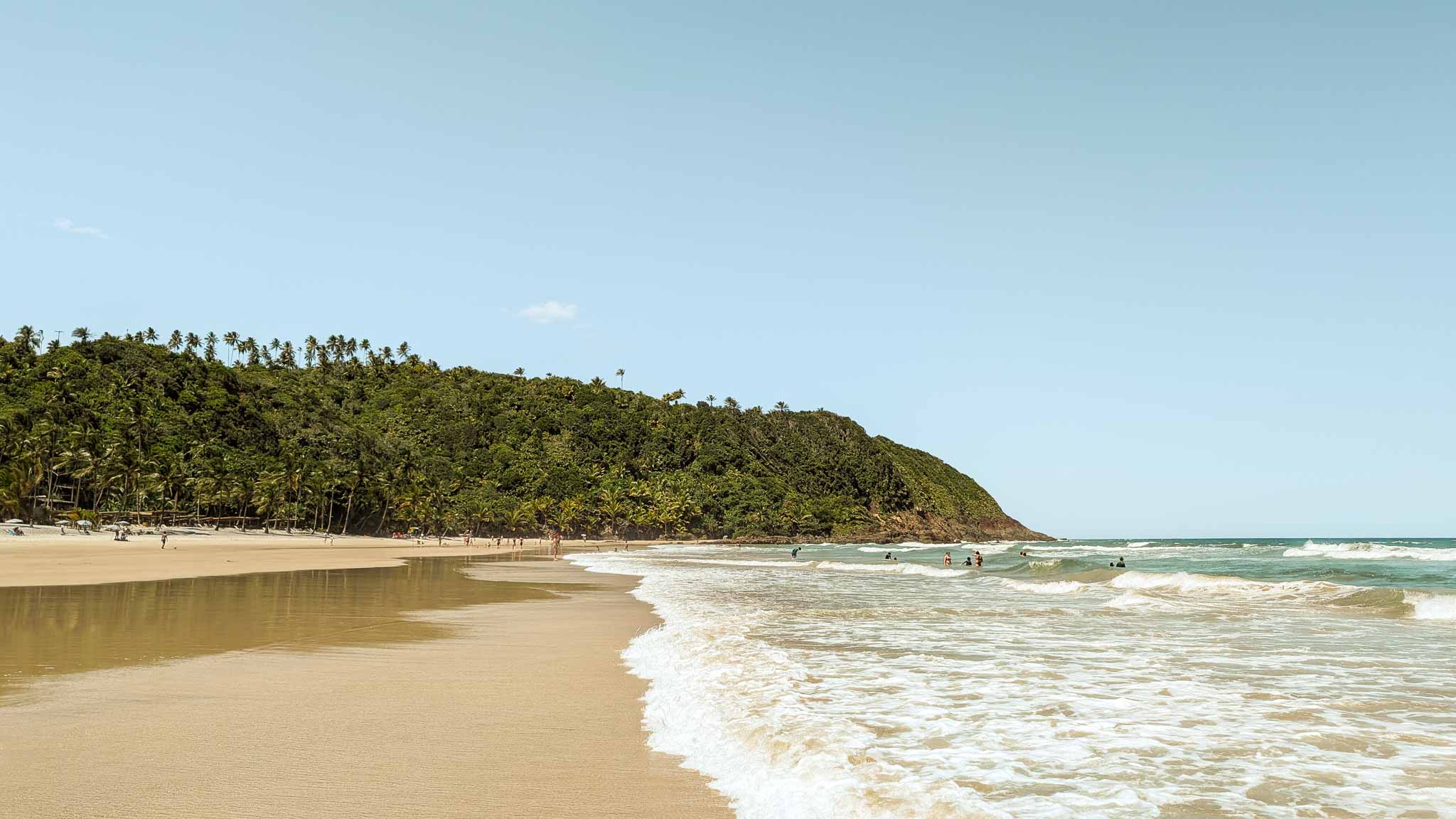
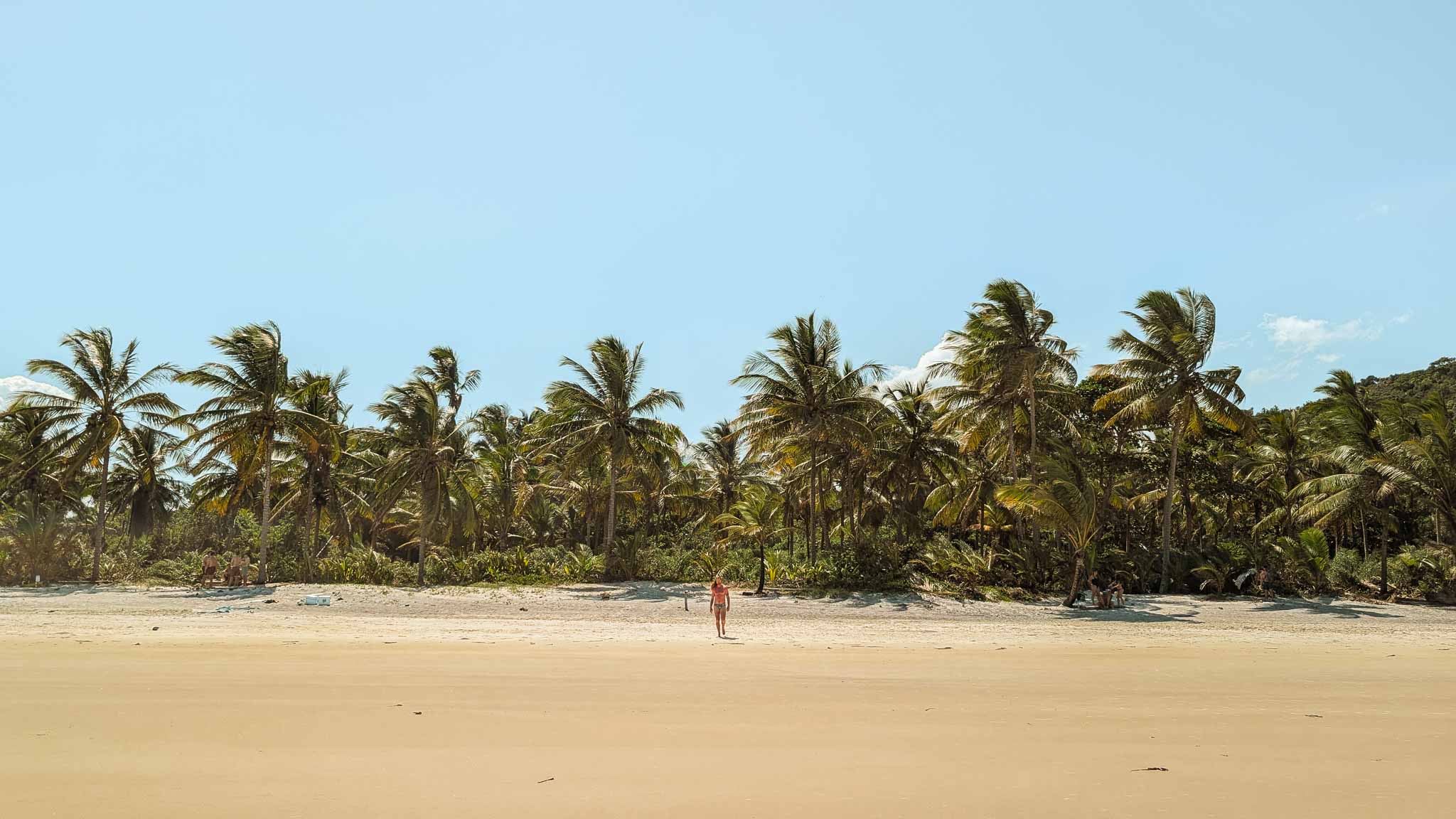
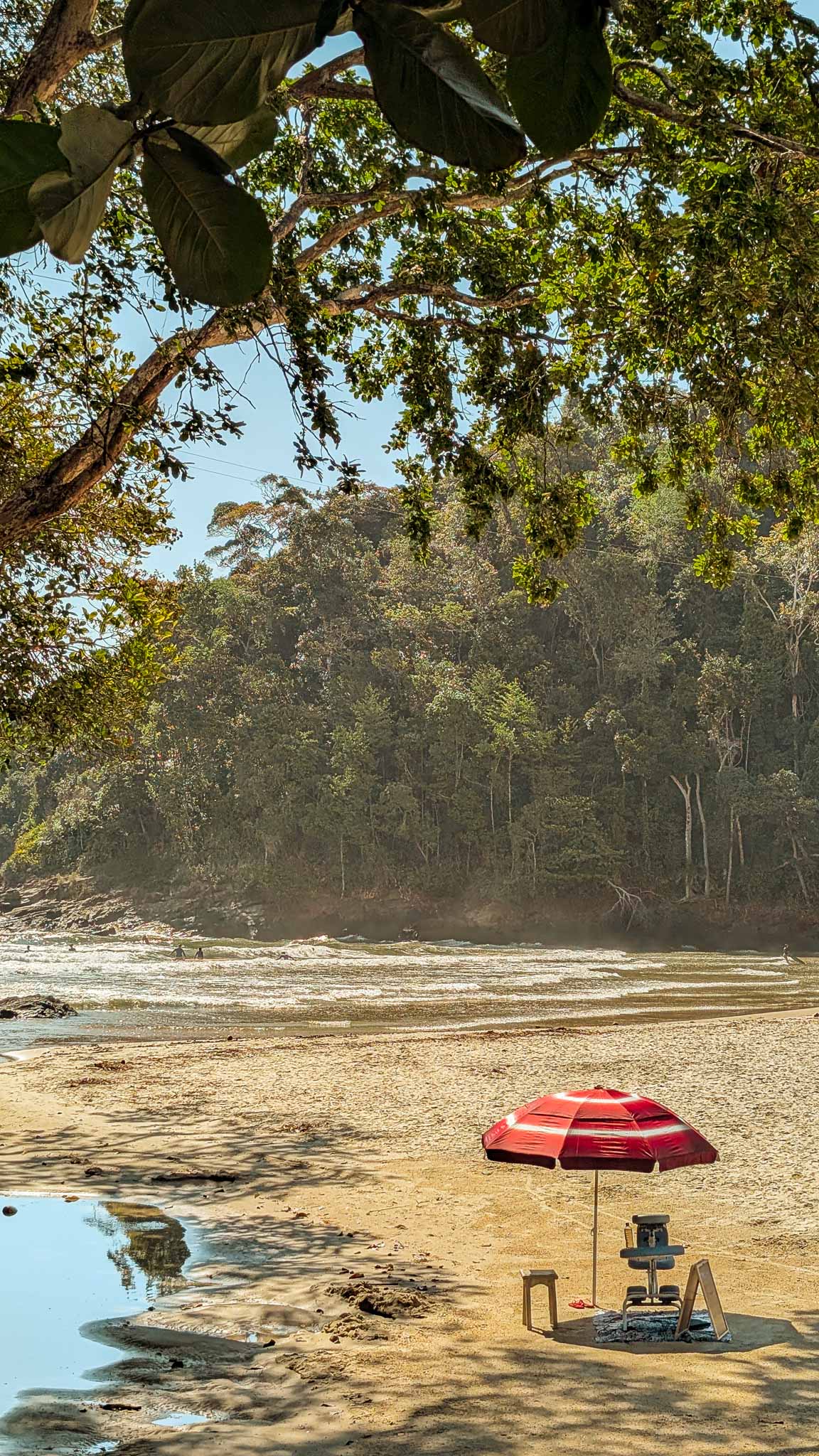
The beaches up this way were improving, and now we were starting to see some really beautiful coast line, where thick jungle would give way to palm trees lining white sand beaches, tucked inside small, protected coves. The only problem with Itacaré is that it’s quite the effort to actually get to the nice beaches. With the closest swimmable beach being an hour walk away in the blistering heat, the solution was to rent a small motorbike for a few days, which turned out to be heaps of fun. Rachael and I zoomed around the streets of Itacaré before getting out onto the main road down the coast, where I would have to stick as close as possible to the right hand shoulder so that cars could easily overtake me. Being a 150cc, this tiny bike was barely big enough to get us up to 80kmp/h, so there were many times I collected quite a queue of cars behind us waiting for the opportune moment to pass us.
There are 3 very popular beaches that are all within walking distance through the jungle from a makeshift carpark on the side of the road, about a half hour slow motorbike ride from town. The sunshine and clean, coastal air seemed to be working wonders for Rachael, as she began to feel better and even went for a swim. I did a bit of bodysurfing on some small waves and we fell asleep on the beach, to awaken with some of the worst gringo sunburn imaginable. We took the bike another 15 minutes down the road to a 4th beach, and opted to walk 15 minutes down the steep road to the carpark at the bottom of the hill instead of paying the crazy $50R ($14AUD) entry fee. We swam again here and bought a delicious homemade sandwich and a guava juice from a guy walking up and down the beach before making the slow bike trip back into town. We heard about a beach party happening that night, and after dinner we walked down to check it out. We caught up with the poms, Tom and Matty from Florianópolis, and they introduced us to their Swiss friend, Paul. “Sorry, did you say your names are Rachael and Hugh?” Paul asked us, “Are you the ones who found my credit card on the ground in Rio a few weeks ago?”. What are the chances? He was super thankful for us finding and leaving it for him at the desk of the gardens in Rio, and it was a hilarious coincidence. I thought he’d shout me a beer or something, but he didn’t, and we left shortly after arriving as it wasn’t really our vibe, and Rachael was still struggling quite a bit
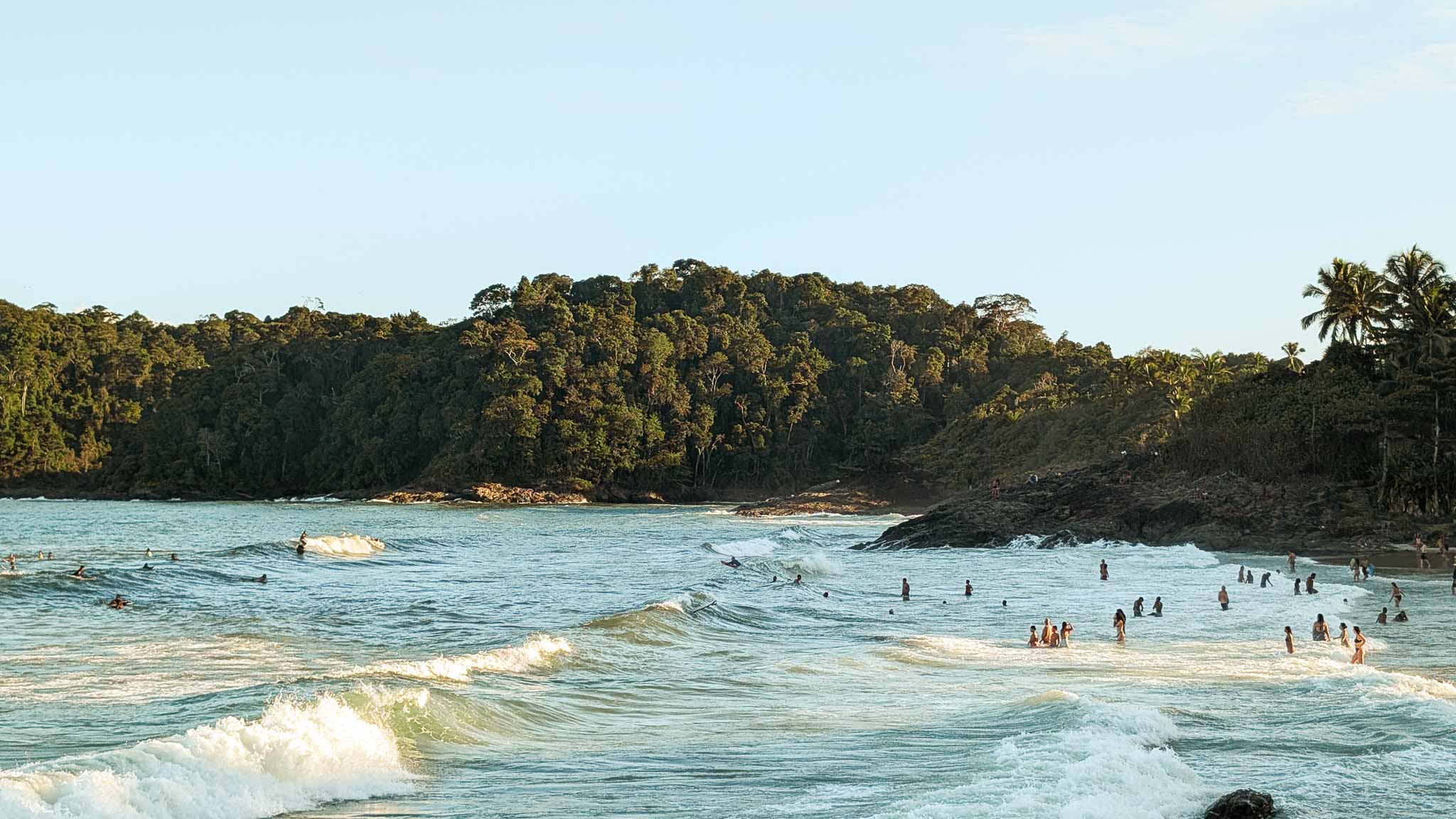
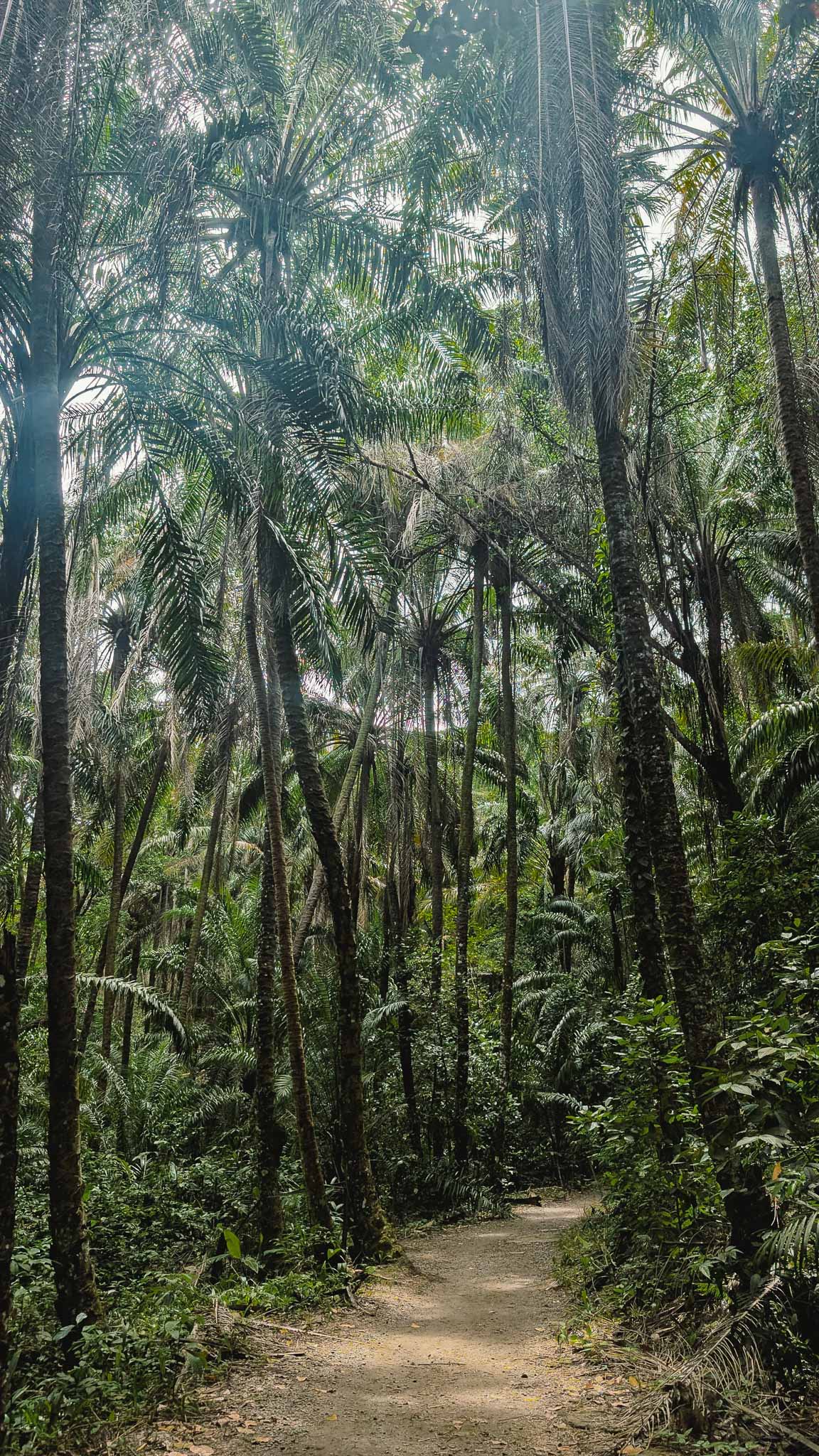
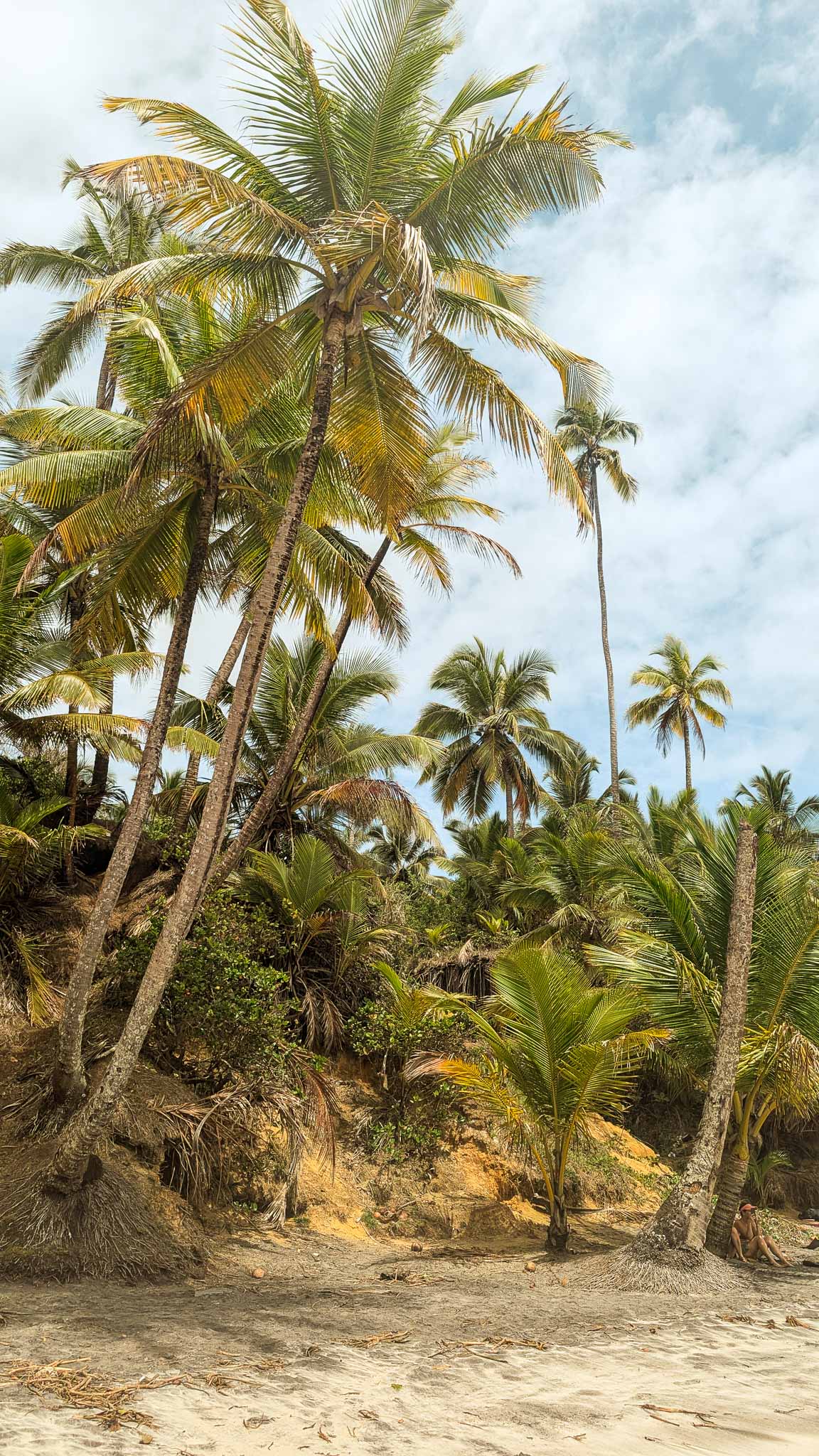
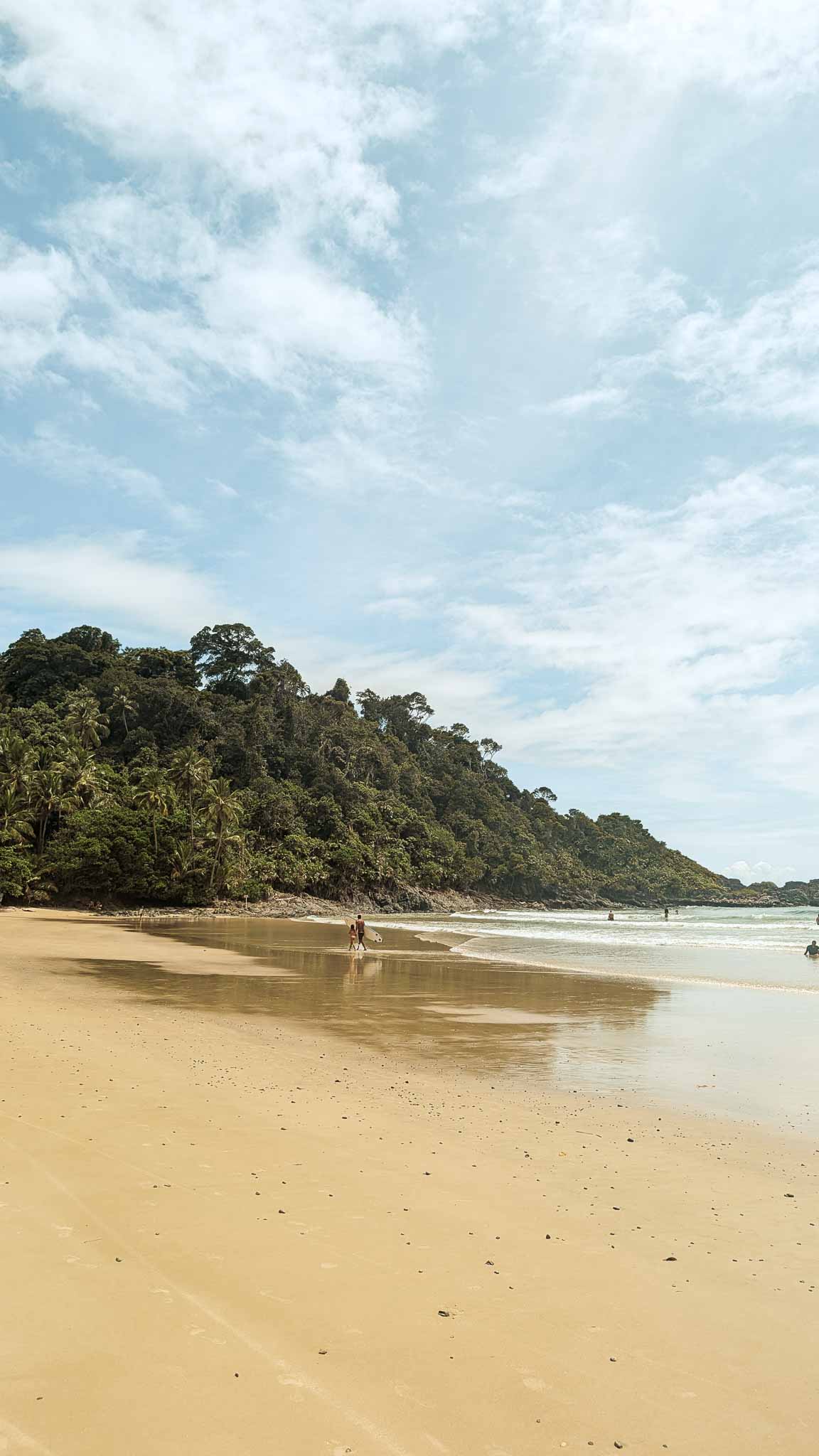
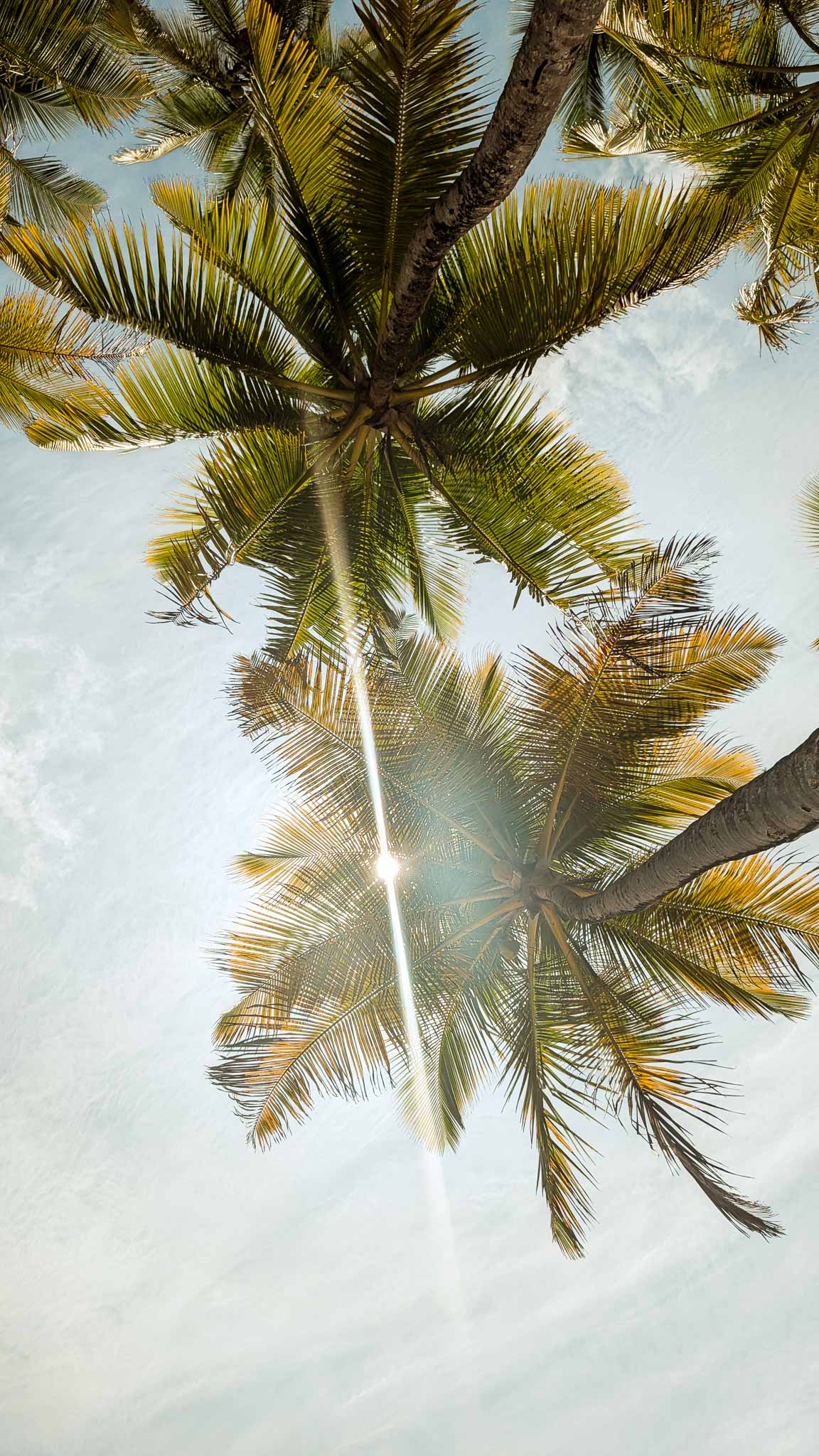
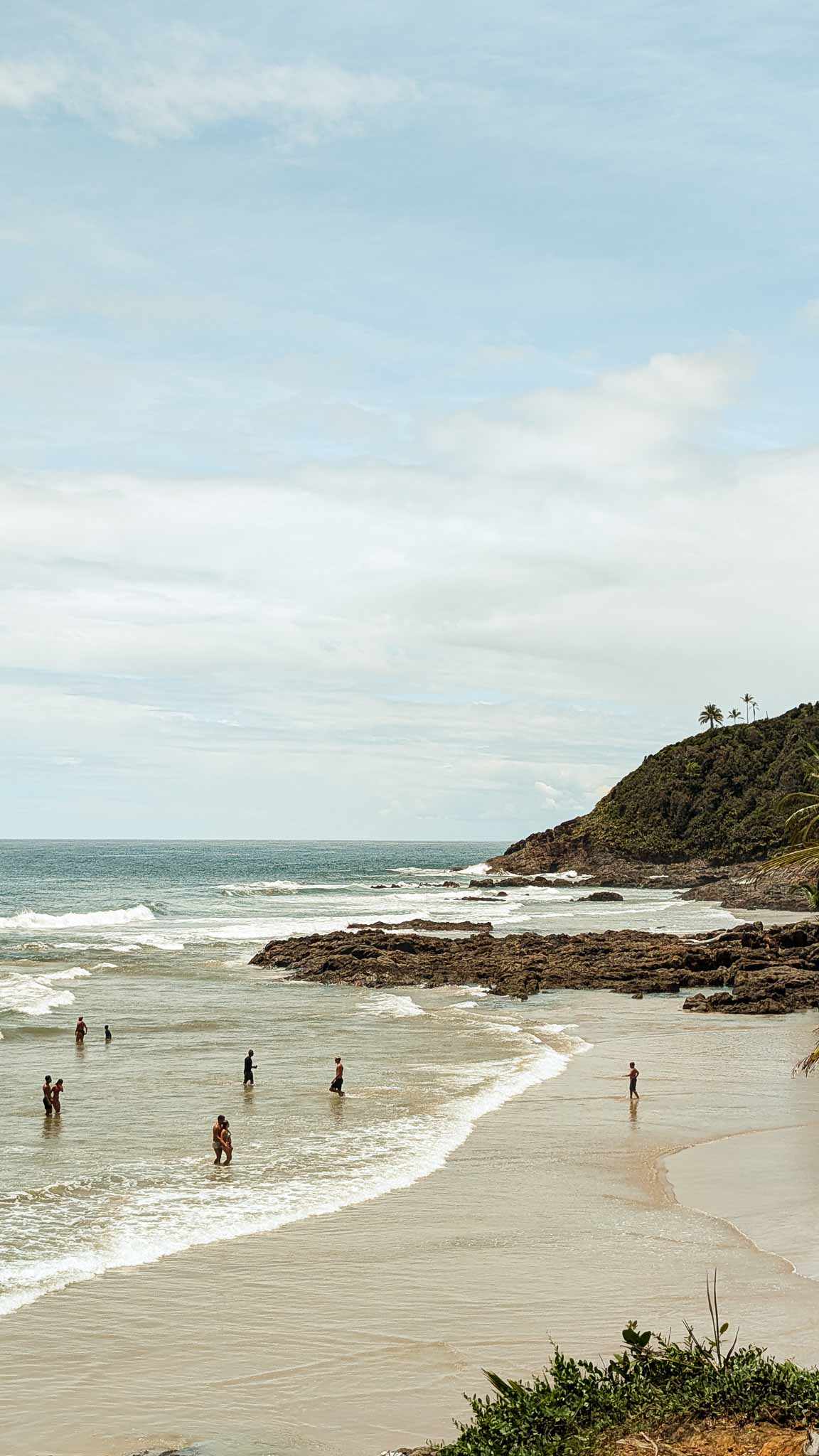
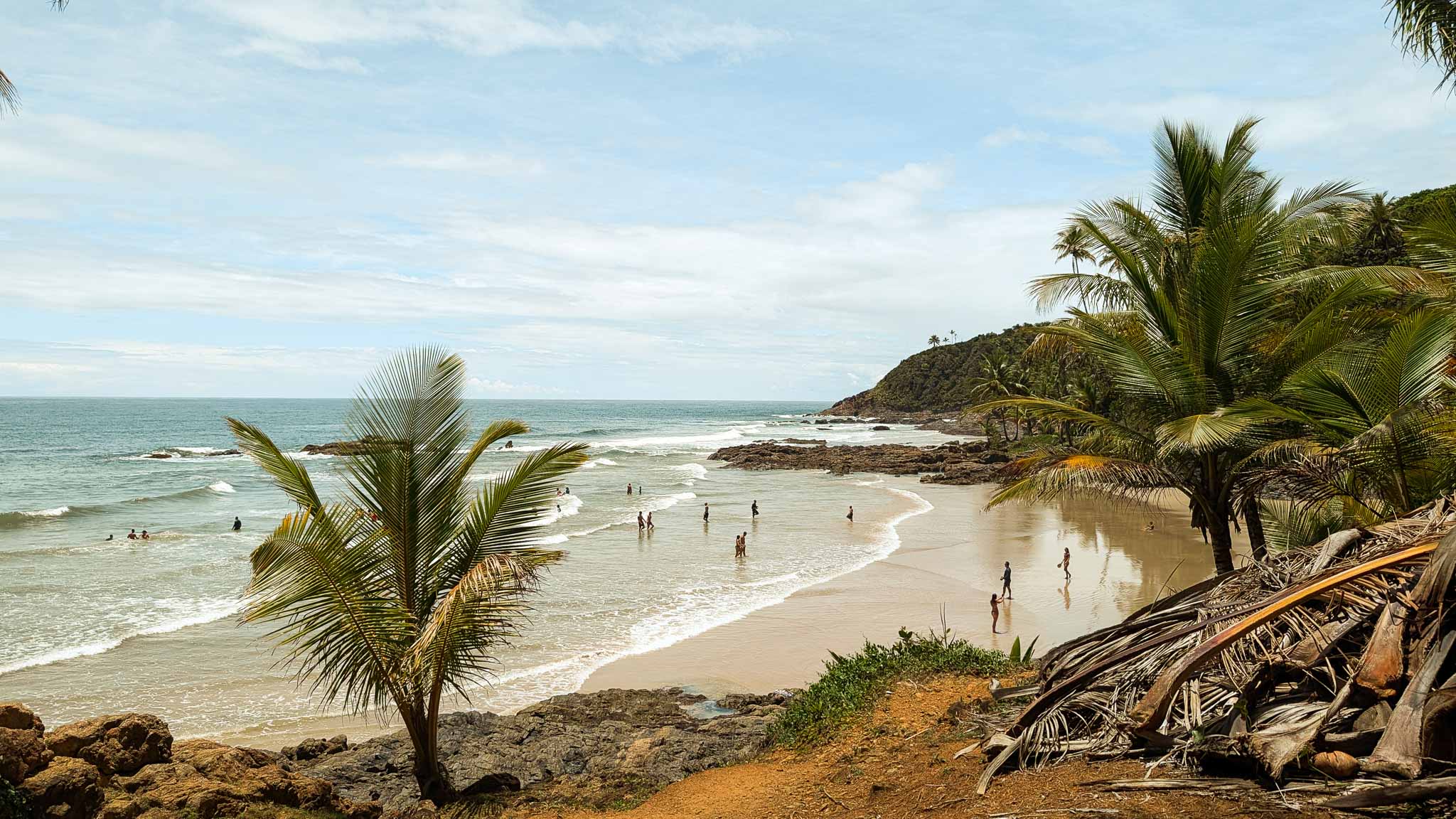
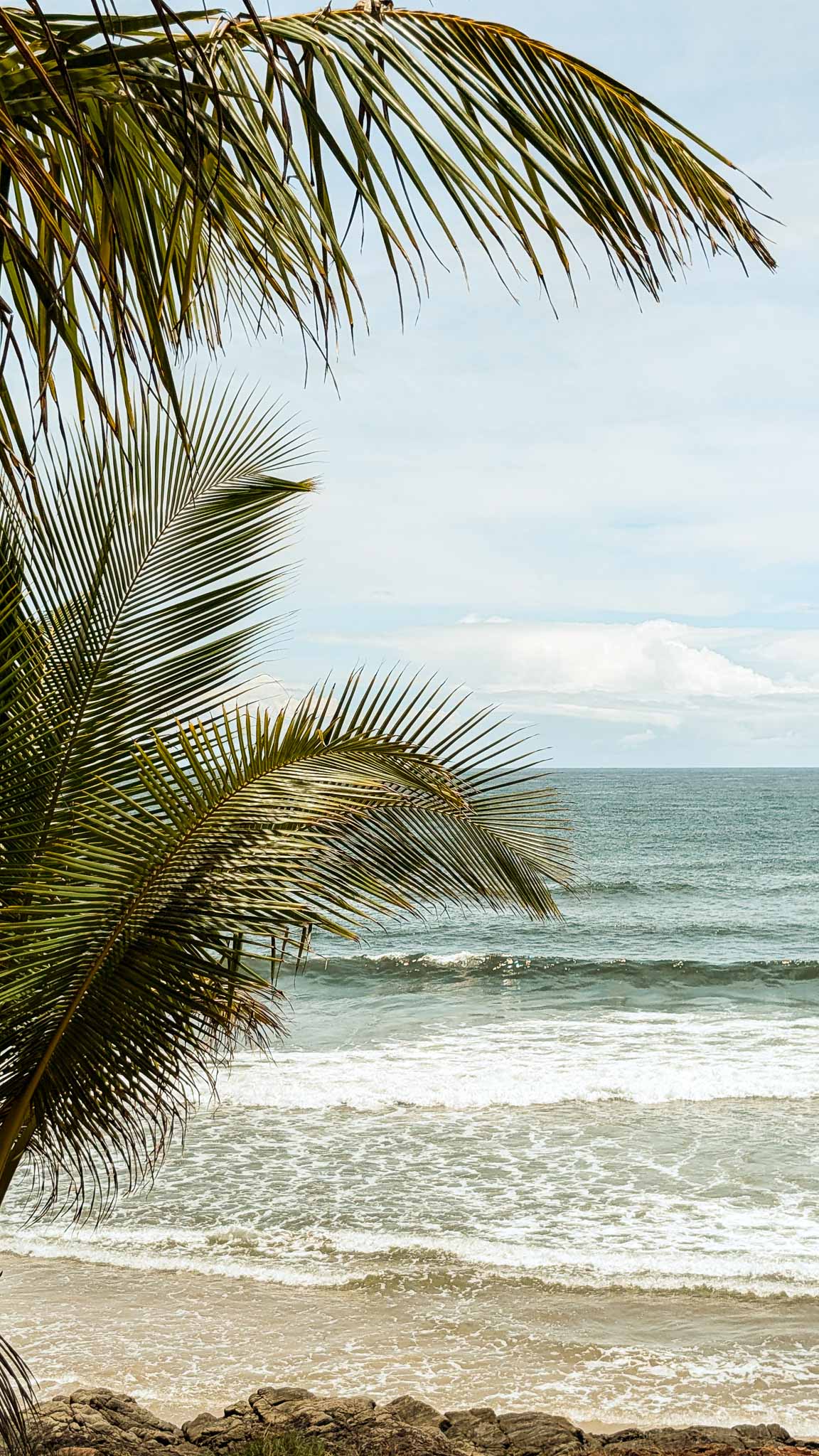
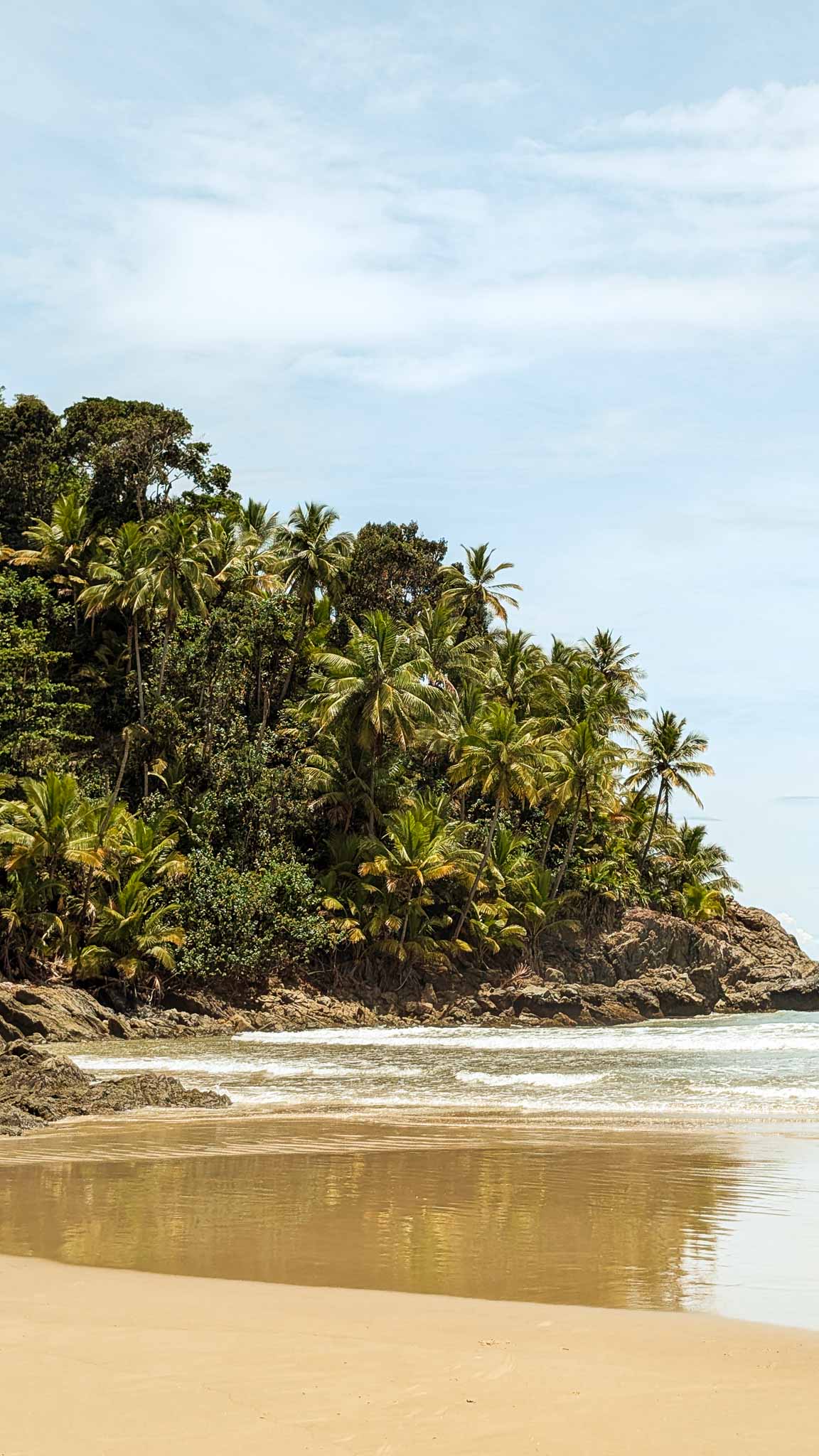
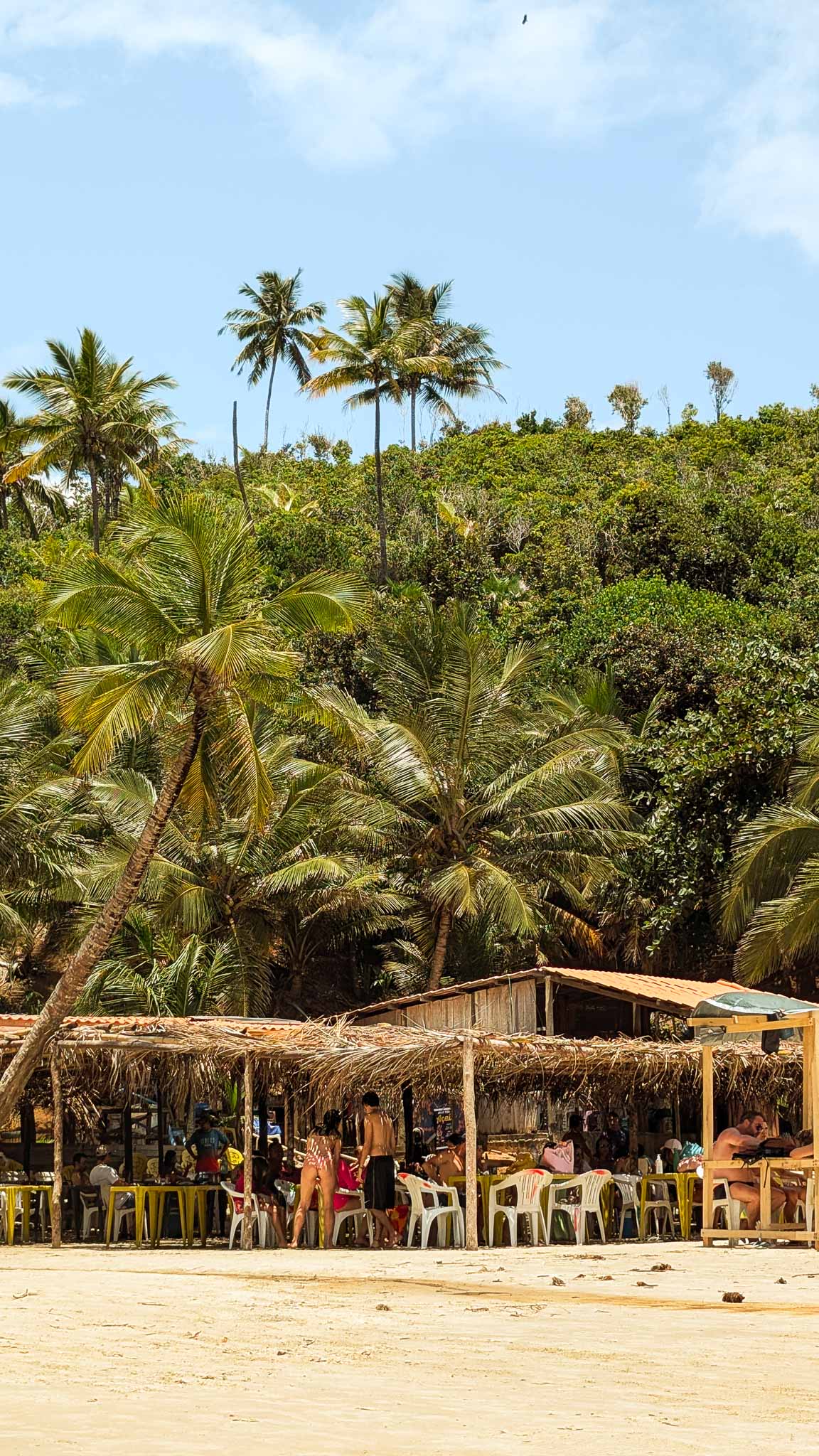
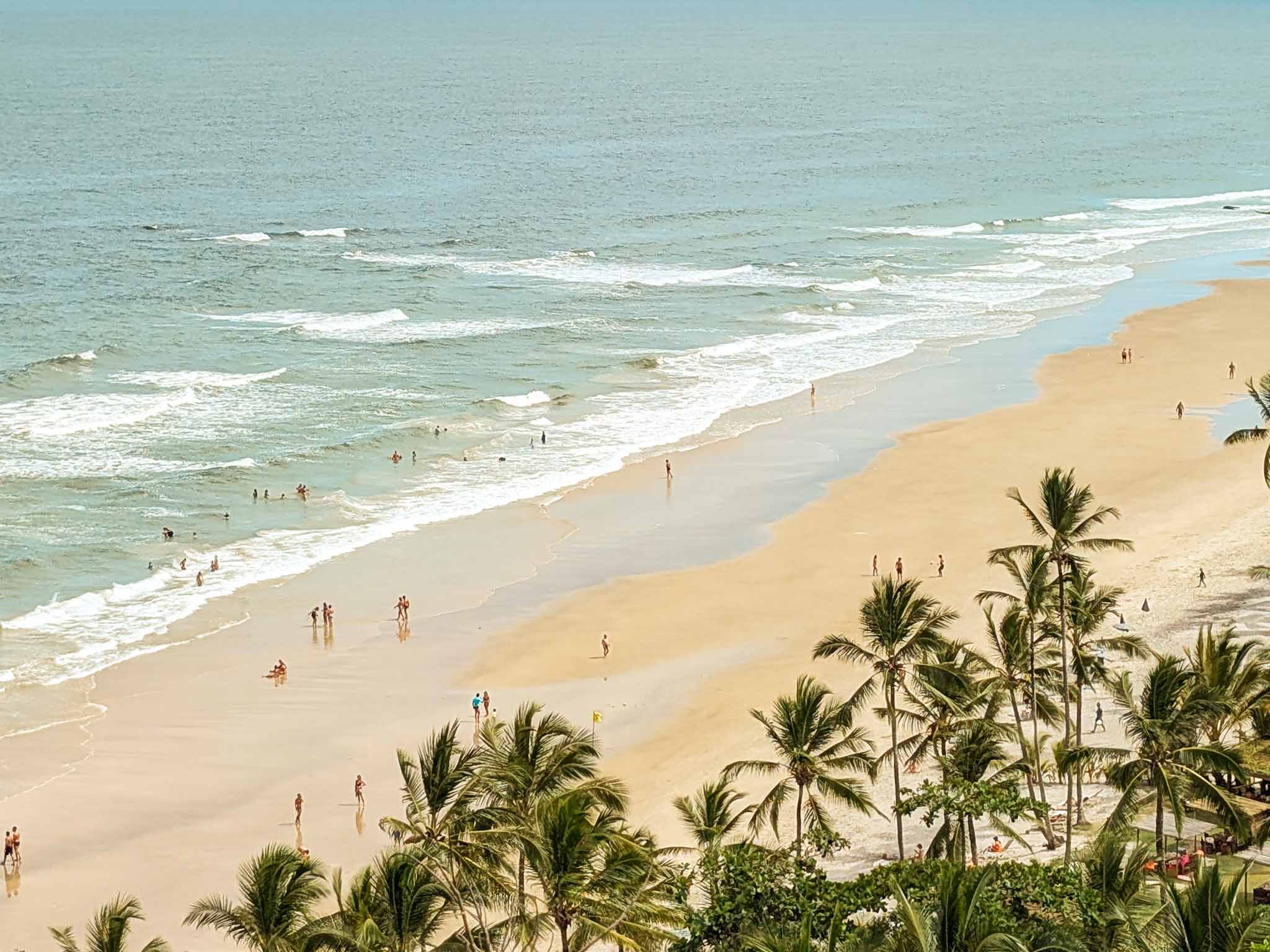
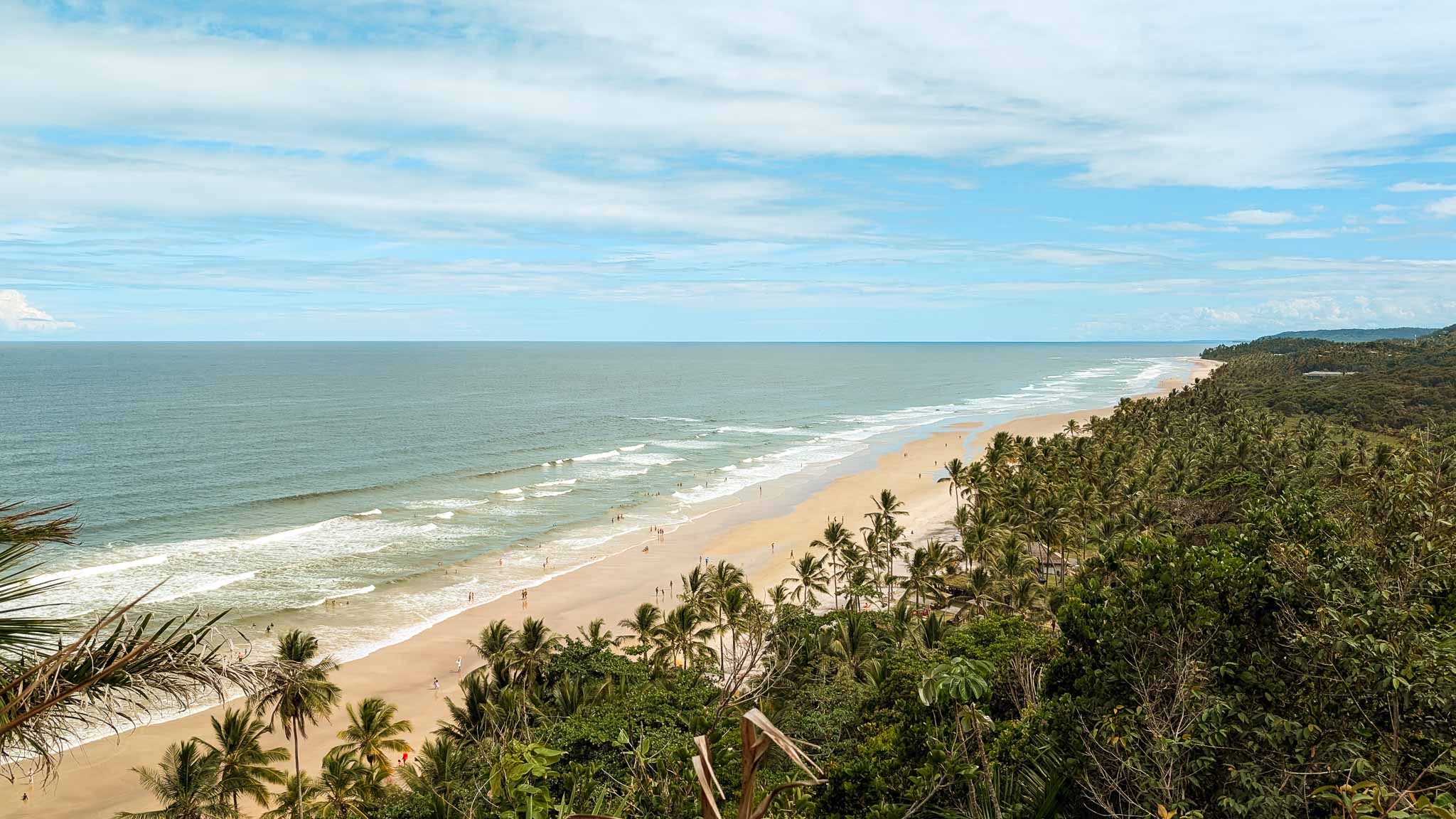
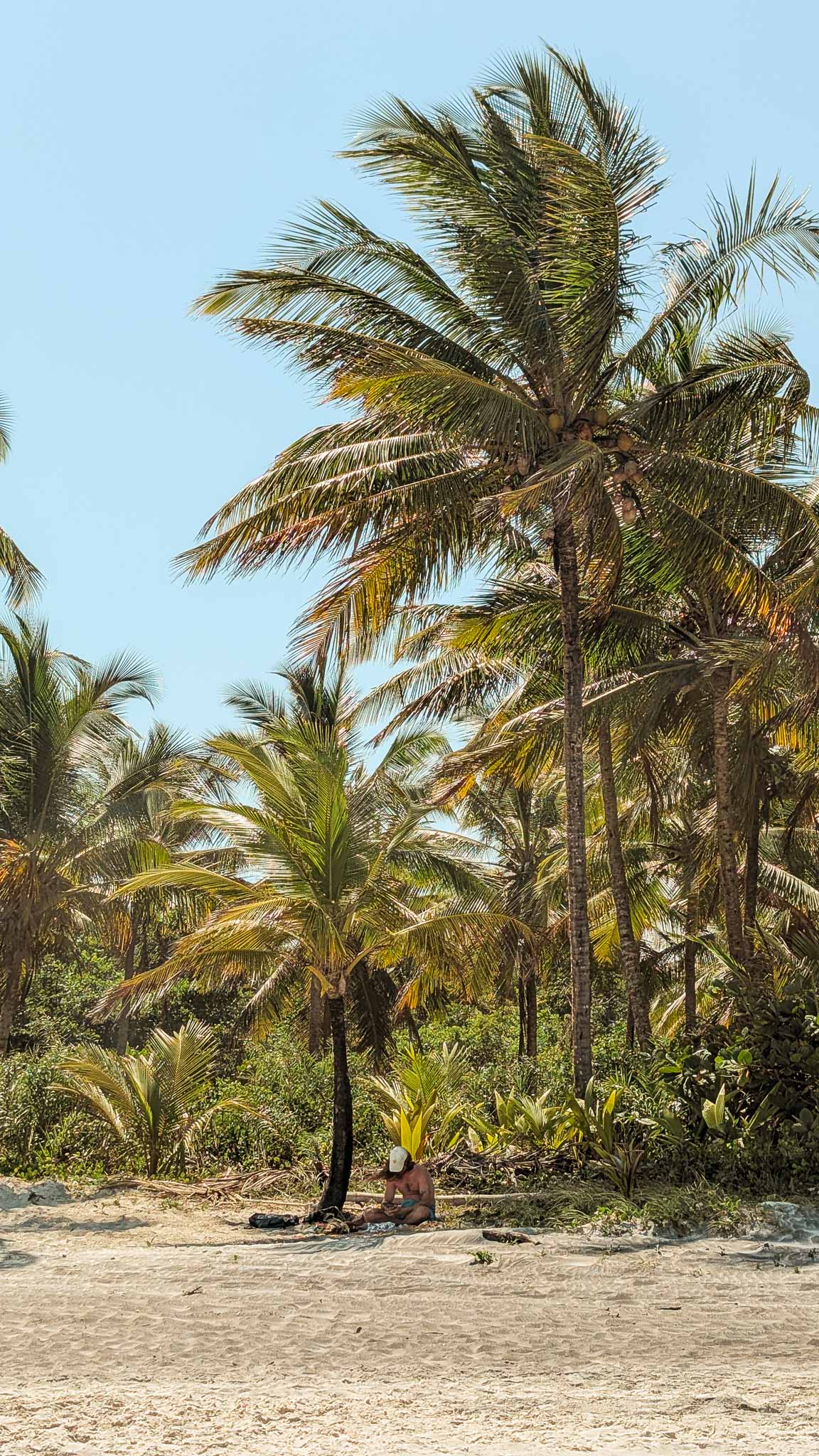
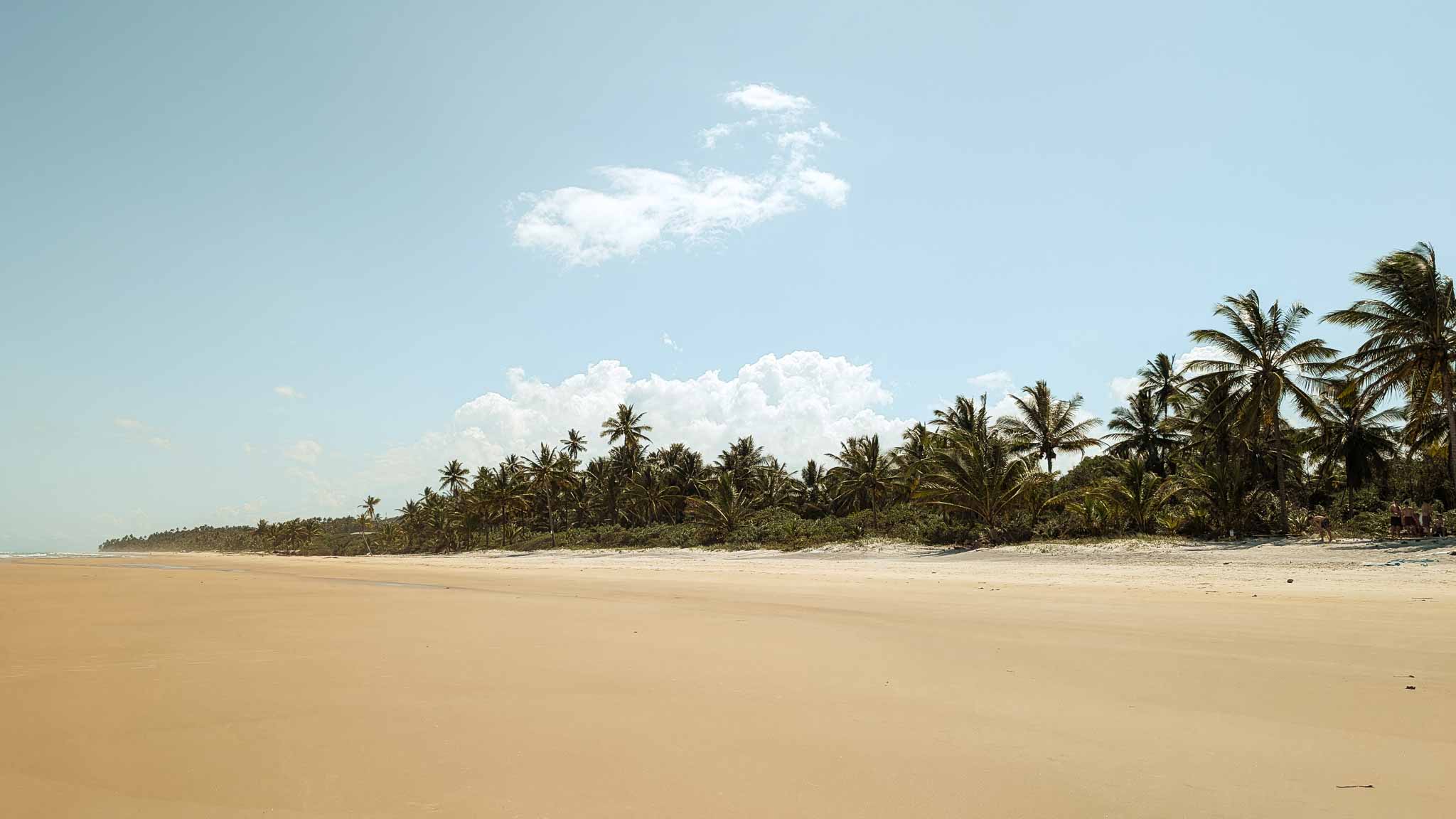
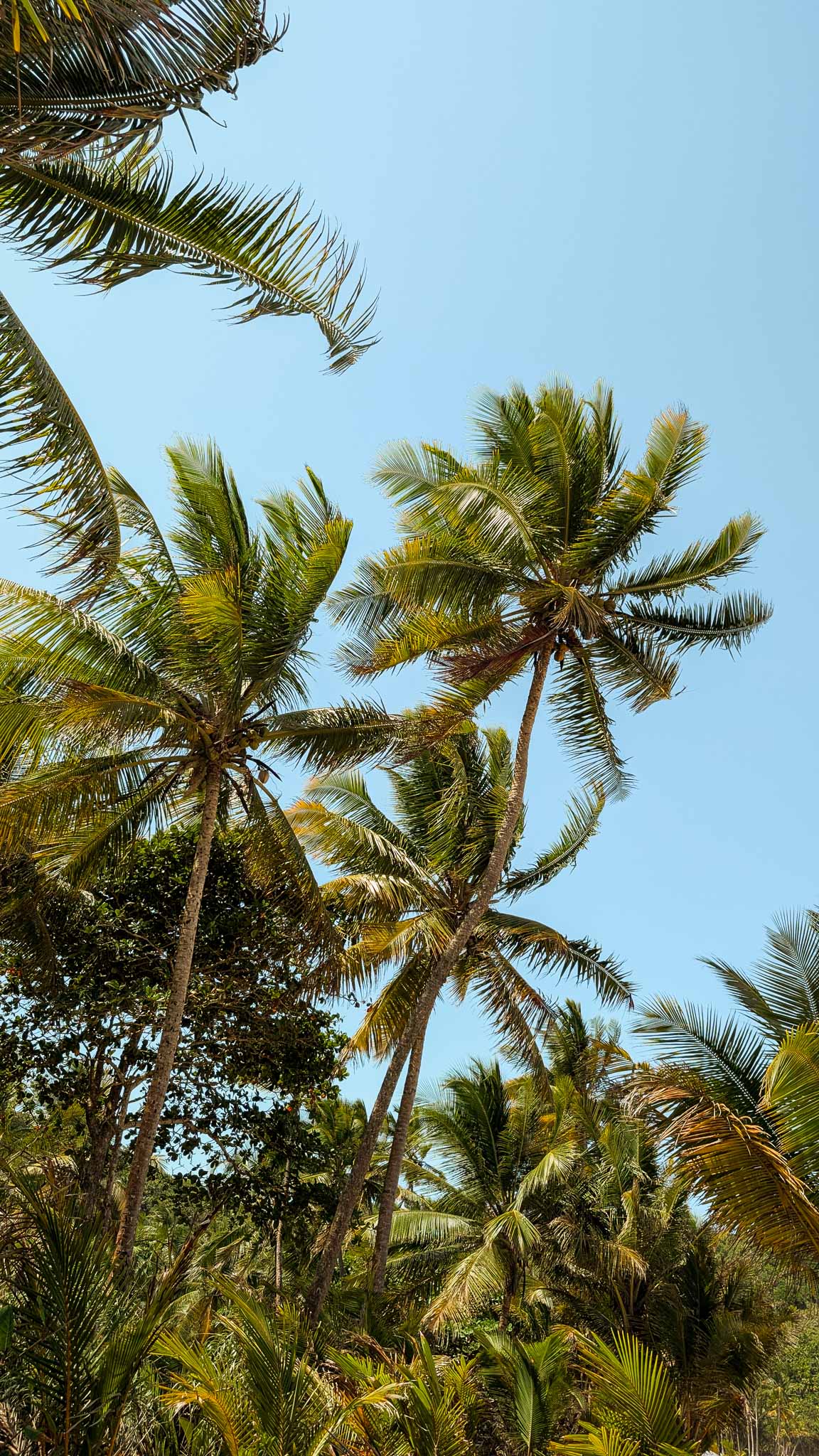
We found a pretty good café close to our hostel that served good, cheap coffee which we frequented, and we returned to the furthest beach as it was our pick of the bunch. Praia Itacarazhino was similar to our beaches at home, with white squeaky sand stretching a good few kilometres from end to end. Plenty of room to spread out and have a big section of beach to yourself. It was a relaxing spot to read a book beneath a coconut tree and go for a dip in the water.
One night in Itacaré, we went out to dinner with some friends we made on the bus trip there a few days prior. Jão from Portugal and Annika from Germany were good company as we waited over an hour for a few very average pizzas at a pretty poorly run restaurant. It was nice to be slowly adding to our list of new friends. I was worried at the beginning of our trip that we were never going to meet anyone we’d consider new friends but it seems the less I focus on the actual ‘making friends’ part of it, the easier it becomes.
After Itacaré, we had a super quick three hour bus ride up to Valença, where we waited for an hour to board a boat to take us south. Here I tried my first acarajé, which is a Bahìan special, and a twist on the Nigerian akara, again, brought to Brazil during the slave trade. It’s basically a fritter made from black-eyed peas, ground up dried shrimp and onions, and deep fried in palm oil. It is then split in half and stuffed with a paste made from ground shrimp and cashews, as well as freshly cooked shrimp, diced tomatoes, chillies and onions. It’s one of those delicious treats that becomes a little less delicious the more you think about it, kind of like the skewers of chicken hearts I would frequently snack on. There’s just something a bit weird about eating whole prawns, head and all, while they’re inside a fritter that’s lined with more whole prawns that have been crushed up to form a paste. Tasty, but weird.
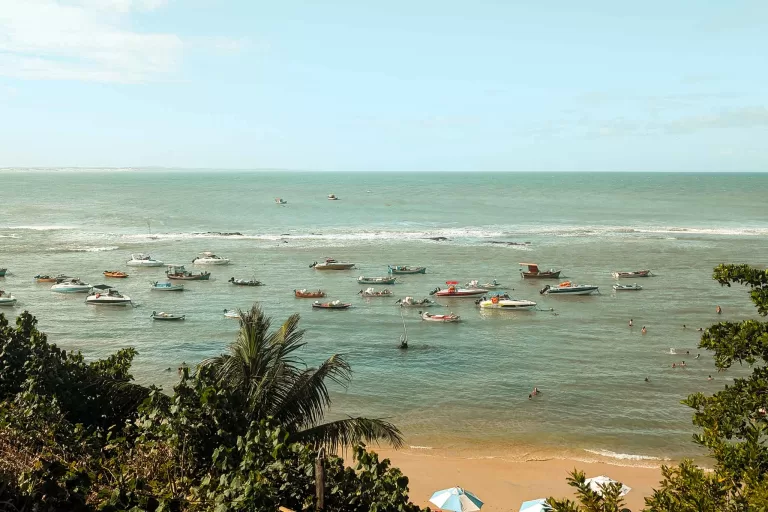
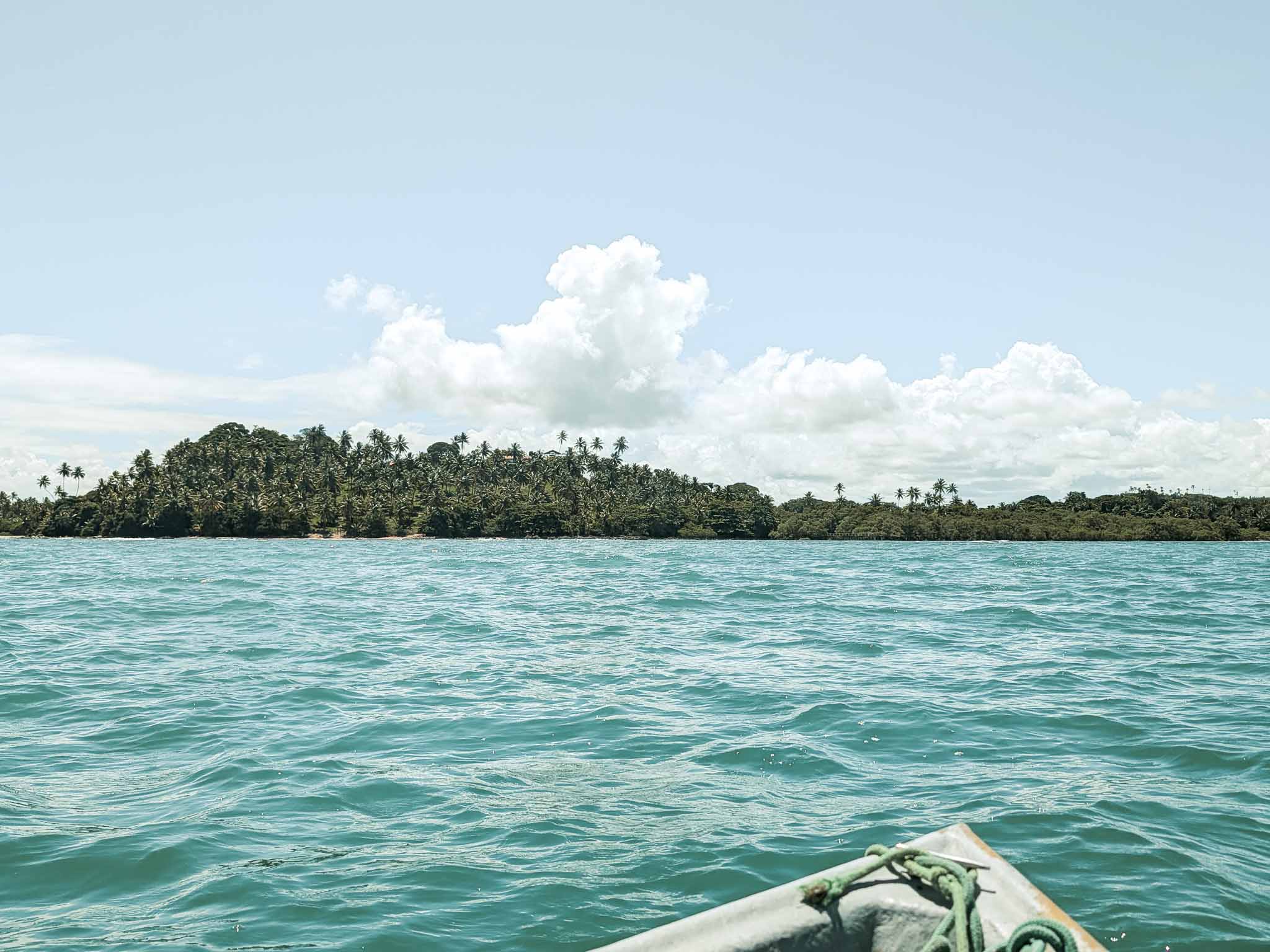
We crammed on board a speed boat with about 20 other people, and began an hour long trip through winding mangroves, super lush jungle and small shacks on private beaches surrounded by palm trees. We passed many Great Egrets that would occasionally glide alongside the boat as we motored our way towards Ihla de Boipeba, a small island home to less than 2000 people. We arrived at the docks of Boipeba amongst colourful fishing boats, and local kids swimming in the water, and once we strapped our packs on we commenced a surprisingly long and very sweaty walk to our accommodation at the far end of town. The Airbnb we were staying at had listed their address as being far closer to the centre of town to where it actually was, and the owner of the place found us walking the sandy streets of town and told us to follow him to his property. The two owners of the place were lovely, very welcoming and happy to meet us, and were constantly sitting out the front of their place sinking tinnies of Brahma during our stay.
We spent the afternoon walking around town, which didn’t take long at all so we did it twice, and we bought some pizza for dinner that was a little more expensive than anywhere else we’d been in Brazil. I guess this is due to the fact that everything on the island has to come via boat, and the boats bringing the cargo down through the mangroves are traveling considerably slower than the passenger boats. Boipeba, similar to other coastal Bahían towns, really only seemed to wake up of a night, once the brutal sun had set and it was no longer torture to be walking around in the insane heat. While we ate our pizza, we watched vendors set up their market stands beneath fairy lights, and a huge row of food stands began to take orders from Brazilian tourists while a man sat on a chair on a tiny stage opposite, singing karaoke to popular Brazilian songs. Before heading back to our accommodation, we decided to hit the pharmacy and get Rachael some medication for her flu that wouldn’t let up. After looking up a few Portuguese phrases, I was confident I could go in and get what we needed. We stood in the square a few minutes later, with Rachael about to pop her first pill. Just before it reached her lips I remembered that she was allergic to Penicillin, so we ran back to the pharmacy and asked the kind lady if there was any Penicillin in the medication. There was. She happily sold us a different medication and Rachael took that instead. I have no idea what would have happened if she’d munched that first pill, but I’m so glad I remembered to check.
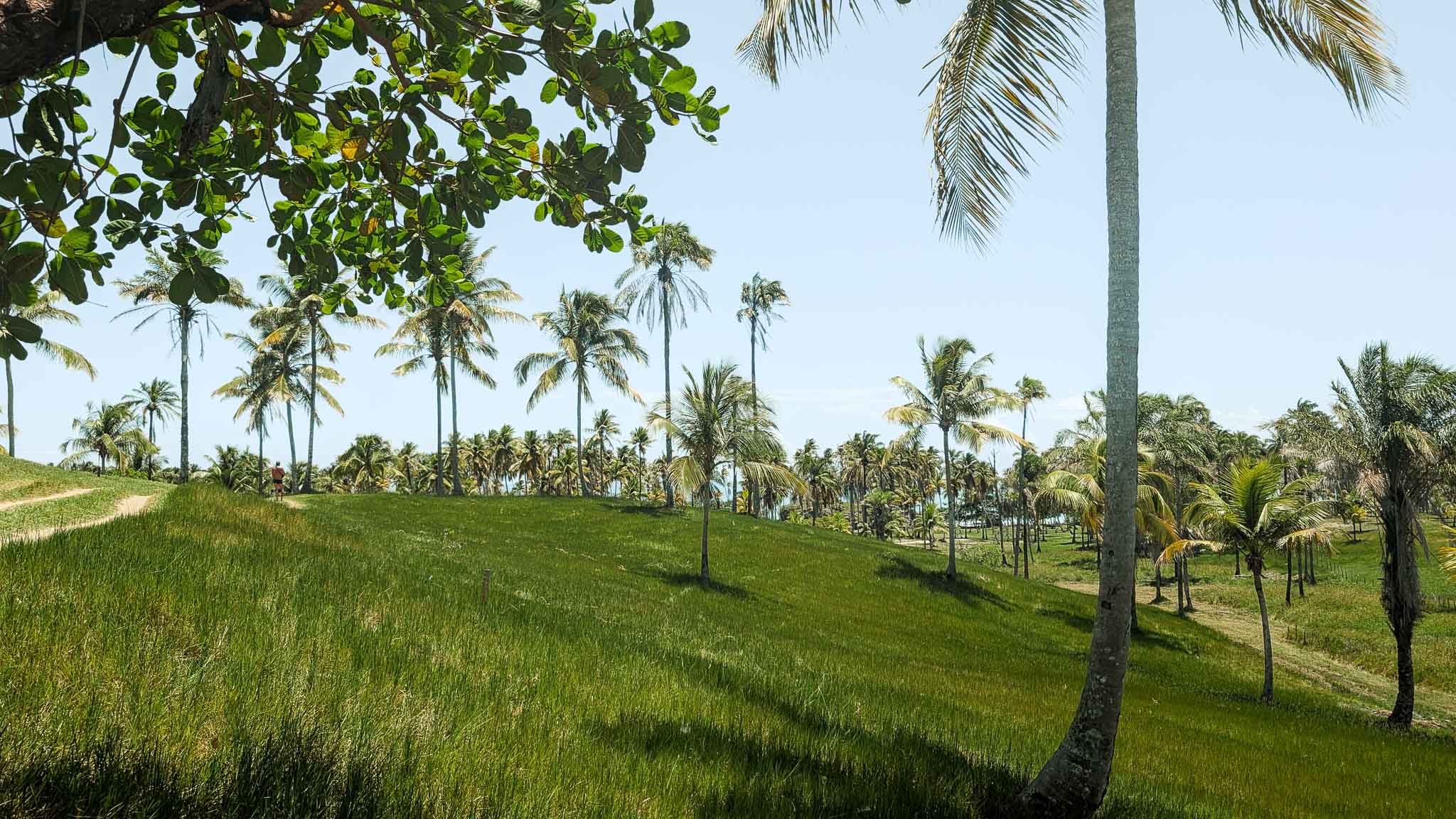
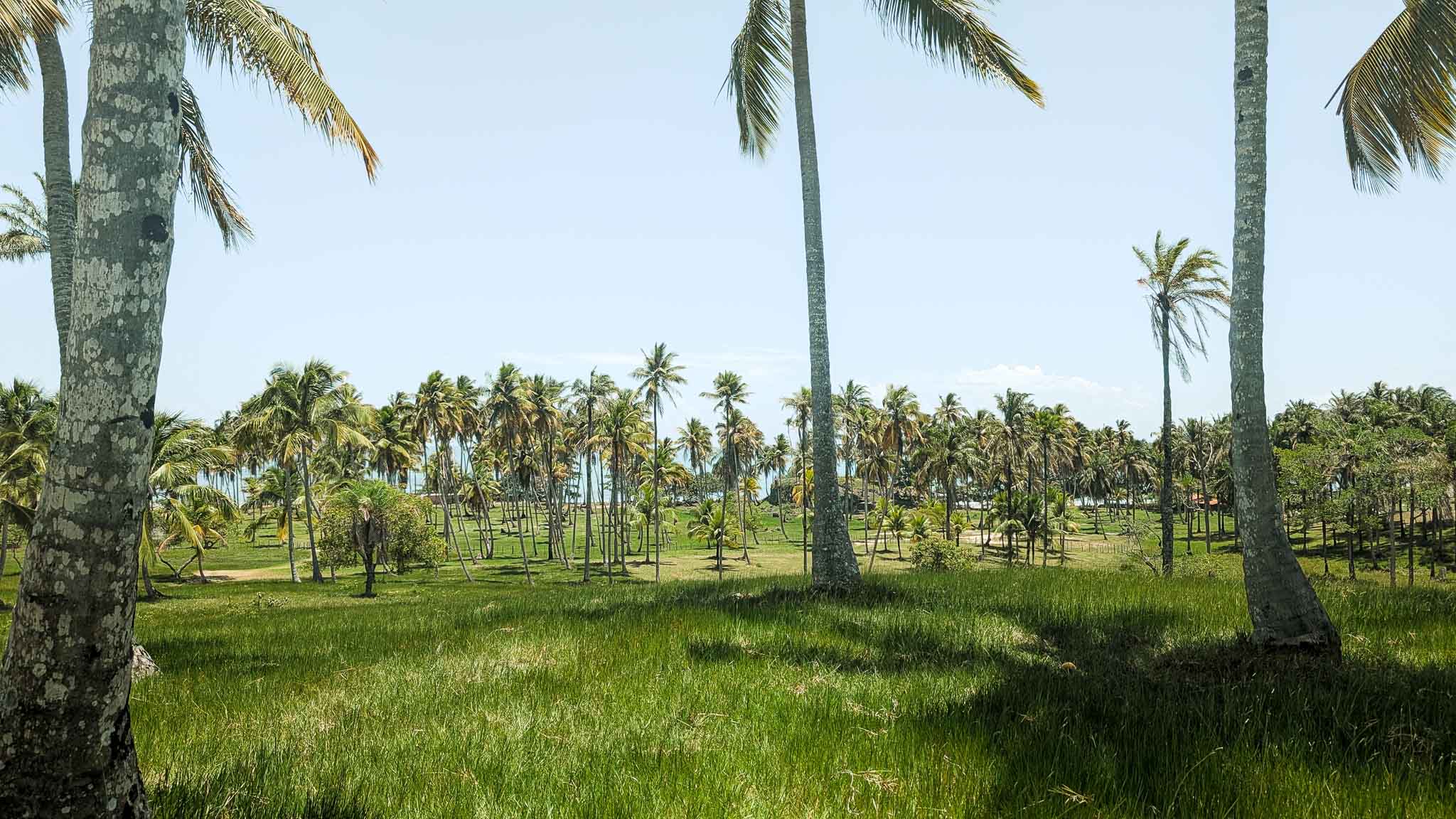
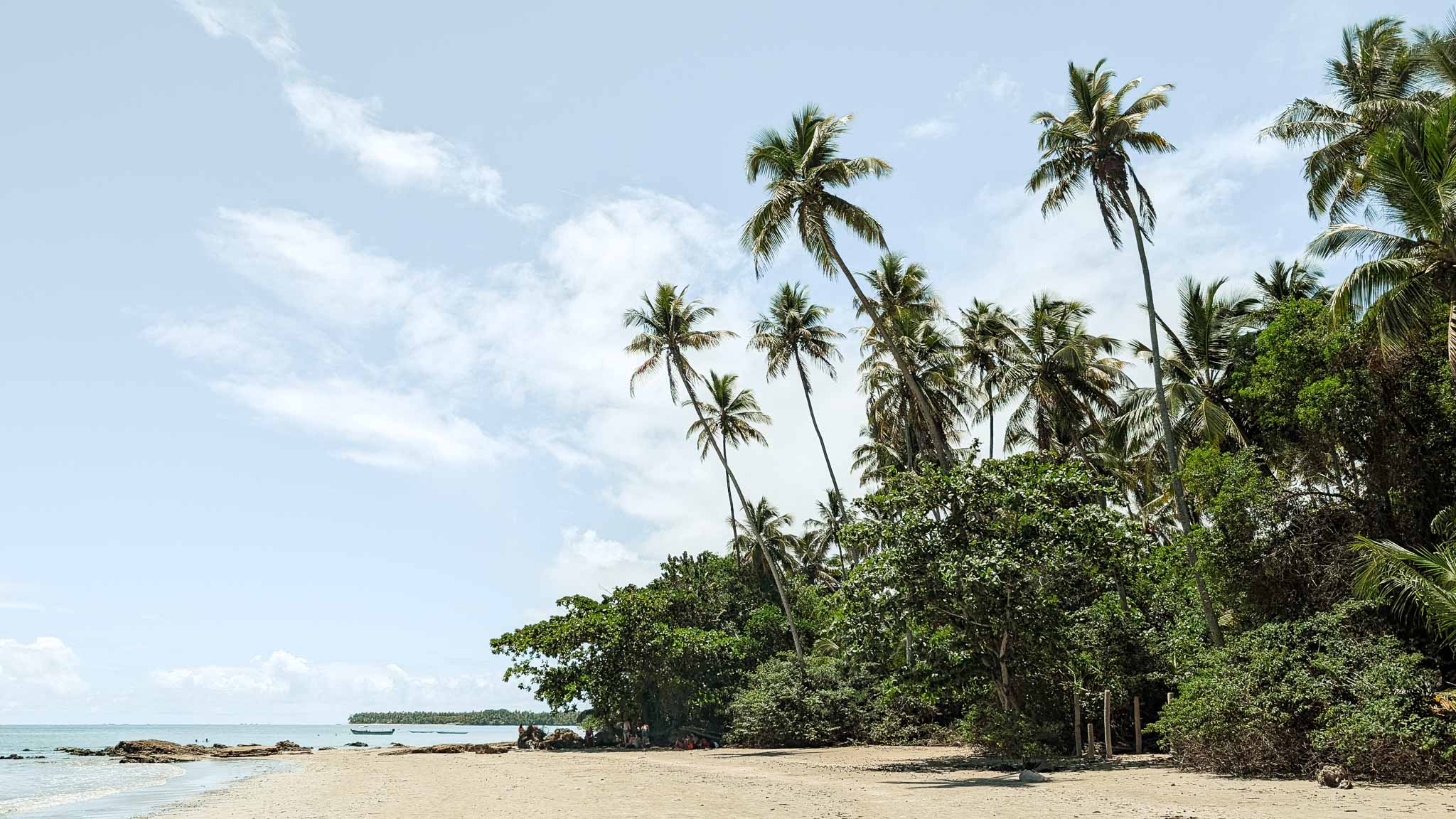
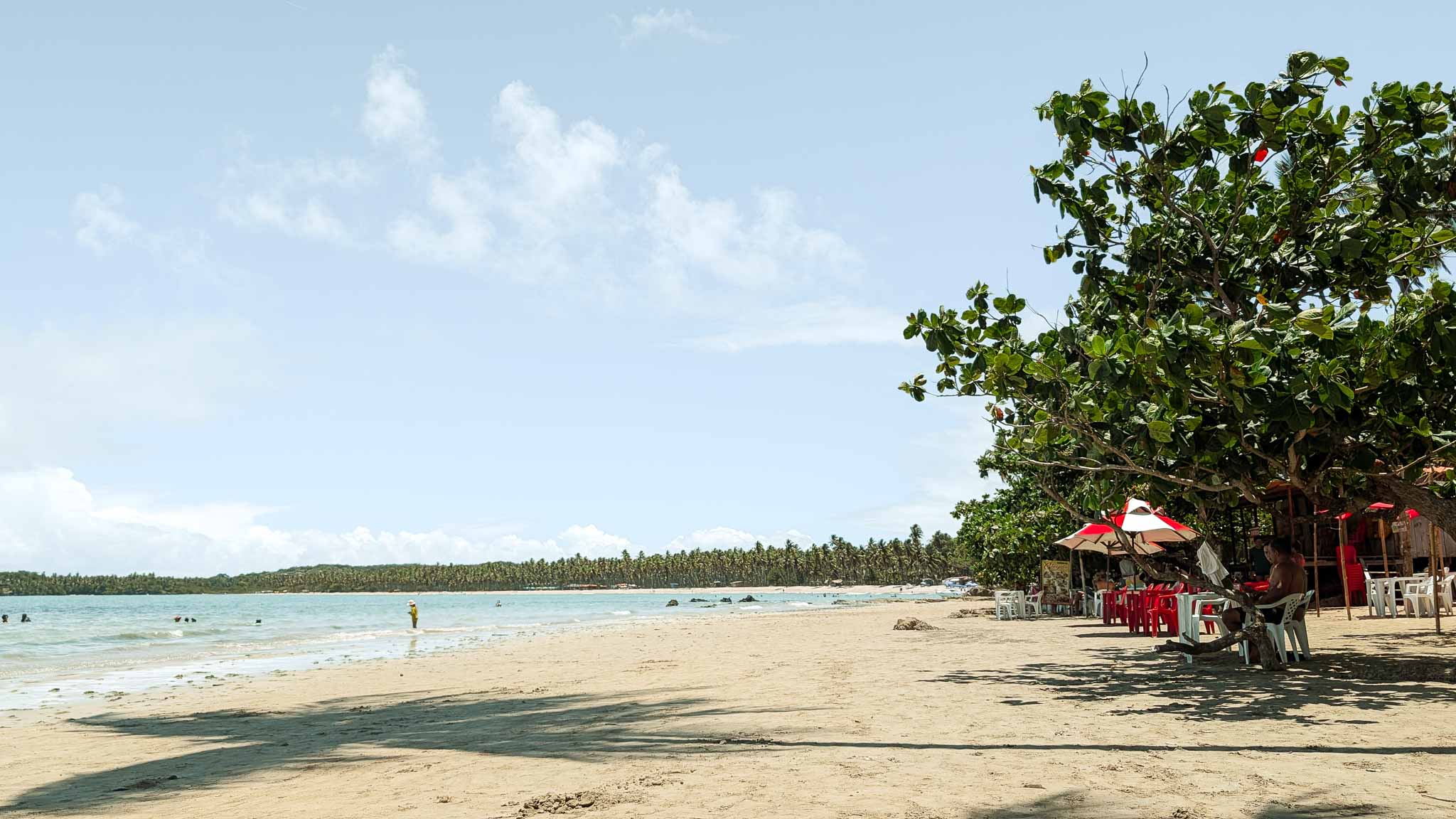
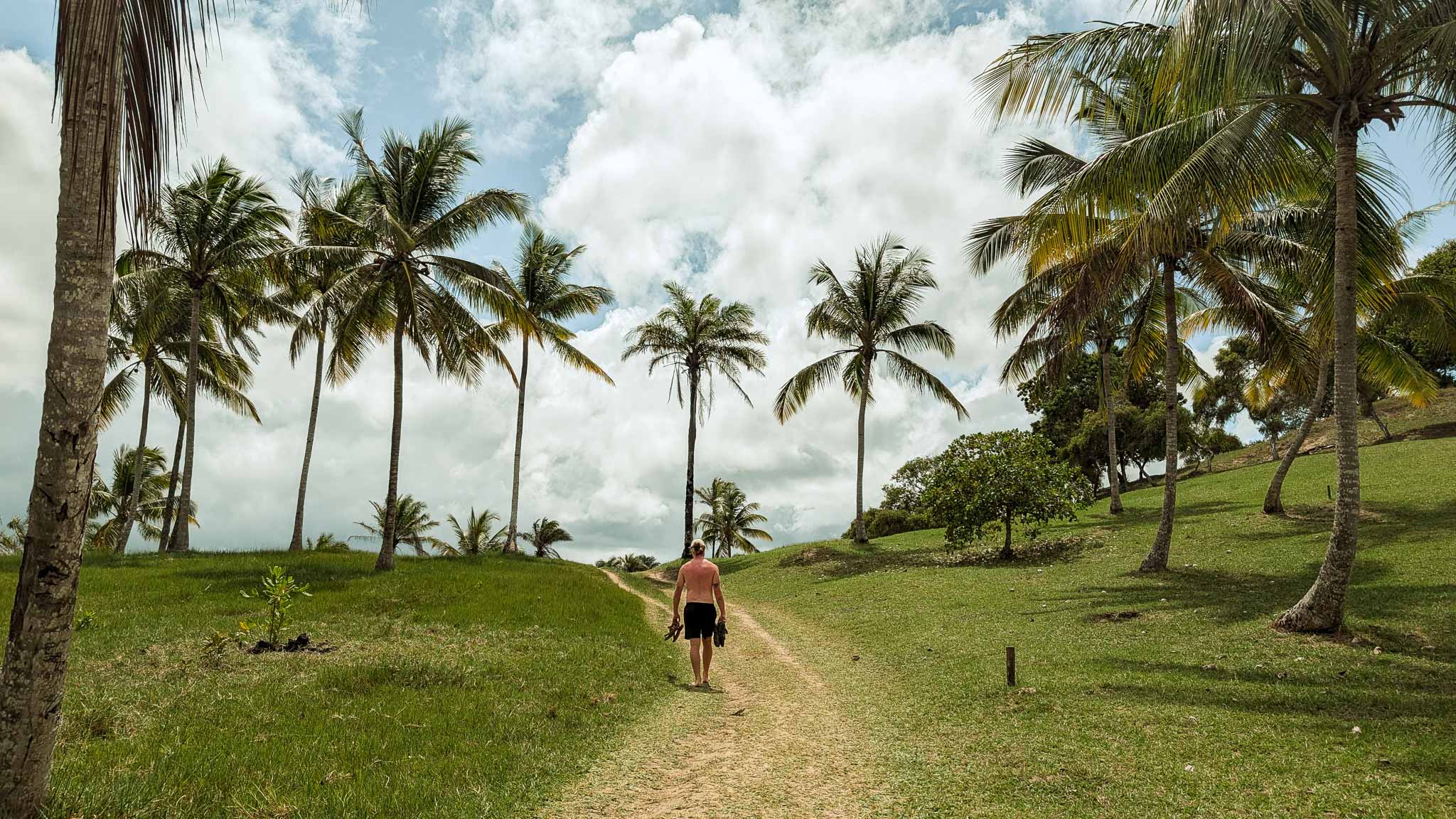
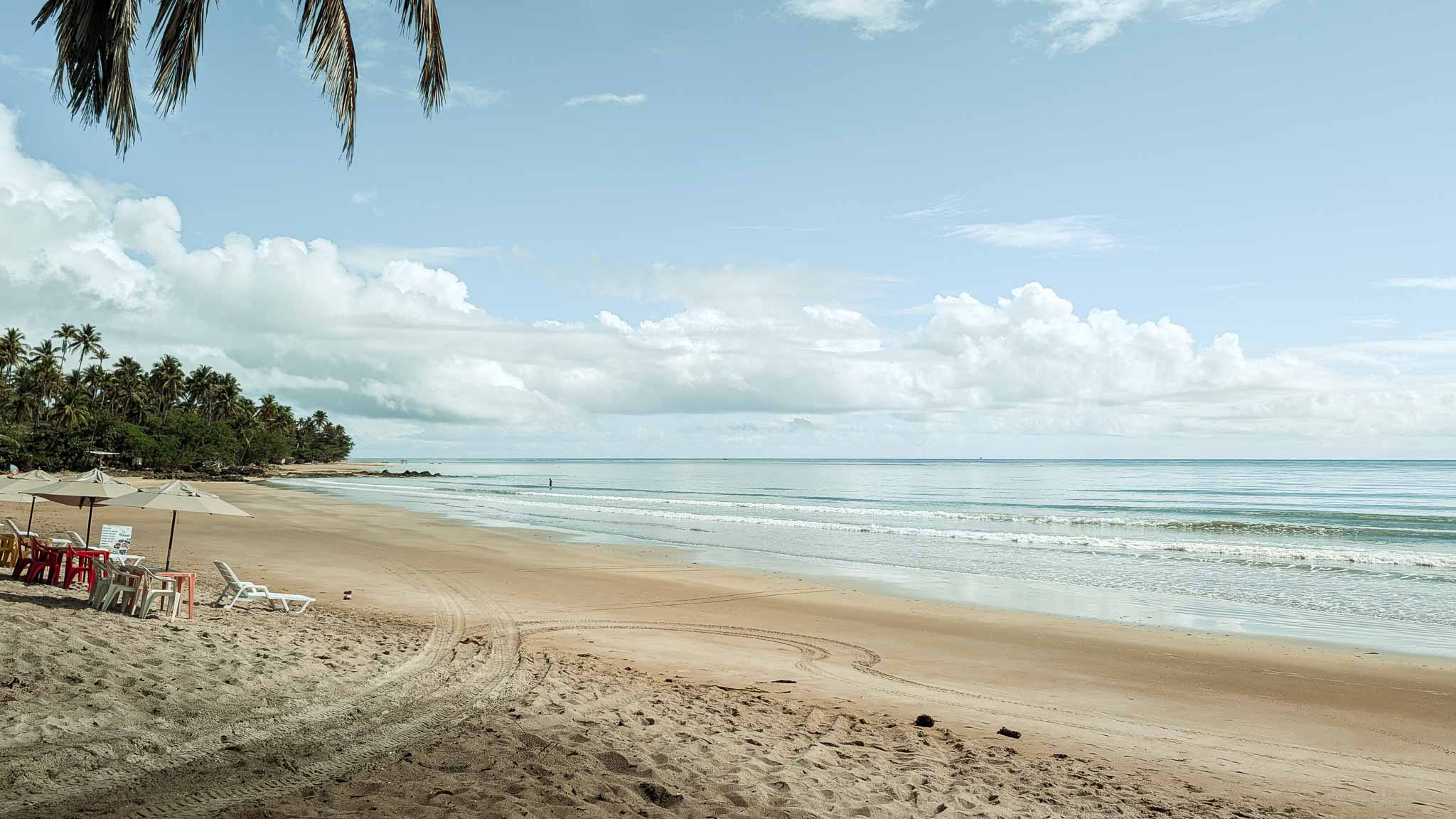
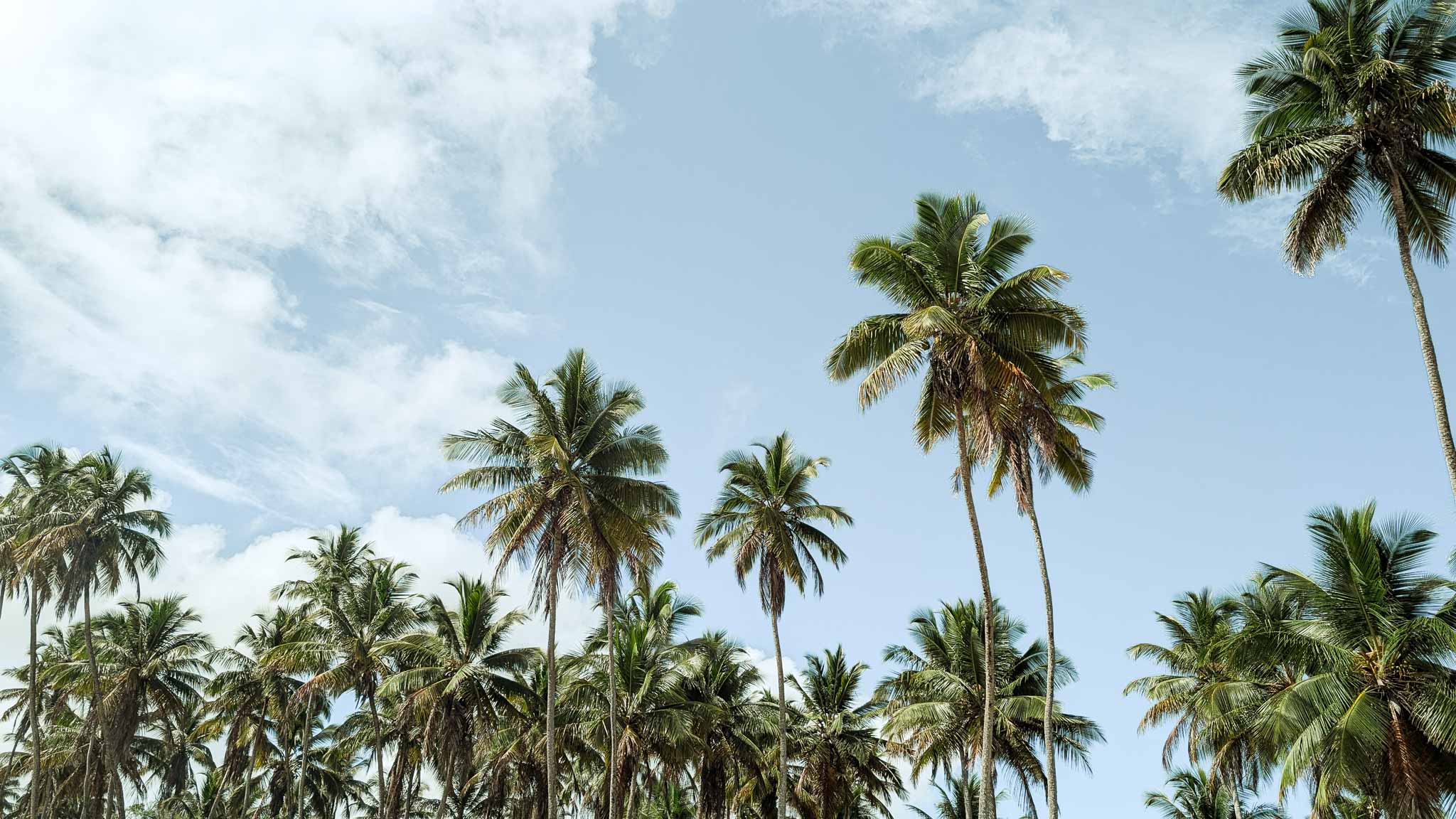
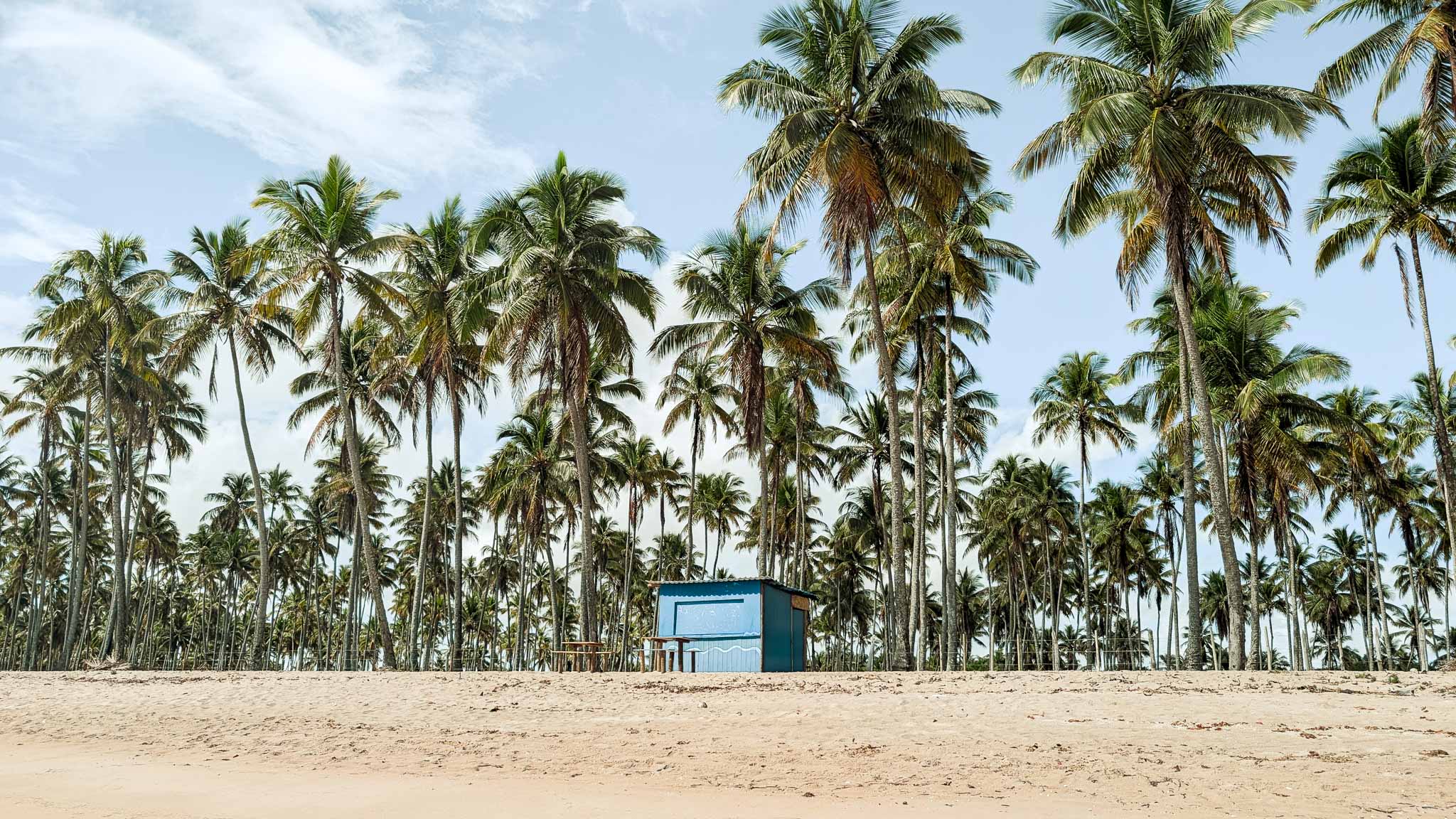
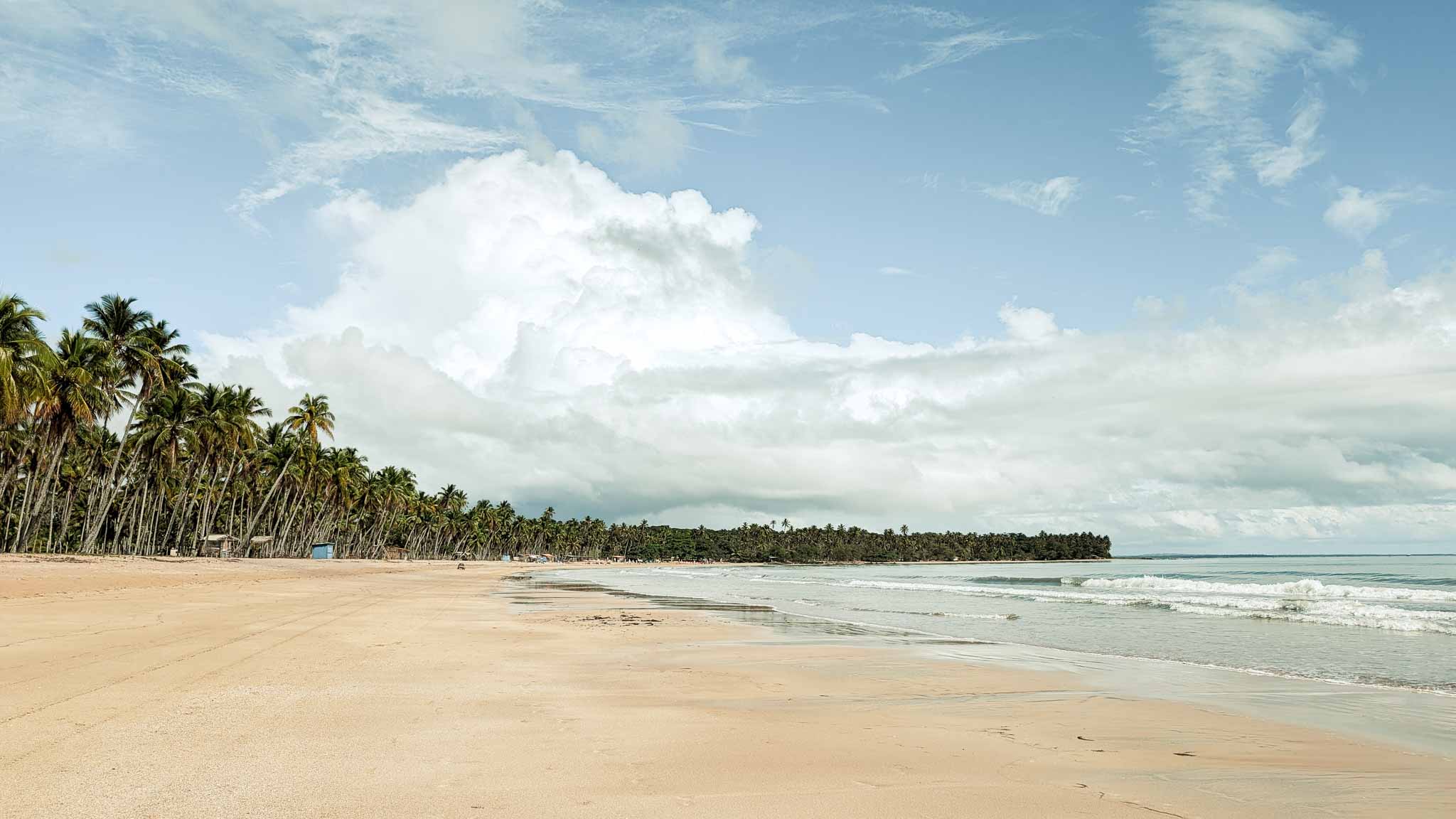
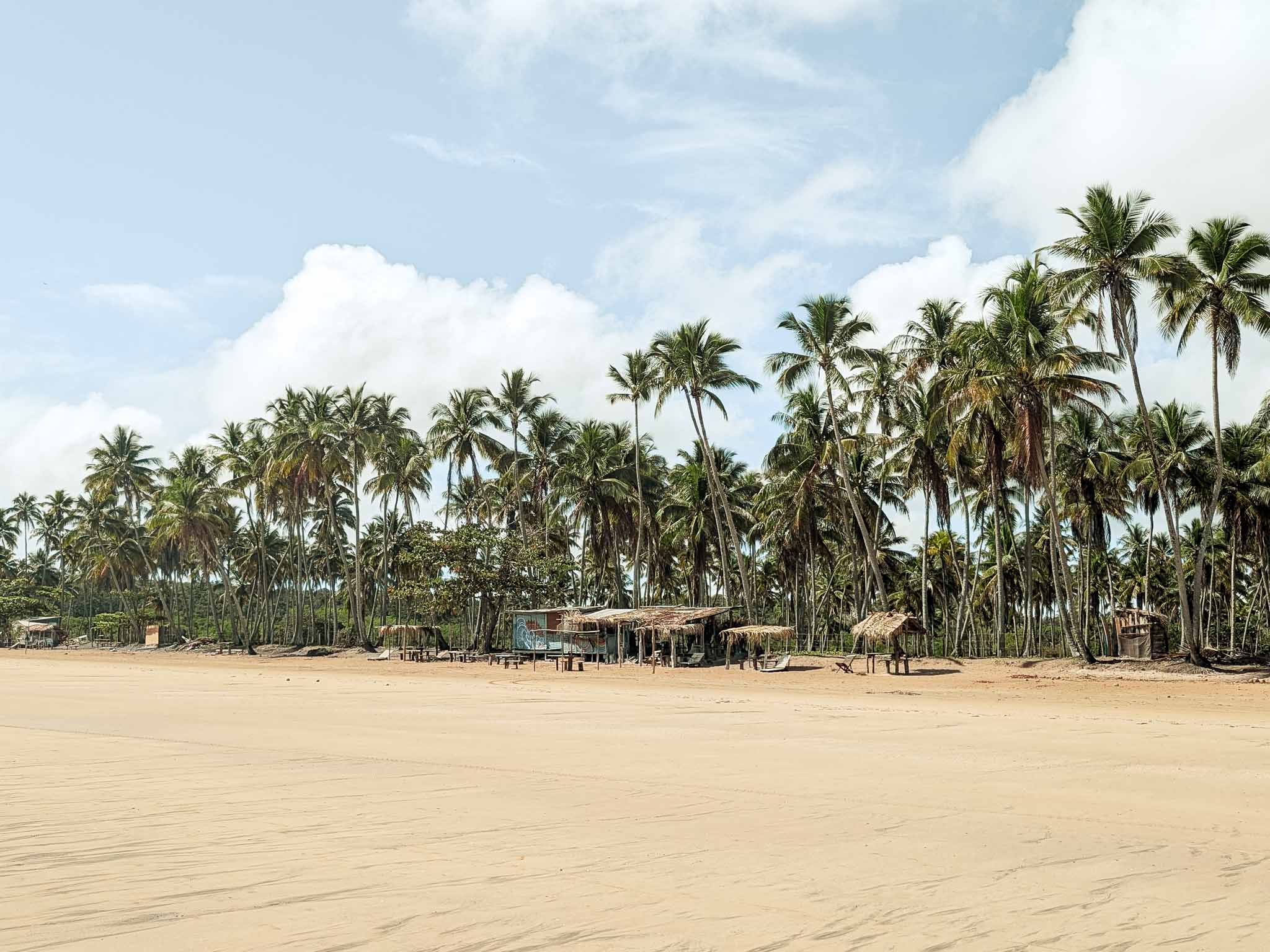
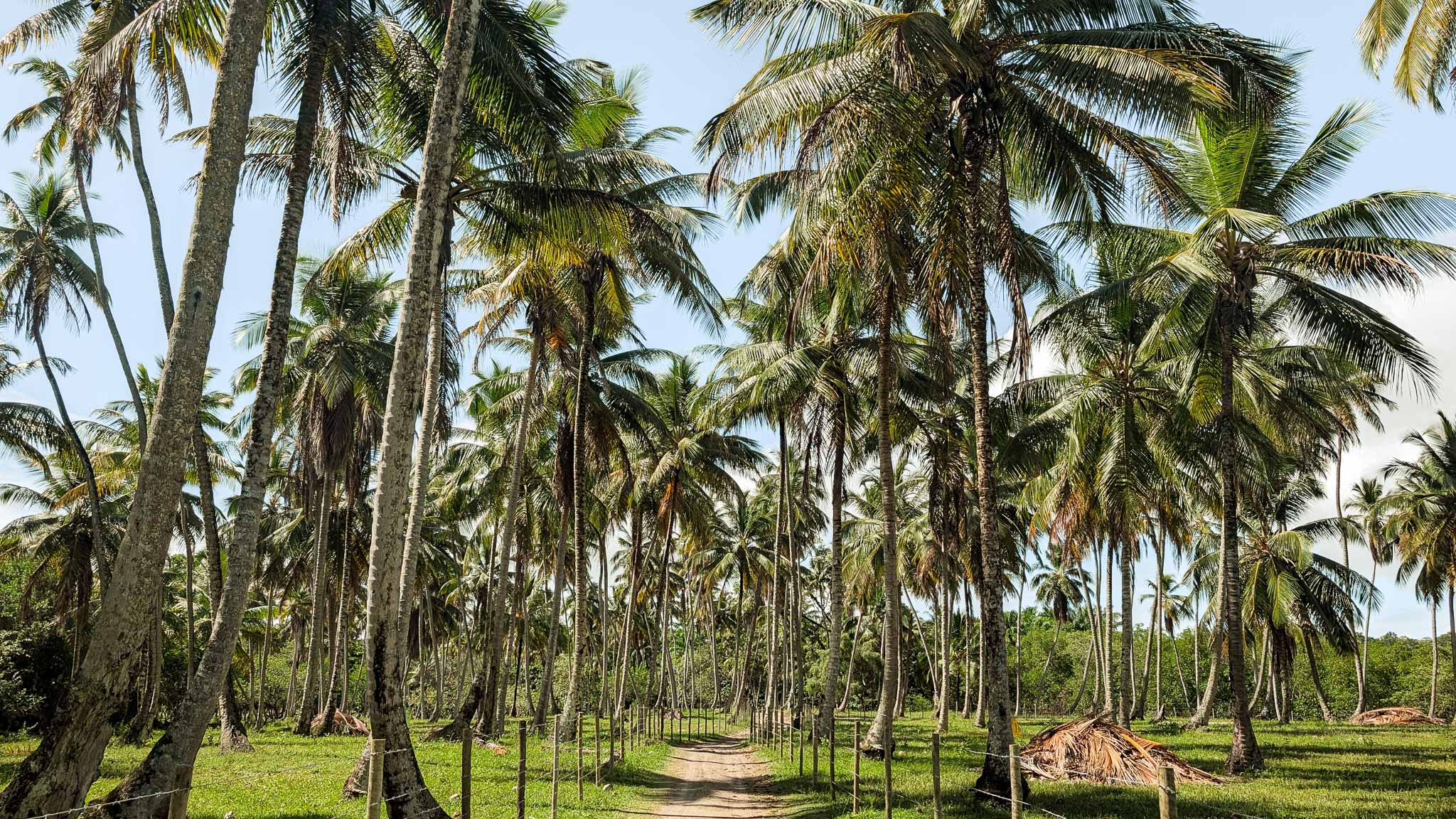
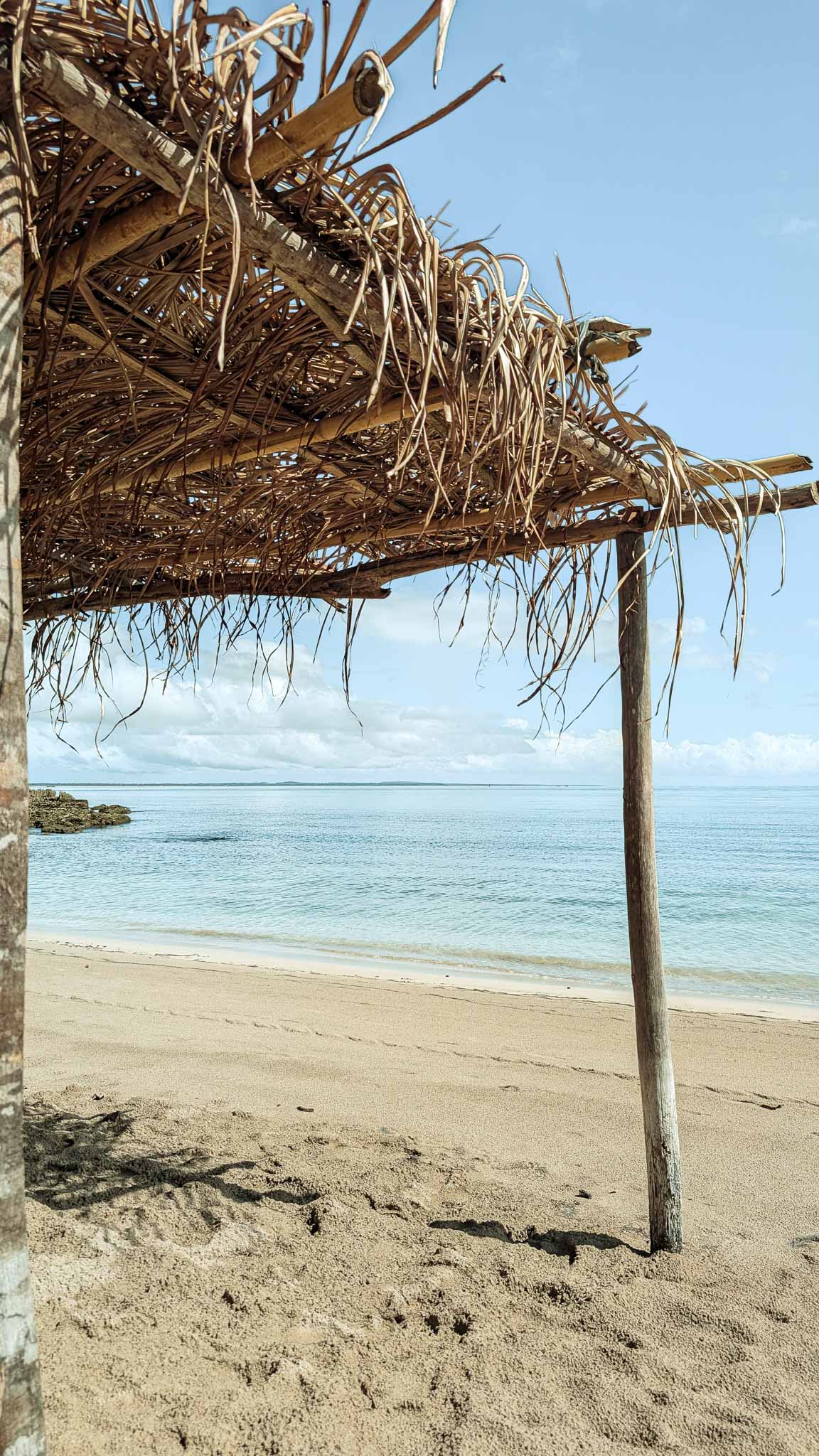
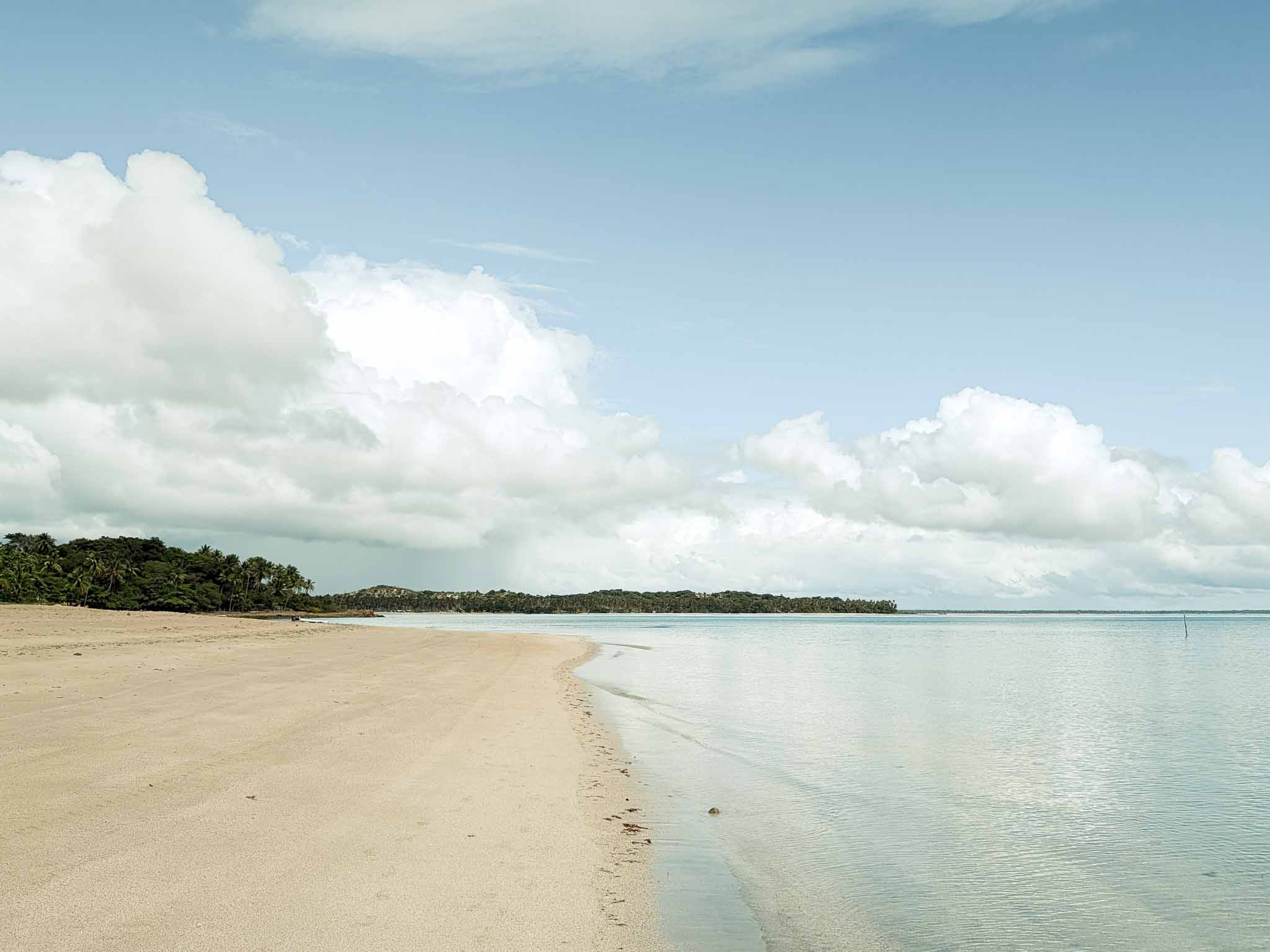
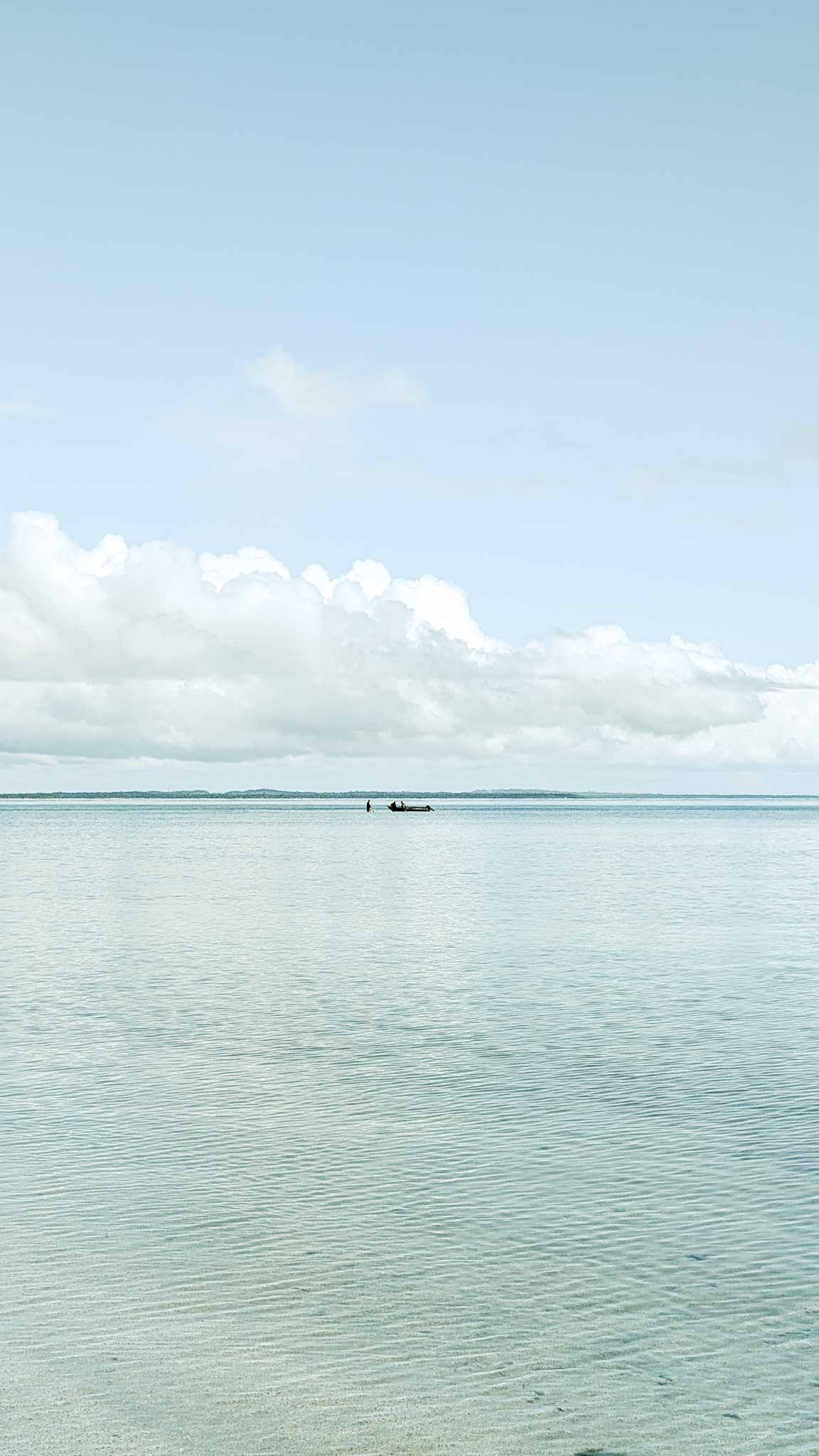
We stayed in Boipeba for about a week, which was a great chance to slow down and have a few days without needing to worry about buses or finding new accommodation. The island was beautiful. Grassy, cleared rolling hills for cattle had been planted with palm trees, where small sandy walkways connected the town to the surrounding white sand beaches. We left early in the mornings to get to the beaches closest to us before it got too hot, and hid beneath the shade of palm or fig trees. I got out the resistance bands I’d been carrying around since we left home, tied them to a palm tree and we both took turns doing a workout before flopping into the water in an attempt to cool off. Because Boipeba is surrounded by a reef that stretches a few kilometres from shore, the cooler waters from the deeper ocean don’t seem to arrive on the sand. Instead, the water is probably hotter than the temperature in the shade of the trees. I’m talking like a good 30+ degrees, which isn’t the most refreshing way to escape the harsh heat of the day. Also, on many of the beaches closer to town, local fishermen would sell their morning’s catch from their boats, and gut and scale the fish in the water at the shoreline. This means that if you’re not paying attention you’re likely to end up swimming in a hot bath of seafood chowder, delicious.
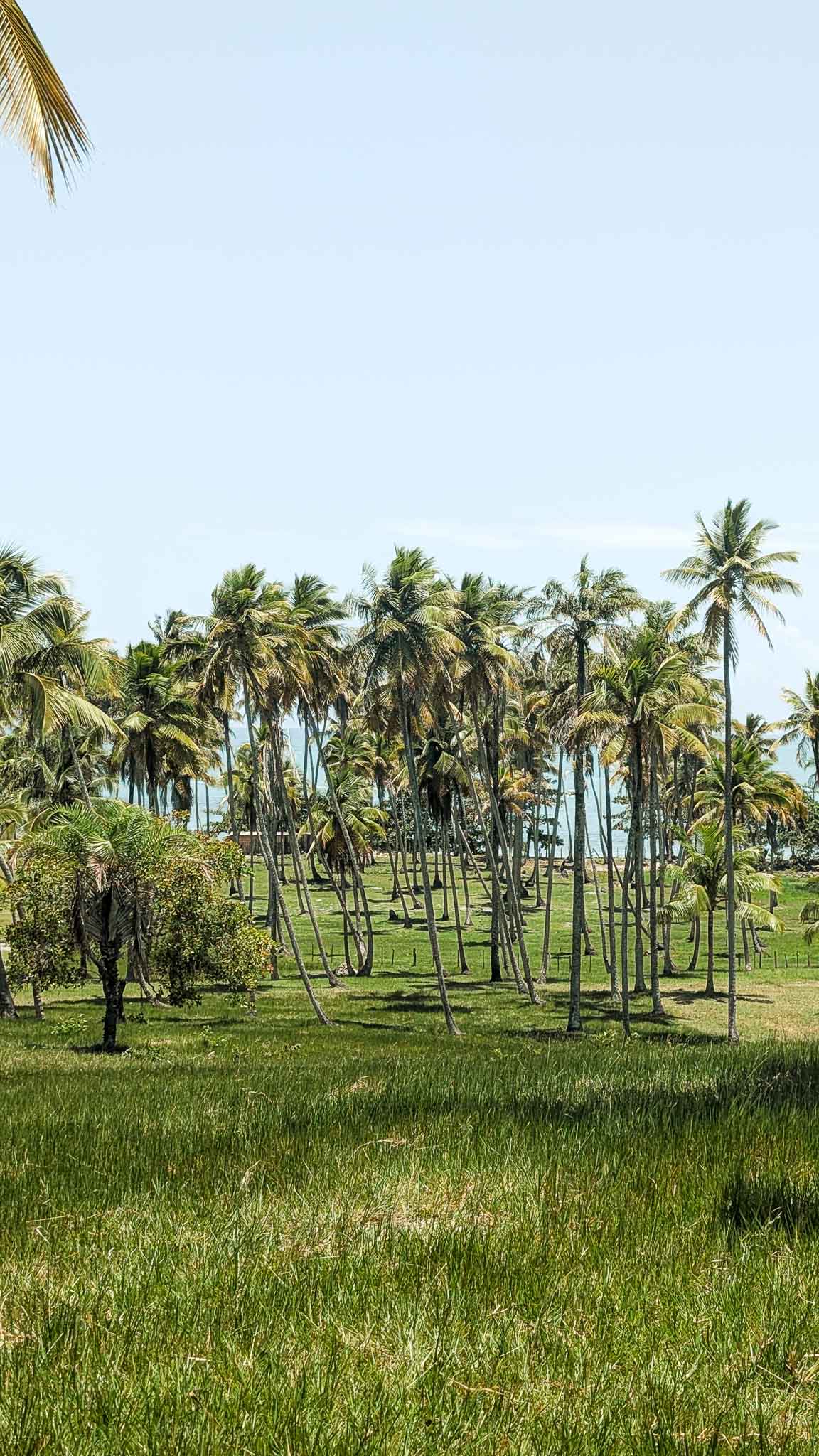
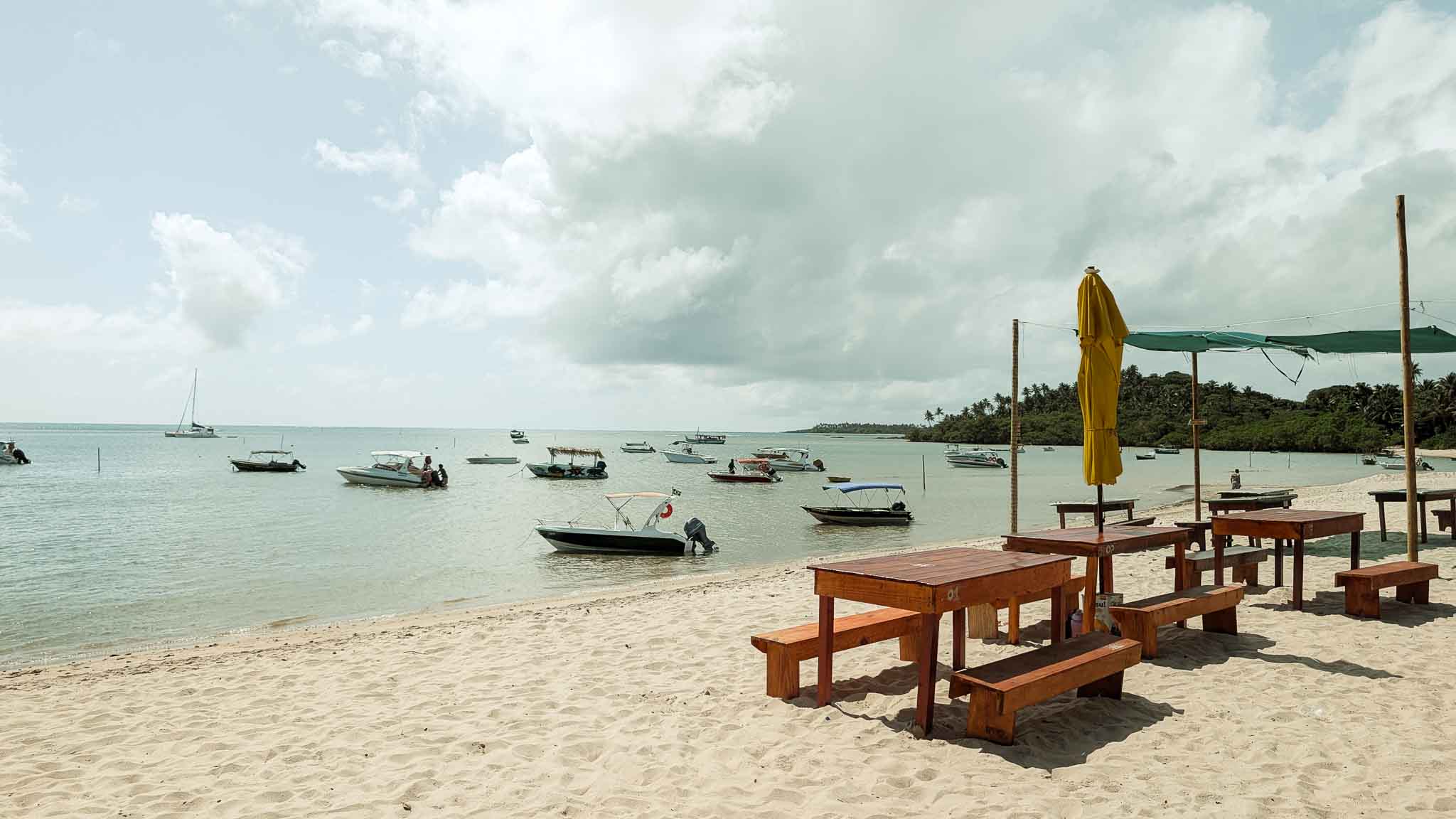
There are no cars on Boipeba, and there are only two transportation methods to get you around the island if you don’t have your own bike. You could pay $50 Reais ($14AUD) for a quad bike that could fit two passengers plus a driver to take you to a small town called Barra, about 15 minutes away, or you could pay $15 Reais ($4.20) to jump in a big carriage that was towed by a noisy, old tractor. We decided it would be easy enough to walk to Barra first thing in the morning, but this proceeded to be a difficult 4km slog through an old sandy firetrail in full sun for about an hour, so we only made this trek once. Barra was beautiful though, and a hell of a lot quieter than the main town. We had a few really good coffees at a small café while sheltering from a passing storm, and bought some awesome pão de queijo to take to the beach once the rain had cleared. We ventured even further south to another beach, and on the sandy road that connected the two, we passed hundreds of blue crabs that dig their holes on the side of the road. On the way back to Barra I walked out to a boat in the water to have a chat with a few blokes who had spearguns. I told them I wanted to join them for a spear sometime and one of them called Felipe said he’d be happy to take me out, for the alarmingly high price of $1000 Reais ($283AUD). He said he ran a tour company that takes people spear fishing, so I gave him my number and proceeded to receive drunk voice messages from him over the following few days where he’d gradually lower his price. Eventually I told him it was just too expensive and he left me alone. He was a really nice guy, and we did run into him a few times after that and he was always happy to see us.
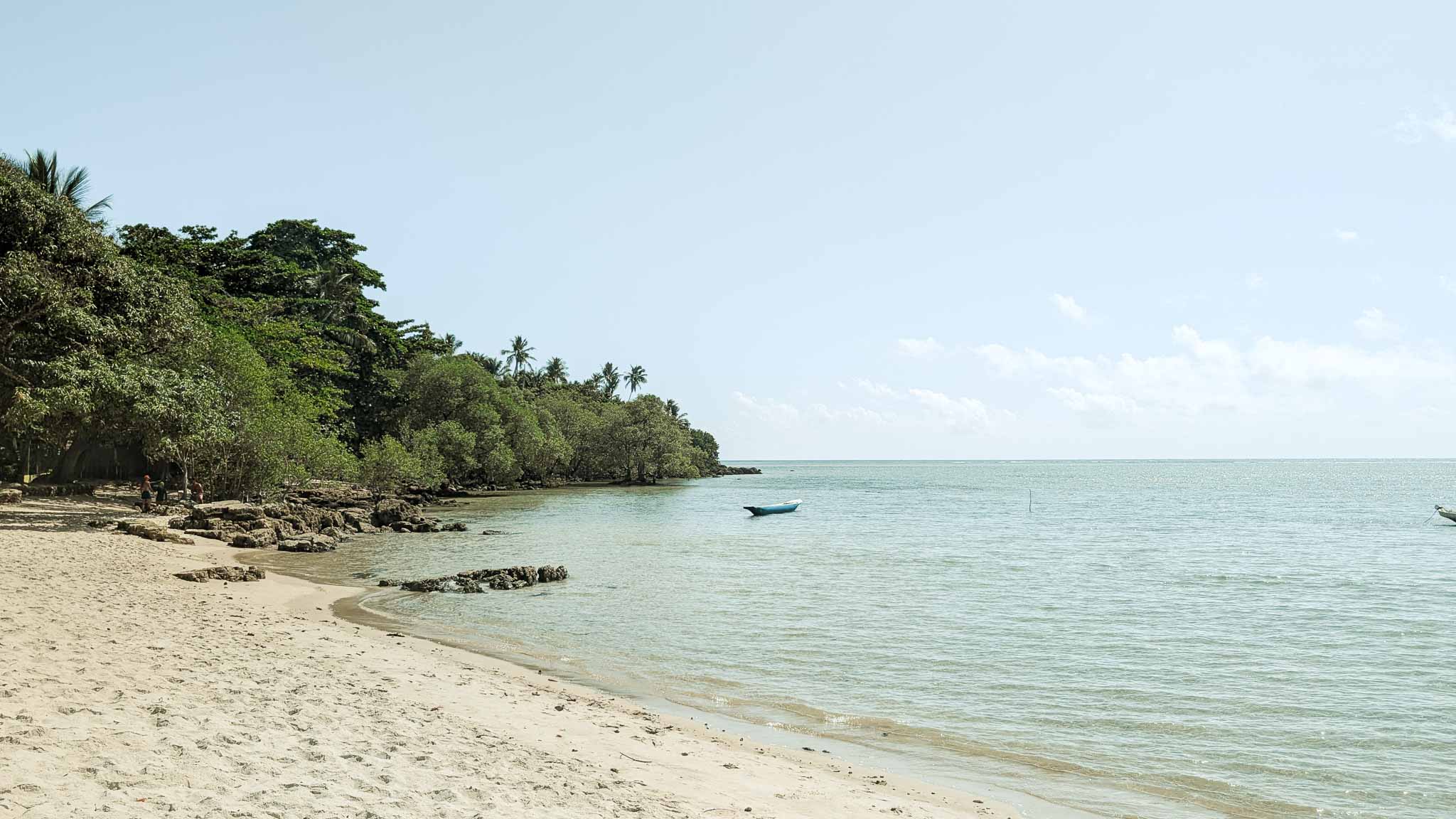
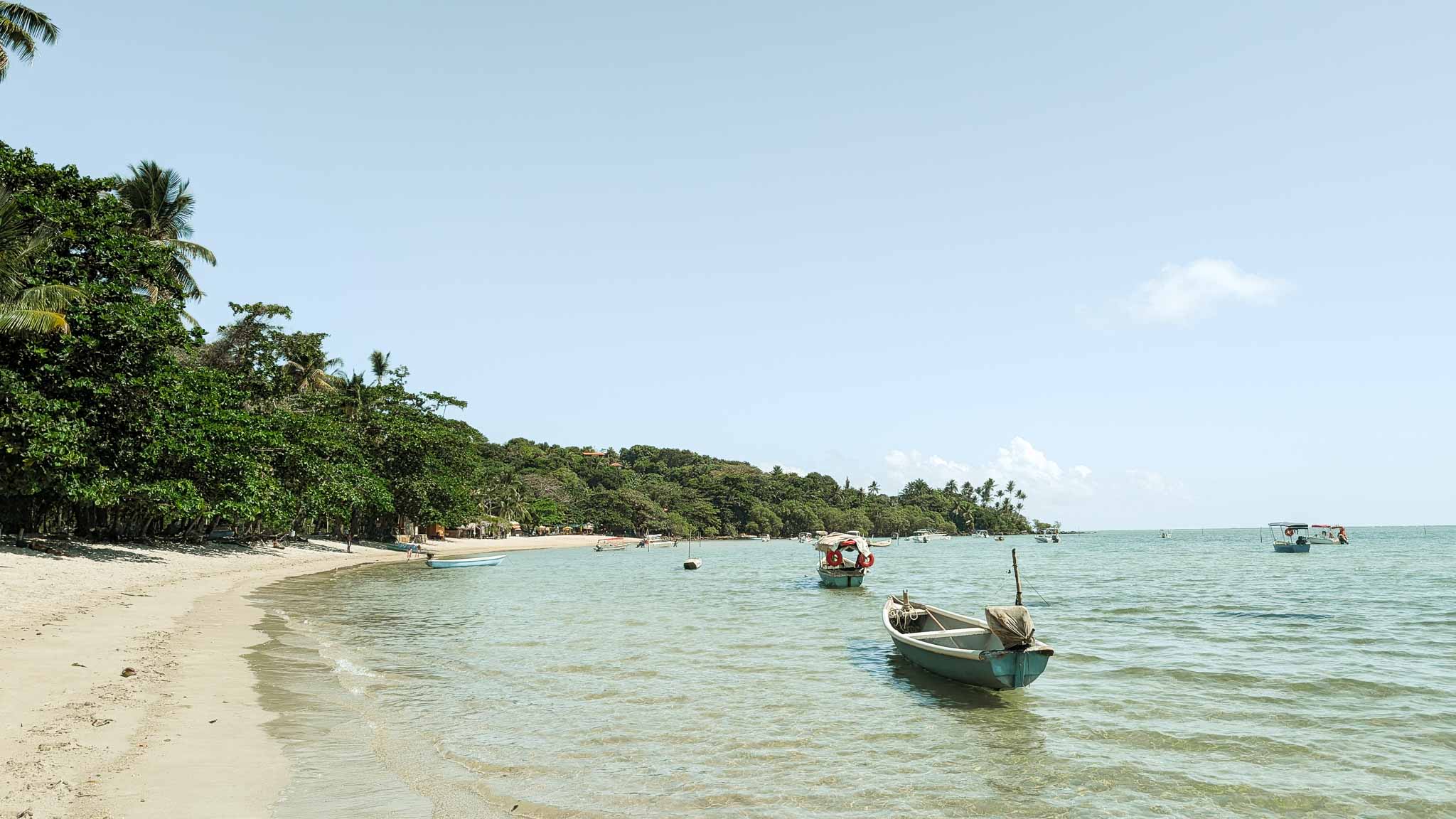
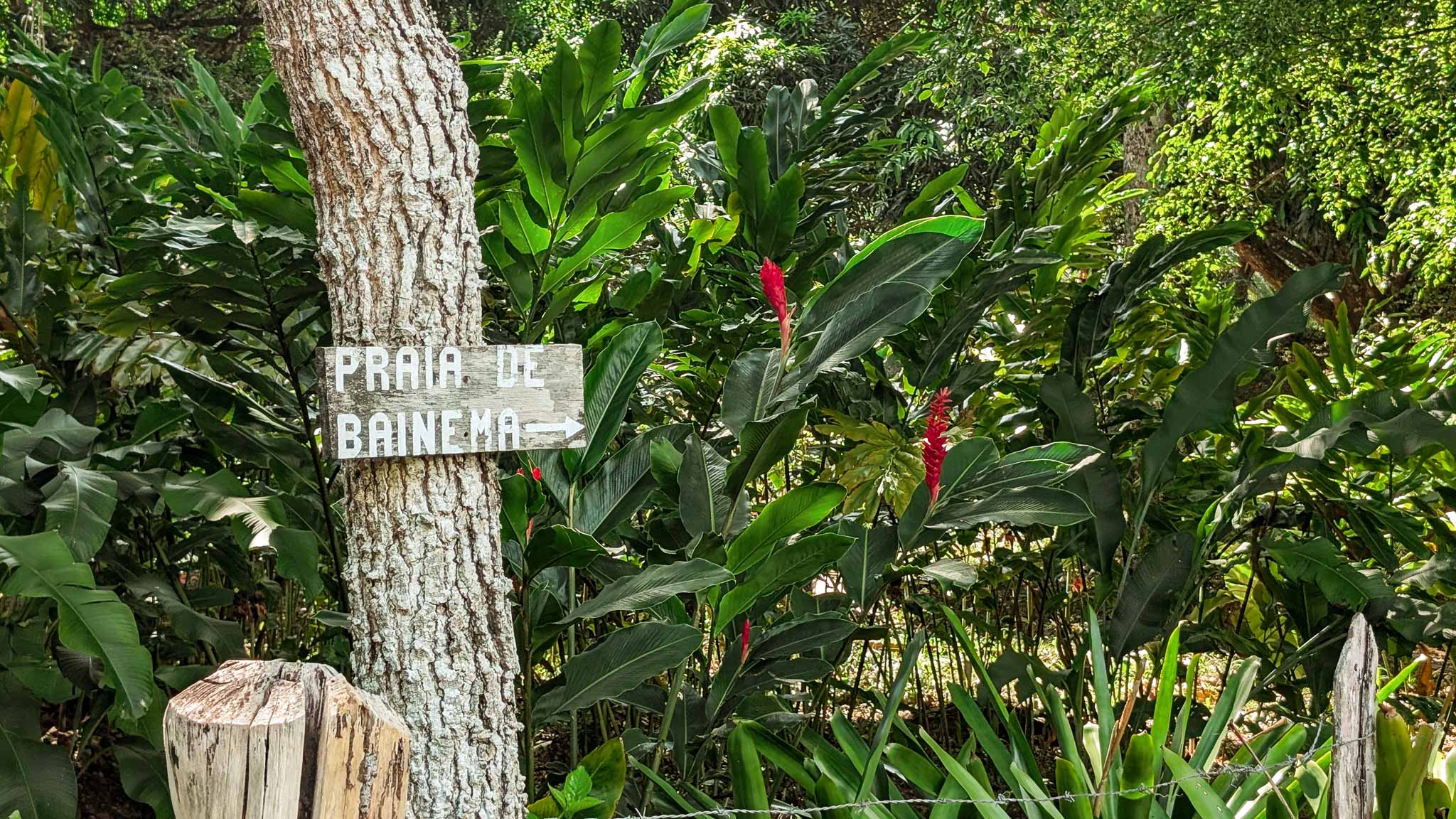
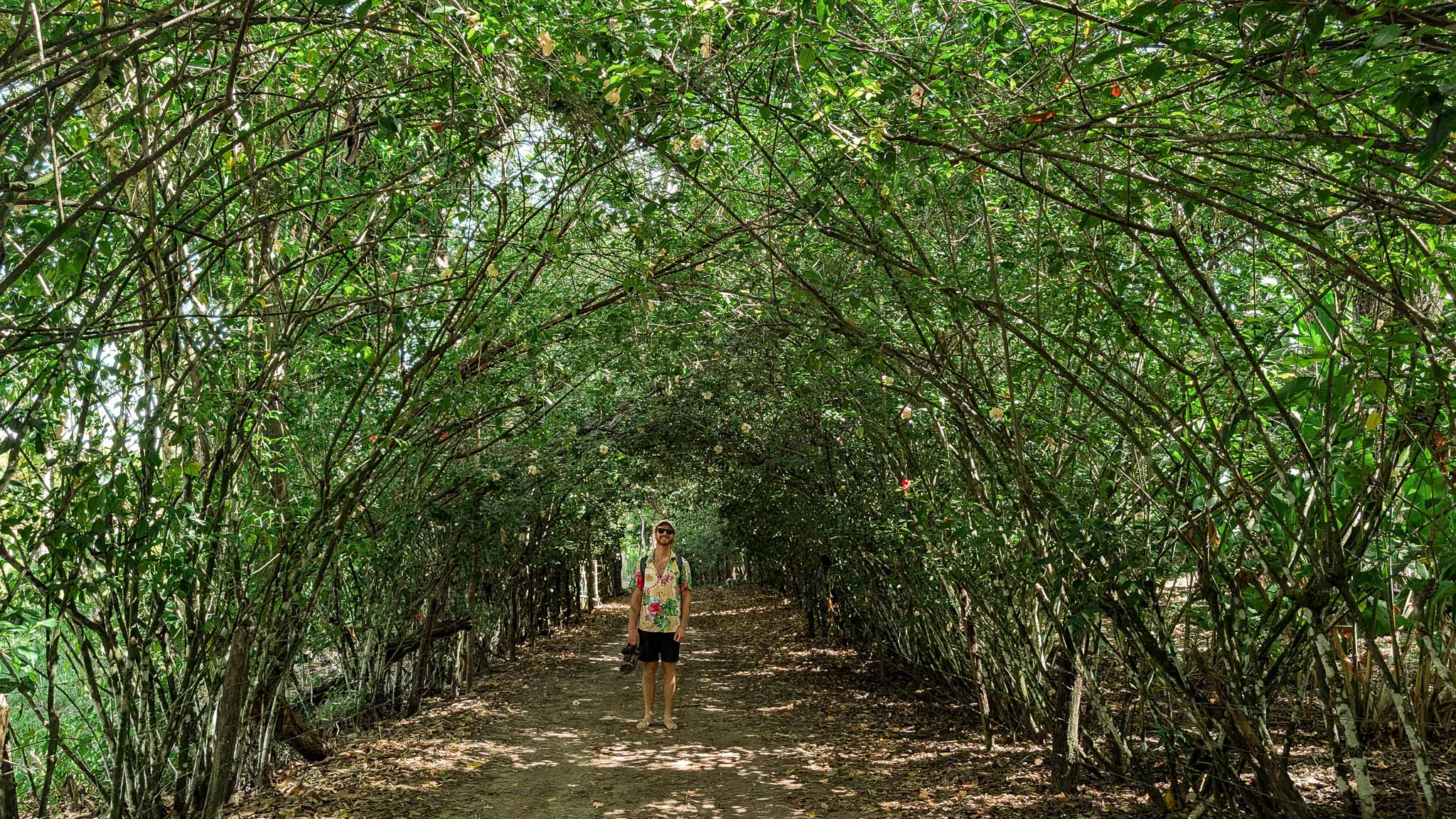
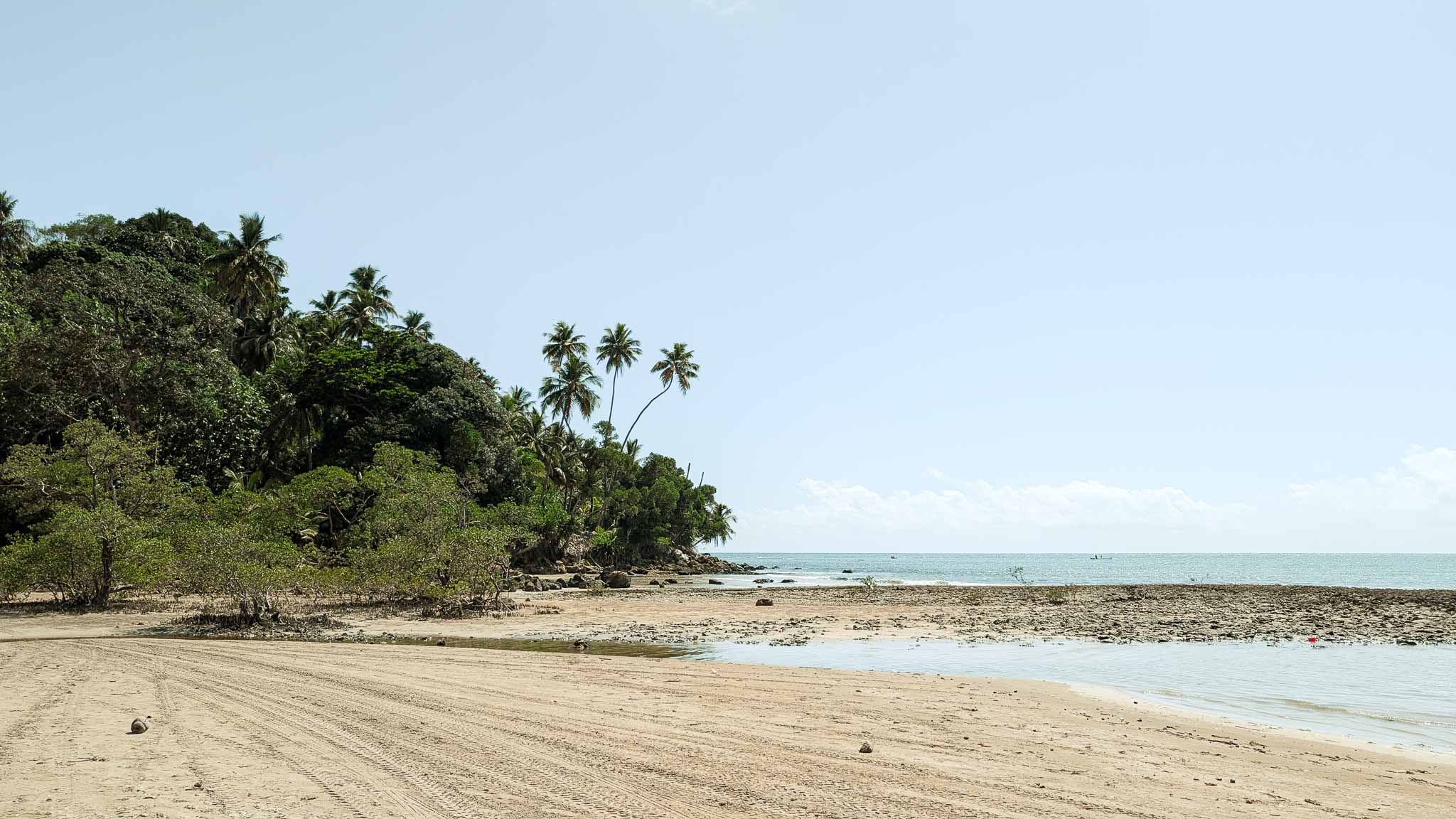
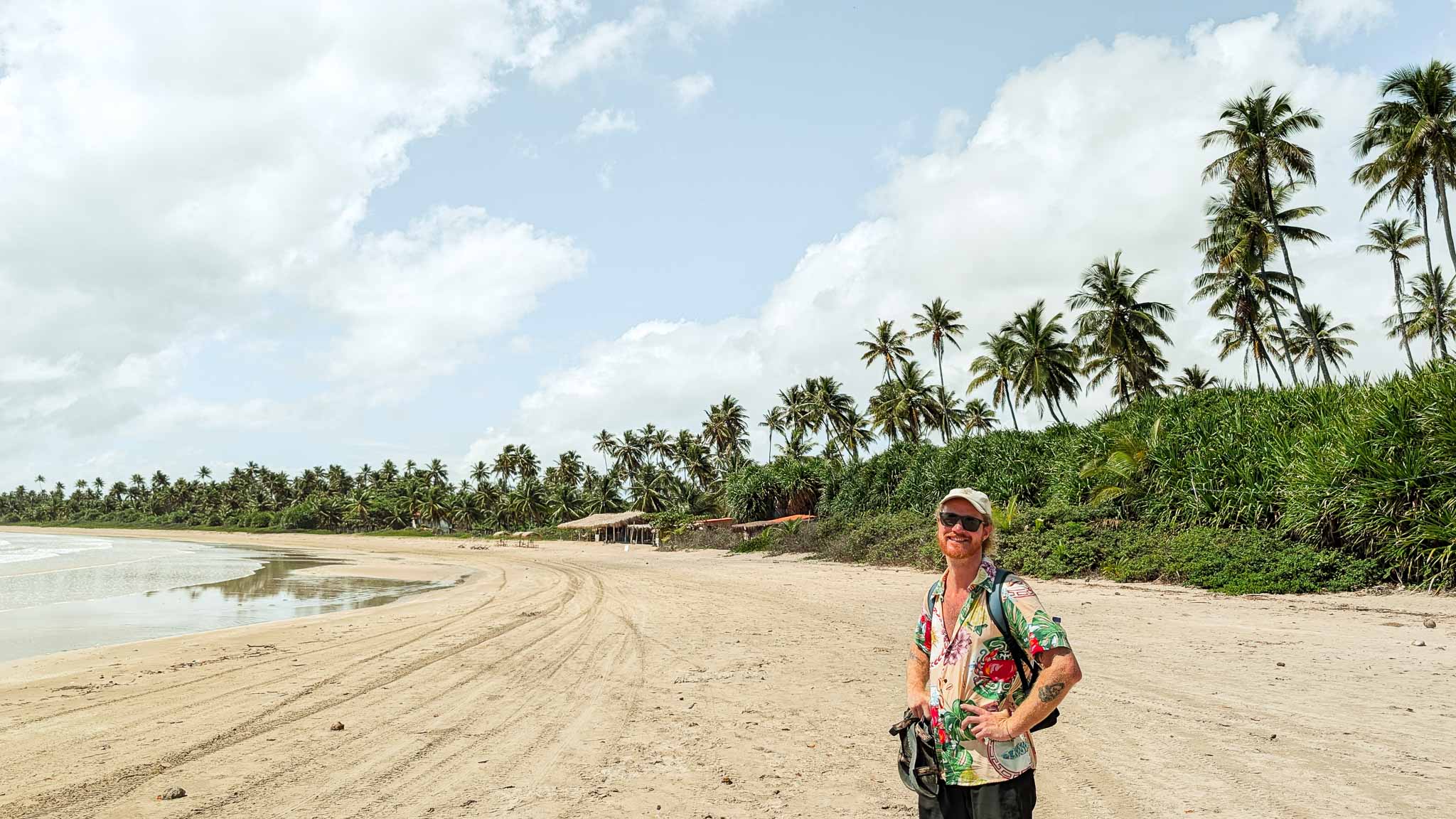
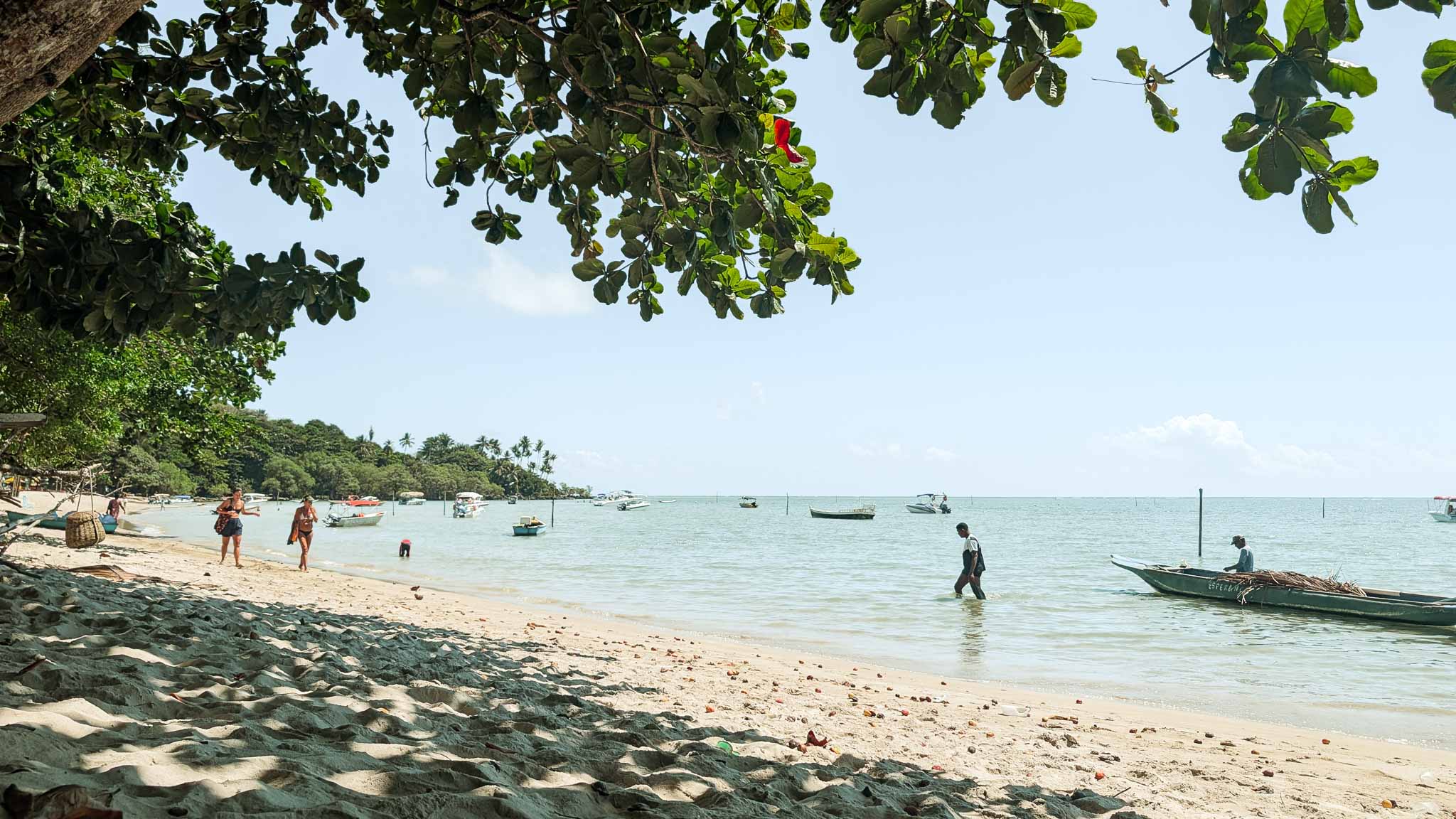
We caught the tractor back to town from Barra, but we had to wait a good 45 minutes for it to fill up with people before they left. They won’t make the trip unless they have a minimum of 8 passengers, which I guess is fair, but it means that the wait times are torturous.
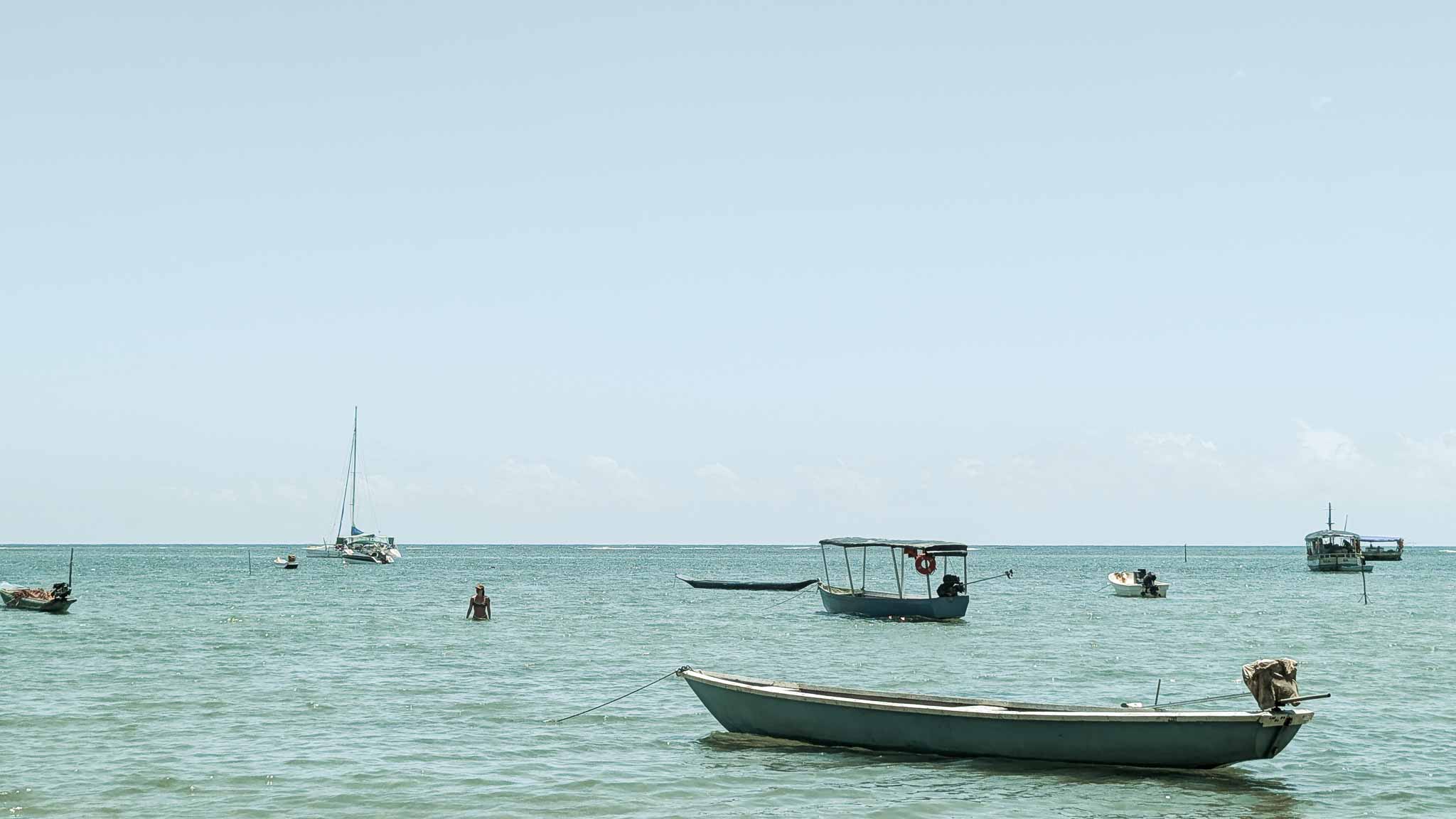
When we were back at our accommodation for lunch, I messaged Boipeba Mergulho, the scuba diving centre on the island, and asked if Rachael and I could pay a reduced price to tag along on a scuba dive but use our snorkels. Surprisingly, Yuri, the owner, was totally cool with this and said we could head out the following day for $100 Reais per person ($28) for 4 hours. This is incredibly cheap, and we were both so excited to be heading out to the reef to see what was swimming around. On the morning of the dive, we walked to the pick up point about 45 minutes away and anxiously waited by the shore for the boat to turn up. A number of tiny dinghies rounded the corner and with each one that didn’t stop I breathed a sigh of relief that it wasn’t our tiny boat. Eventually, the smallest and loudest old clunker in the world rounded the corner with the Boipeba Mergulho logo painted to the side of the hull. It was one of those moments where you take your sunnies off in disbelief and the only words you can find are “Oh my god.”.
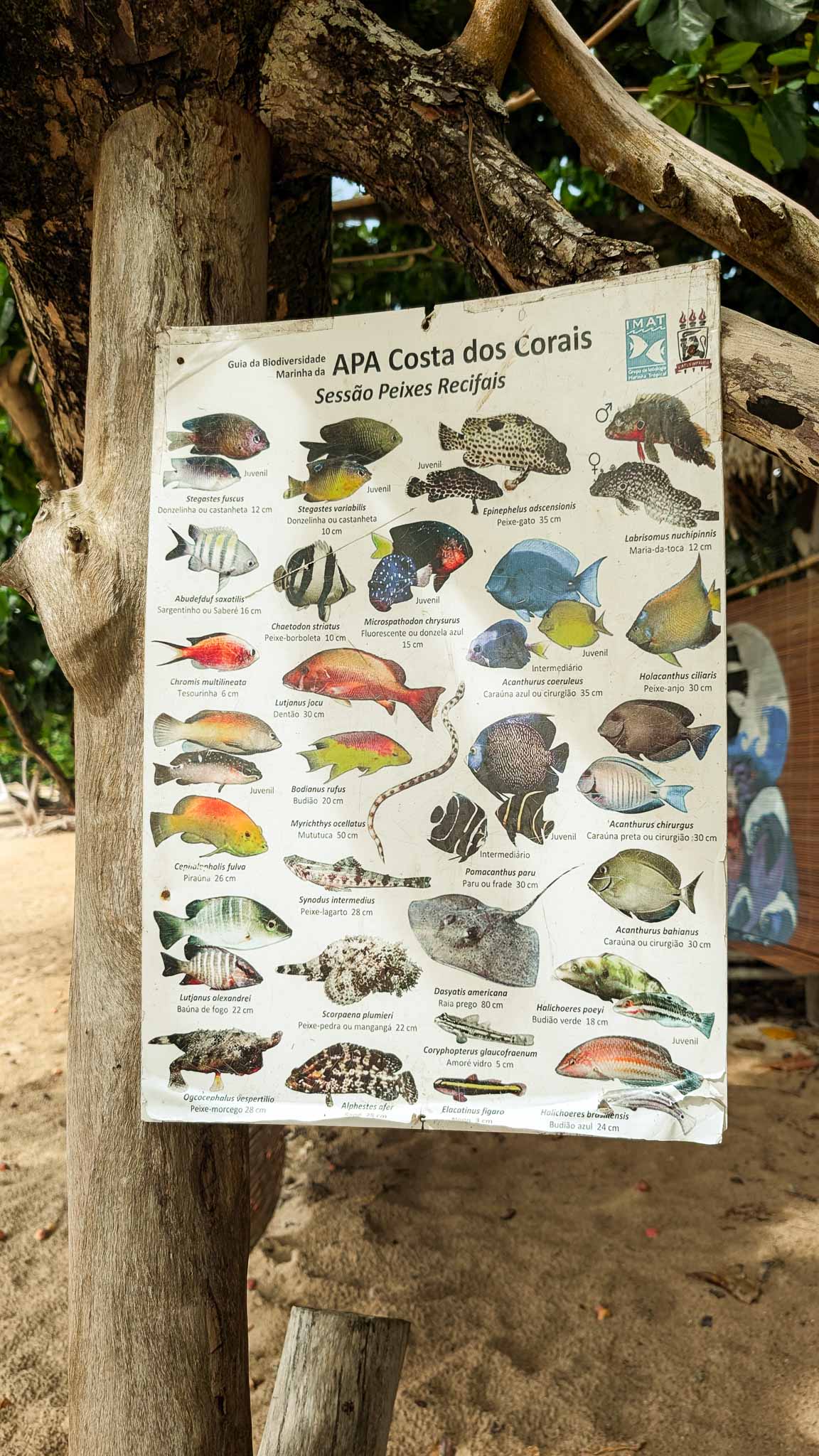
After waiting for the three scuba divers to get all their gear sorted, the five of us plus the “boat” captain boarded the “vessel” and made the agonisingly slow 2km trip to our dive point on the reef. The water here wasn’t deep at all, maybe 6 metres max, but the visibility was decent enough. We saw a few new species of fish but nothing really exciting was going on out there. In spite of this, it was still amazing to be under the water, and it felt like I was home. It was just so nice to be kilometers from shore, cruising around with Rachael, making small dives and breathholds while watching small schools of fish zoom around. We had a blast, and the fact that it was so cheap was such a win.
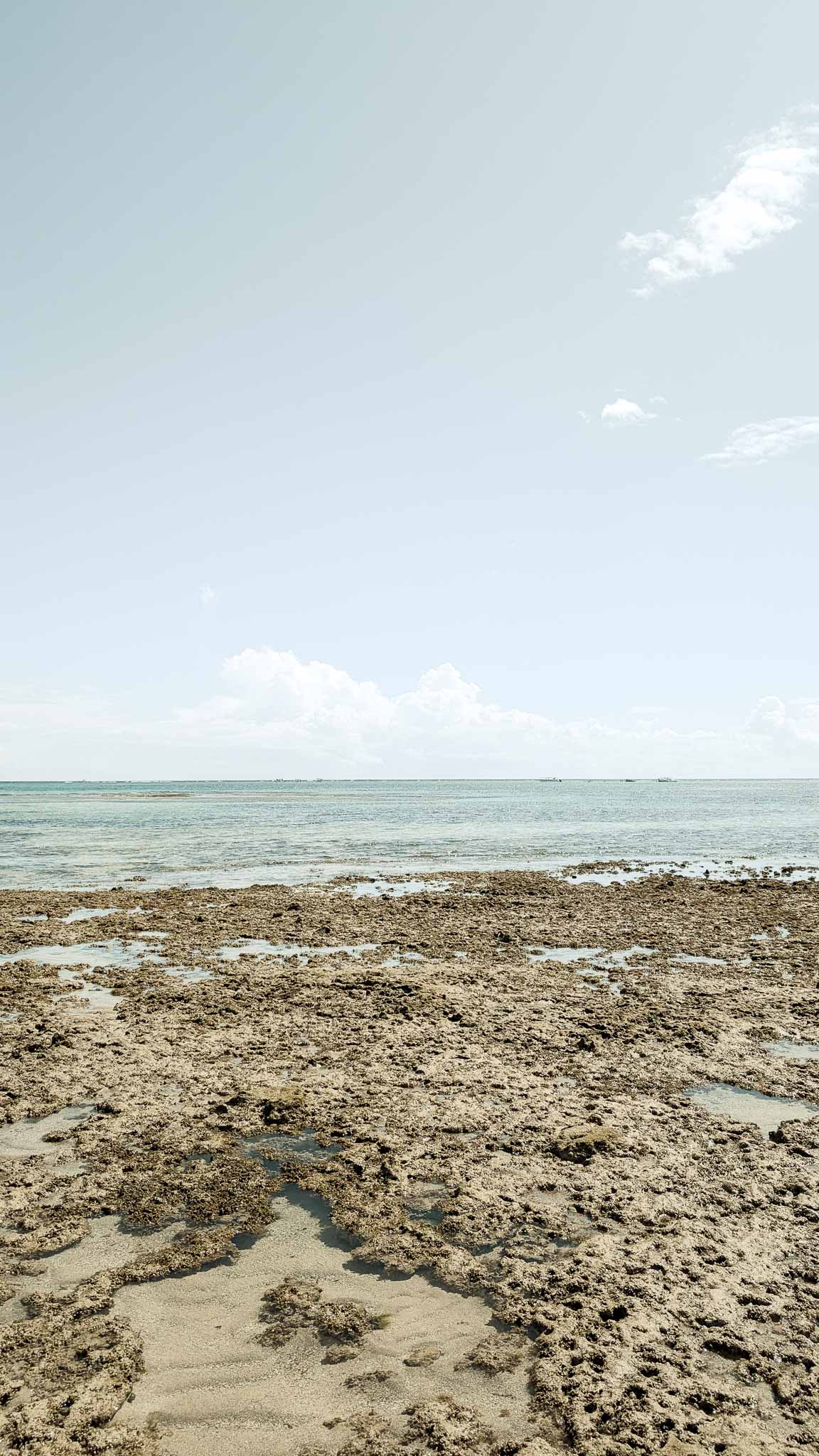
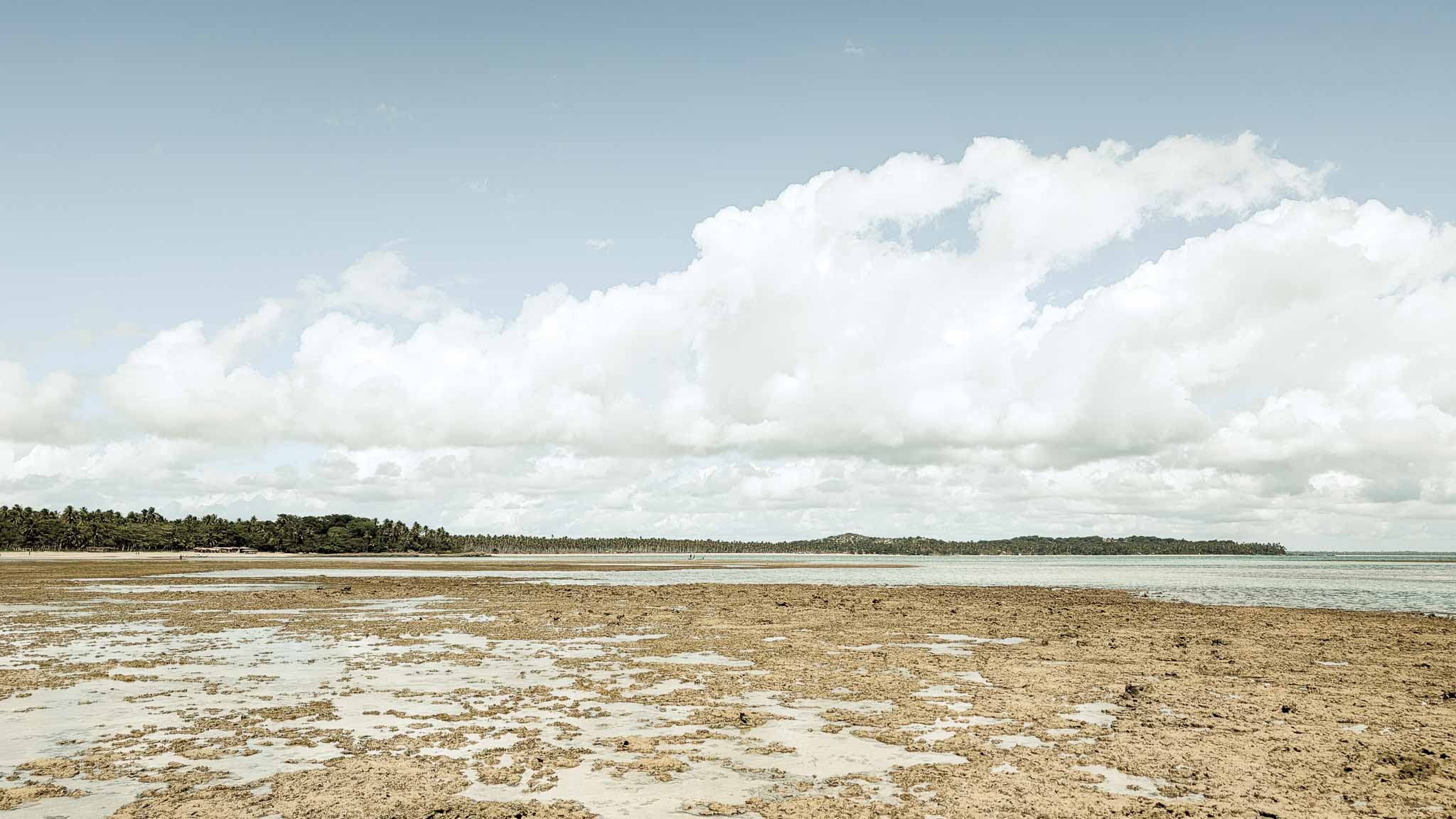
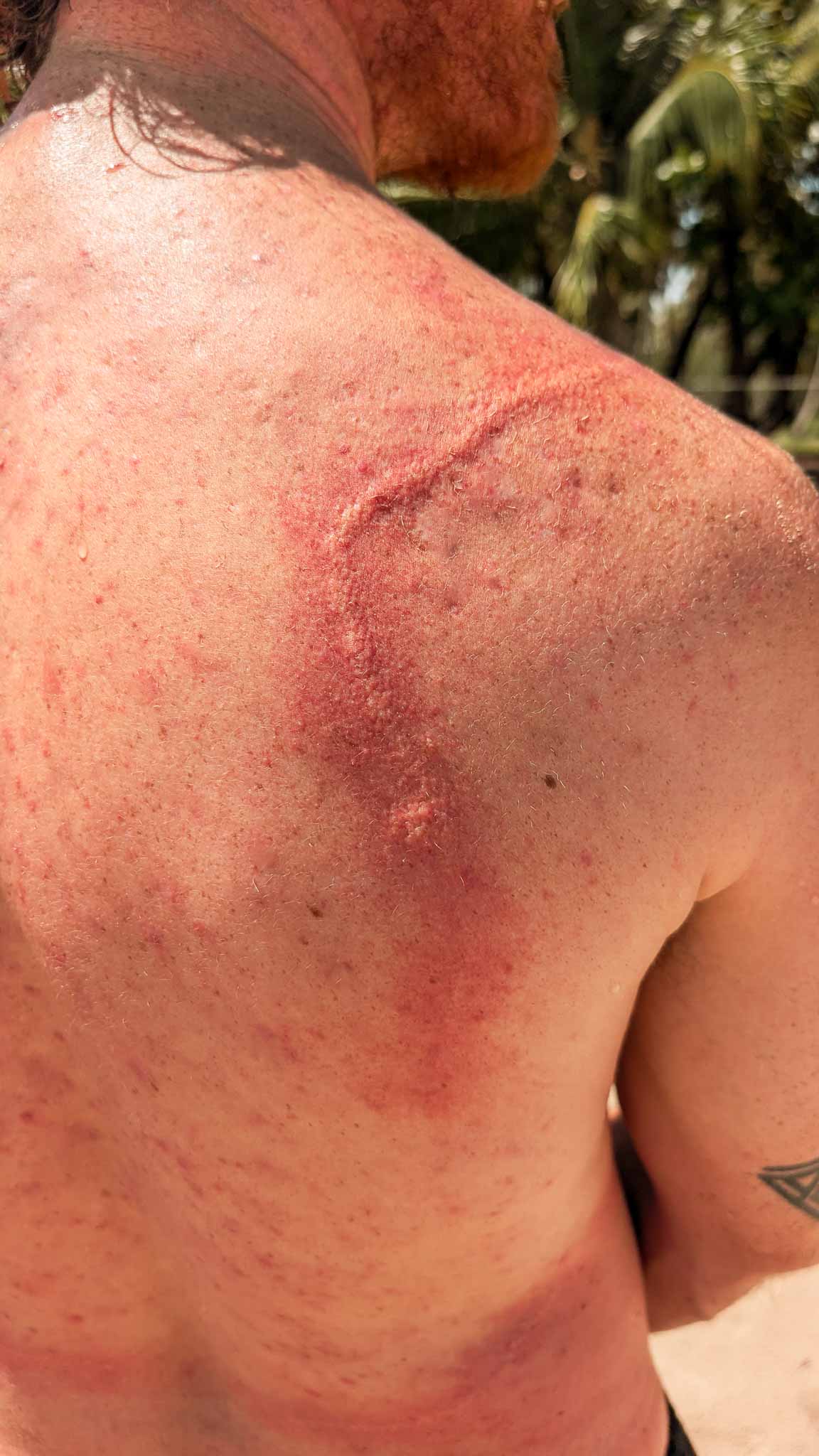
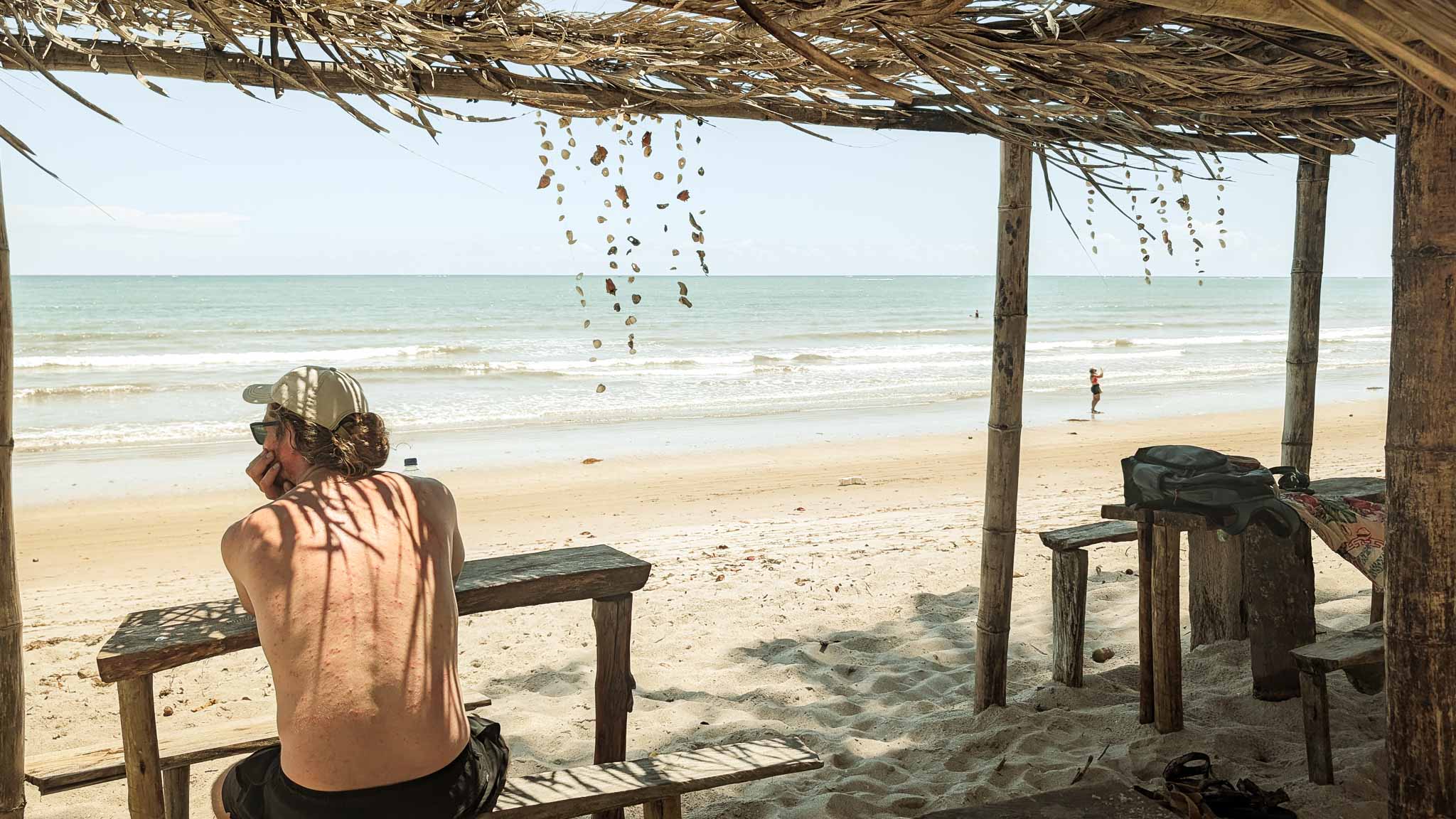
We made an attempt to continue our frugal enjoyment of touristy activities on another day, by trying to make our own way out to Boipeba’s natural pools instead of paying $200 Reais per person ($57AUD) to catch a boat out. The natural pools are more reef about a kilometer from shore, where tour boats take people out to snorkel with fish that they also feed to make sure they stick around. I assumed it’d be easy enough to get out there at low tide, so one morning we walked 45 minutes to the beach and then walked another 15 minutes through the water, trying to pick a route through the rocks to get as far out as possible. Eventually it became too deep for us to get out with all our stuff, so Rachael opted to head back to the sand while I started swimming. I was so close to the pools, maybe only another five minute swim away when I got absolutely whacked by a bluebottle. At first I had no idea what was happening, I thought I was being electrocuted, but then I saw the blue tentacles and I knew. I swam right into the bastard, and got his tentacles wrapped around my right shoulder, my stomach and lower back. Surprisingly, this is only the first time I’ve ever been stung by a Portuguese man o’war, and bloody hell it hurts. I retreated to the shore and had Rachael rinse me off in the shallows while we tried to scrape off the small blue barbs that were left in my skin. We decided it wouldn’t even be worth it to head out to the natural pools after all and we went back to our place to eat some fruit instead.
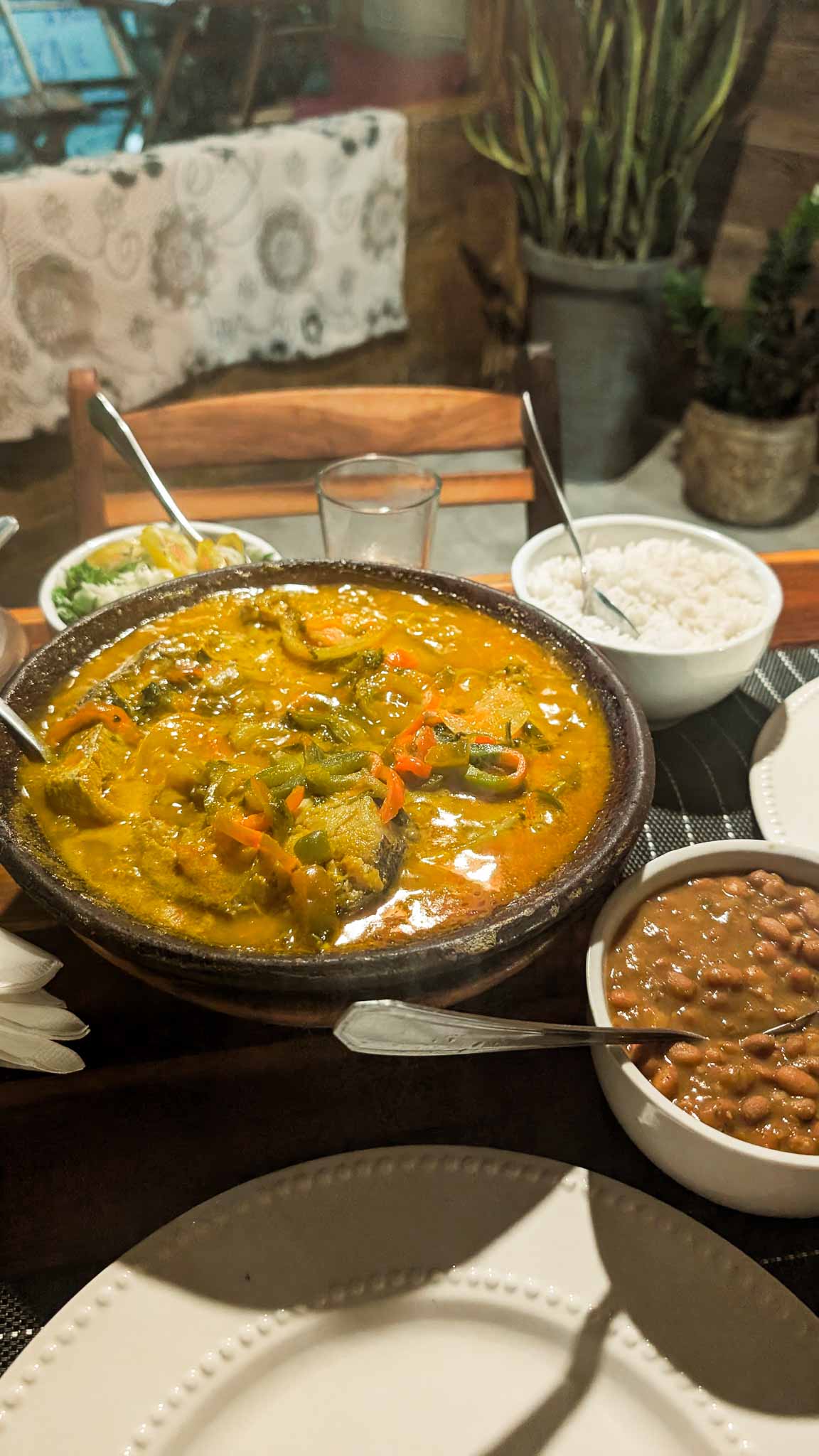
We were invited over for a few beers by the Airbnb owners one afternoon, which turned out to be quite a laugh. One of them spoke zero English but the other knew a little bit, which meant I could practice my Portuguese and ask questions when I needed to clarify something. These guys loved getting on the sauce, and they drunkenly tried to teach me some dance moves which was hilarious. After Rachael and I ate some burgers from a food stand in town, I stopped off at the bar opposite our place called Dois Irmãos (Two Brothers) to dance some samba with one of our hosts for a few songs which was a bit of fun. Rachael and I also went out for dinner one night to a local little restaurant and enjoyed a big, bubbling bowl of moqueca, a highly delicious Brazilian fish stew. Big chunks of firm white fish are simmered in a coconut milk broth with onions, carrots, capsicums, garlic, tomatoes and chillies, with a lot of lime juice, paprika and cumin. It’s typically served with rice and beans, and it’s an incredibly delicious dish that I couldn’t wait to replicate myself. In fact, the following night I made a vegetarian version with lentils which was also fantastic. I’ve definitely got this one on the list to make again when we get home.
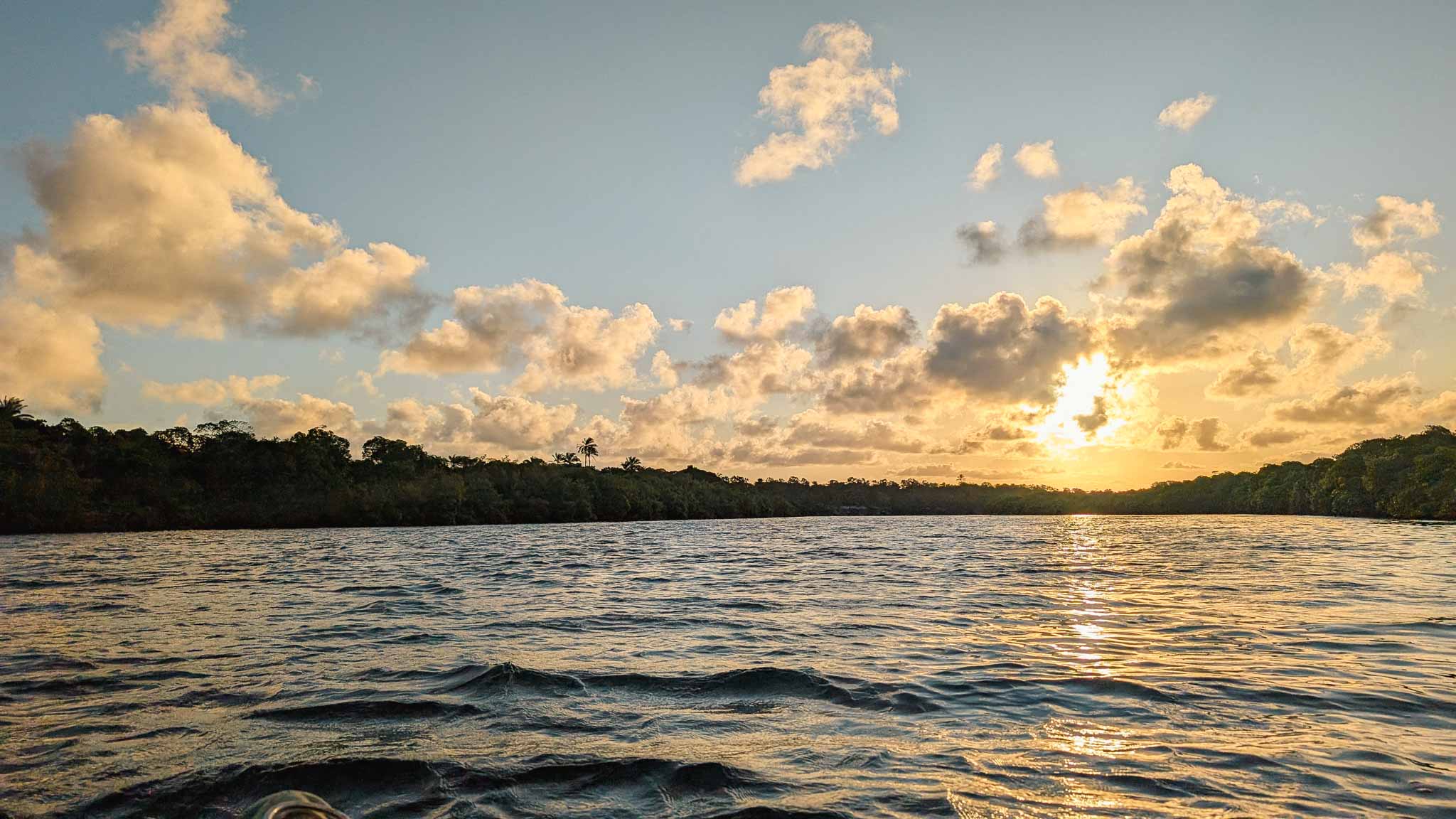
We met a lovely Argentine girl called Chury somewhere along the way that invited us out for a sunset kayak. We turned up at a different hostel that rented the kayaks out and met a handful of other travelers from all over Europe. We jumped in our kayaks in the swampy mangrove and paddled our way through narrow mazes of trees, led by a local guide, out to the wider river. It was a great afternoon out on the water, and the light became quite beautiful as the sun was setting. Once it was dark, we stopped on the bank of the river and splashed around in the bioluminescence, which everyone thought was incredible but Rachael and I get to see far more of it back home, so we pretended to be equally as impressed so as not to bring the vibe down. Upon our return, everyone was slightly confused as to which way we were supposed to be going, and the group sort of split in two. I had a feeling that we’d forgotten someone, but it was completely dark now so I had to paddle back to check. I heard the little Italian/Danish girl of our group in amongst the mangroves. “…guys?” she called out into the darkness. A sudden splash near her, “What was that?!”. I approached and asked her what the heck she was doing in the mangrove, and she said that her kayak began to sink so the guide took it from her and began to tow it back to town, and told her to wait. Rachael came back to find us and I told her what was happening, and we all laughed at how insane this was, to leave a poor girl clinging to a mangrove tree in the river, in complete darkness. Understandably, she was quite scared and told us that she just wanted to go home, but Rachael and I managed to lighten the mood and eventually someone came to pick her up and double her in another kayak. The tide had gone out while we were out on the river and when we got back to where we started, we had to drag the kayaks through ankle deep mud that stunk to high heaven. It was a pretty fun afternoon and it was great to do something different and meet some new people.
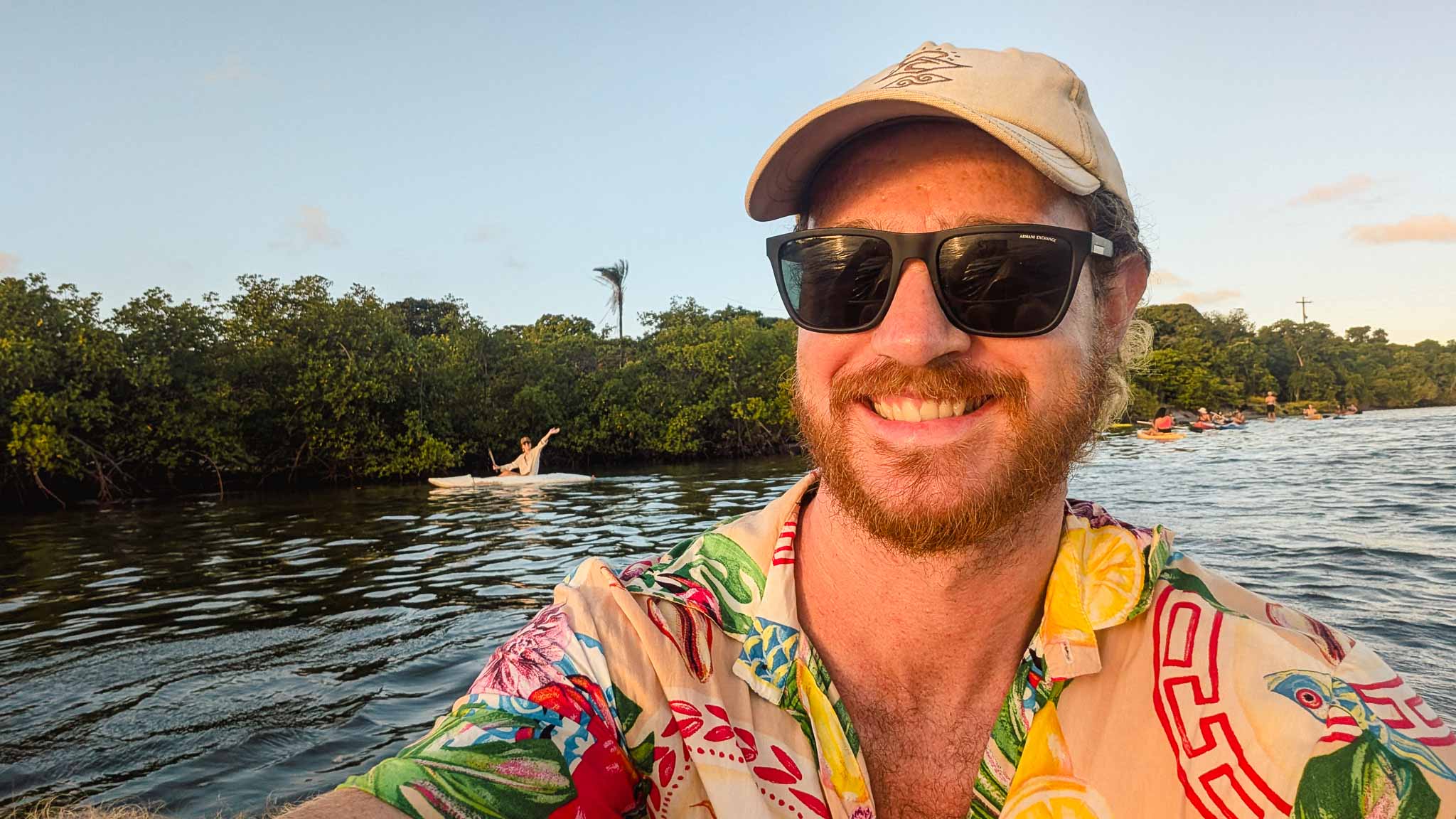
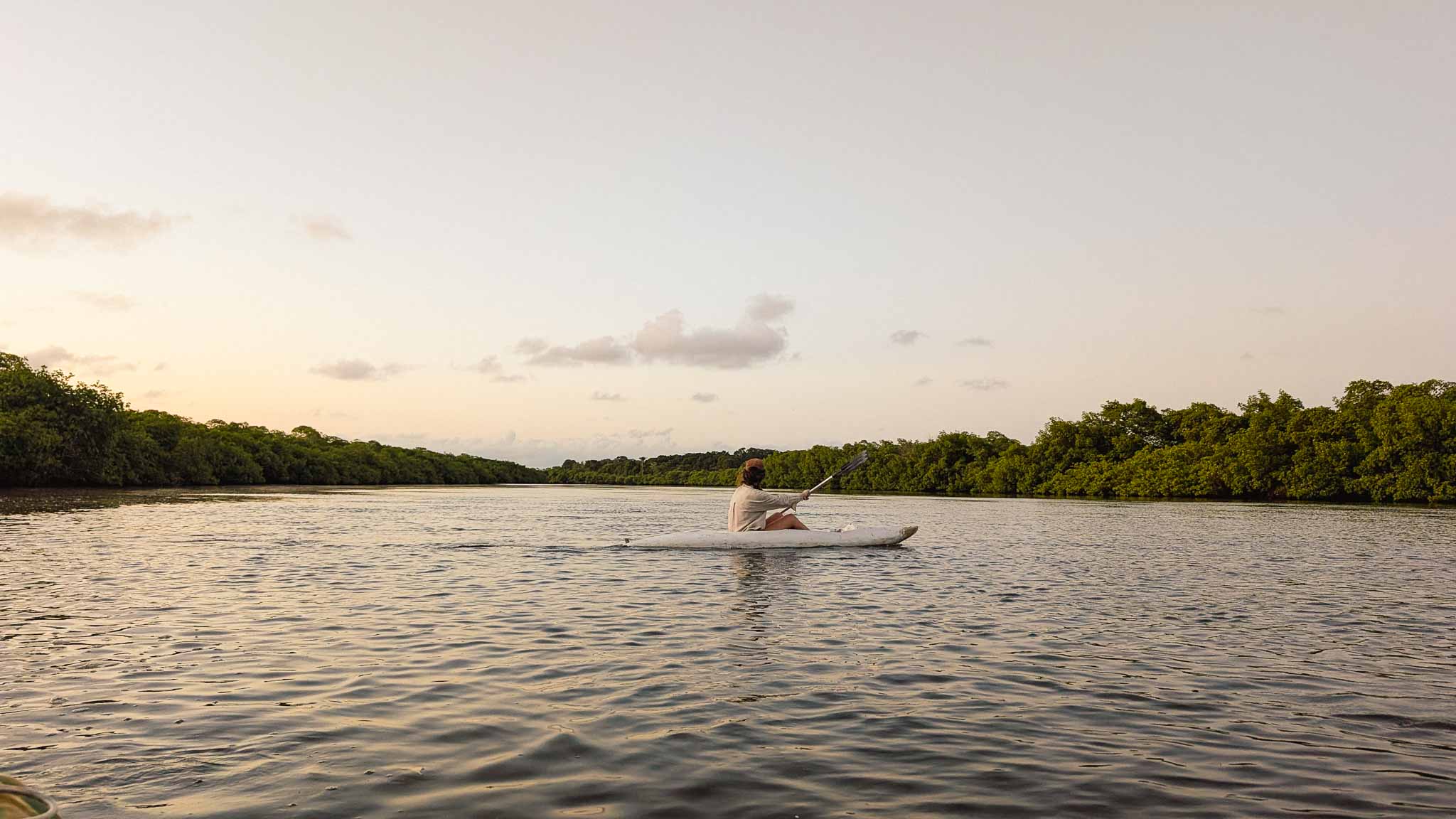

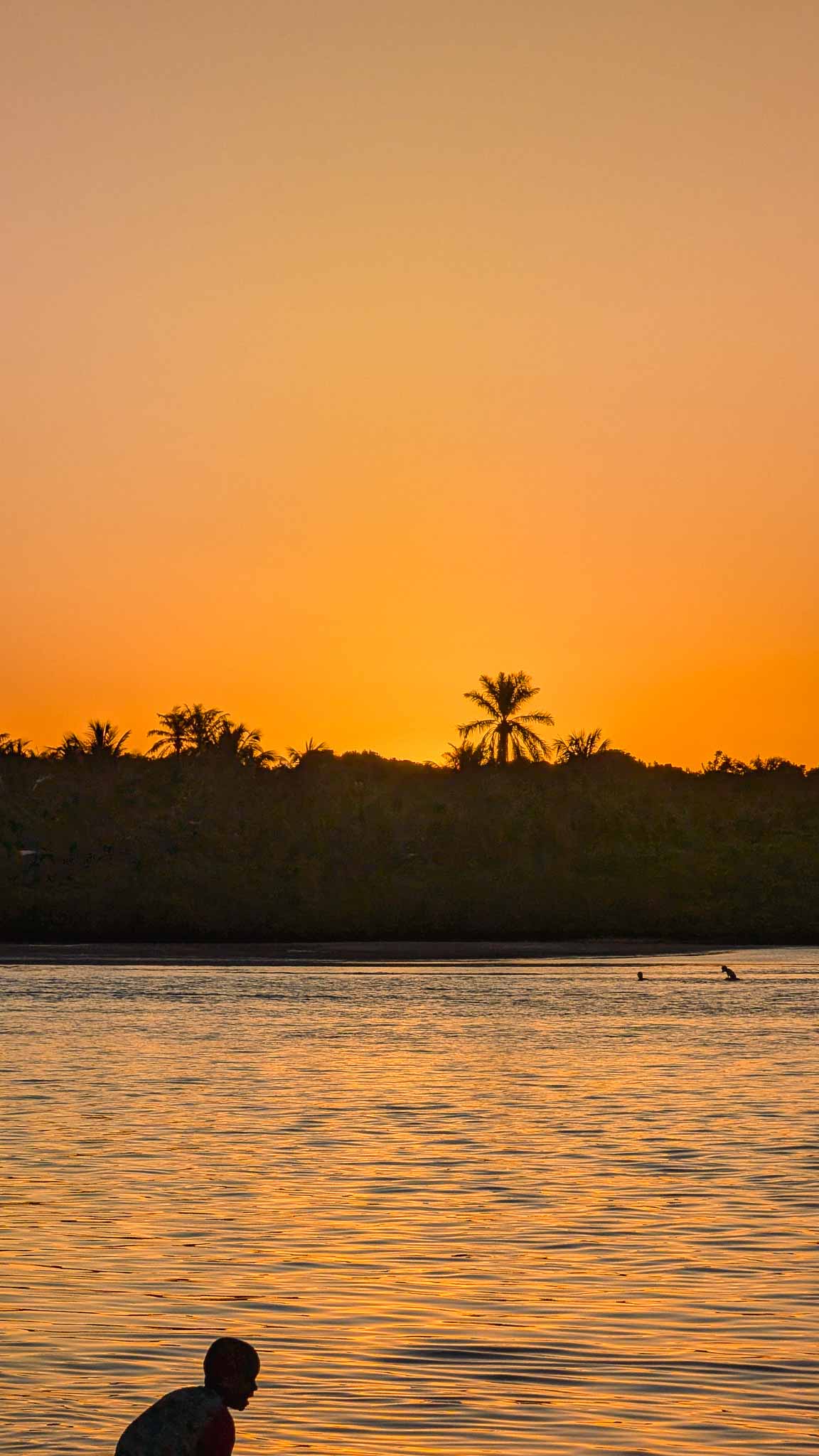
We moved accommodation during our time in Boipeba to a different part of town, which proved to be a lot more difficult than it needed to be. We walked around in circles in the blazing sun for ages trying to find the place we’d booked. We spoke to a guy running a pousada, which is basically a family run inn, who helped us track down where we needed to go. He gave us directions and we started to walk down the street, only for more nice Brazilians to ask us where we were going and if we needed help. Eventually, we had a good collection of about 6 people walking with us, questioning everyone we passed if they’d ever heard of the name of the pousada we were looking for. After many, many obrigados (thank yous) we arrived at our new place and settled in. We were a little bit closer to a good sunset spot now, and made a habit of going down to the water with some fruit to wind down the day. The fruit here, and in most of Brazil, is fantastic. We were buying enormous mangas (mangoes), abacaxi (pineapples) and maracujá (passionfruits) which I’d chop up and mix together for a highly delicious sunset treat.
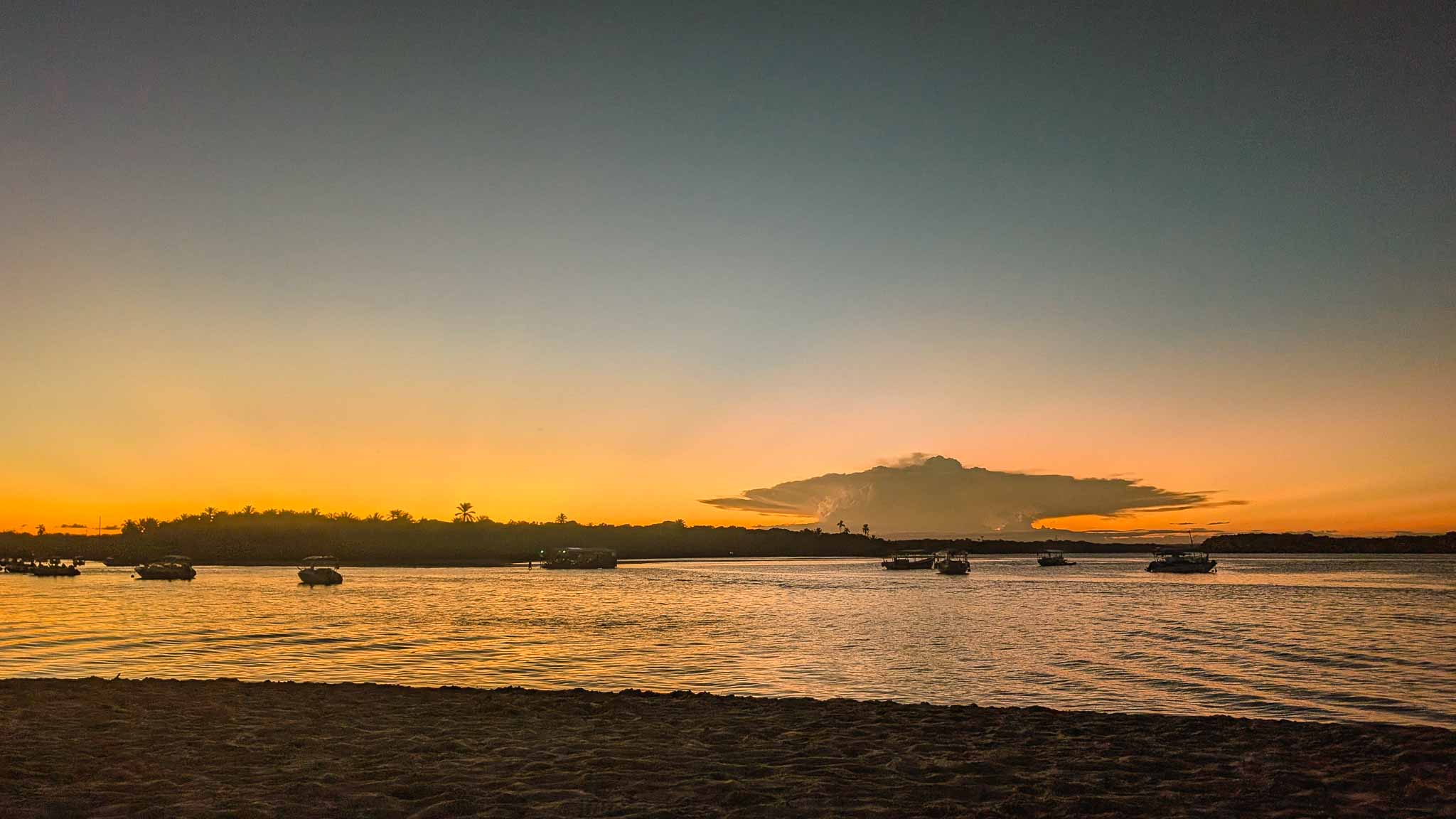
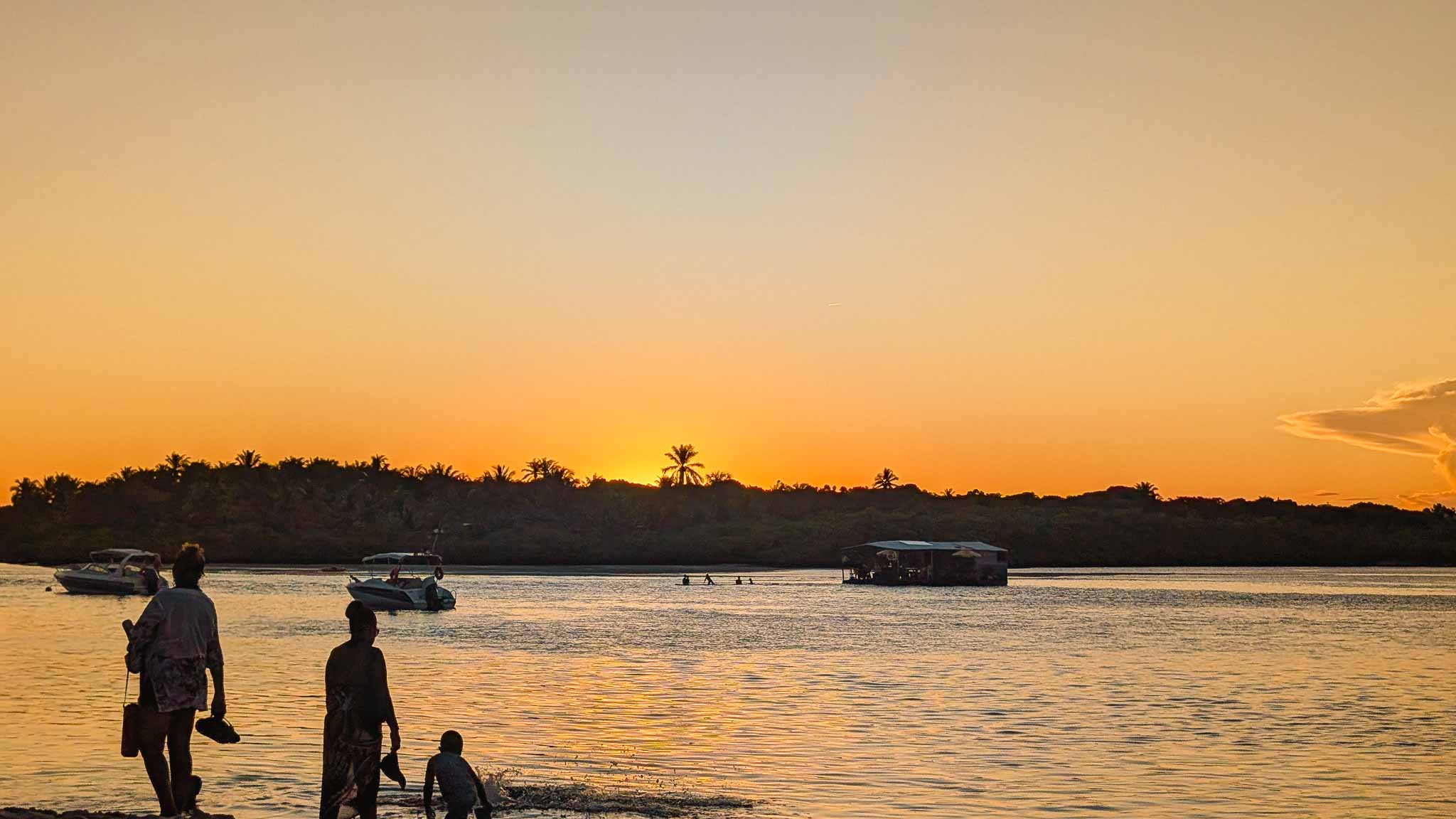
The Portuguese was coming along nicely, and I was beginning to be able to hold conversations with people. I spoke to a quad bike driver at great length about his studies as a chef in Italy, bought boat tickets and asked about dates and times, ordered us dinner and also chatted to a kind old lady selling ice cream by the beach. I was really enjoying it, and every time someone told me I spoke very good Portuguese Rachael would shake her head and we’d laugh. This, combined with my run in with the bluebottle earned me the nickname ‘Portuguese man o’war’, which I was quite fond of. Unfortunately, we couldn’t stay in Boipeba, bumming around on the beach, eating fruit and learning Portuguese forever, because we had to continue our journey north to the capital of Bahía, Salvador.