Physical Address
304 North Cardinal St.
Dorchester Center, MA 02124
Physical Address
304 North Cardinal St.
Dorchester Center, MA 02124

1st – 10th February, 2025
It was a shame to be leaving the beautiful state of Bahía after spending a good few weeks working our way up its beautiful coast, and also to be leaving Salvador after only a few days, but the energy of the city had made us excited to venture further into the north of Brazil. We grabbed some take away pão de queijo and jumped on a bus to take us 5 hours north to a city called Aracaju, the capital of the state of Sergipe.
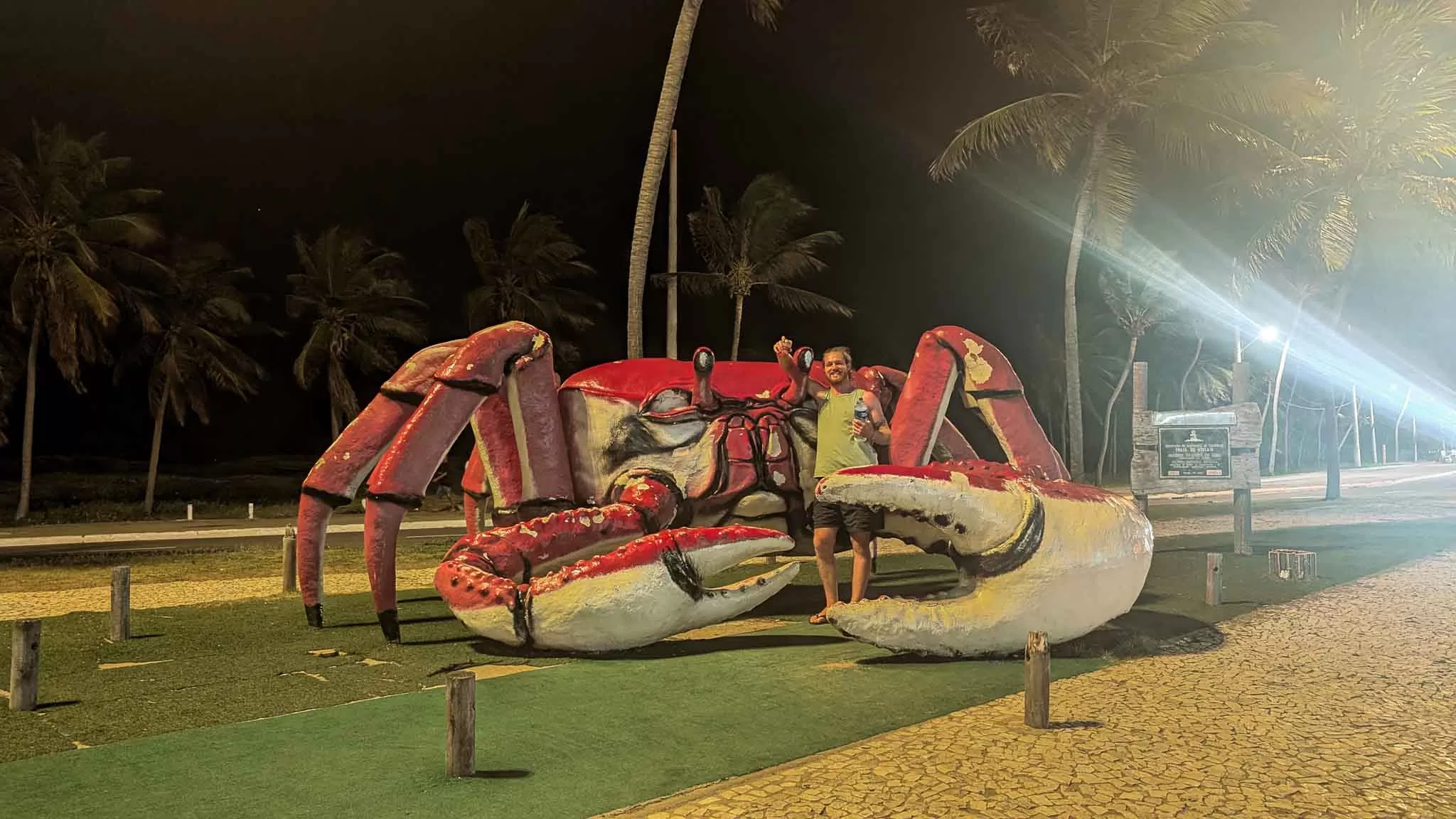
The sun was beginning to set by the time we arrived, and we made the 15 minute walk from our pousada into town to see what the vibe was like on a Saturday night. There was a big crowd of people dancing to a band in the main square, and we ate a few espetinhos and grilled cheese sticks while making our way along the main street to see what other food was on offer. Aside from the group of people in the square, there was really nothing else happening in town. There were a lot of massive, empty restaurants that gave off a really cheap, sterile, Penrith sort of vibe which wasn’t great, but we eventually found a place that was obviously for the locals, with bright red plastic tables and chairs out the front and a plastering of different beer advertisements on the walls. The food here was simple but cheap and filling and the longnecks were cold and delicious. Once again, the staff were happy to be receiving gringos and it was a nice dining experience amongst the locals. However, it was quite the contrast to be leaving the magic of Salvador and rocking up to Aracaju, which really has nothing going for it except for a large statue of a crab in the centre of town.
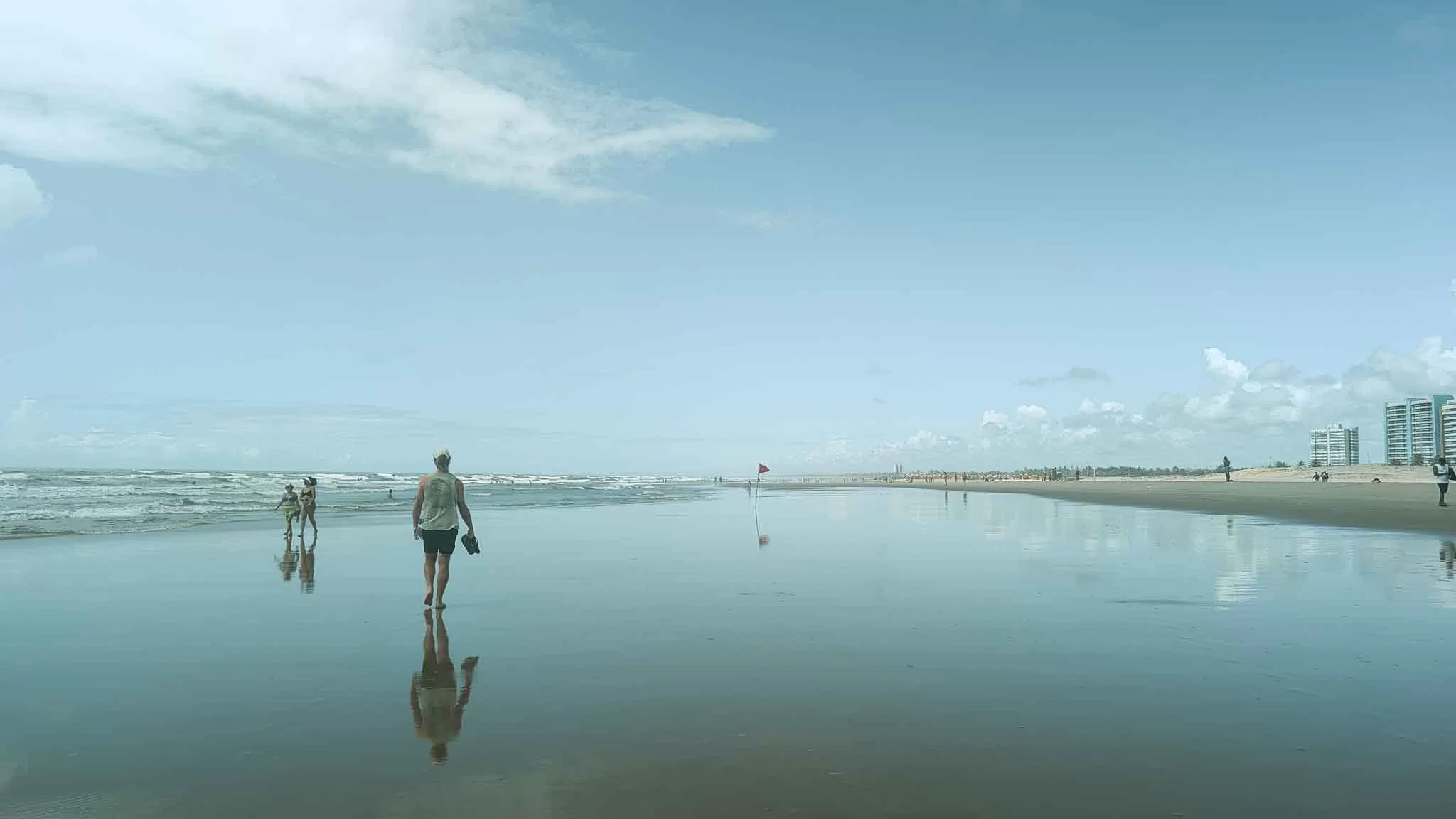
We were staying in a decent enough pousada but we had to sleep in separate male and female dormitories which was a bit sad. The pousada had a tonne of surfboards and I asked the bloke at reception if we could borrow one and he said that they didn’t own the boards, they just let the locals store them there. At least there would be surf, right? We walked down toward the water on our first morning in town and out onto a huge beach that stretched in a near straight line as far as the eye could see. The tide was a good 300 metres out and we walked all the way to the edge of the water to confirm our suspicions that yes, it was indeed dark brown and soupy. There was a very strong onshore breeze which meant that there were no decent waves and it was quite a sad state of affairs. We sat on the sand amongst the rubbish from the previous day’s Lemanjá festival, a celebration of the Afro-Brazilian goddess of the sea. It’s quite ironic that the way in which the people celebrate the sea goddess is by piling food, flowers, candles and all sorts of plastic knick knacks into small, makeshift boats and sending it out to sea. Obviously, every single piece of this rubbish just washes ashore at some point, and I struggle to think of a way in which you could piss off the ocean gods more. At least there were three young people walking the beach, handing out plastic bags so people could help to pick up rubbish. Rachael and I took a bag each and we watched them walk away and be denied by everyone else on the beach. They eventually came back our way, but instead of picking up rubbish themselves they’d just kick plastic bottles along the beach as they walked, and then leave them when they got bored. We filled up our bags but it felt sort of pointless as we were barely making a difference.
We didn’t do much else in Acaraju, there wasn’t really anything else we could do, and it was absolutely stinking hot. After returning to the same restaurant for dinner we sat around at the pousada playing cards, and then had a slow morning the following day. We bought some bus snacks for another trip 5 hours north to Praia do Francês, French Beach, in the state of Alagoas.
It was bound to happen sooner or later. During this bus trip I had my first experience with food poisoning. It must have been what we ate at that local joint the night before, because midway through the trip we both started having stomach cramps. We stopped off at a big Brazilian bus terminal buffet in the middle of nowhere and raced to the bathrooms, where we stayed for a good while until we heard the bus start up again out in the carpark. Luckily, I don’t think either of us really had anything left in the tank that we could expel, so the remaining few hours on the bus could have been worse. We arrived in the city of Maceió, the capital of Alagoas, and caught an uber 30 minutes south to Praia do Francês. I was having a good chat with the Uber driver and he asked me how long I’d been learning Portuguese. “Seis semanas.” I told him, but he thought I must have been mistaken and corrected me “Seis anos?”. He thought I’d been learning for six years, but I reassured him it was only six weeks and he was quite impressed, which Rachael obviously rolled her eyes to.
Once we arrived at Praia do Francês, named as such due to its use as a refuge by French pirates during the 17th century, we walked into town to see what was going on. There were a lot of very expensive looking bars and restaurants along the main street that ran perpendicular to the water, but there weren’t very many people out and about. Waitstaff tried to drag us into a few different places but I told most of them that their food was too expensive for us. Eventually we found a tiny pizza shop run by a lovely old Argentine woman, and I tried to convert back to Spanish so I could talk to her in her first language but it was nearly impossible. It seemed I was losing all the progress I had made in the months prior to coming to Brazil. We ordered a delicious pepperoni pizza for takeaway and ate it back at our pousada, which was a little run down but quite homey.
I fell into a bit of a trap in Brazil, one that I was sort of expecting before we left home, but it still got me all the same. Free breakfast. I haven’t really been eating breakfast at home for a good 5 or 6 years, and it’s worked wonders for my health and energy levels throughout the day. Obviously everyone’s different, but for me breakfast is a no go. Unless it’s free. I absolutely abused my insides with bread, hot dogs, baked beans, cheese, ham, eggs and margarine of a morning in Brazil. While I did eat a bit of papaya when it was on offer, that was nothing compared to the abominations I was assembling on my plate first thing in the morning. A full plate of carbs, grease and at least 5 coffees were just the normal way I’d start my day if there was a free breakfast at a pousada. No wonder I felt disgusting. I told Rachael I did this because I had to show my stomach who’s boss, but in reality I just hate the idea of not eating something if it’s free. I guess technically we’d paid for it, but that probably just makes matters worse. This is a problem I’ve since become better at dealing with, but at this point in our trip I was just going to town. Gross.
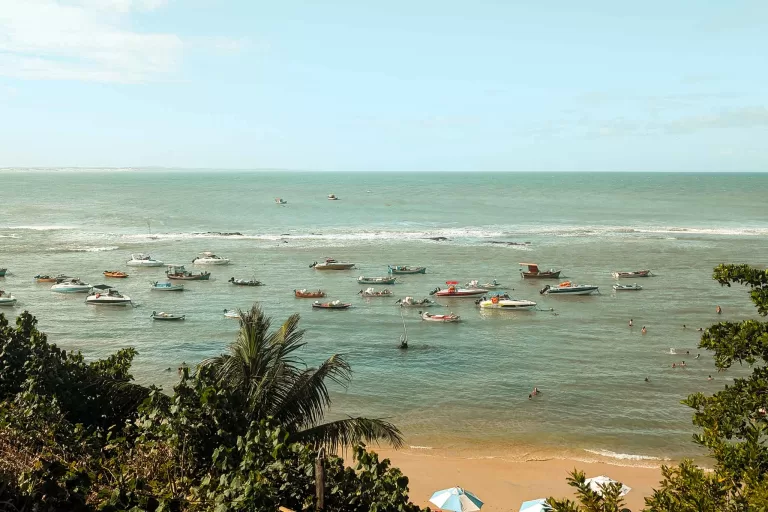
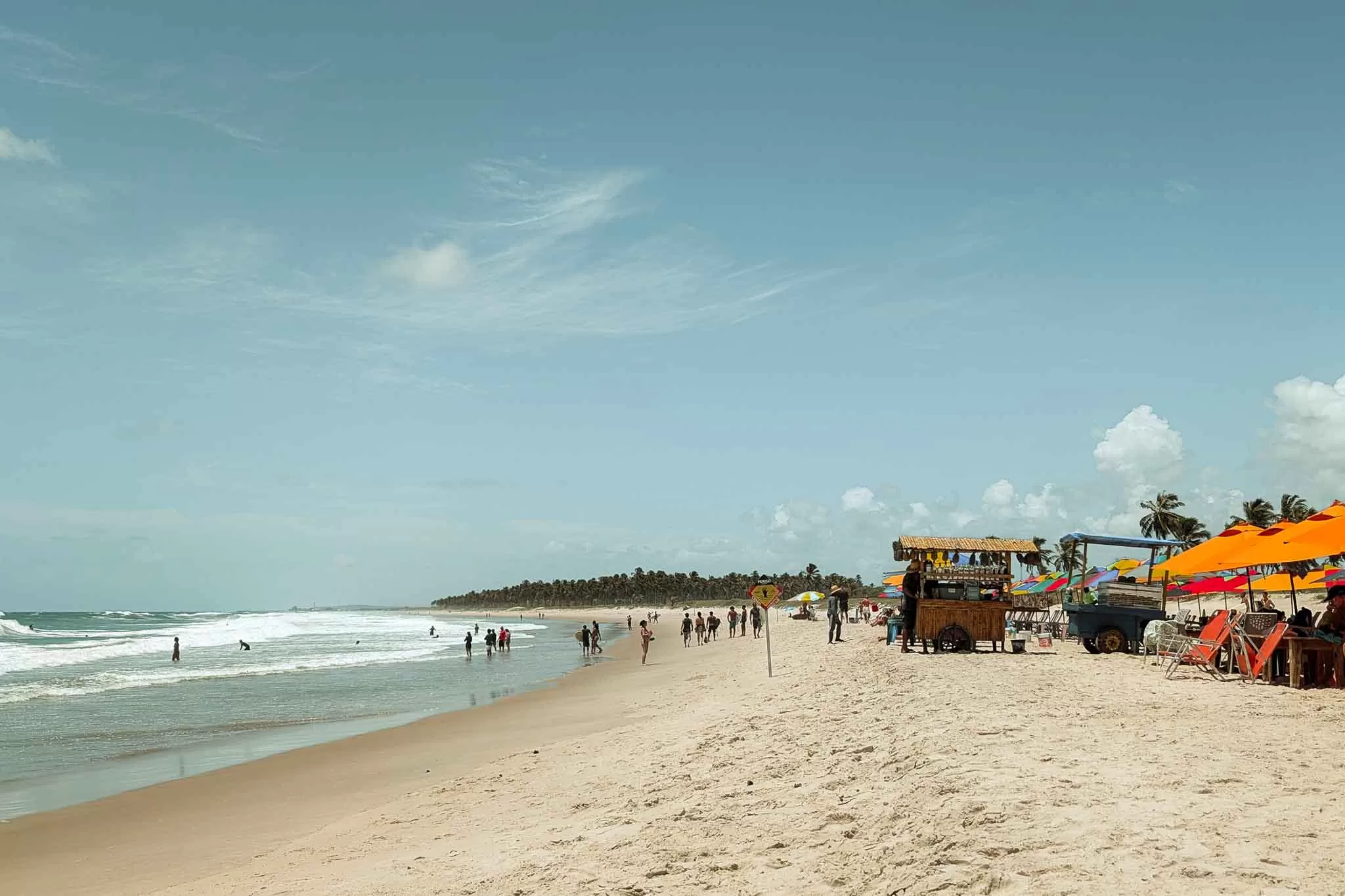
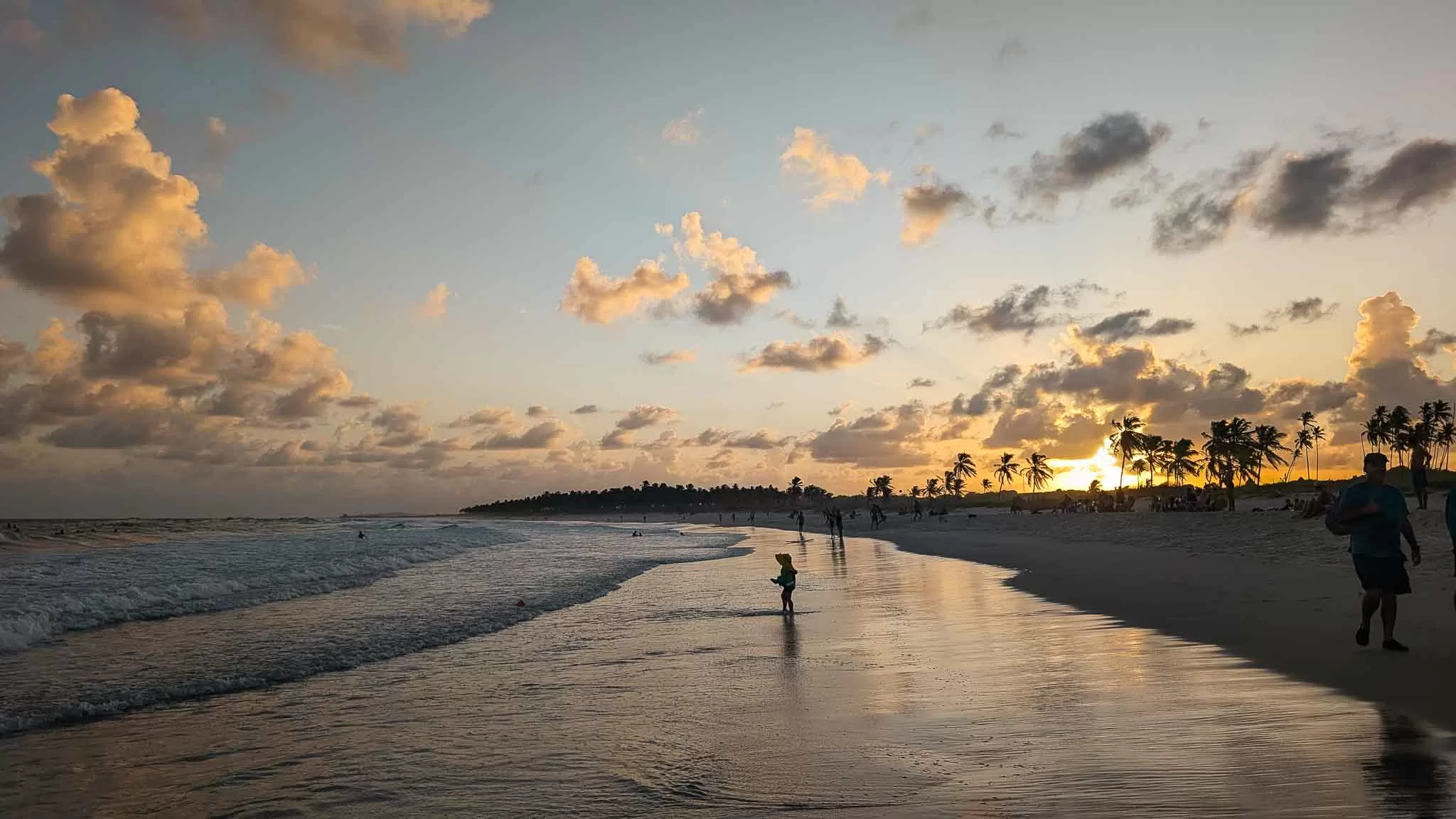
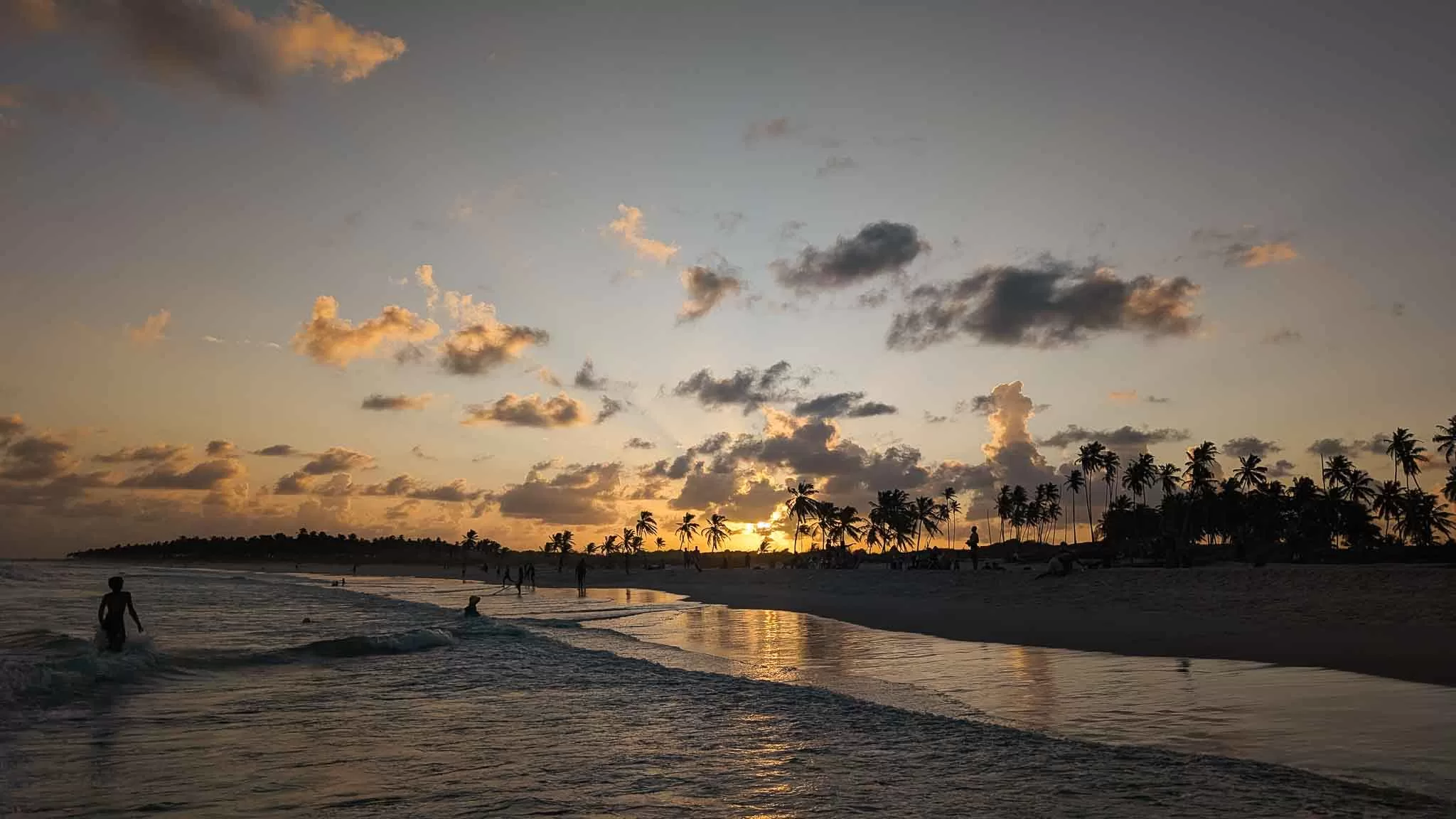
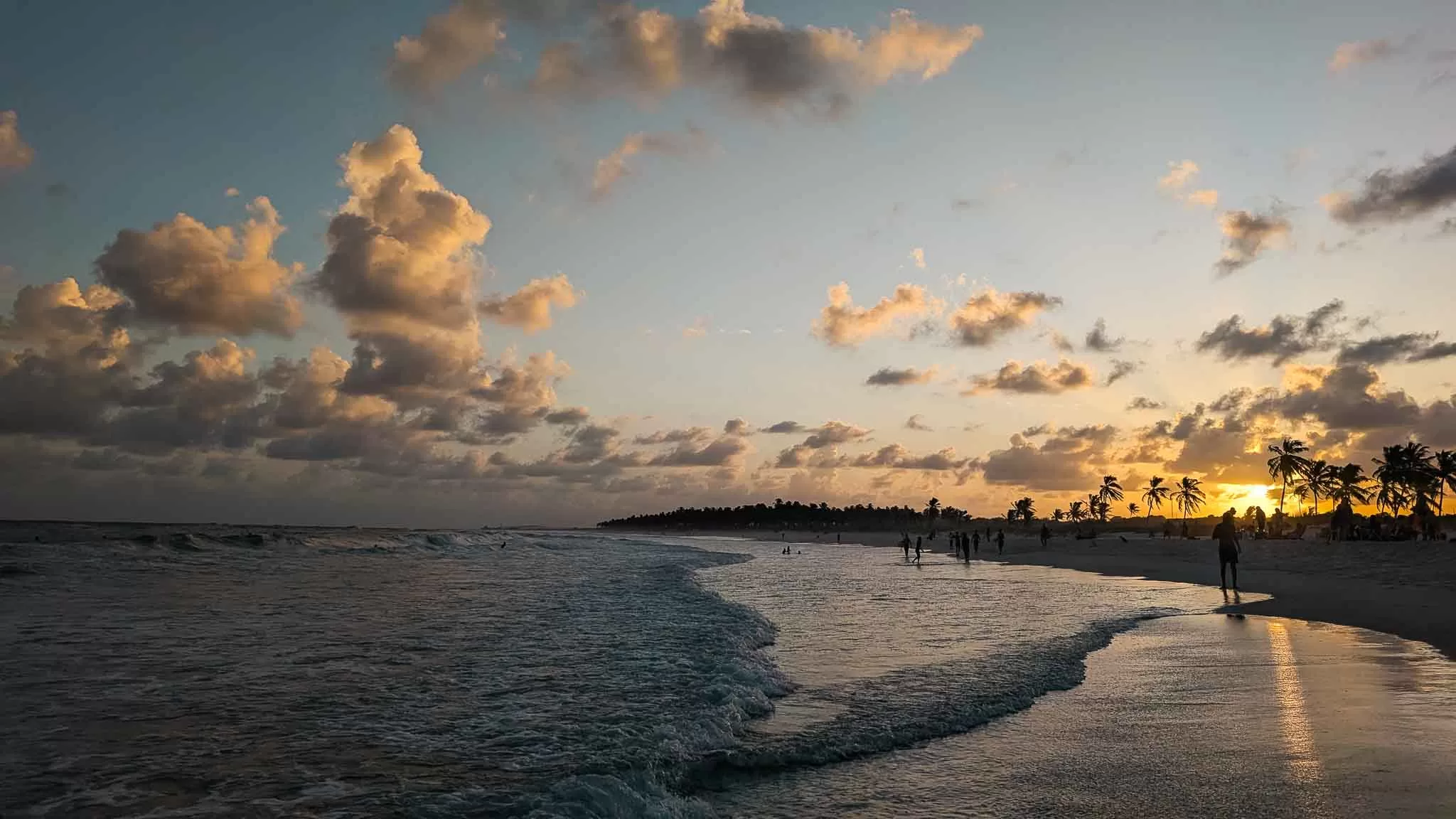
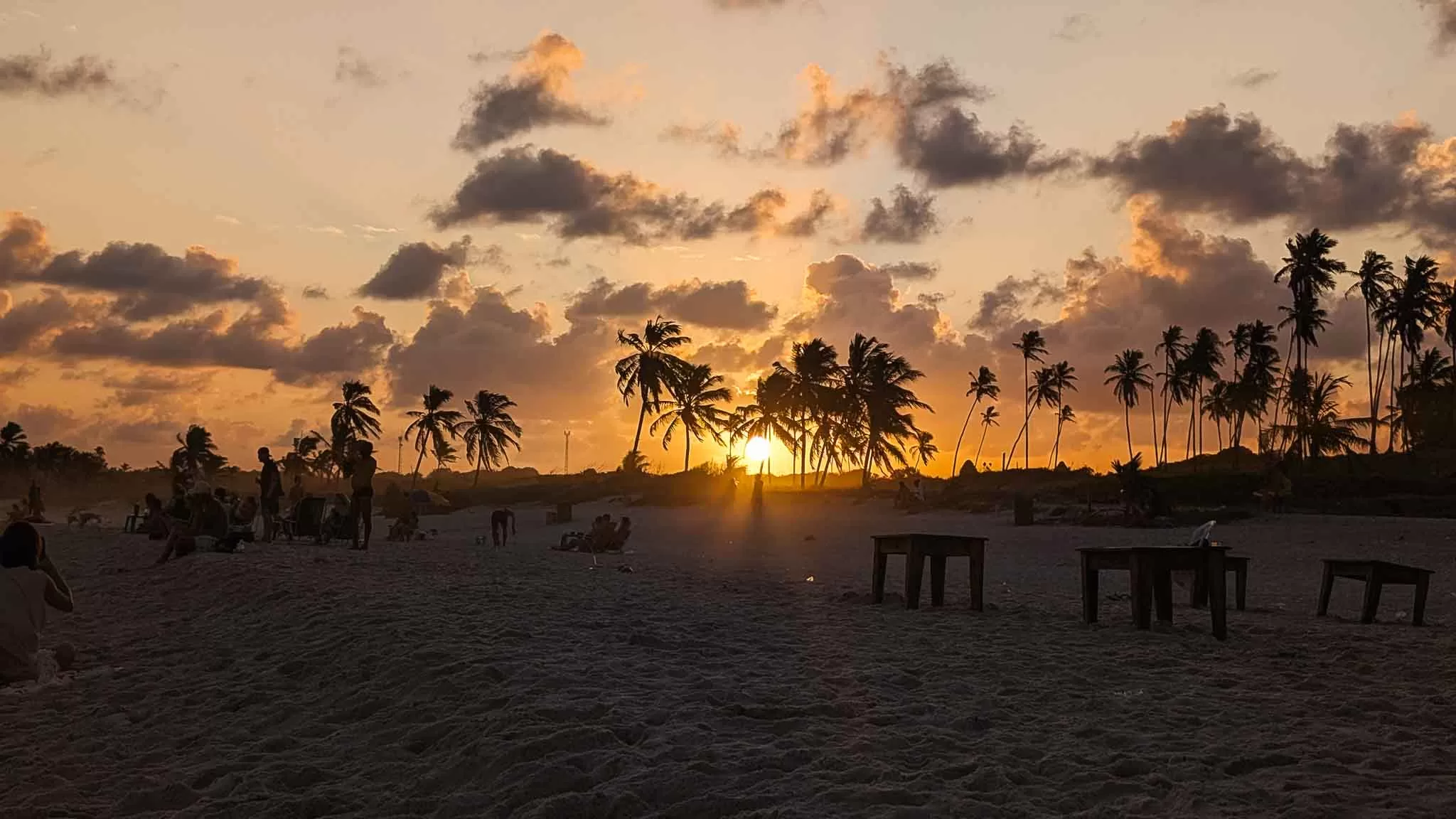
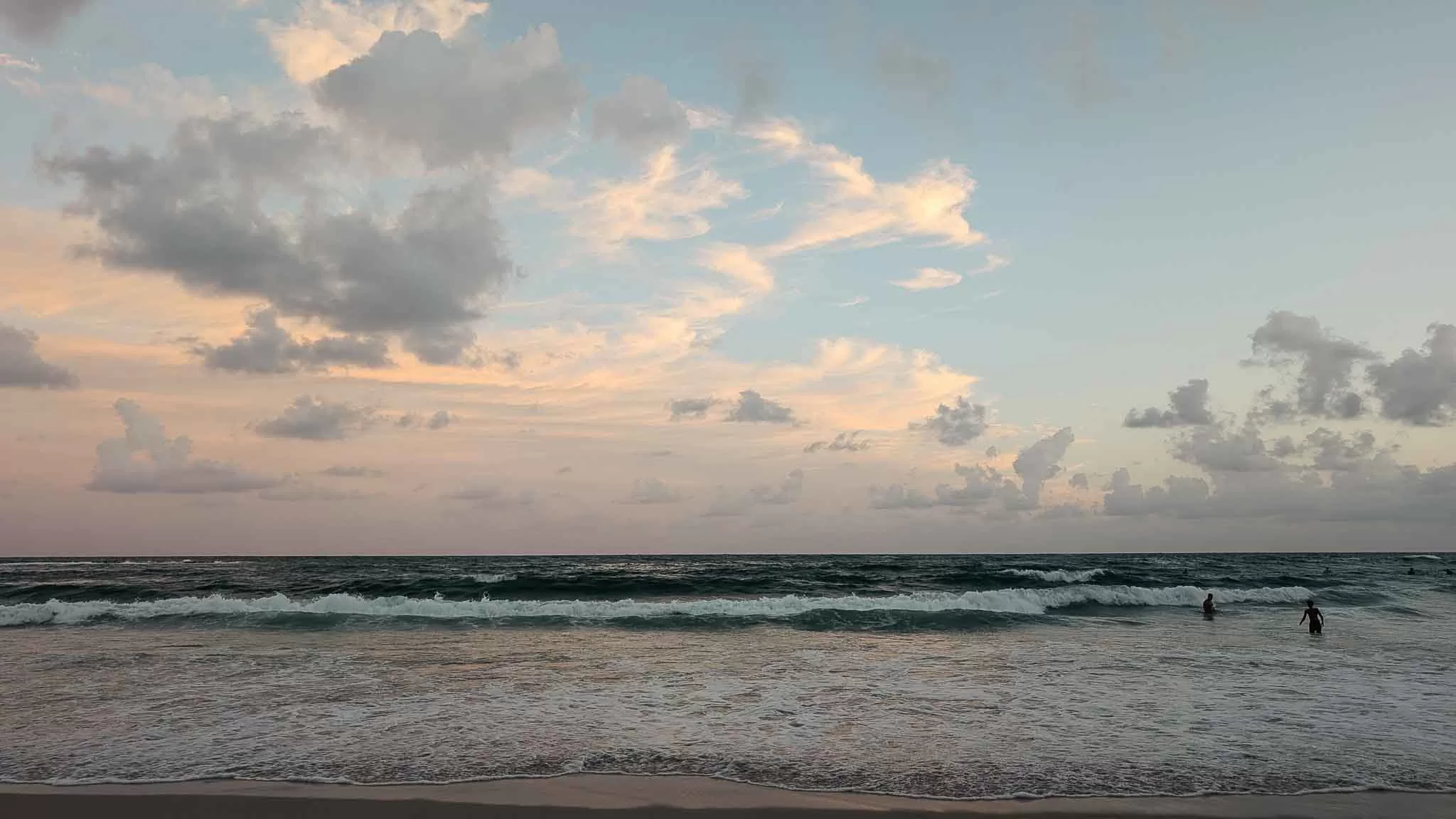
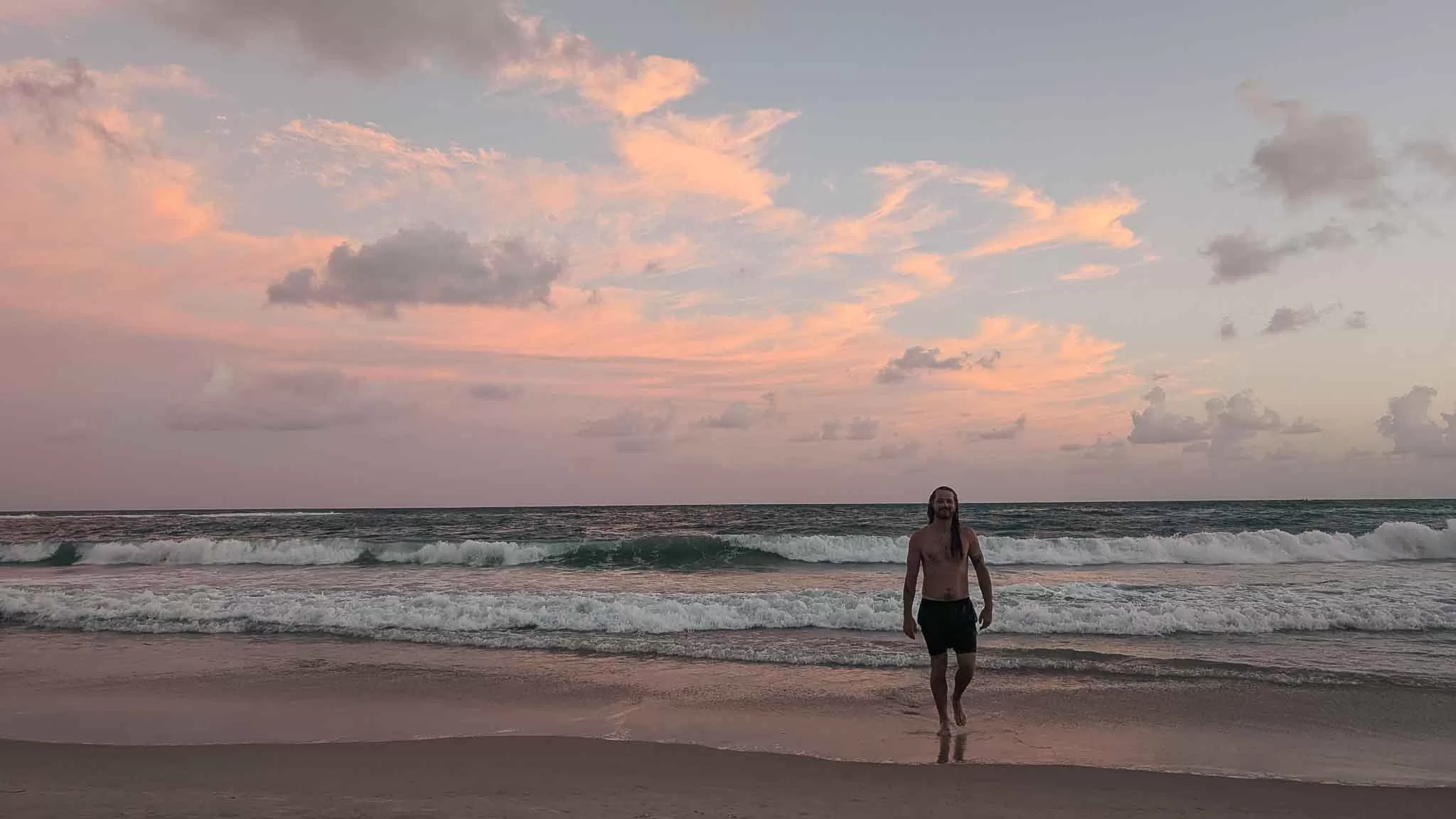
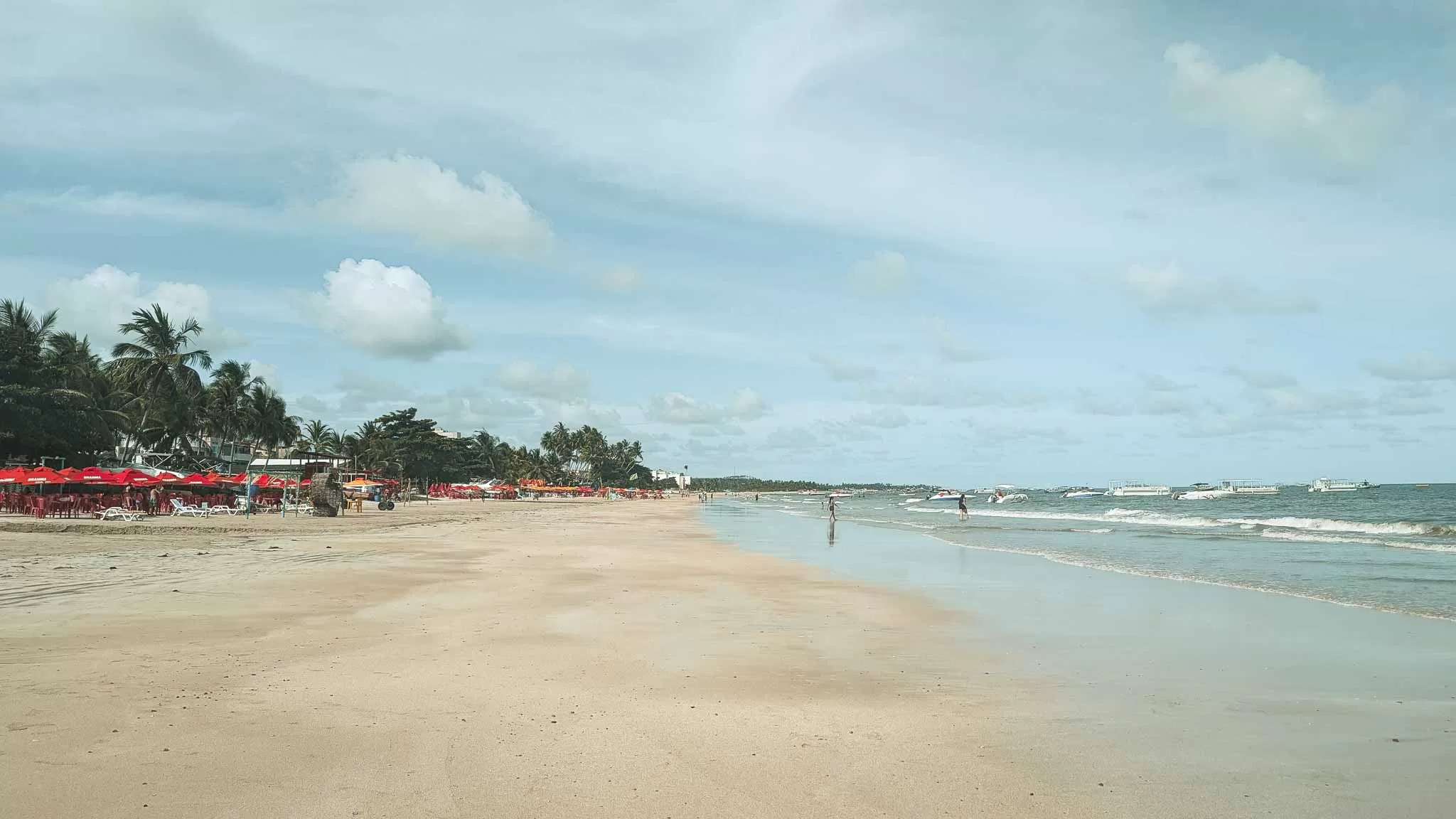
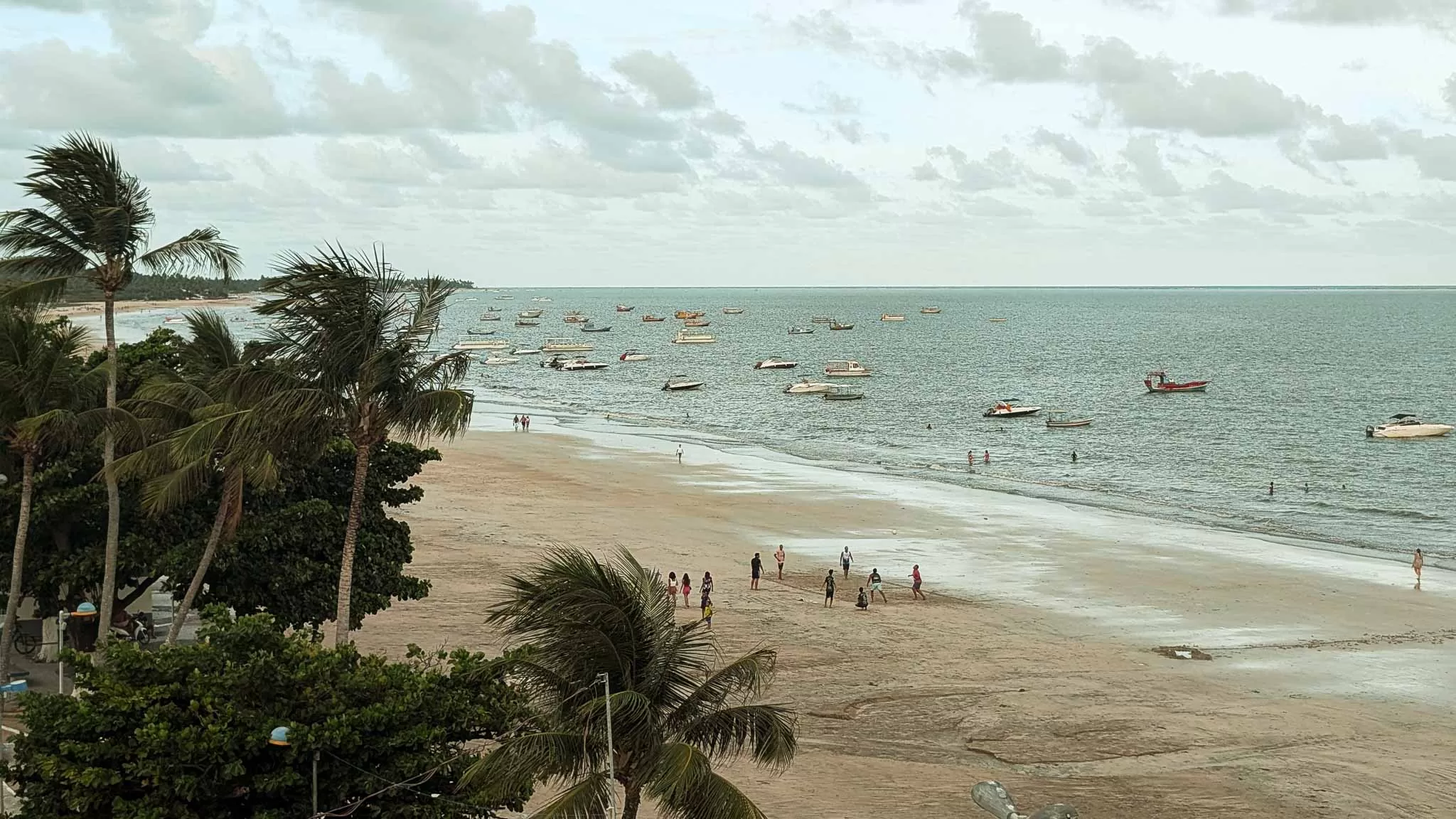
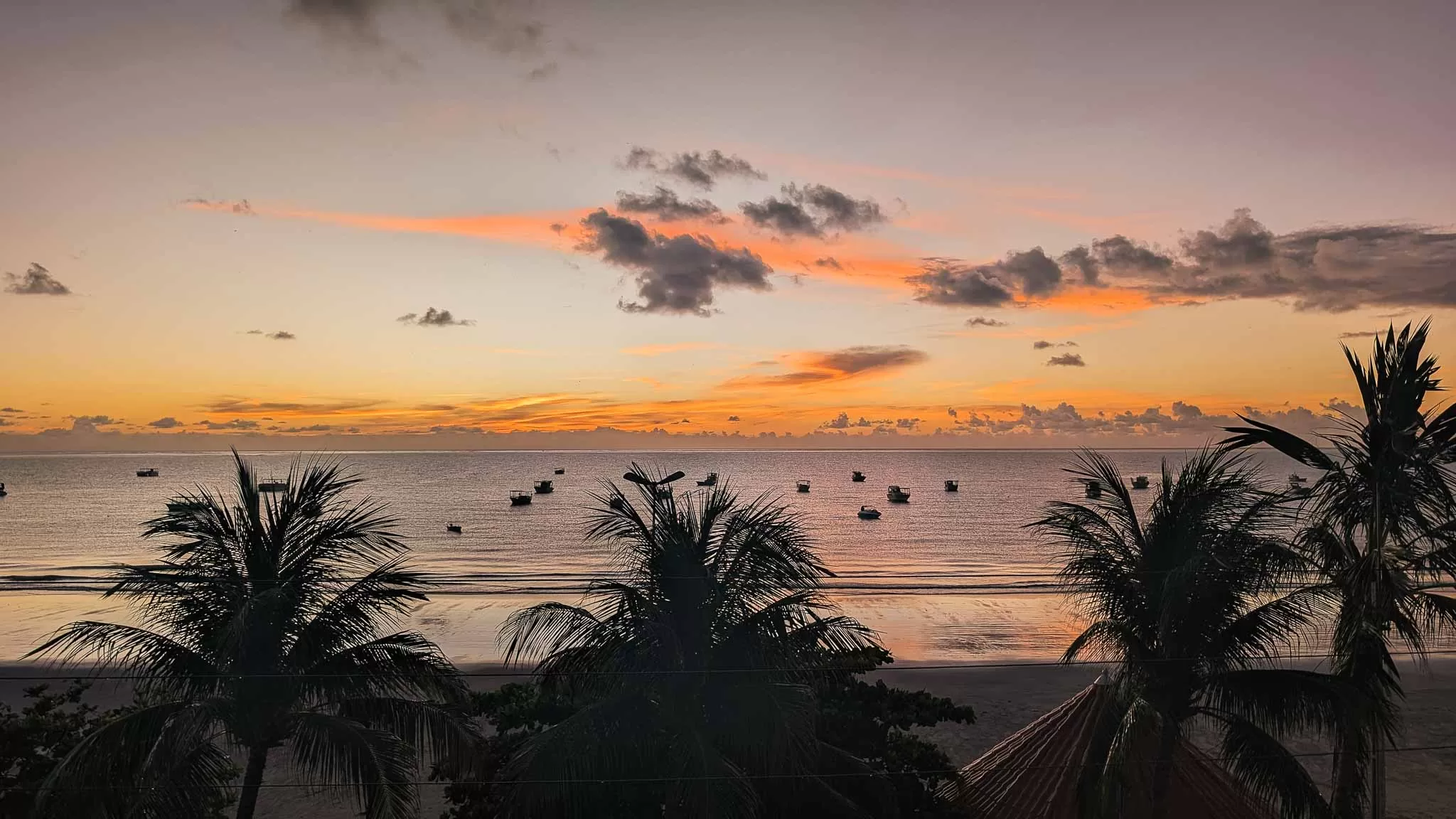
Once Rachael, who was still recovering from food poisoning, was feeling up to it, we walked through town to see what the beach was like here. In every way this beach was a million times better than down in Acaraju. The water was actually clean enough for us to swim in, and there were decent waves to bodysurf. Even though there were the typical beach bars and chairs and umbrellas clustered on one part of the beach, there was plenty of space where we could spread out and not be pestered by people selling things. We returned later that afternoon to take turns swimming and catching waves, and even stayed for sunset which was especially beautiful. I spent ages bodysurfing as the sun disappeared behind the palm trees and turned the sky a golden pink. It was probably one of the nicest afternoons by the beach I think I’ve ever had. We topped this off with an even bigger pizza than the previous night’s and tried to come up with a game plan for where we’d be stopping next on our way up the coast.
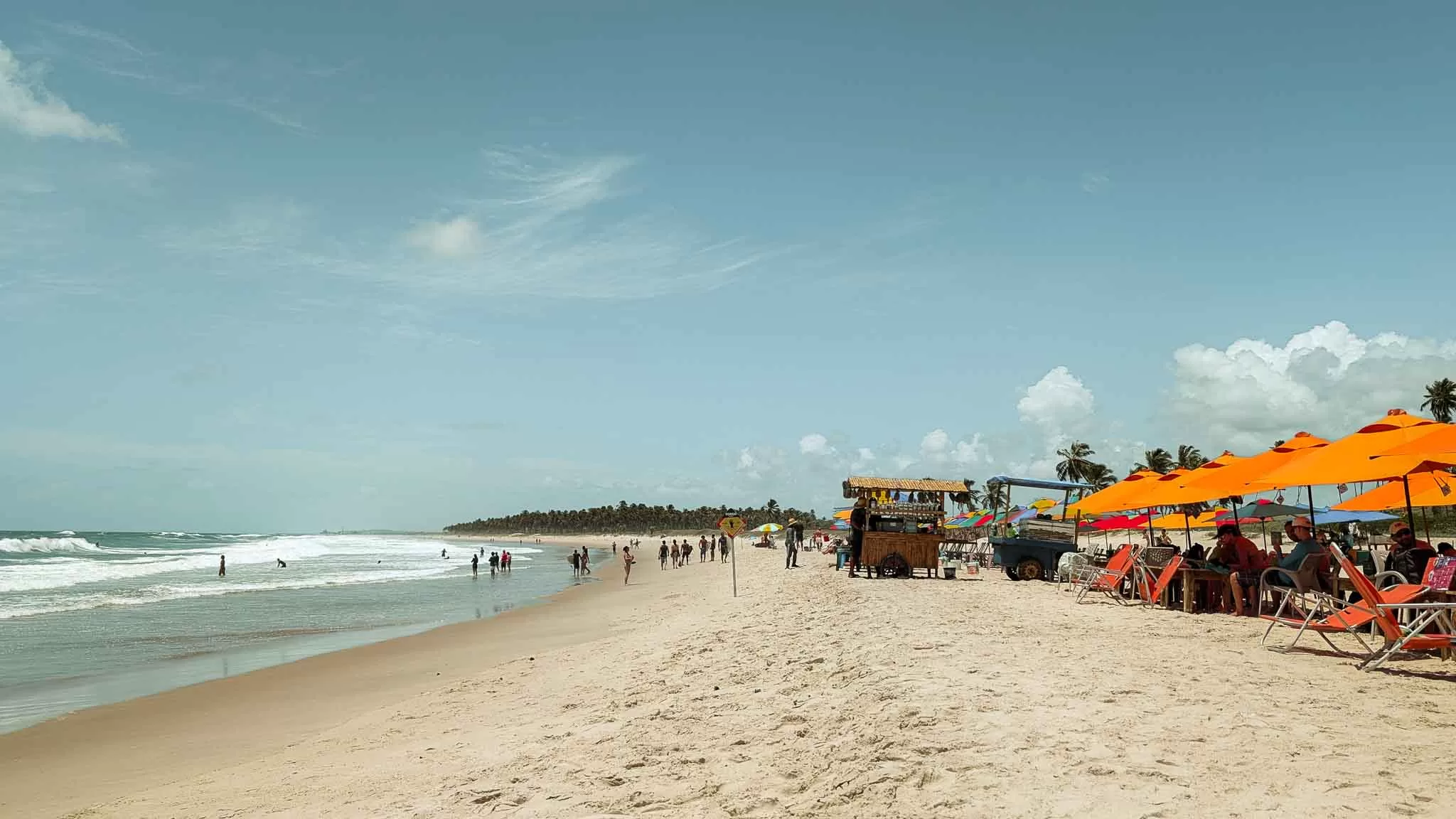
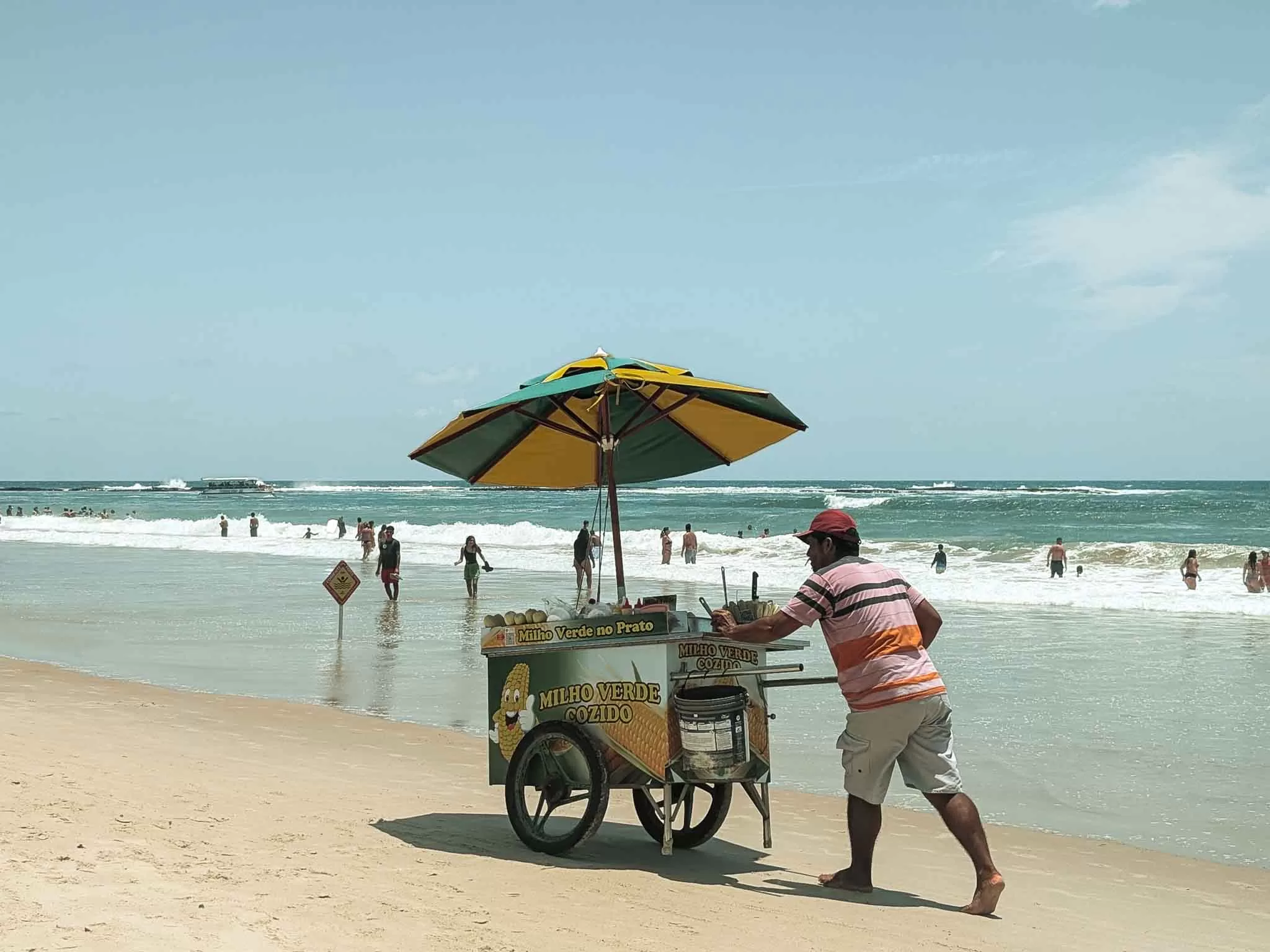
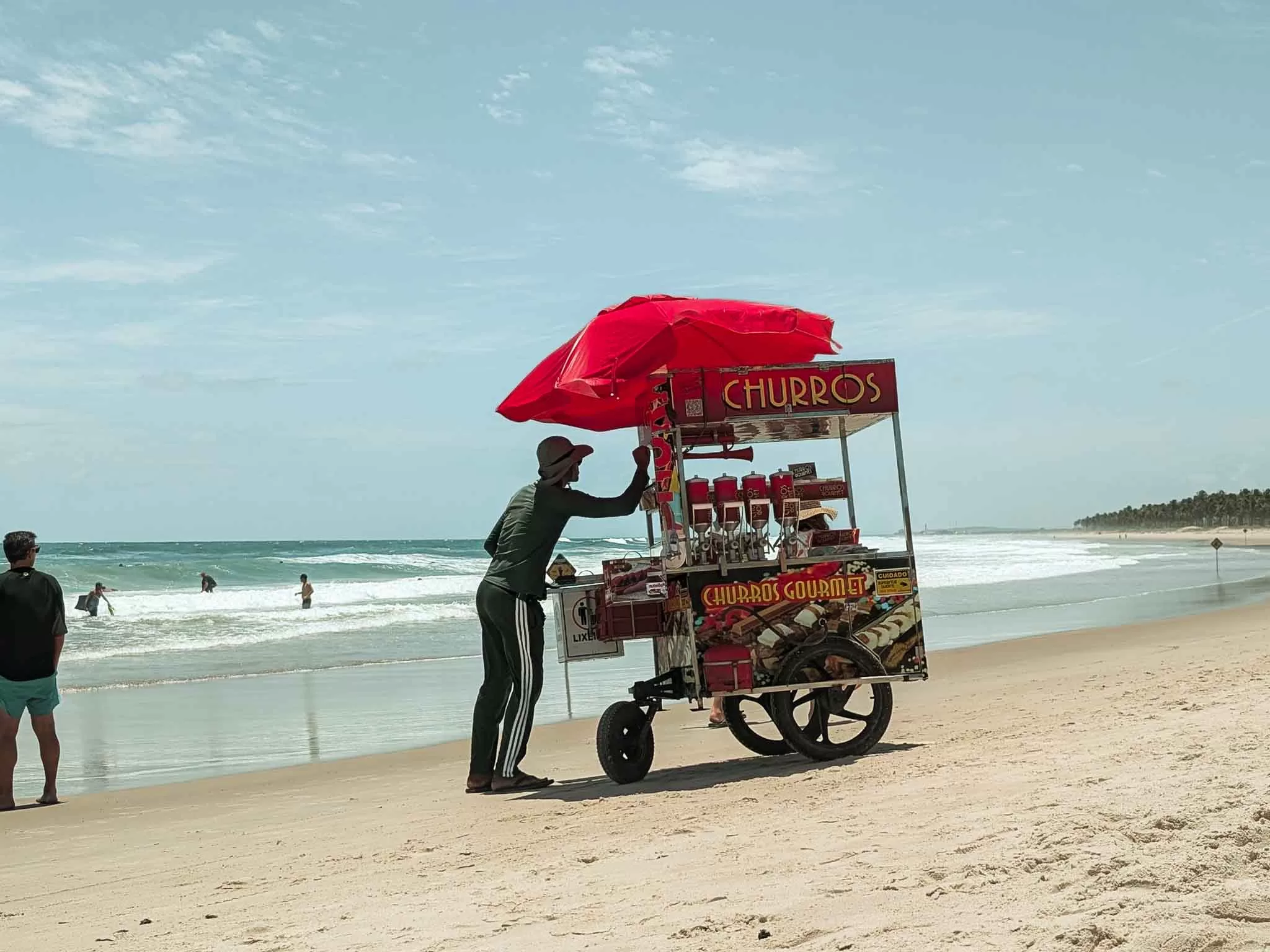

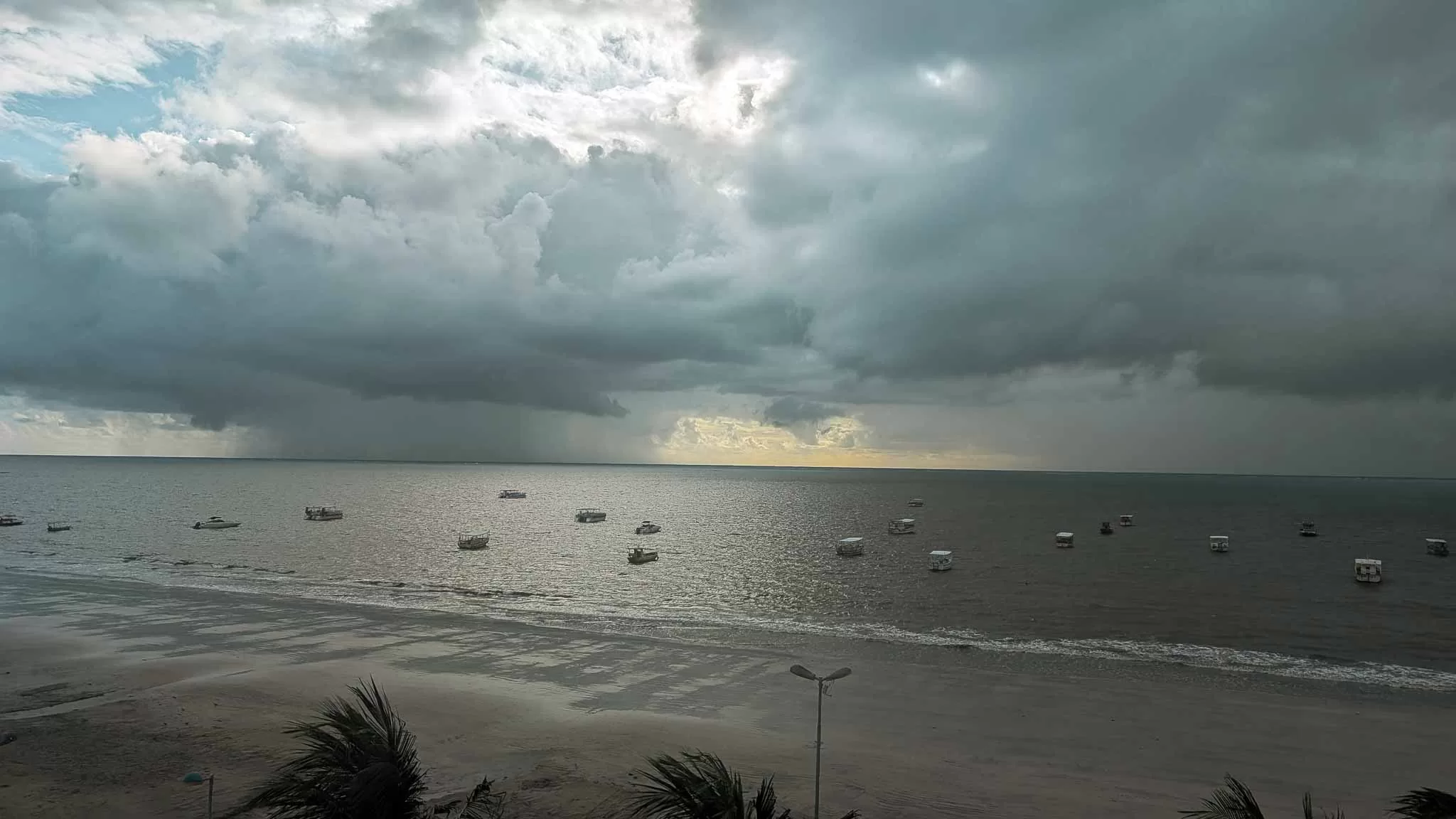
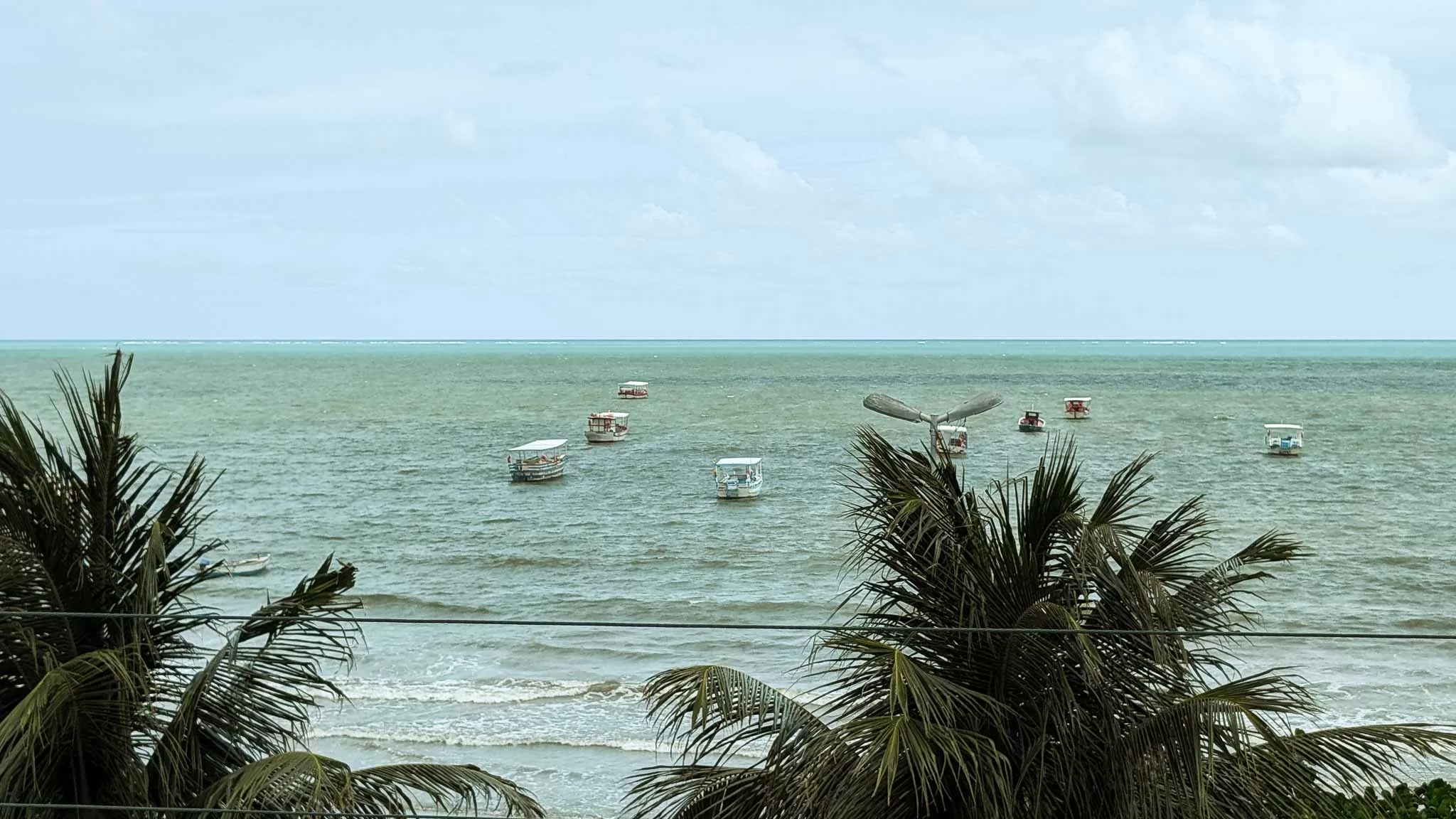
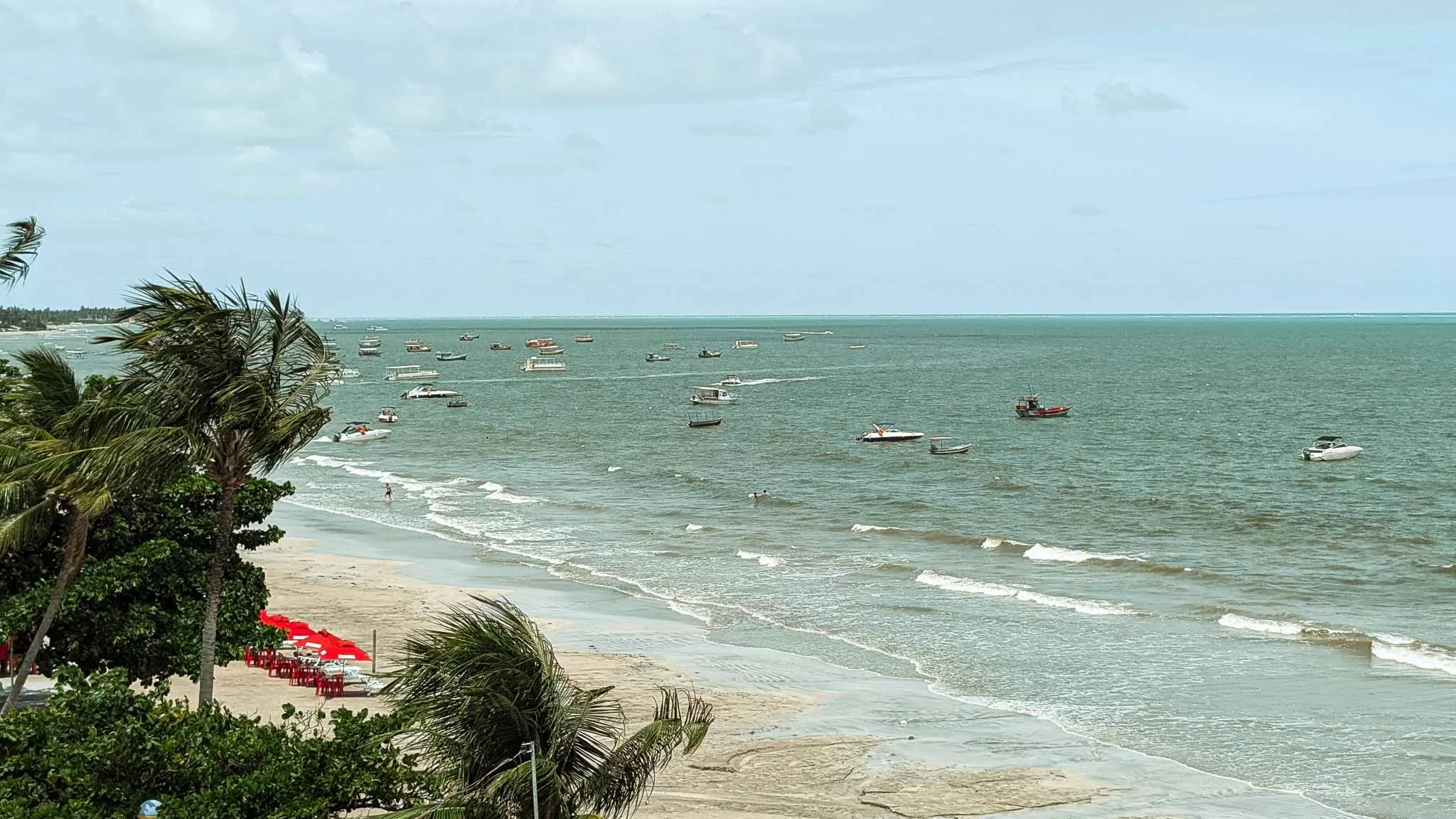
As a general rule of thumb, you should never listen to beach or food recommendations from anyone from the UK, or probably even Europe for that matter. We made this mistake so many times in South America, and the next place we visited is in high contention for one of the worst beach recommendations we’ve ever received. We caught a bus three hours north in torrential rain to a town called Maragogi. This place sucked. This was one of the saddest looking beach towns we’d ever seen, but was somehow built solely for tourism. Small jeeps lined the streets waiting to take tourists on drives up and down the coast, and expensive looking beachfront bars sat empty amongst piles of construction rubble that littered the footpaths. The water here was horrid, similar to that of Ubatuba at New Year’s, and we walked past dead rats and chickens washed up on the sand as we tried to enjoy a pleasant afternoon stroll along the beach.
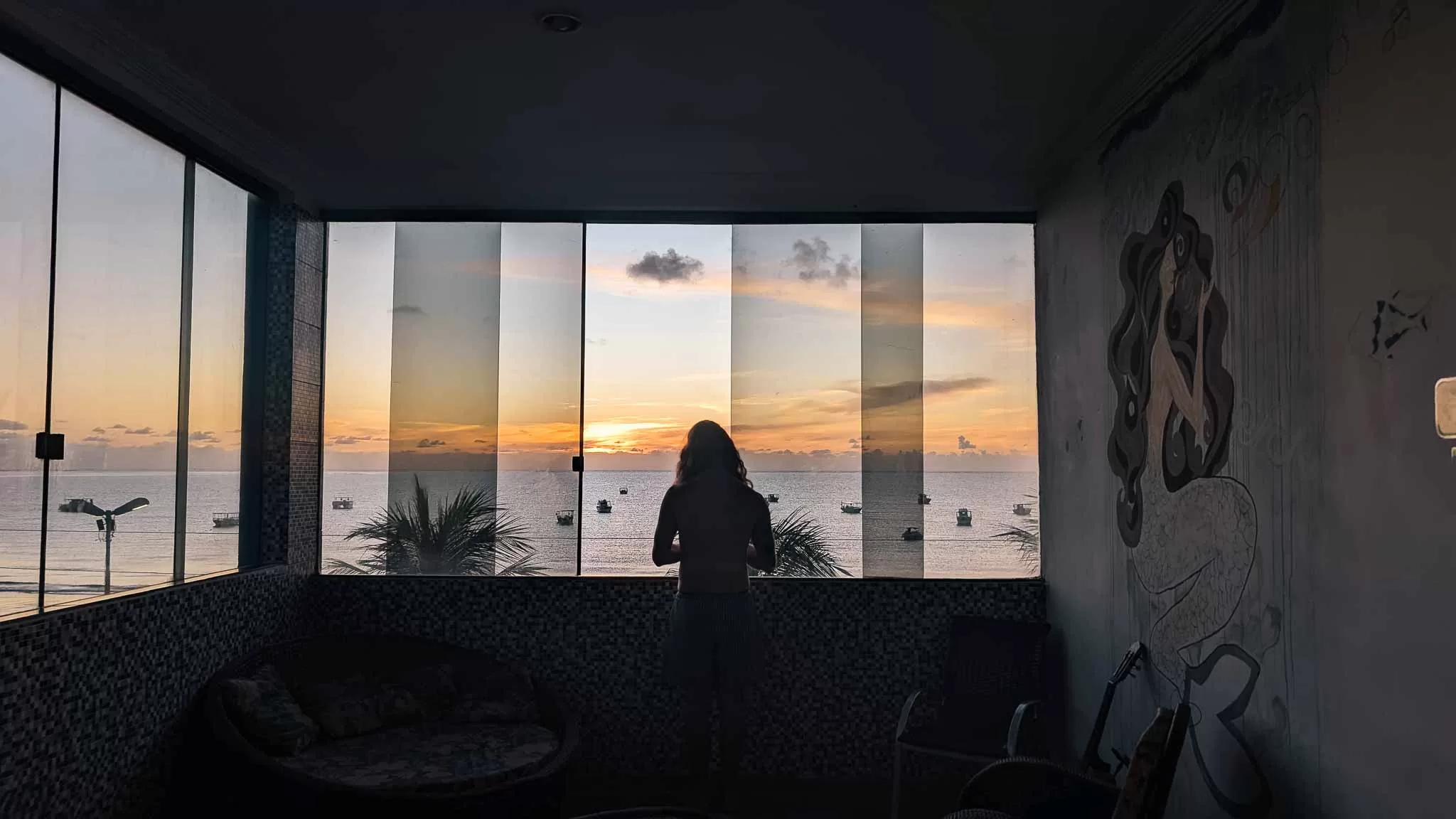
The place we were staying in was quite nice though, and we had a huge kitchen to cook in as well as a great view of the ocean which was actually a bright blue out on the horizon. We cooked all our food here because the prices at all the restaurants were crazy, but this was cool because I got to chat to a middle aged Brazilian couple who were from the Amazon while we made our dinner. We didn’t really do too much in Maragogi. I tried to get us on a dive boat with our snorkels like how we did in Boipeba, but the dive companies wanted nothing to do with us unless we paid the full price, which was insane. We bought a volleyball and kicked that around on the sand one afternoon to try and kill some time, but for the most part we just reminisced about our trip so far and slammed back tinnies of Brahma or Original. I told Rachael something that I never thought I’d hear myself say, I was ready to head back to the Andes. We began to come up with a plan that would get us back there which involved us heading up to Natal, another 7 or 8 hours up the coast. But there was still one more stop we wanted to make before we left the coast of Brazil, at a town called Pipa.
To get from Maragogi to Pipa, we had to take a 45 minute Uber to a town called Barrieros, then a 2 hour bus up to the city of Recife, the capital of Pernambuco, then catch another 5 hour bus to a random town on the highway, then catch a local bus 30 minutes to the coast. Sounds like a bit of a mission, and in the end it proved to be too much for us. We made it as far as some random intersection in Recife, where the bus driver told everyone it was the end of the line. We hopped out and tried to make our way in what we thought was the direction of the bus terminal, through a super run down part of the city, past hammered old blokes stumbling around in the streets and ladies deep frying all sorts of weird looking things on the footpath. We eventually thought better of walking around in an area that we definitely shouldn’t be in with literally all of our things, and we booked an Uber to take us to the nearby colonial town of Olinda.
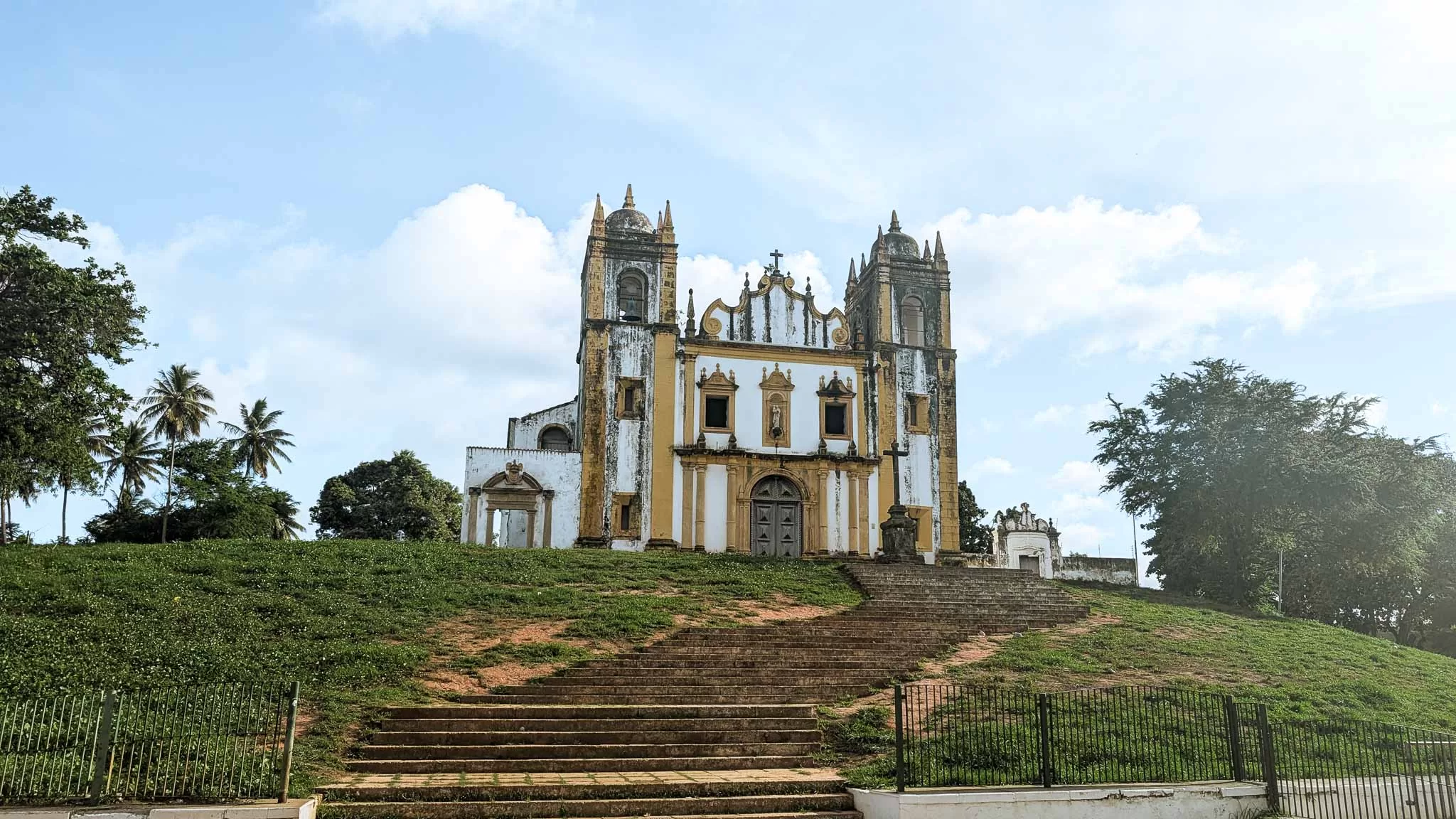
I’ve read before about how unplanned events are usually some of the things that you remember most about your trips, and that couldn’t be more spot on. Our surprise visit to Olinda was one of the best things to happen in all of our travels around South America. Home to about 400,000 people, today Olinda seems like an extension of Recife to the south, but it was actually the original capital of Pernambuco and was the richest city in colonial Brazil for the 16th and early 17th centuries. In 1634 it was taken and burned by the Dutch, who also took the north east corner of Brazil for themselves and declared it New Holland (where have we heard that name before?), but they were kicked out by the Portuguese in 1654, and the new capital was moved to Recife. Today, the historical area of Olinda is a UNESCO World Heritage Site, and the city is one of Brazil’s largest cultural centres, which has one of the biggest and arguably the best Carnival celebrations in the world. We were in luck, as when we arrived the pre-carnival festivities were in full swing, and it was absolutely incredible.
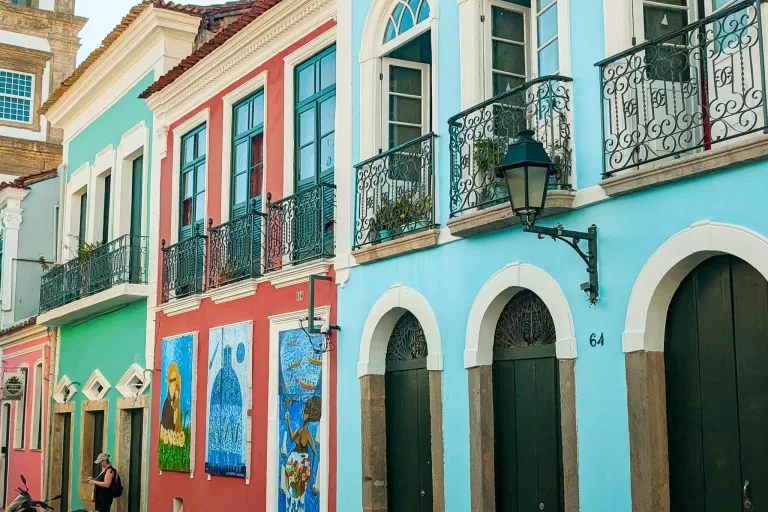
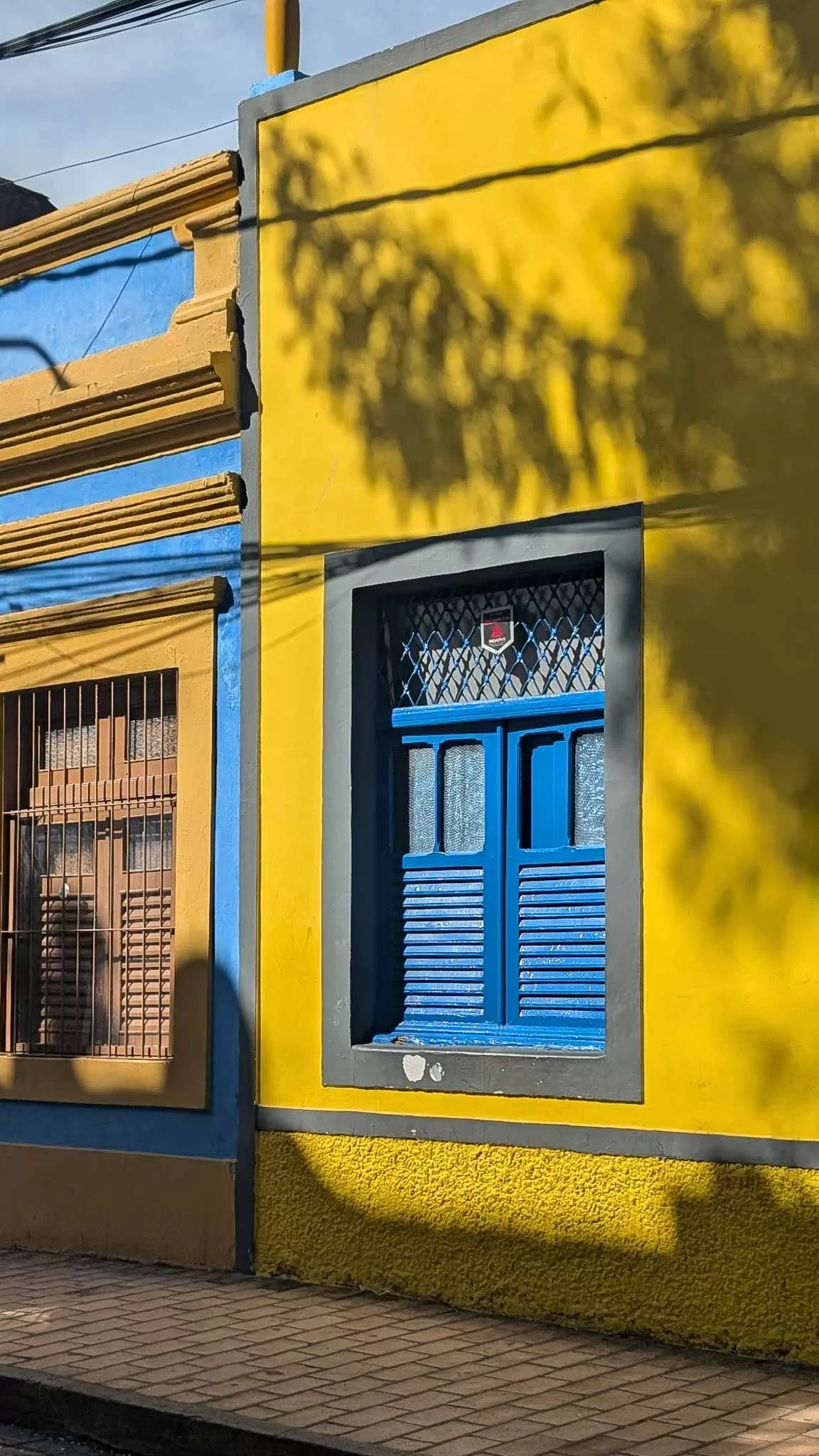
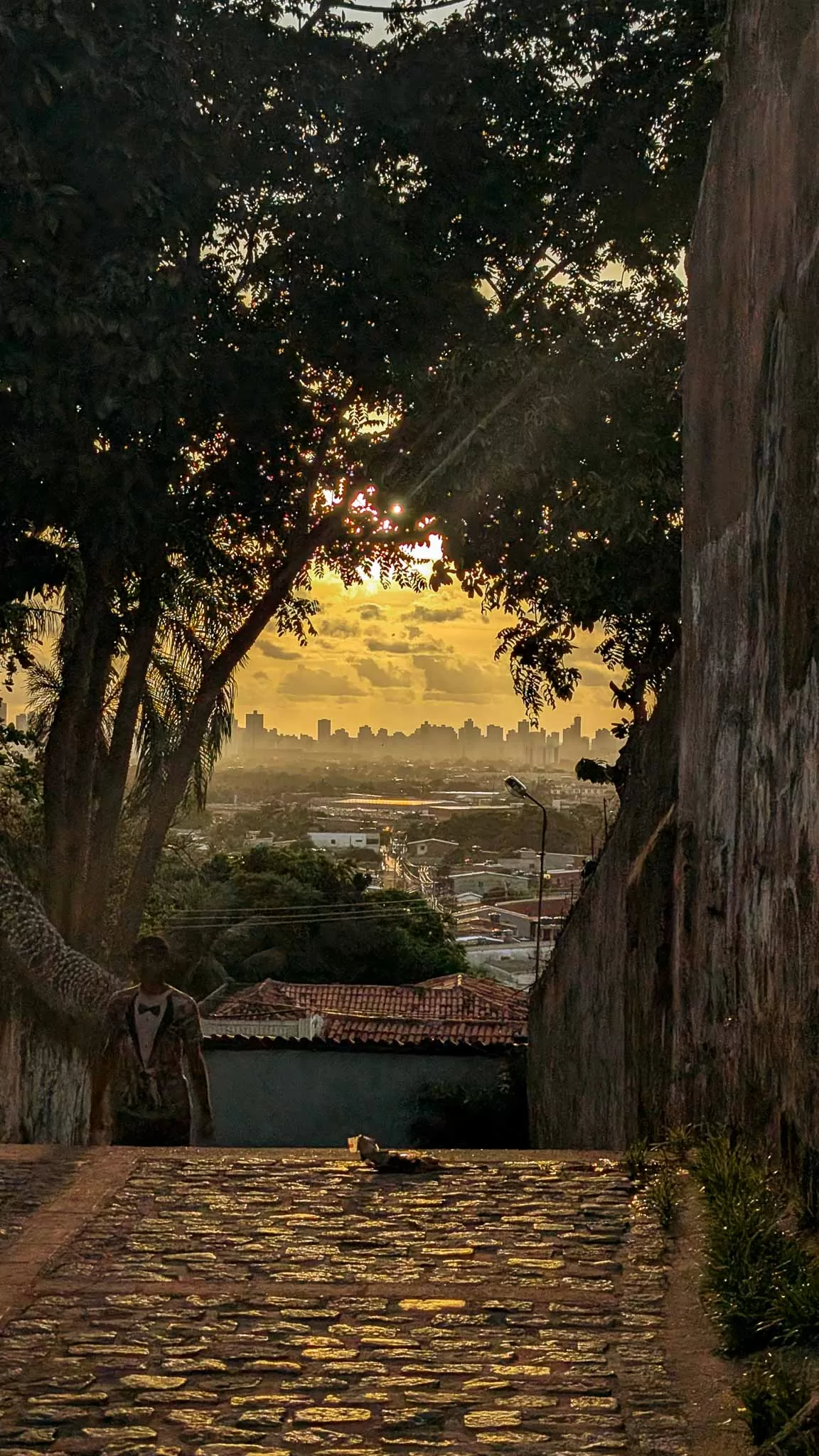
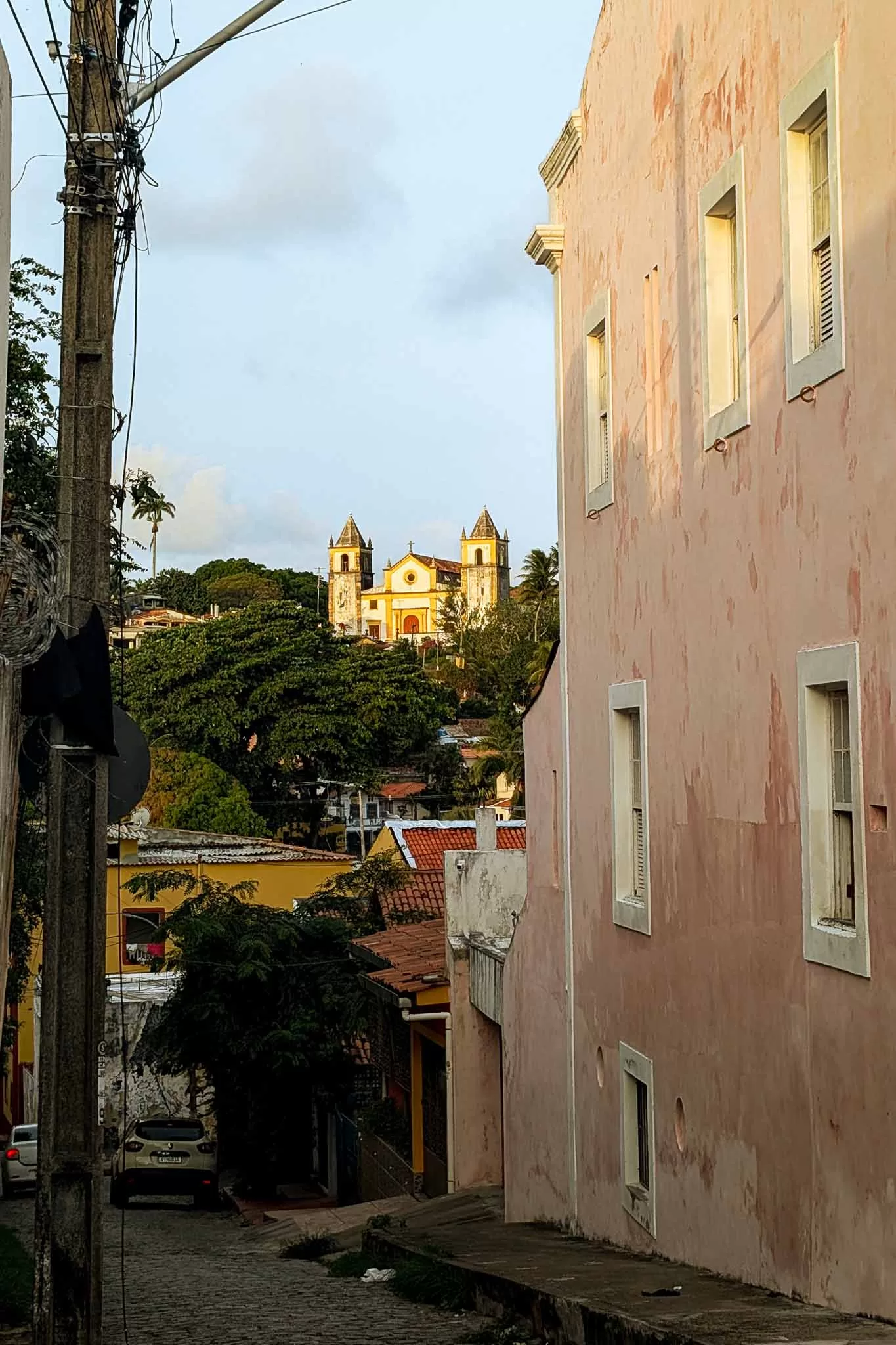
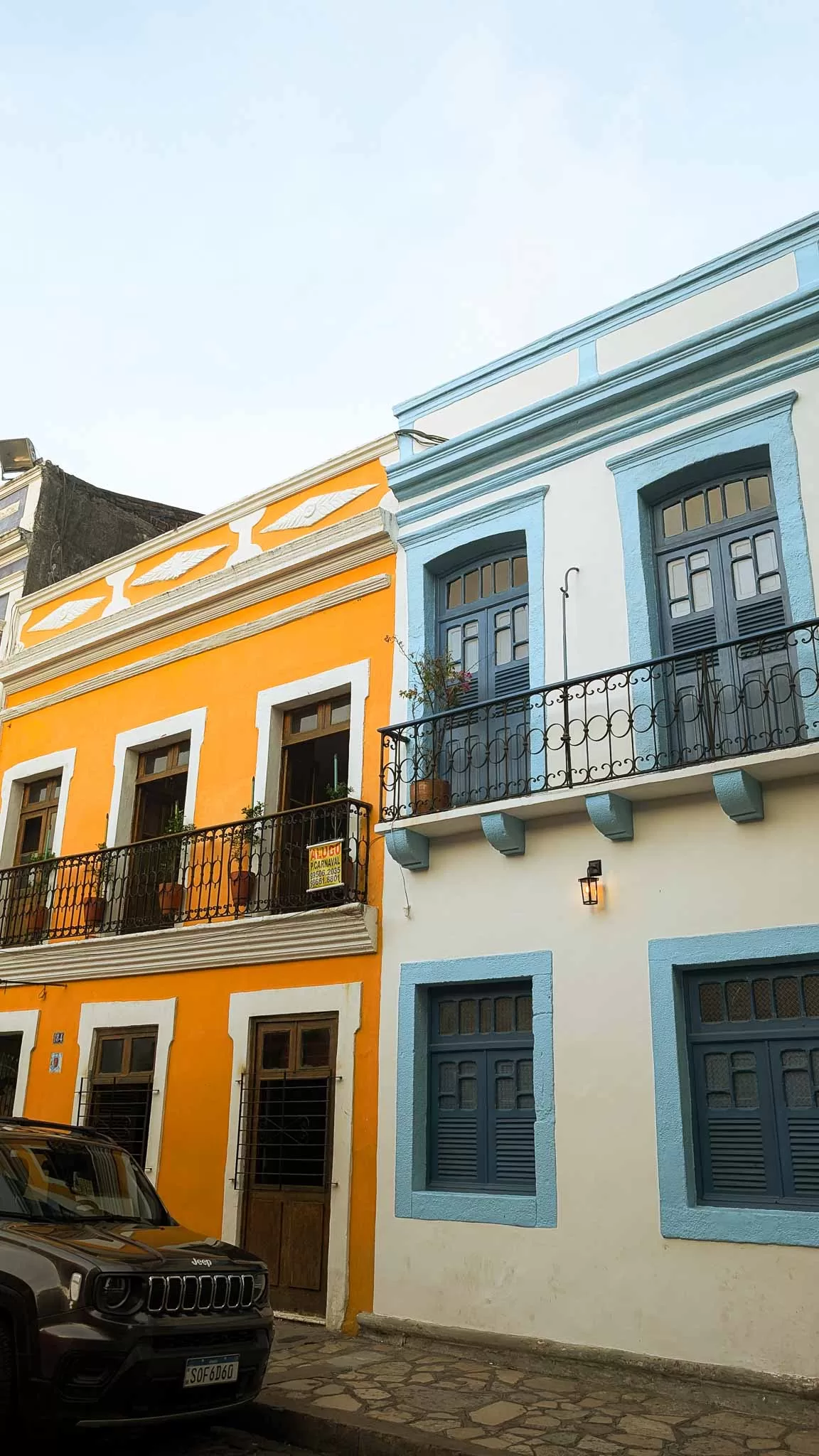
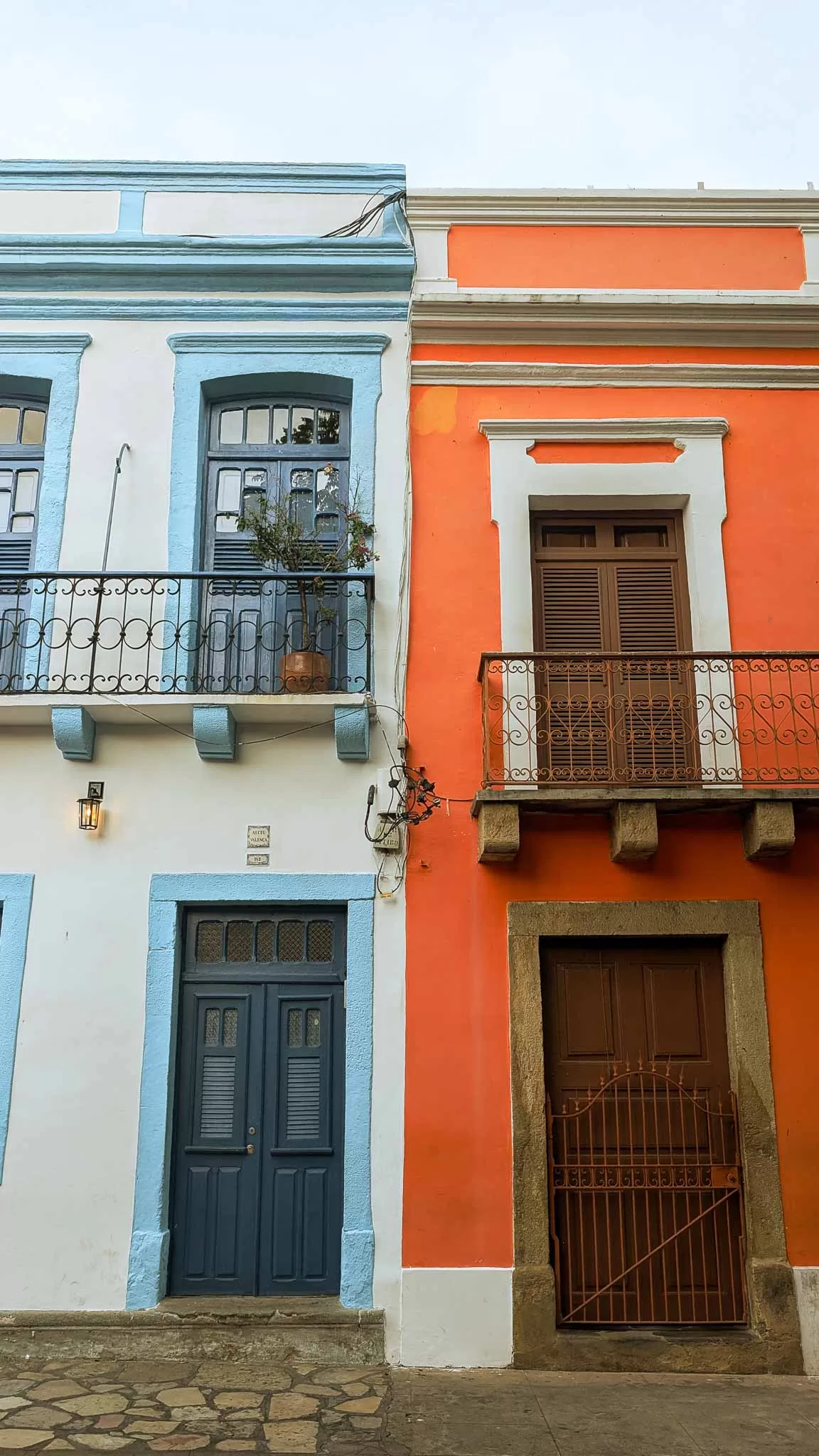
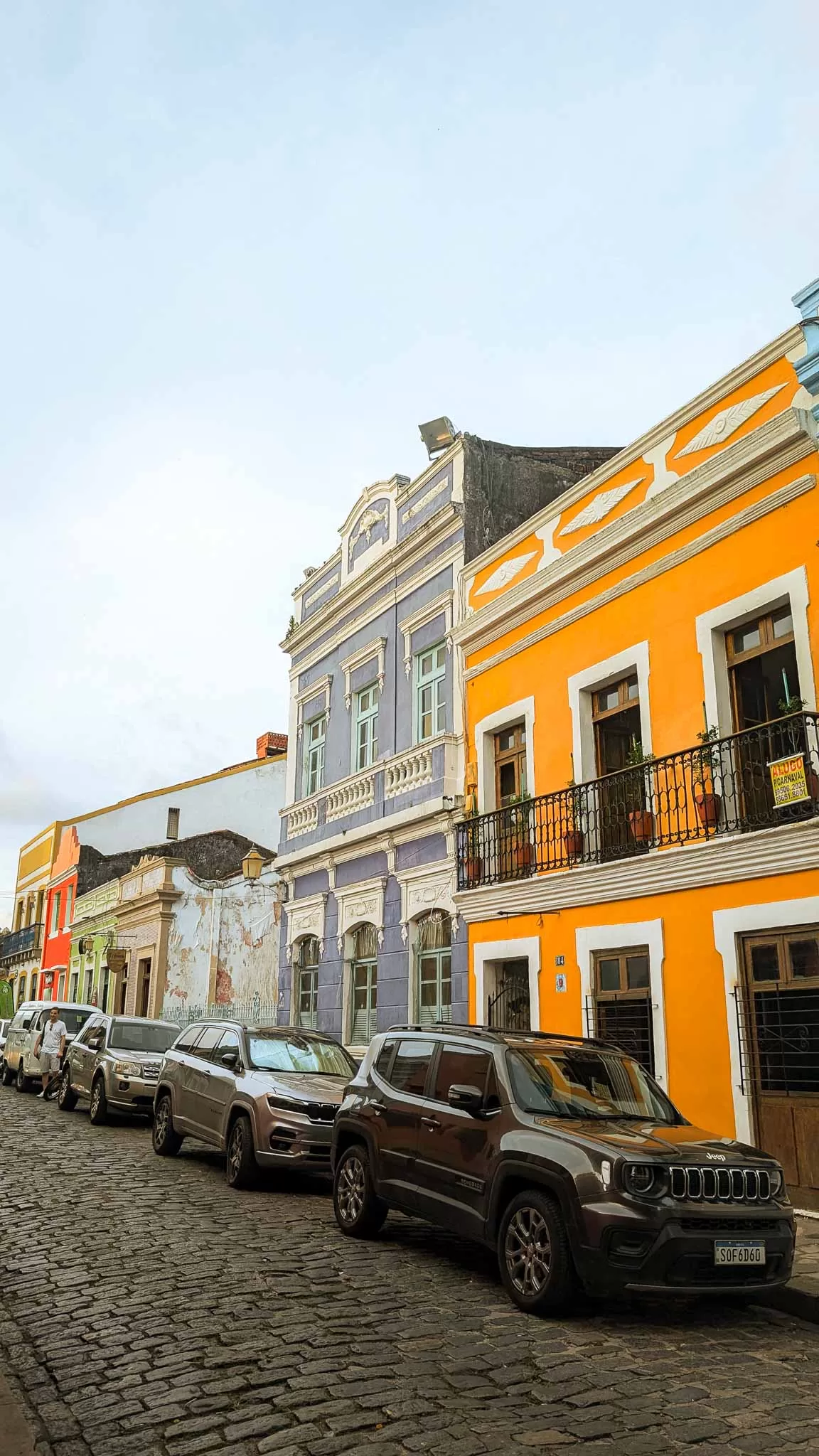
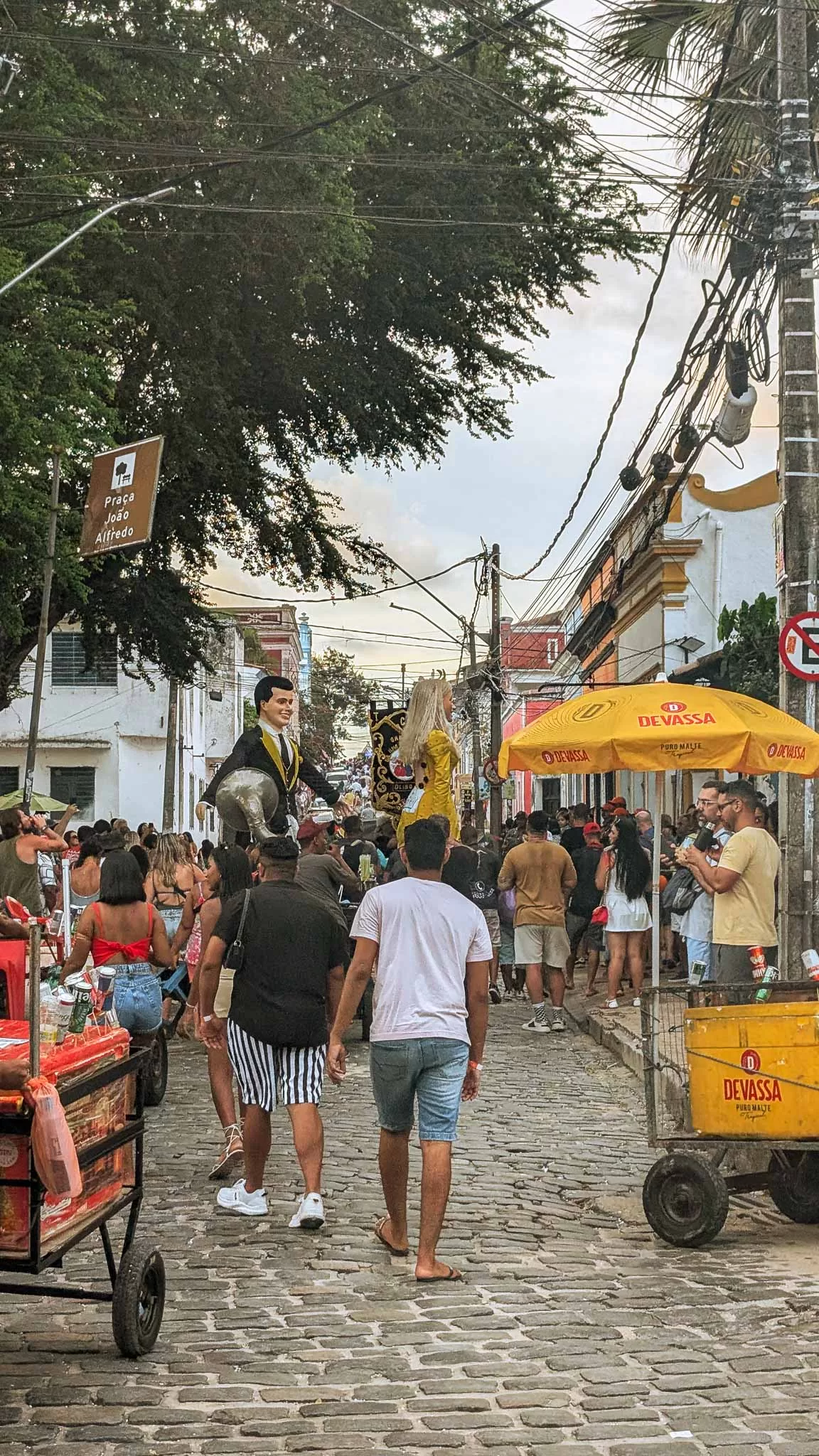
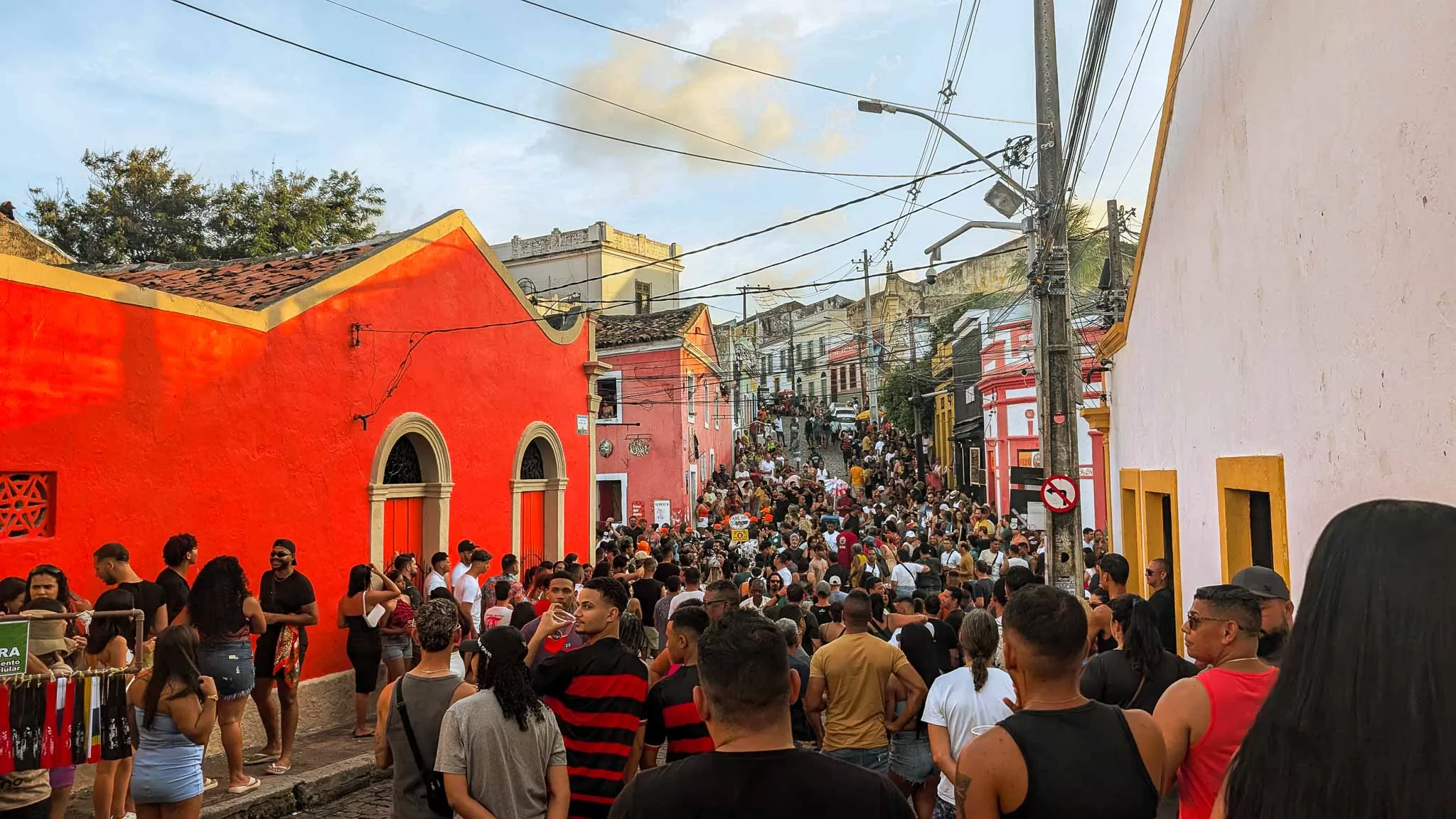
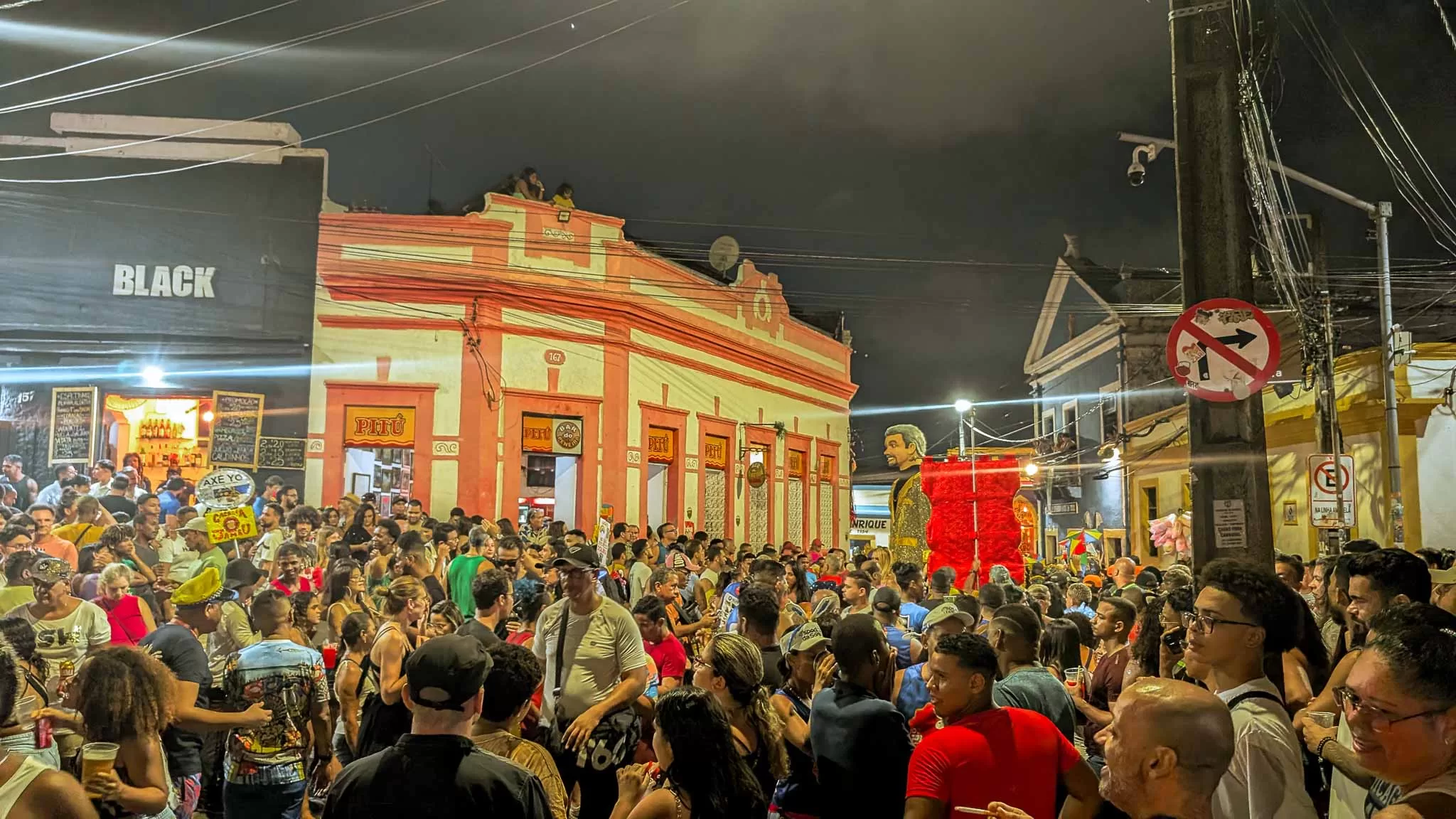
We began our spontaneous Olinda visit by walking through its abandoned streets in the historic centre. Along cobblestones, we passed brightly painted, old buildings and climbed a steep road up to a vantage point where we could see the Atlantic ocean, and Recife to the south. It was insanely hot and humid here which explains why there was no one out and about, or so we thought. That’s when we heard it. Approaching in the distance were drums and brass instruments, and the cheers of people as they paraded their way through the streets under the blistering sun in a practice run for the festivities later that night. We hid beneath the shade of a tree and waited for the parade to come past us, and it was awesome. The Olinda Carnival tradition is to have people dance around in these really tall costumes of Brazilian celebrities with huge paper mache heads and long floppy arms, bobbing up and down above the crowd and spinning their arms around while the music is playing. There are also groups of dancers among the parade who dance in styles local to Pernambuco called Frevo and Maracatu, and everyone looks like they’re having a great time in spite of the relentless heat.
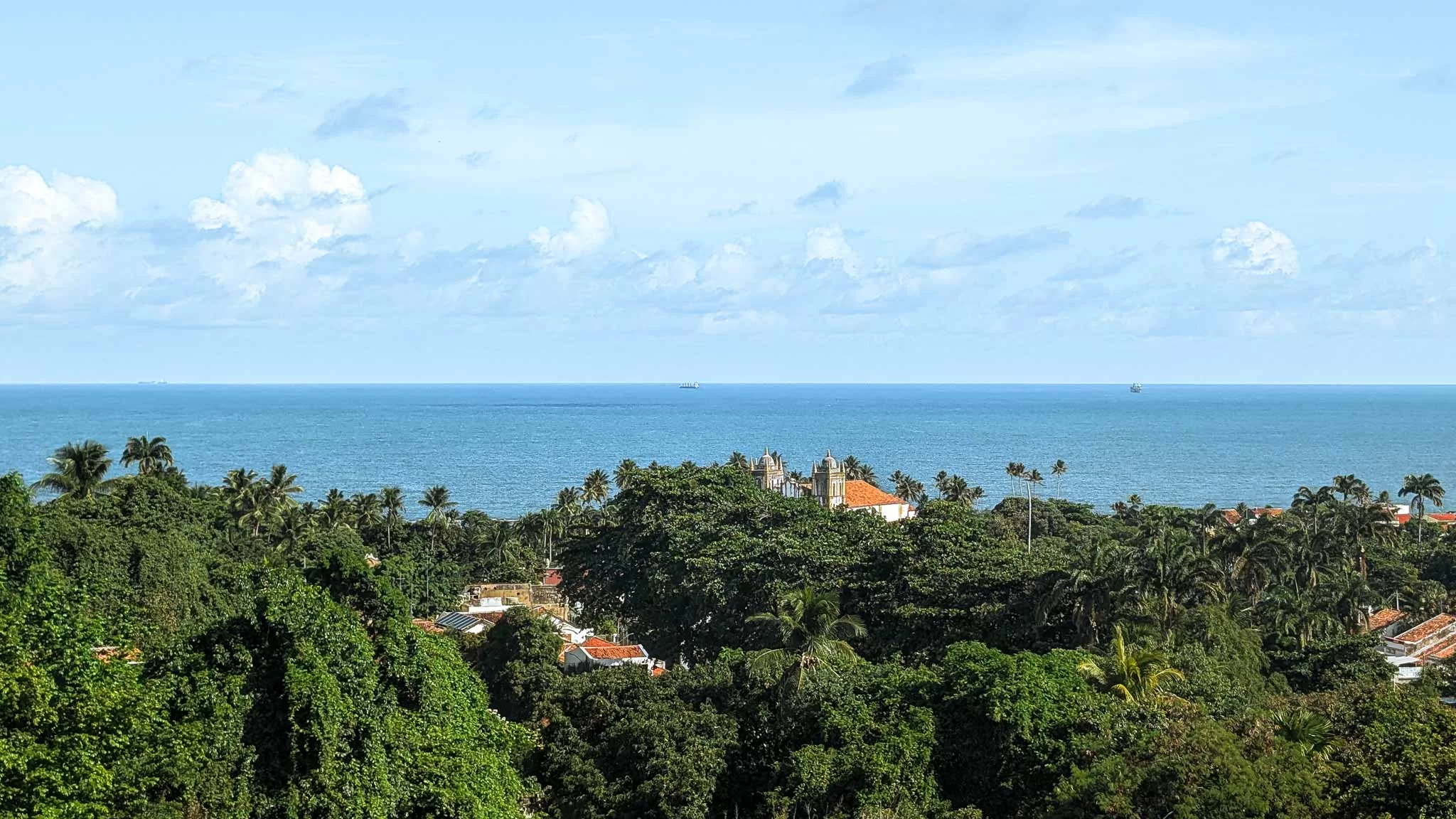
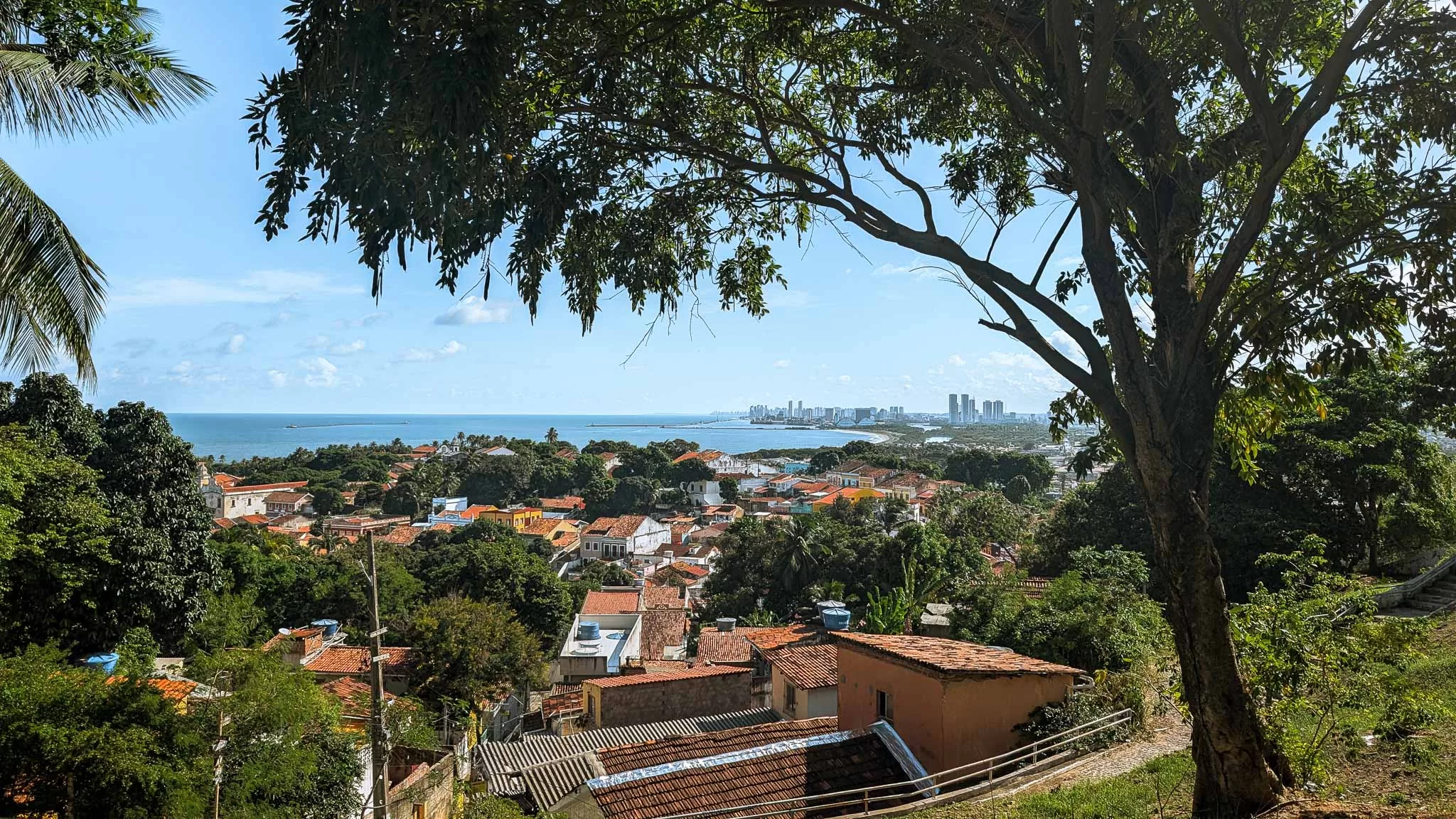
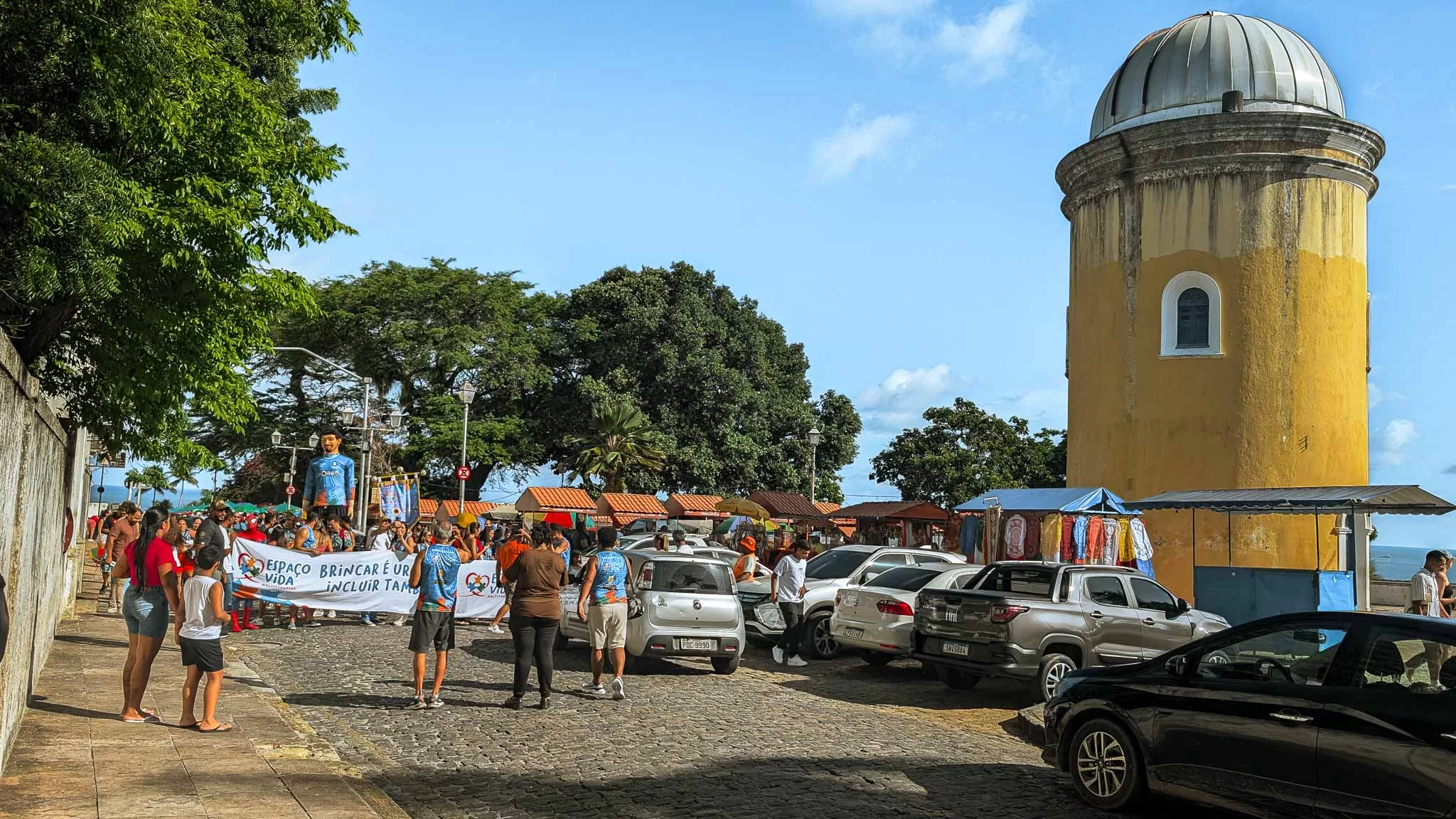
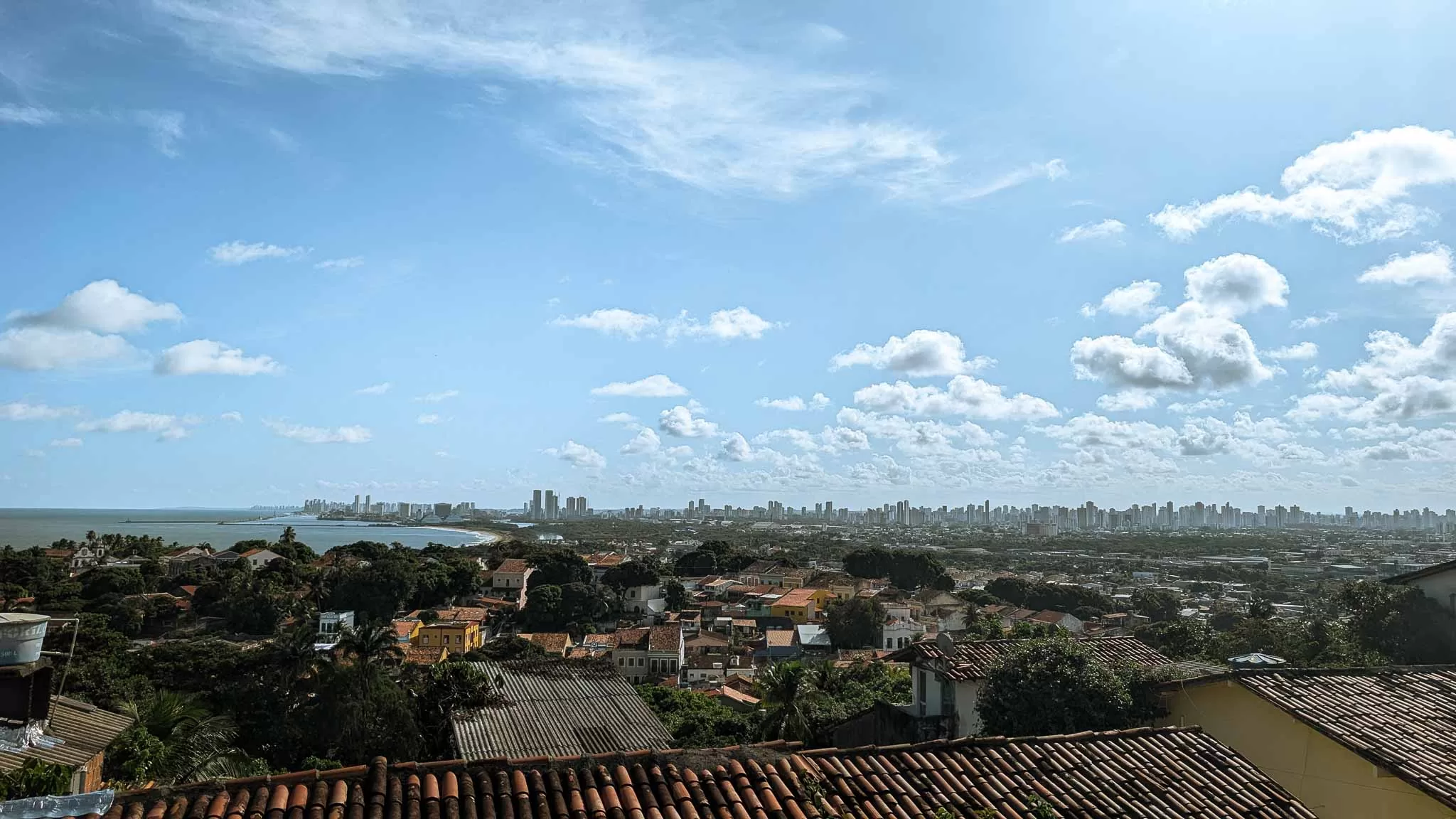
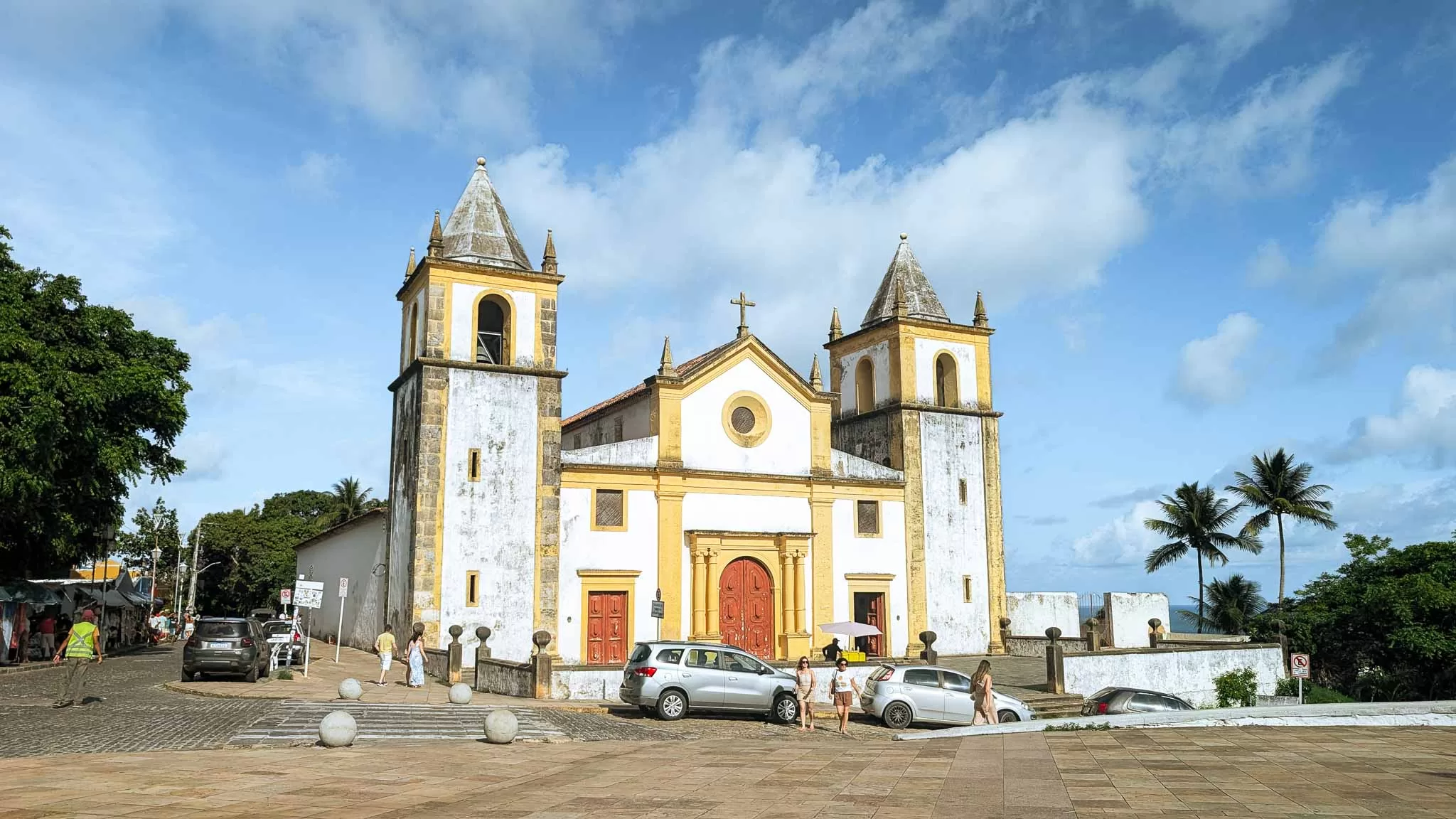
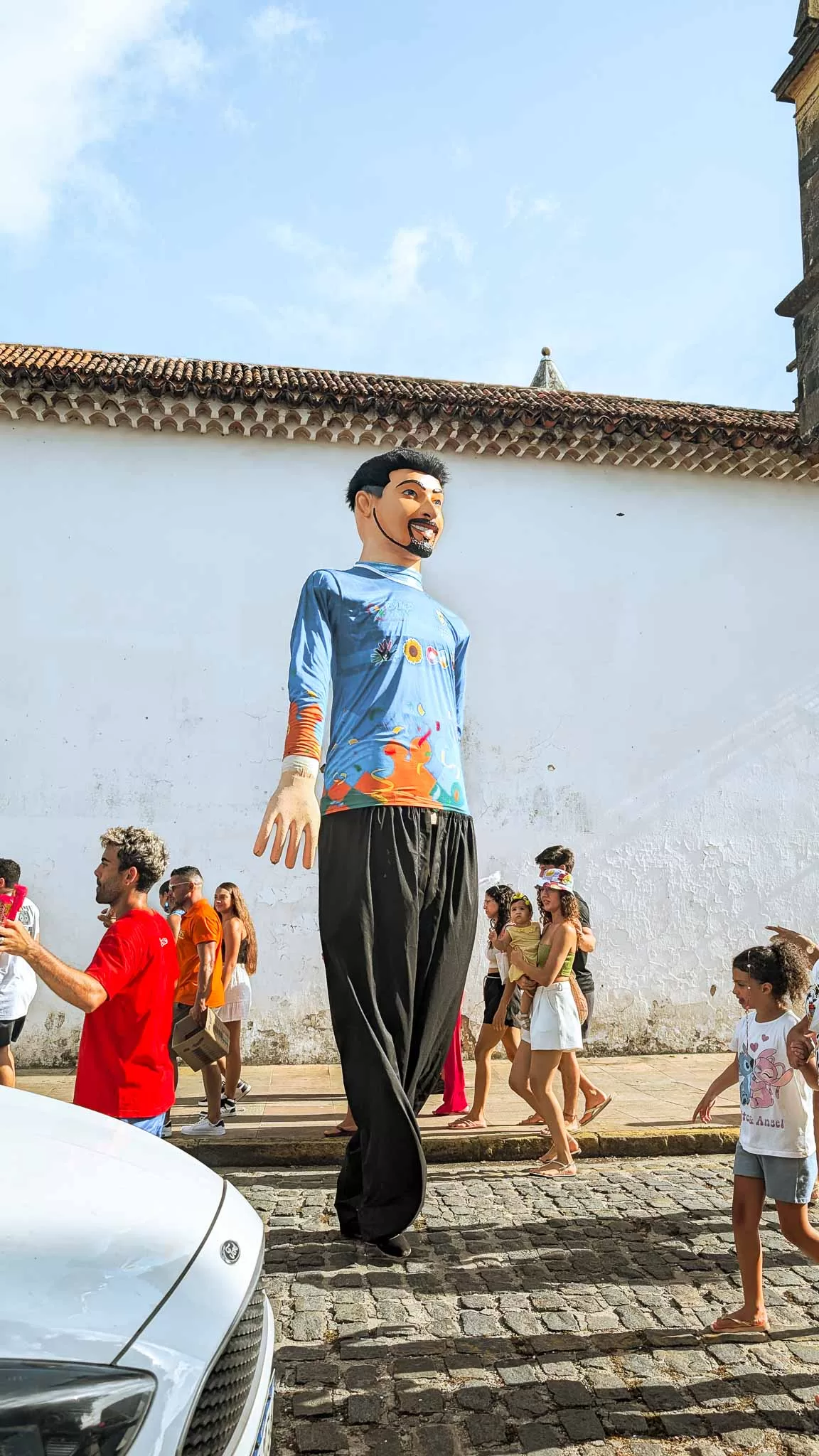
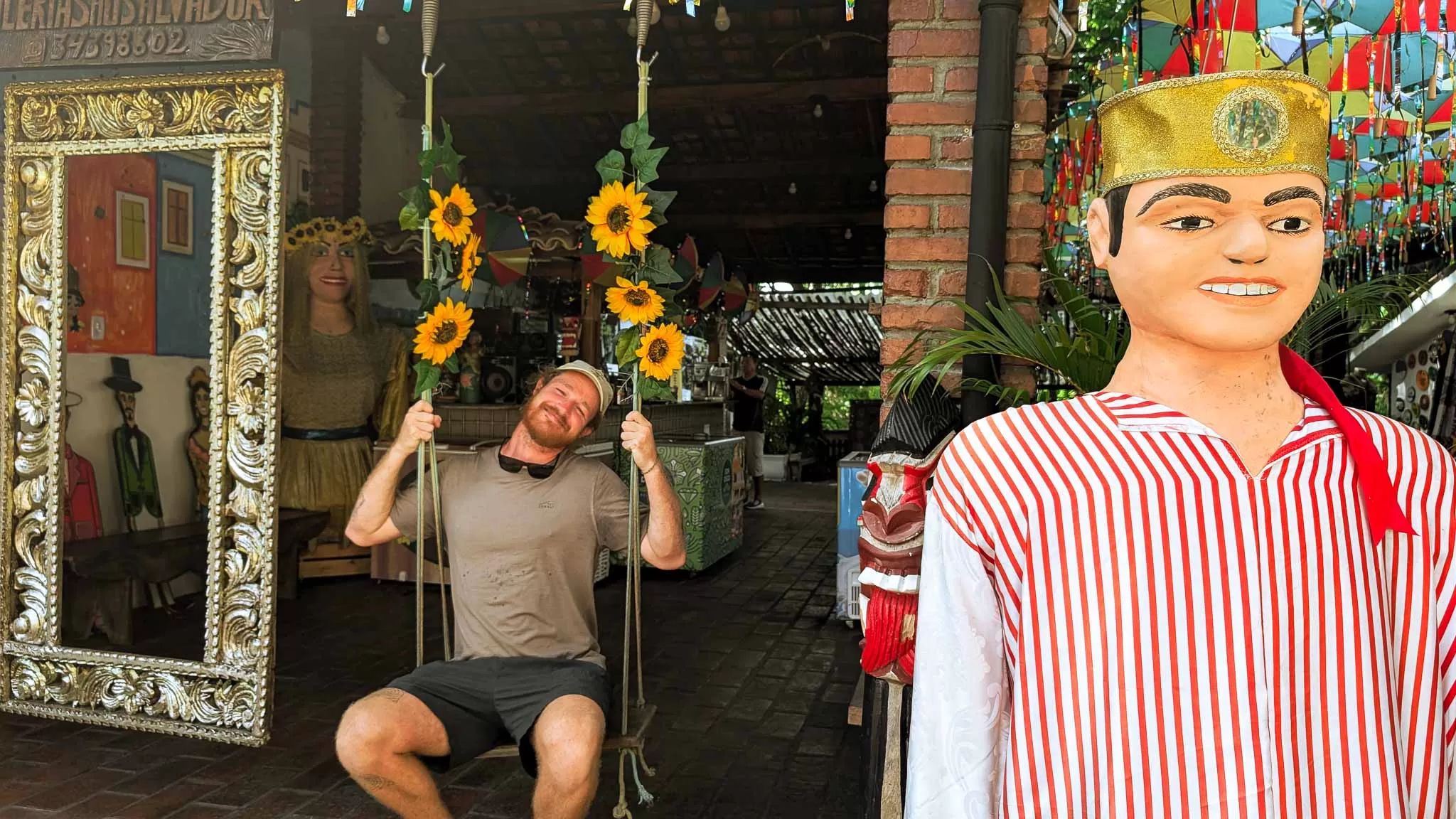
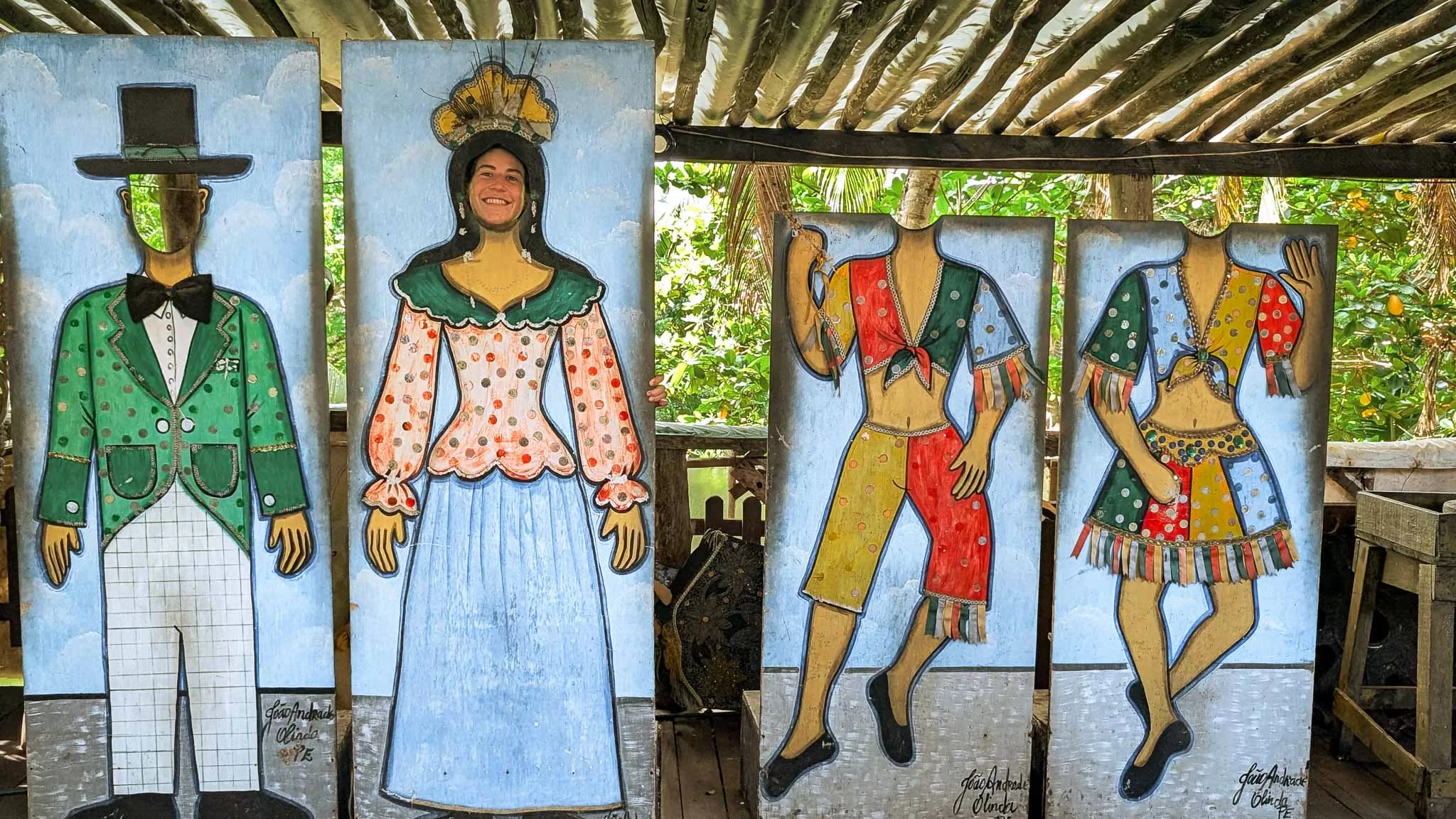
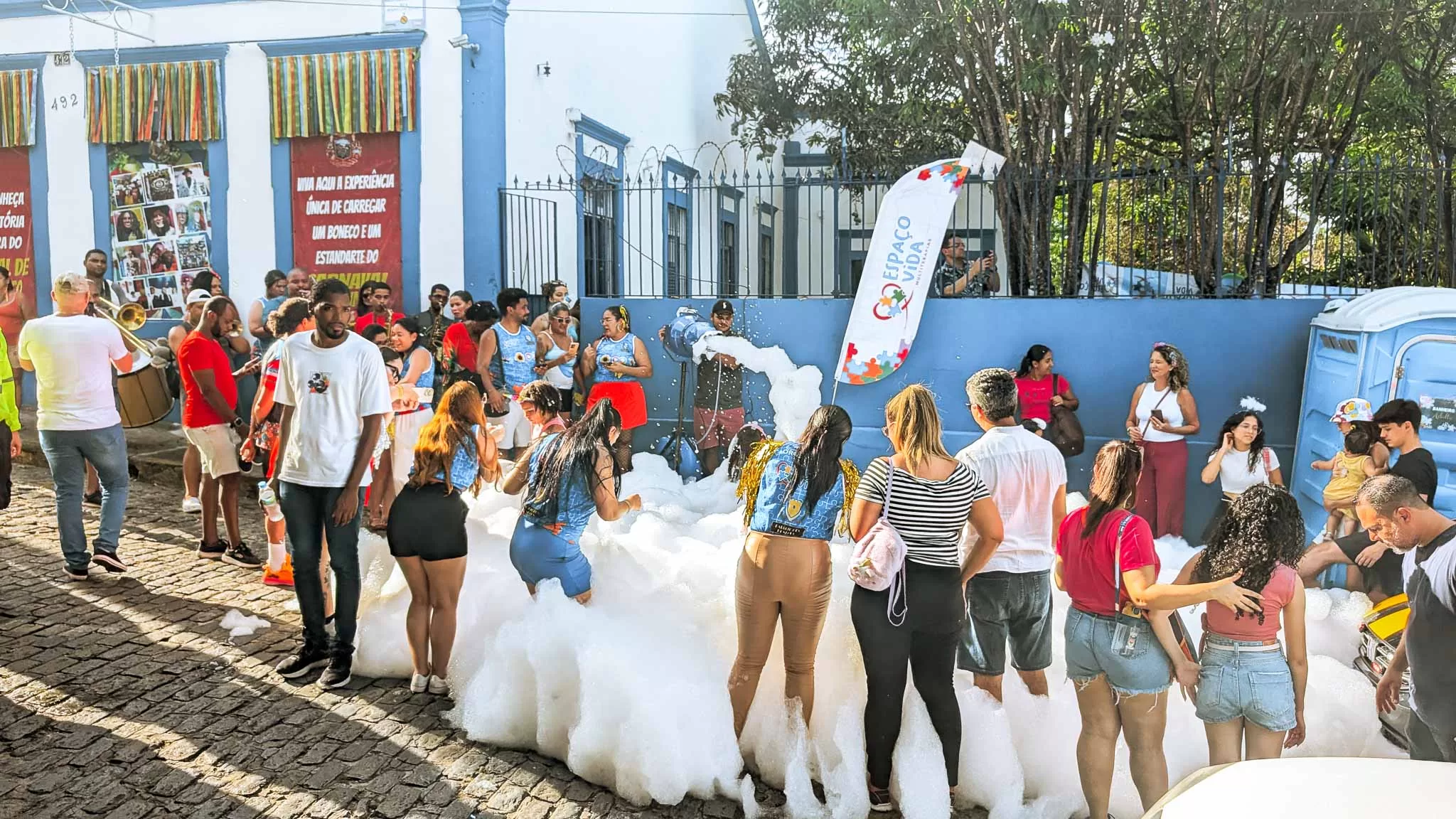
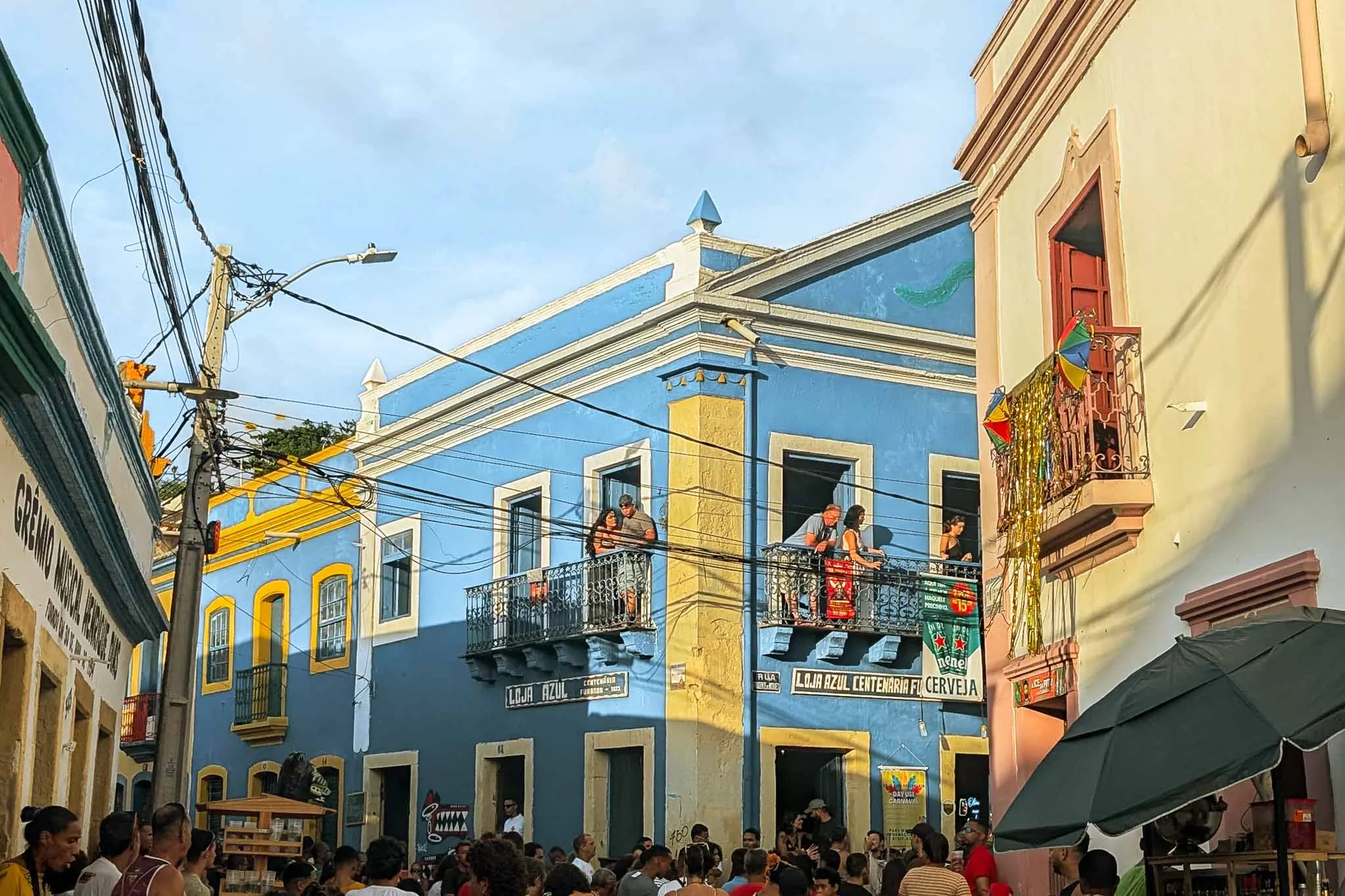
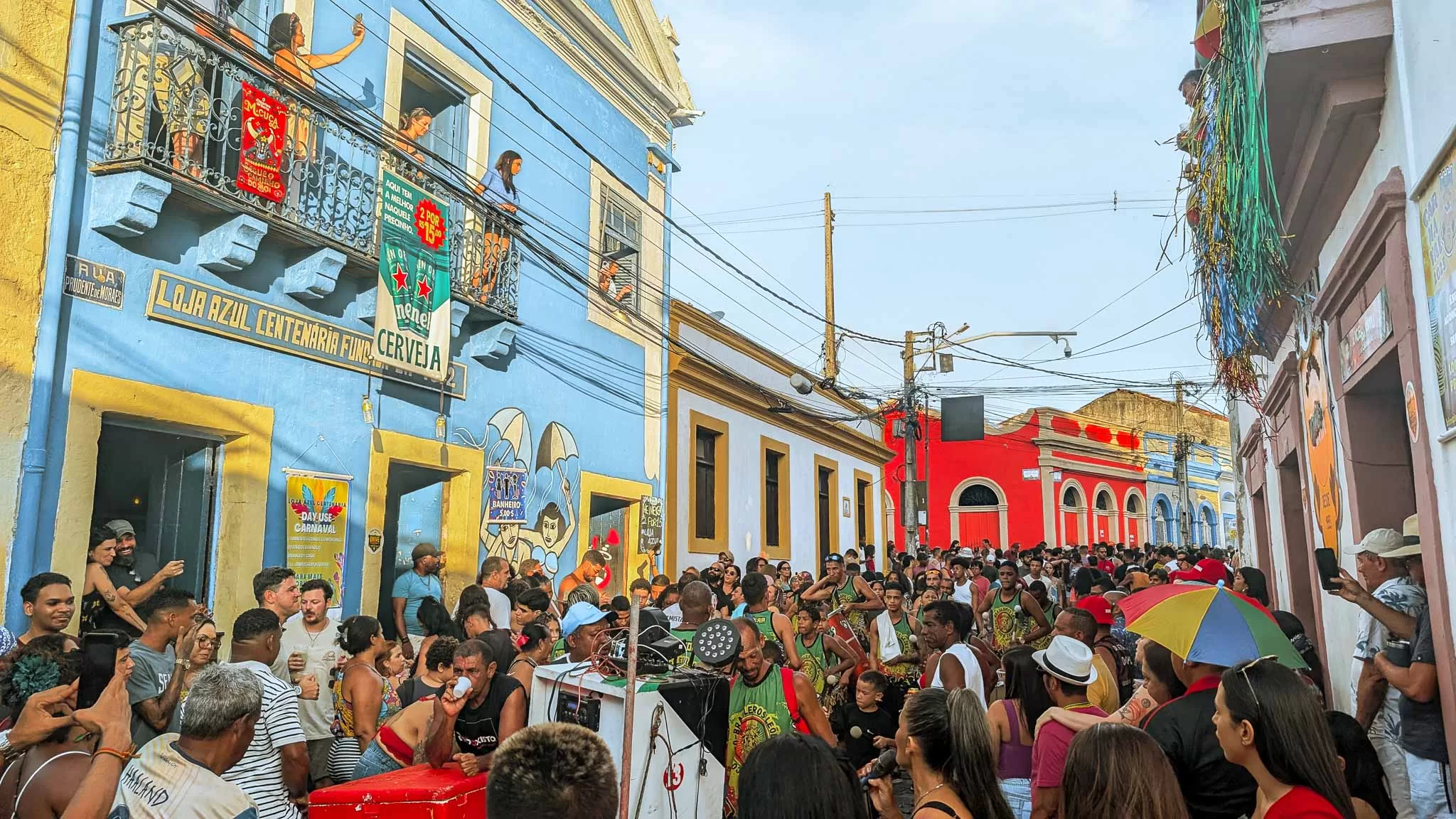
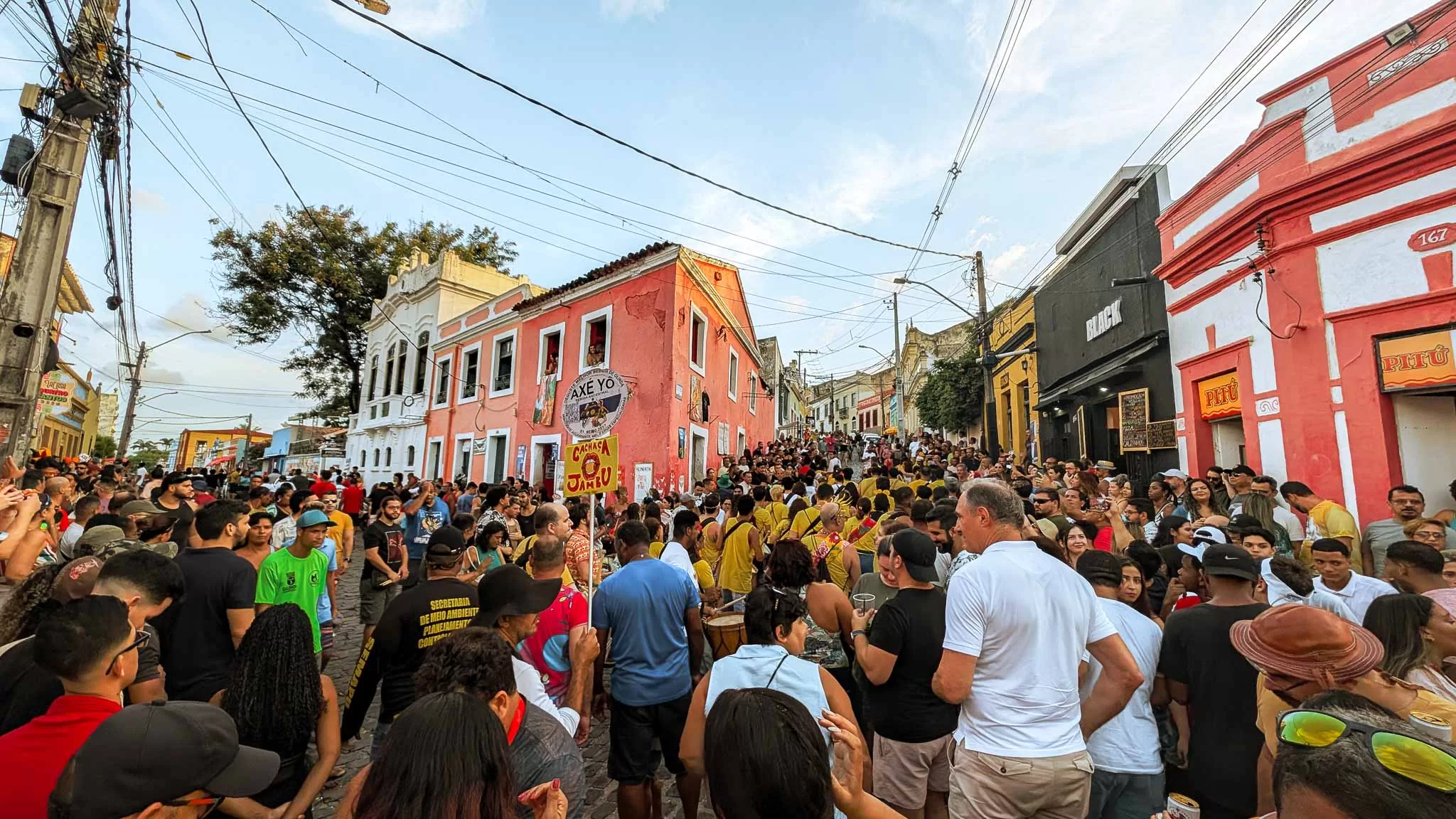
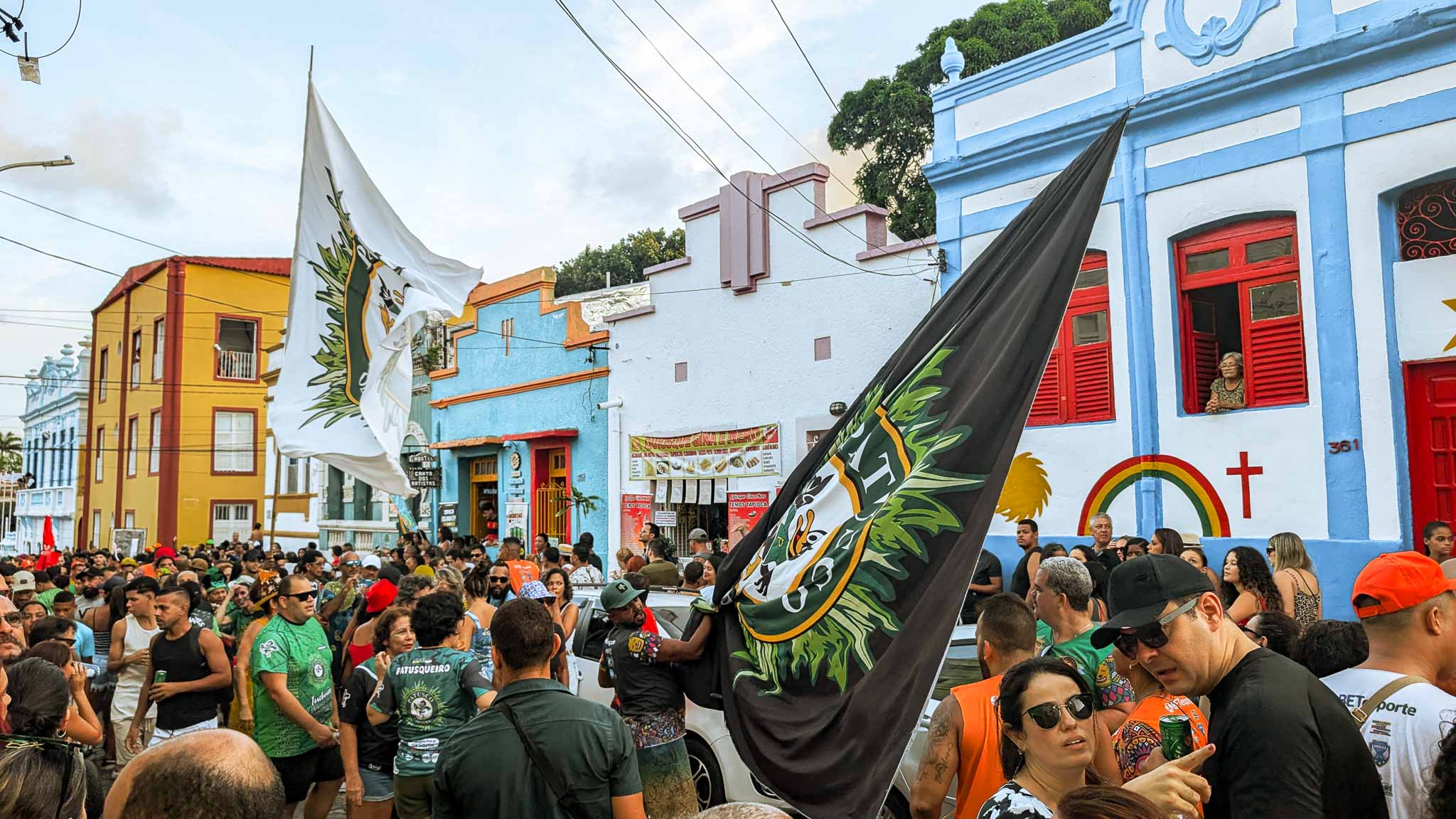
After the parade passed, we walked around the souvenir markets for a bit, and continued down into the main square of town where we saw stages for music and a tonne of food and drink stands being set up. I was beyond excited to head out later in the afternoon once it had cooled off a bit, so we went back to our hostel, freshened up a bit, and I put on a party shirt and we hit the town. It was so much fun. The streets were beginning to fill, and it seemed that anyone who owned an eski was selling beers to passers by as we made our way to the square. We passed a few more parades with more paper mache heads and did a stroll up and down the main street where the food stands were selling all sorts of things like burgers, hot dogs, mountains of espetinhos and other Pernambuco dishes I’d never heard of before, but said I would definitely try. We walked up to a cocktail stand and ordered two caiparinhas from the 12 year old that was running the joint, and went to watch a band play to rehearsing dancers out the front of an old library. Once the sun had set, the streets were packed full of people eating and drinking, and watching the different parades come and go. We saw some really cool maracatu drum ensembles playing while a guy would sing catchy melodies over the top, and we tried a bit of carne do sol com farofa e vinagrete, which is like a dried beef sauteed in tomatoes and onions, served with farofa and a pico de gallo with vinegar type dressing. It was quite delicious alongside a Brahma, made even better by the music we were surrounded by. We left the square and continued walking around town, and it just seemed like around every corner there were different bands playing, people dancing and the streets were just packed. It was such a fun night.
After another few beers and caiparinhas, we both awoke the next morning quite hungover, one of us significantly worse for wear than the other. Because we weren’t aware of how much would be happening in Olinda we only booked one night in this hostel, but now we really wanted to stay longer. The owner told us that we’d have to move from our private room into a shared dorm with a shared bathroom if we wanted to stay another few nights. Usually this would be fine, but because Rachael was absolutely chucking her guts up, we decided to book a private room at another place in town. While I checked us in at our new place, Rachael waited out the front, vomiting into a potplant until I was able to take her upstairs and get her to bed. This accommodation was a similar price to the last one and actually one of the nicest places we’ve stayed in, which was great because Rachael spent most of the day bedridden.
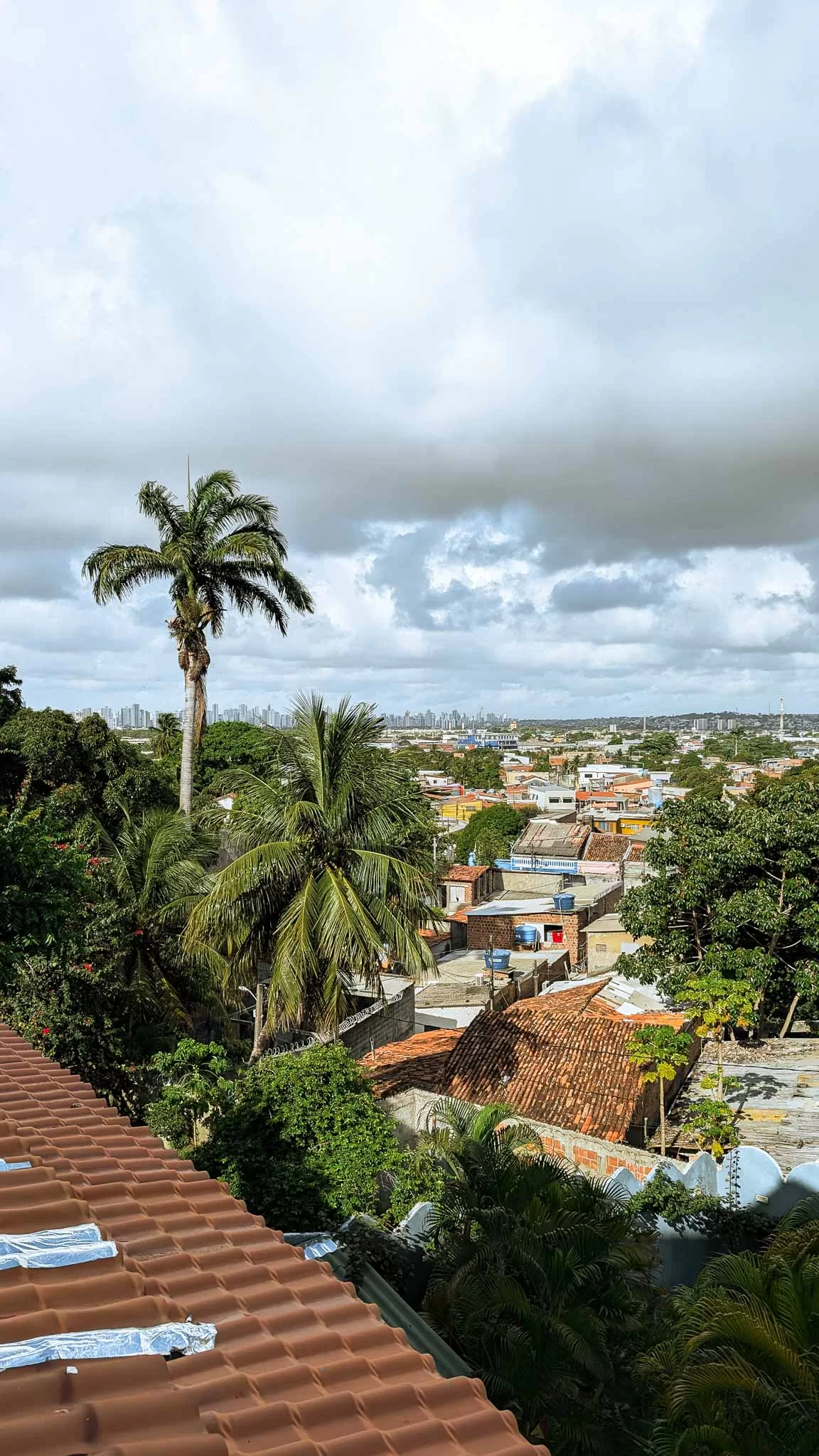
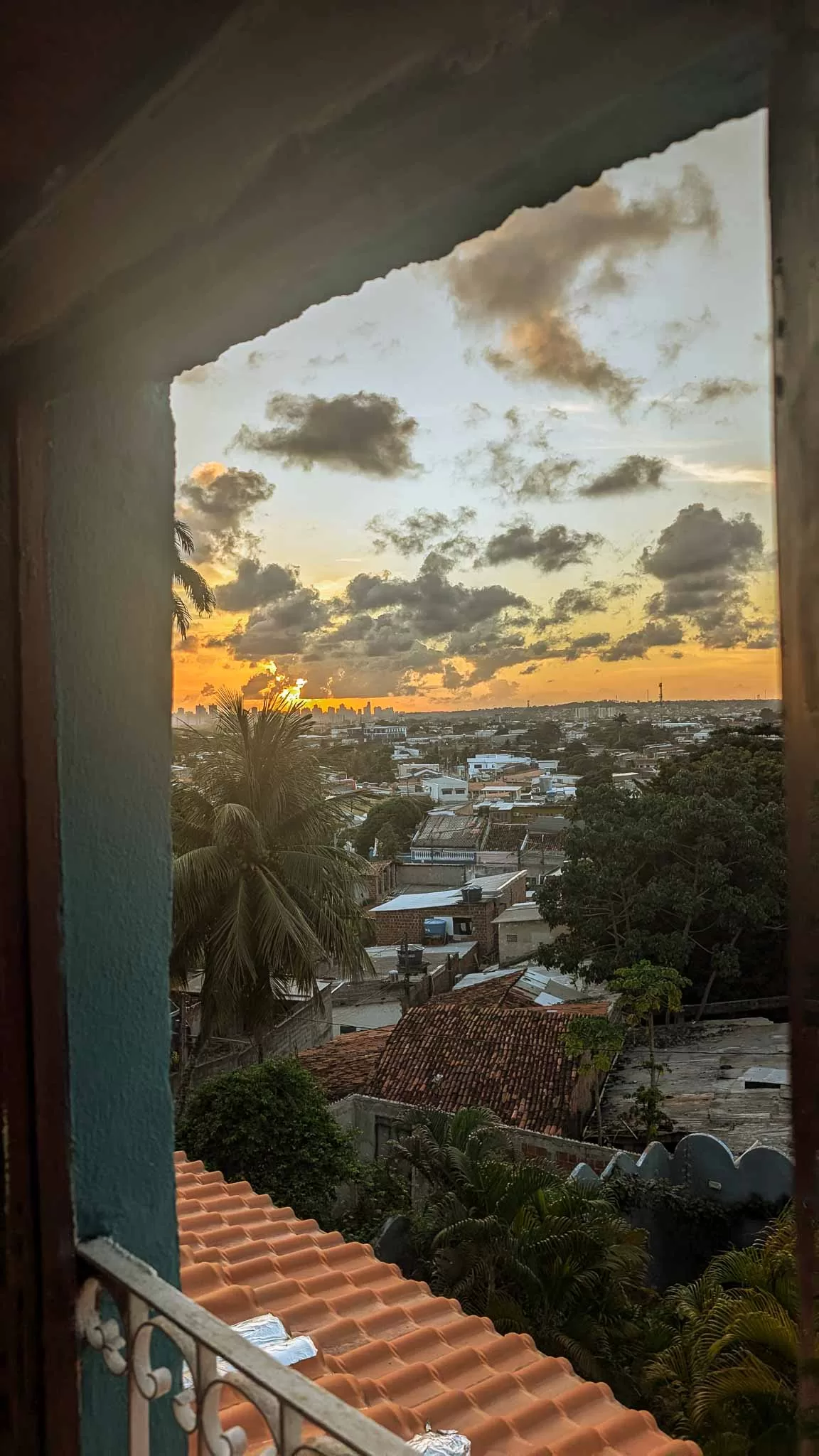
I went for a walk to the nearest grocery store, which was about half an hour away, to buy Rachael some water and a can of coke. I didn’t realise that the route took me through a favela, basically a super poor area of a city where people live in shacks or slap together their homes with whatever they can get their hands on. It was a little bit freaky to be walking around as a gringo with my party shirt on in such a sketchy area, and I definitely got stared at quite a bit. When I reached the grocery store, there were maybe half a dozen blokes seated out the front, on the beers and intensely watching me approach. I decided to fake absolute confidence and hit them with a “Boa tarde, tudo bom?”, good afternoon, how are you? And they all smiled and said “Tudo bem.”, all good. I made my way back to Rachael with the goods secured, and left to go and get myself some lunch.
The food stands were open earlier today, as it turned out to be the biggest day in the pre-carnival calendar, so I approached a stand with a nice looking lady and asked her what she recommended for lunch. She gave me a box of escondidinho de carne de sol, which was similar to what we had for dinner but served on a bed of sliced potatoes with a creamy sauce made from requiejão, a Brazilian cheese. The name translates to something like ‘little hidden one of dried beef’, because it’s usually served like a shepherd’s pie, with the meat hidden beneath a layer of potatoes. Traditionally it’s made with mashed cassava instead of potatoes, and instead of carrots or peas in a shepherd’s pie, this has capsicums and hot chillies. Obviously, I enjoyed this dish drenched in hot sauce with a big 473ml can of Brahma.
When Rachael was finally feeling like she could brave the festivities again, the sun was getting low and an absolutely insane number of people packed the streets. We passed massive sounding baterias, with little kids playing at the front of the group, and I was amazed at how tightly these kids were able to play with the rest of the drums. I bought beers at 3 for $10R ($2.85AUD) from random hole in the wall bottlos and blokes dragging around big eskies, and we made our way towards the square again, only for the streets to be completely packed full of an impenetrable mass of people walking behind a ute blasting the loudest music I have ever heard in my life. Once they eventually passed, we were able to walk around for the rest of the afternoon and just enjoy the absolute magic that was all around us. It was such an absolute party, everyone was having the best time and topping this off with a few esptetinhos made for an unforgettable evening. Once we made it back to our place, my hunger for music, cachaça and grilled meats wasn’t quite satiated, so I ventured back out on my lonesome. I chatted with a couple running a drinks stand, and they invited me to sit down and speak some portuguese with them while sipping on a caiparinha de maracuja, which uses passionfruit in place of limes. I was in my element and I just couldn’t pass up the opportunity to eat at least another 4 espetinhos, two beef and two chicken, on my way back to our accommodation when it was inevitably time to call it a night.
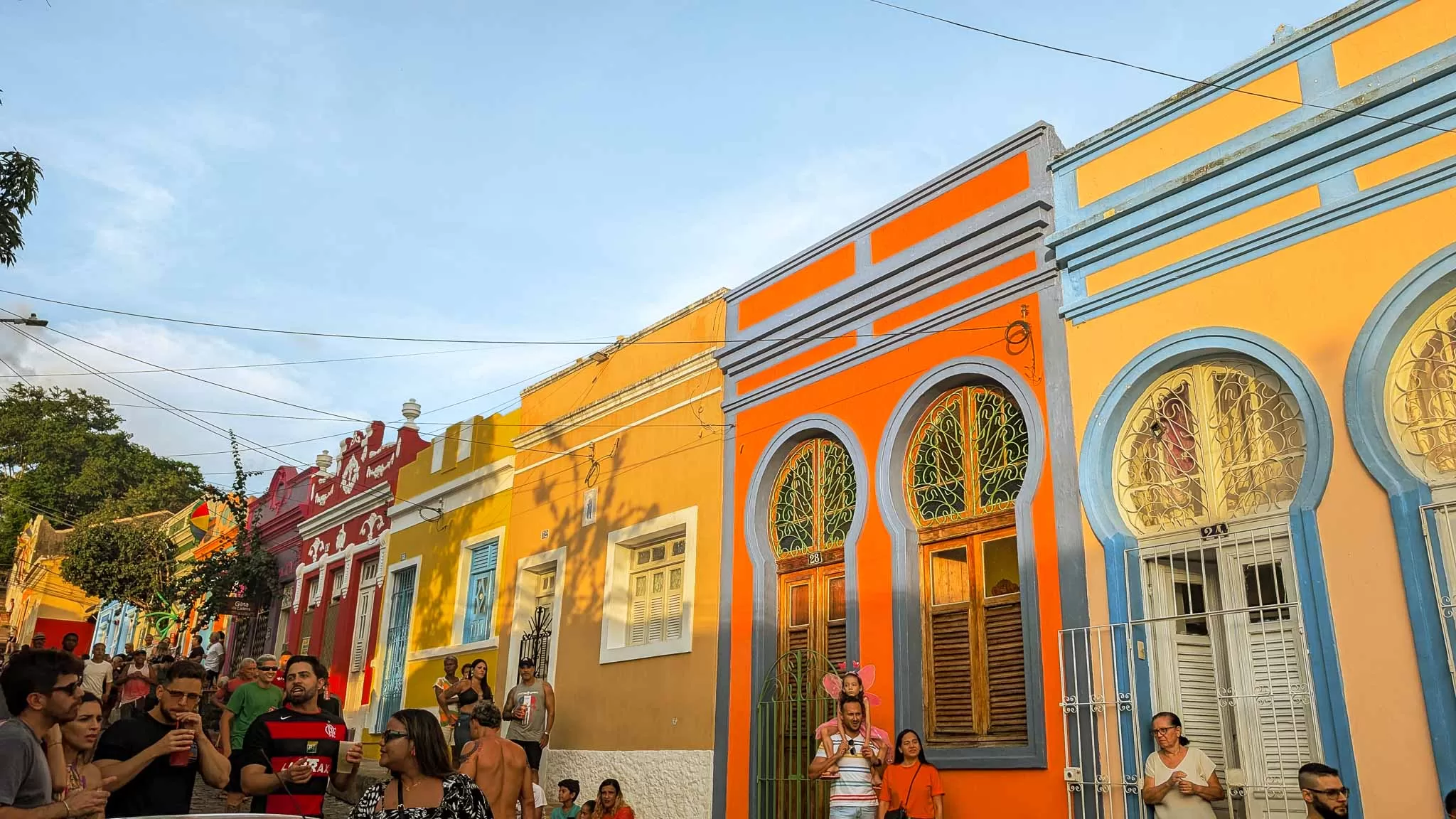
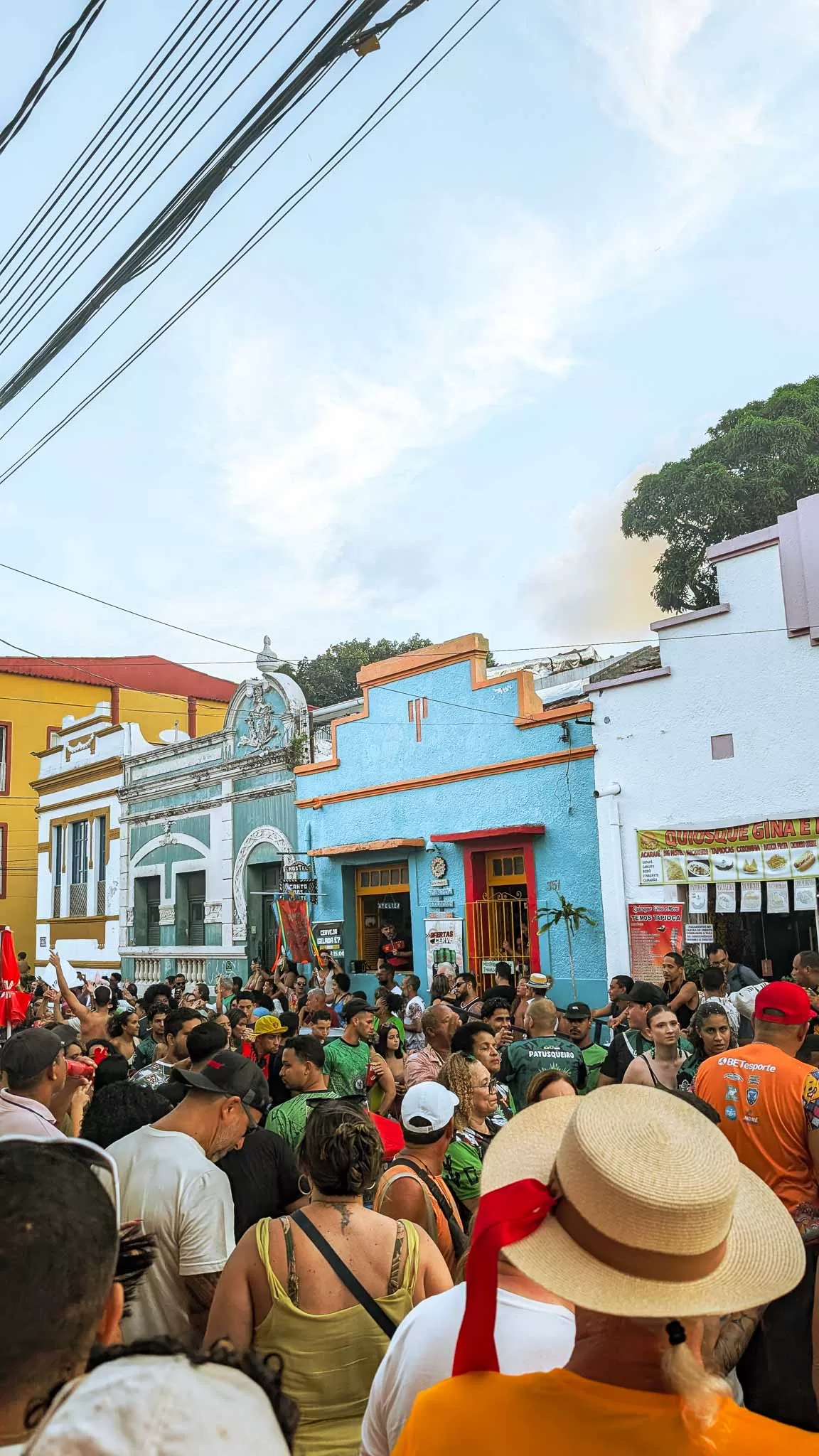
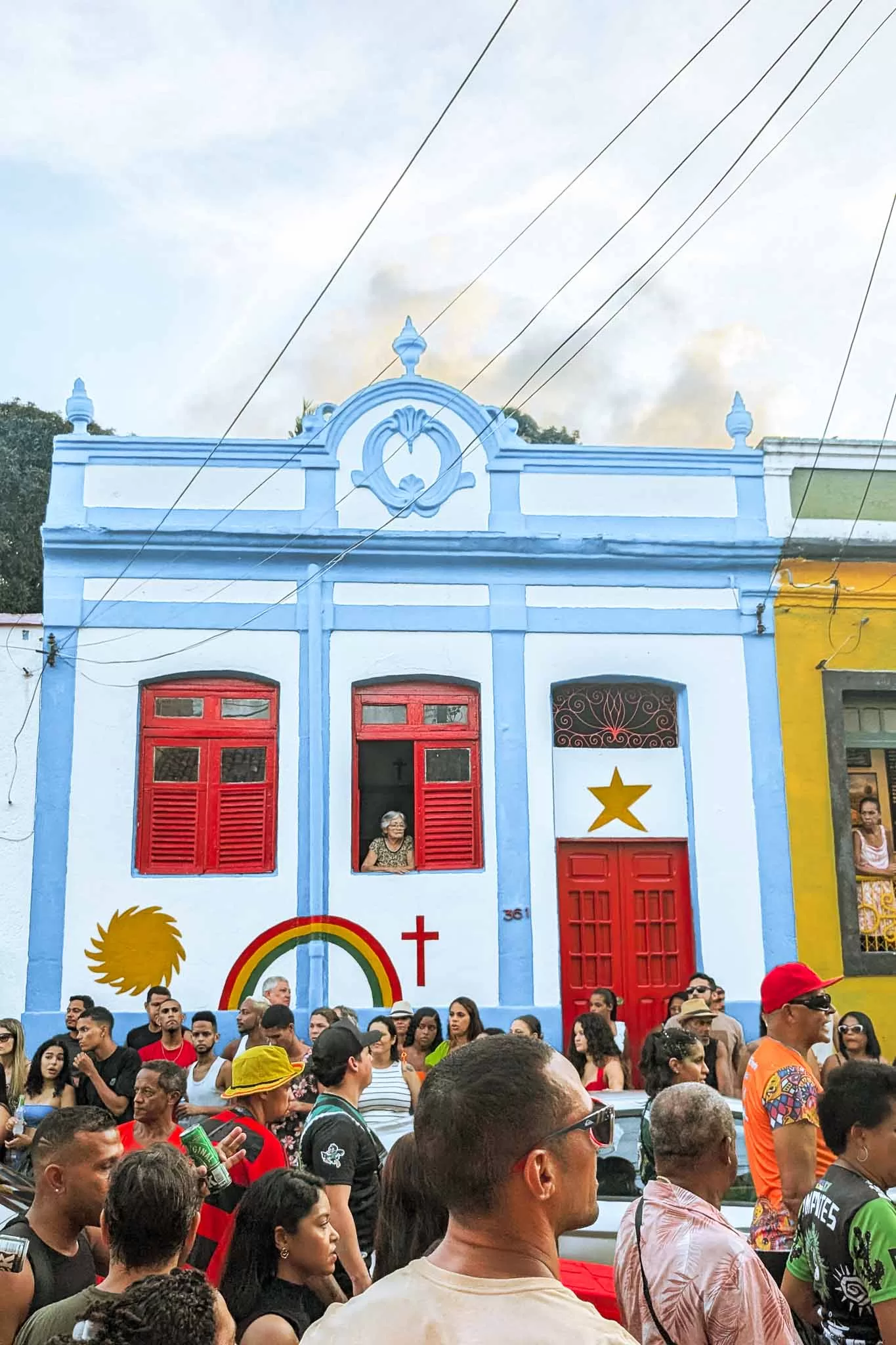
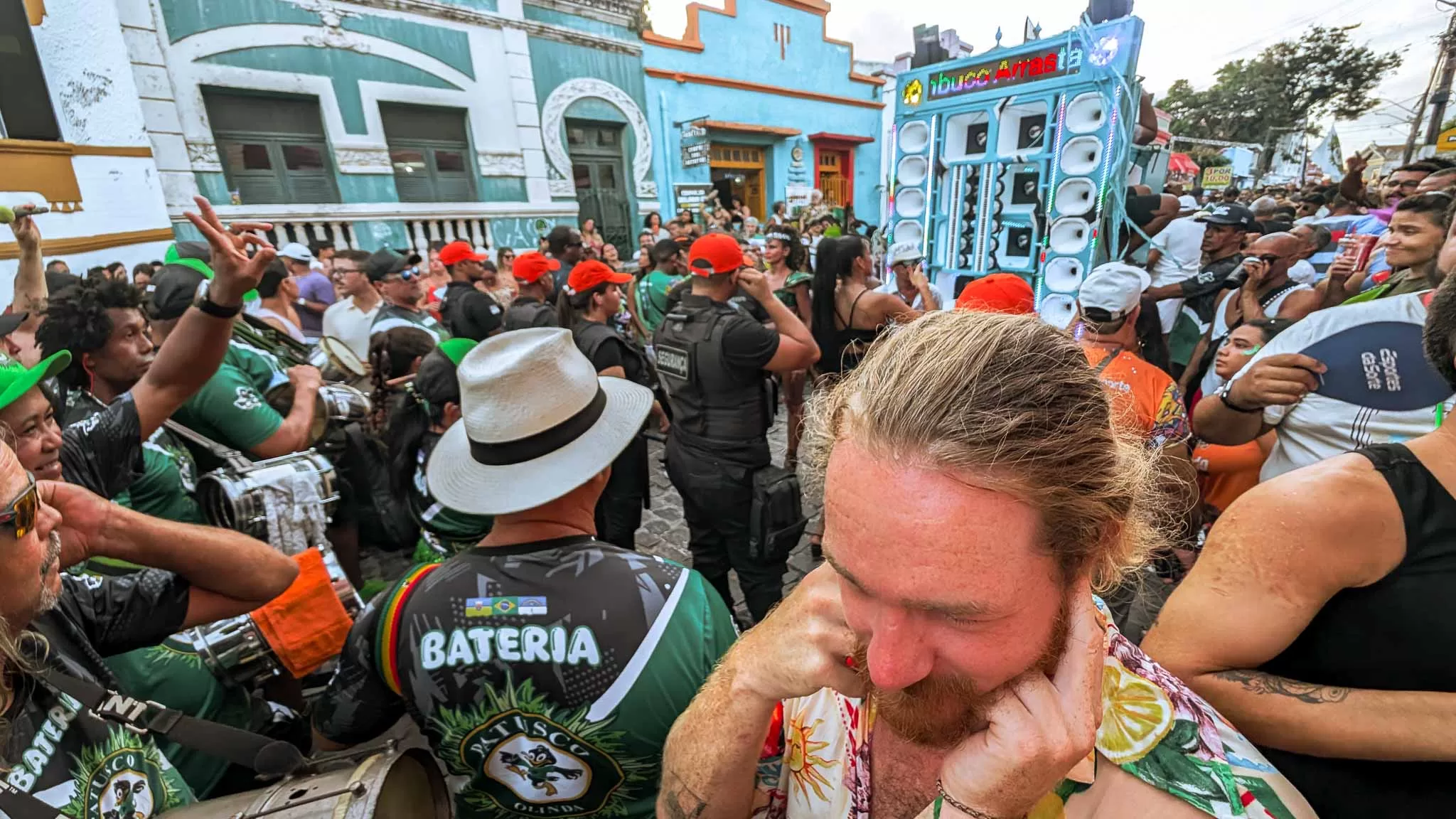
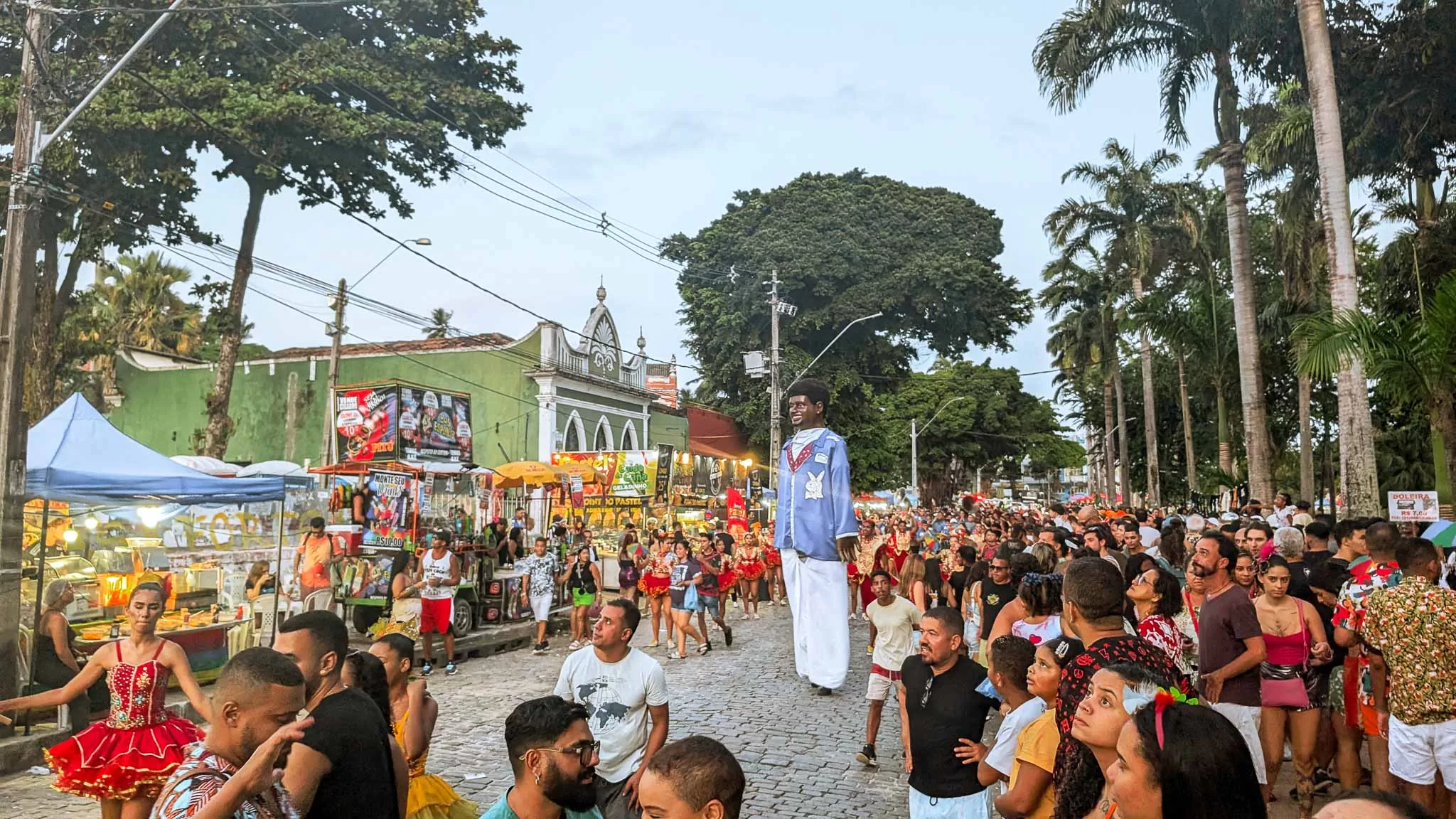
Our last day in Olinda was a slow one, and the pre-carnival festivities had finished so the place was once again a ghost town. After chilling in hammocks for the morning, I went for a walk into town to grab some food and found a nice local bar near the water where I had a Brahma and some chippies, and listened to a few podcasts while watching the world go by. That evening we went to a Churrascaria that was recommended by our Uber driver a few days prior. A Churrascaria is a Brazilian restaurant that specialises in grilled meat, churrasco, and while we had been to plenty of bus stop buffets that doubled as churrascarias, we’d never tried the real deal. We were dropped off at the front door and entered the huge restaurant to wait staff wearing suits and someone playing a grand piano in the corner. We giggled to each other as we were incredibly underdressed for such an establishment, and a waiter approached to tell us some important information that we were completely unaware of. This was a rodizio, an all you can eat grilled meats restaurant, and tonight they would be running a special for $40R ($11.30AUD) per plate. This was hands down one of the best dining experiences of my life. First we loaded our plates at the huge salad bar, and when we returned to our seats a line of waiters funnelled out of the kitchen with huge skewers of different cuts of meat, and approached the different tables, slicing off pieces of delicious, salty and juicy steak. My luck continued when Brazil’s famous Picanha, the rump cap, was also coming out of the kitchen in good quantities. I’d wanted to try some Brazilian picanha for ages, but it was always way too expensive. We had a dial on the edge of our table that had an arrow pointing to “Sim, por favor”, yes please, or “Não, obrigado”, no thank you, and even when I had the dial set to “Não, obrigado”, the blokes just kept making a beeline from the kitchen to our table, and I couldn’t say no. This meat was so salty and succulent, I was borderline crying the whole time. I only realised at the end that the dial had two faces, and when it was facing “Não, obrigado” for us, the wait staff were seeing “Sim, por favor”. It was incredible. I can’t believe how much meat I ate for less than $12, it was one of the best dinners and the best way to finish up an incredible few days in Olinda.
I think our whole trip from leaving Salvador to arriving in Olinda is a testament to how you don’t really need to plan every single detail of a trip. We heard great things about Acaraju, Praia do Frances and Maragogi from other travellers, and those places weren’t anything special, but no one mentioned Olinda. A very hungover Rachael may disagree with me, but those few days in Olinda are some of my favourite in all of South America, and we didn’t even plan on passing through the city.