Physical Address
304 North Cardinal St.
Dorchester Center, MA 02124
Physical Address
304 North Cardinal St.
Dorchester Center, MA 02124

18th – 20th December, 2024
When we realised our original plan of traveling up the Andes would get us to Peru during the rainy season, we began to throw around ideas on where to best spend our time to avoid the dull weather. Fly up to Colombia to work our way back down the Andes, only to backtrack a few months later? Do something crazy like fly to Mexico and begin to work our way back down to Peru, knowing that once we got to Mexico we’d probably never leave? One of us was throwing such nonsensical ideas around, while the other calmly suggested “let’s just go to Brazil”, which was obviously the smart choice. We’d be able to spend a good few months exploring this huge country, without going too far off course that it would seem unlikely we’d get back on track again. I can understand Rachael’s hesitation with visiting a country with such a wild reputation, let alone the fact that we’d done very little research about it in comparison to other South American countries we’d be visiting. In fact, I was only really certain about 3 things when it came to Brazil; it’s dangerous, the food isn’t great, but the beaches are incredible.
Obviously it pays to do your research on a place so you know what you’re getting yourself into, so you know which route to take and which places to avoid. That’s the smart, safe and predictable way of traveling, but it leaves no room for surprises. It fills you with great expectations that can’t always live up to the hype, and leaves little time to deviate from your predetermined course should something pique your interest along the way. We entered South America’s biggest country with absolutely zero plan and very little expectations, and experienced 8 weeks of surprises which has left me with a dire necessity to spend more time in this beautiful, vibrant place.
My admiration for Brazil is somewhat of an enigma. The reasons why I wanted to come here aren’t at all what make it so special, in fact they could be the worst part of the whole two months exploring the country. I can’t begin to describe just how excited Rachael and I were to have a break from hiking in the Andes, and to breathe in the sea breeze once again. To go diving, surfing and swimming in crystal clear waters that I’ve heard described as ‘the most similar beaches in the world to Australia’ would be such a welcome change, almost like a holiday within a holiday. We both needed to return to the coast for a bit to recharge and pretend as if we were back in Jervis Bay, to put our feet up and swap hiking boots for sandals, to stow our puffy jackets and fleeces in the very bottom of our packs and rely on boardies and bikinis to get us through daily life on the beautiful Brazilian coast. If only it were as perfect as I’d imagined. The beaches here are dogshit.
If I wasn’t entirely aware before, I can now say with absolute certainty that we are absolutely spoiled for great beaches in Australia. I don’t know how many times we spoke to poms or europeans who thought that the beaches in Brazil were absolutely incredible, and at first I was able to bite my tongue and sort of go along with what they were saying. Towards the end of our two months here, however, I finally caved and had to disagree with them. You see, Rachael and I traveled just about the entire east coast of the country. From a city in the south called Florianopolis, all the way to Natal in the north, a stretch of coast similar in distance to that from Hobart to Cairns, about 3600km, entirely by bus. Not once did we see a decent wave to surf. Not once did we see a decent reef to dive. Only twice did we see water with a visibility greater than 30 centimetres. Rachael actually only swam in the ocean 5 times during our entire stay.
So, here is the enigma; in spite of this, Brazil is easily my favourite country I’ve ever visited. It is abundantly rich in culture, bursting at the seams with music, oozing with history and completely overrun with some of the happiest, most kind people I have ever met. We only visited 12 of Brazil’s 26 states, and as I write this, I’m leaving the country in just a few days with a great desire to return one day to see the rest.
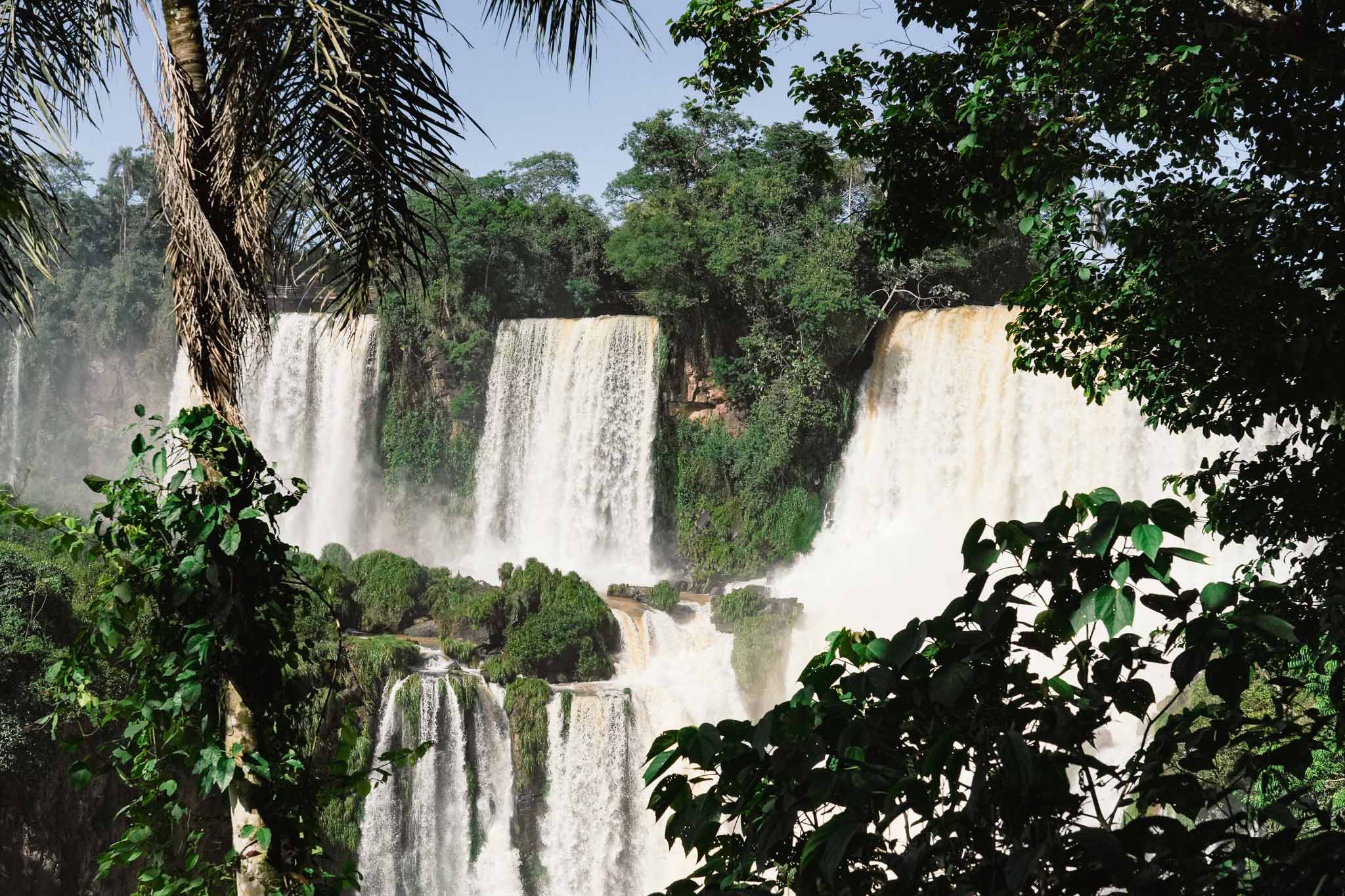
The beginning of our completely unplanned trip through Brazil actually began in Argentina, at Iguazú, the largest waterfall system in the world. Iguazú falls lie on the border between Argentina and Brazil, and during the rainy season the falls’ flow rate reaches up to nearly 13,000 cubic metres a second, where 275 different drops between 60-80 metres stretch 3 km along the border. We flew to the city of Puerto Iguazu from Salta on the other side of Argentina, and were met with crazy humidity and an abundance of mosquitoes. The city is home to about 90,000 people and mostly revolves around tourism of the falls. You can walk through the city towards Iguazu river to where it intersects the Paraná River and see both Brazil and Paraguay from the Argentinian side of both rivers, it’s pretty cool! The markets here were very confusing as people were advertising prices in both Argentine Pesos and Brazilian Reals as well as the US dollar for some reason. We went to a Mexican place for dinner which was really underwhelming, and in hindsight I guess that’s completely to be expected, but the city itself is actually pretty cool. There are a lot of bars and restaurants and heaps of music blasting from all different directions so it was easy enough to kill some free time during our first afternoon and night here.
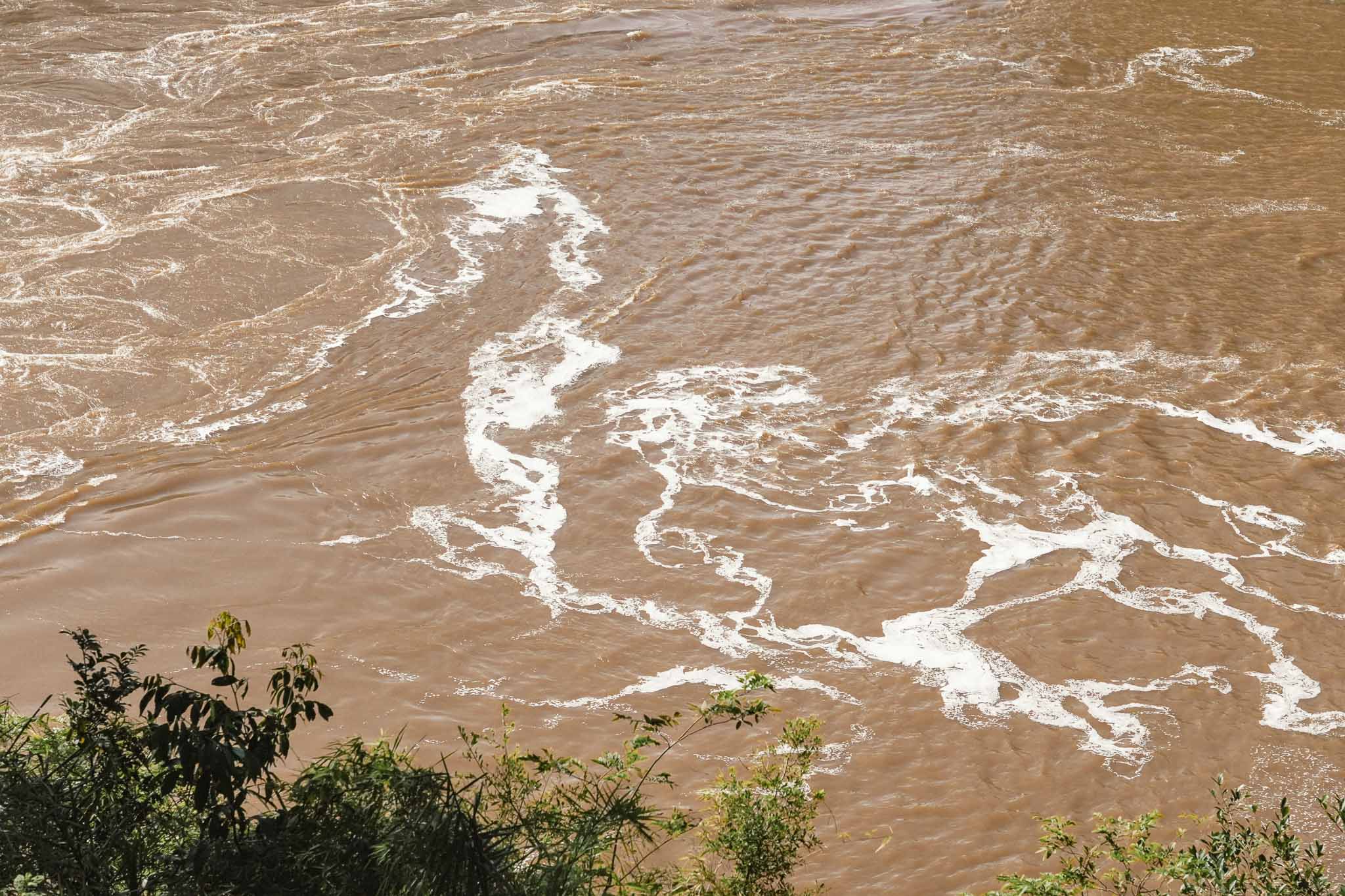
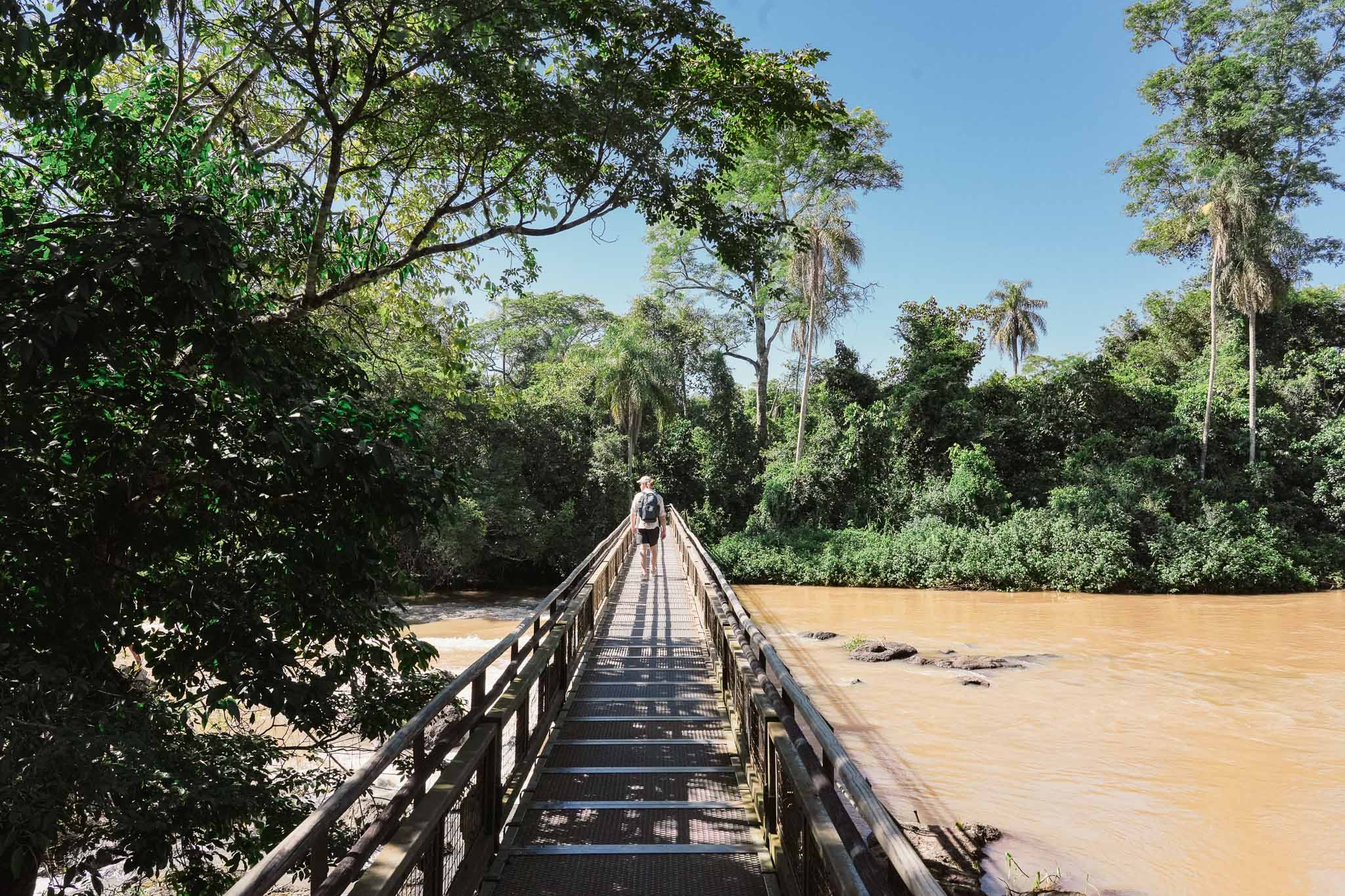
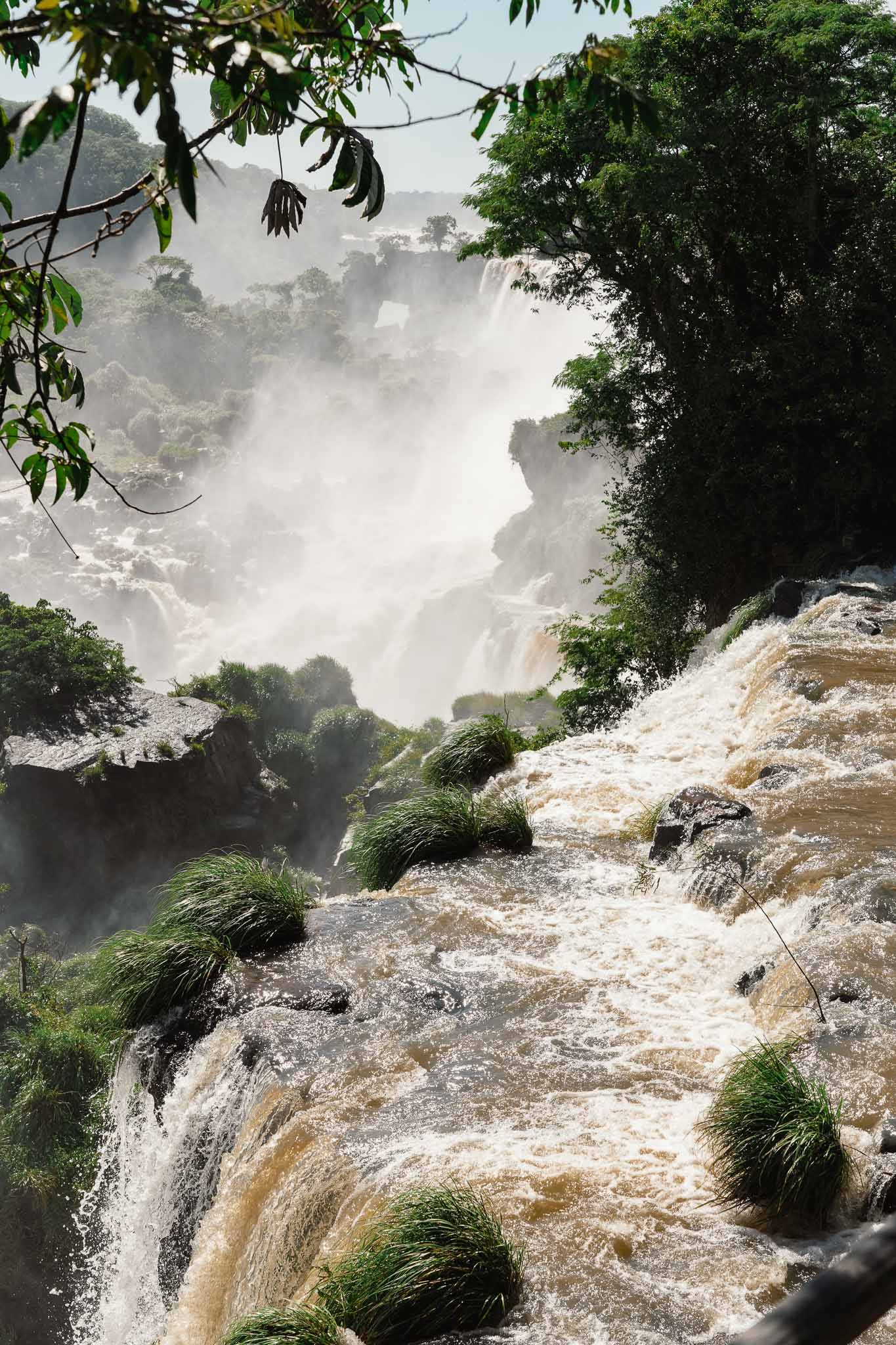
The following morning we caught a bus into Iguazu National Park and made sure to be there when the gates opened to avoid the stampeding crowds later in the day. The park is in the middle of super dense, luscious green rainforest where every month of the year it receives a minimum 100mm of rainfall, and during the wetter months it averages at about 250mm. It was a bloody hot day when we were there, and the humidity beneath the tree canopy was stifling as we made our way across raised steel-framed walkways through the dense vegetation in the direction of the increasingly loud roar of the falls. I can remember seeing our first glimpse of them as we rounded a corner and were finally able to put an image to the noise. It was insane. The scale of the falls is so absolutely off the chain, it was hard to take it all in at once, and to comprehend just how much water was being moved. The spray from even a few hundred metres away was making its way to the elevated footpath we were on and had soaked all the plants around us, and made the footpath extremely slippery. There were many times I began cartoonishly ice skating and somehow never ended up on my ass. The chocolate brown water far below us rapidly flowed down river as we followed the edge of it up and around several fantastic vantage points to take photos and just marvel at the magnitude and power on display. There were little islands of life situated at random points along the falls where rocks were still able to stand above the water and harbour vegetation where birds could live. There is even a bird called a ‘Great Dusky Swift’ that has evolved to be able to fly through the waterfalls to build its nest in the caves protected by the falling water.
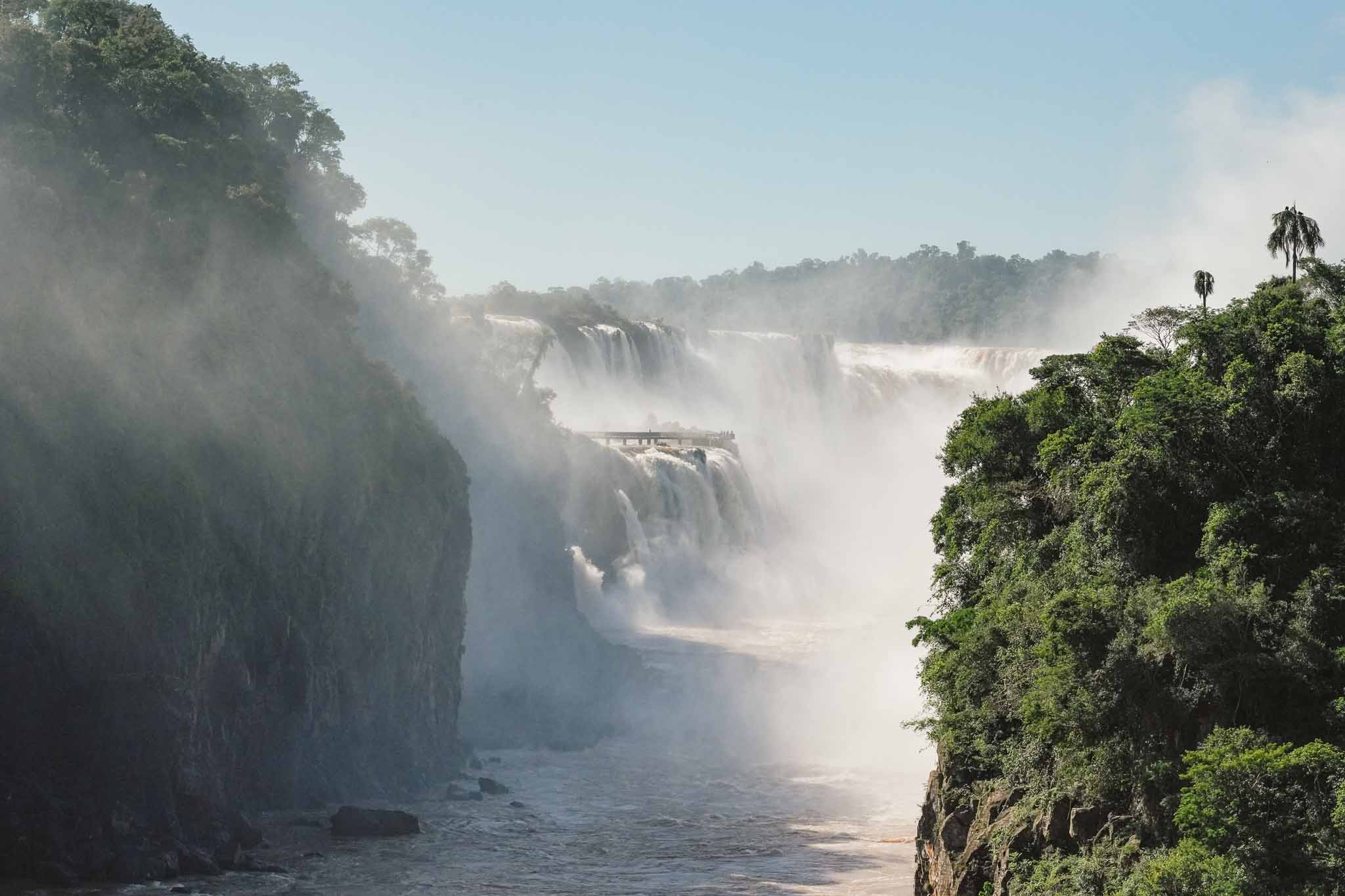
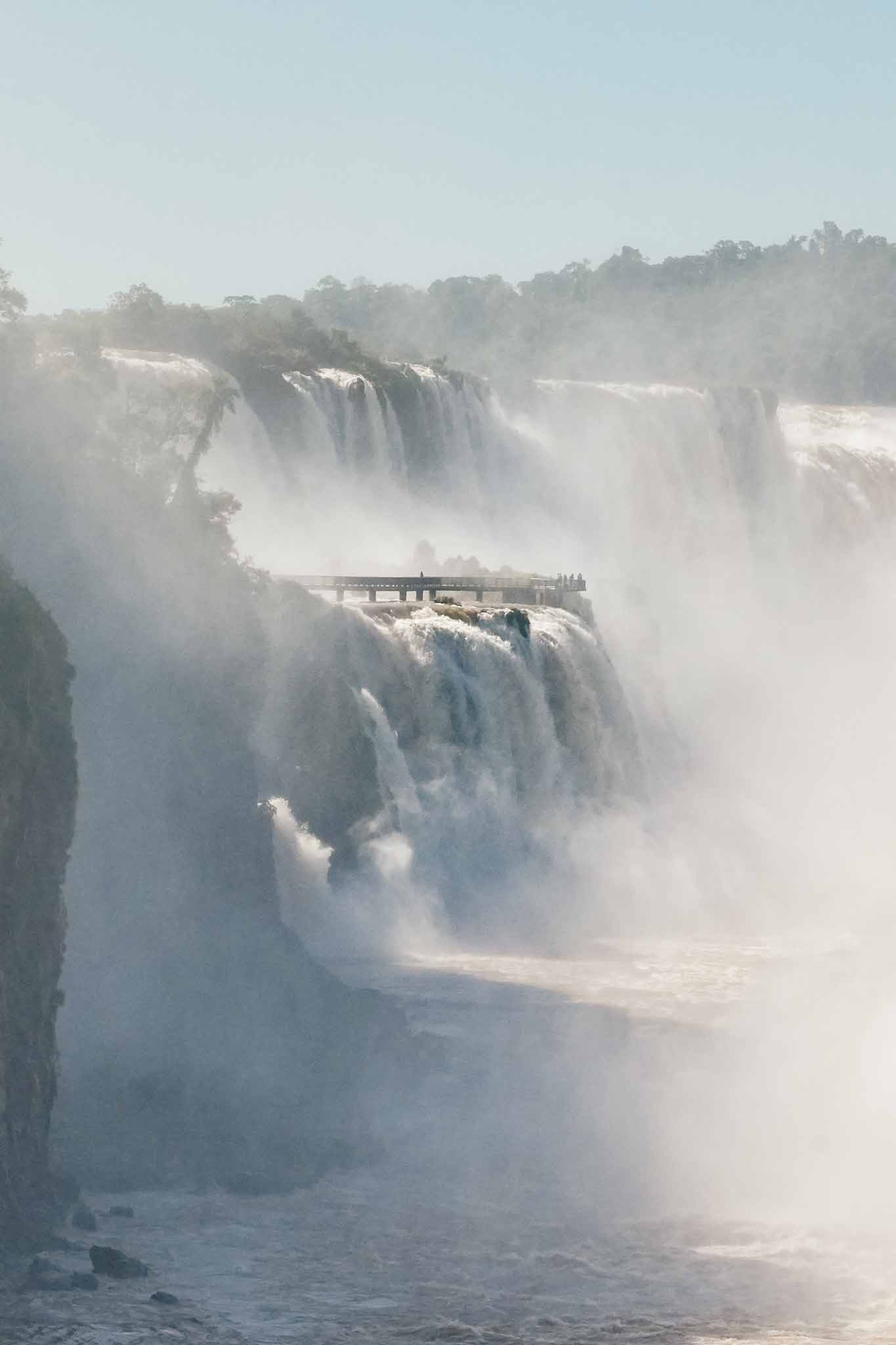
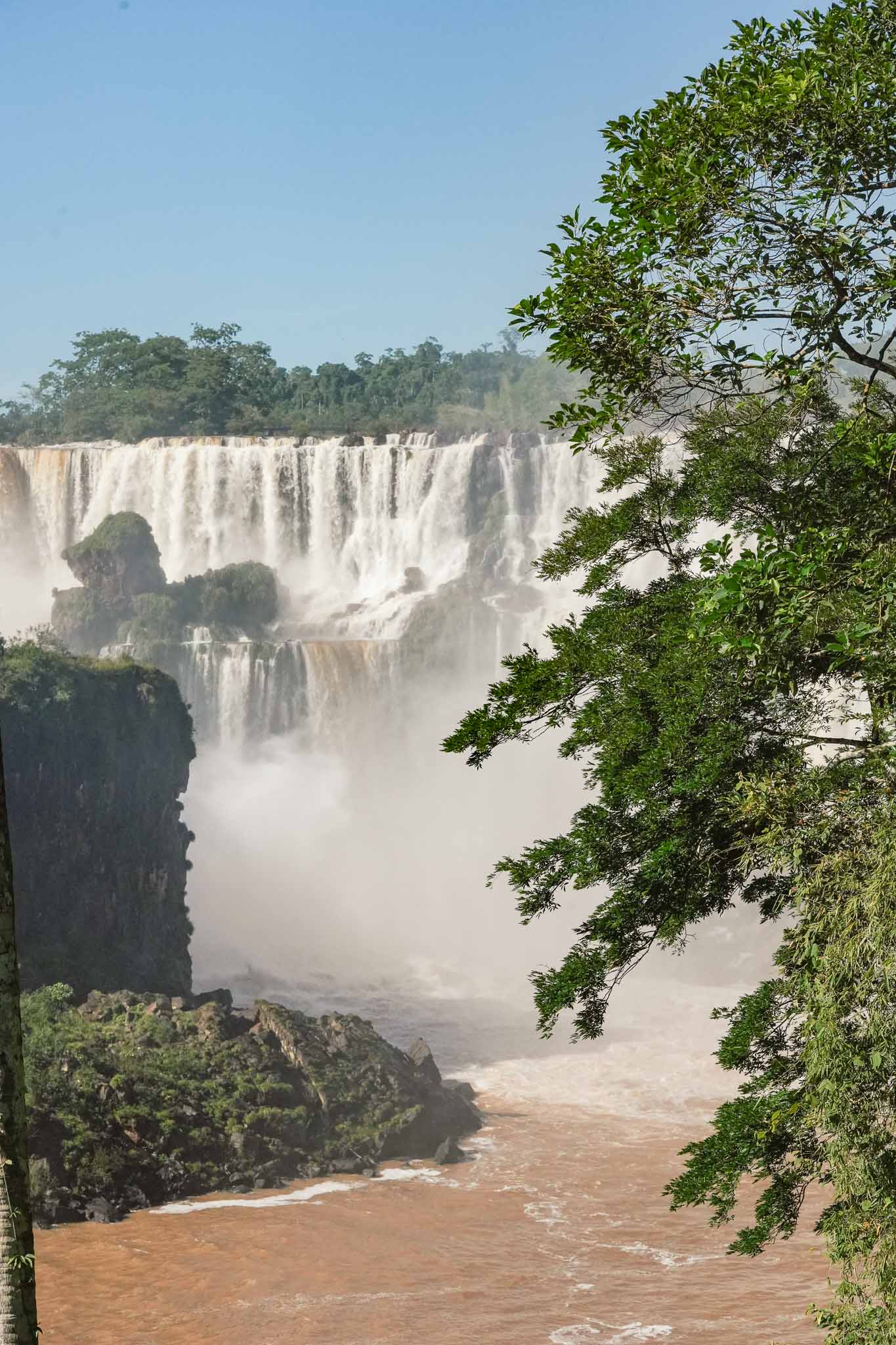
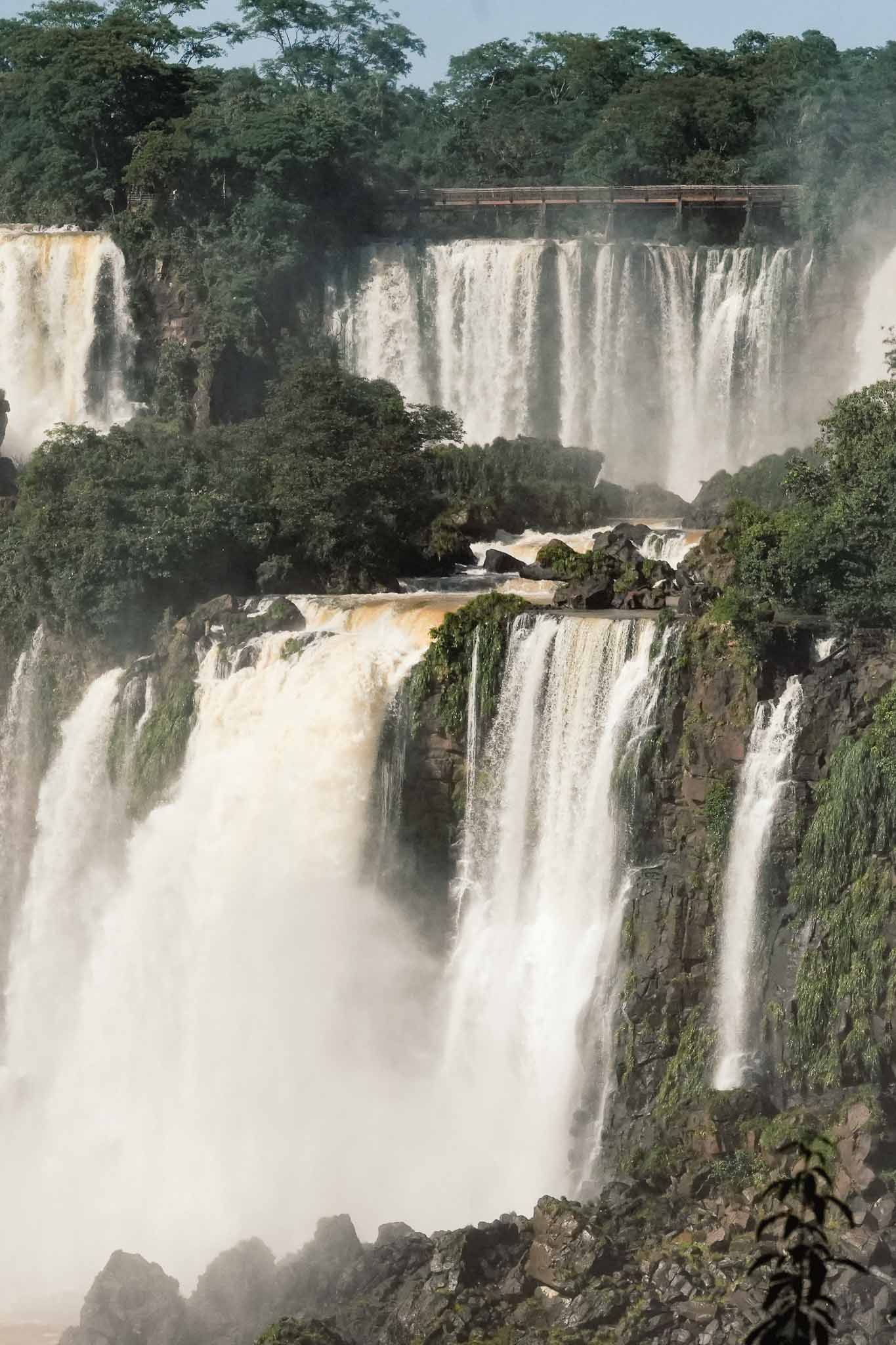
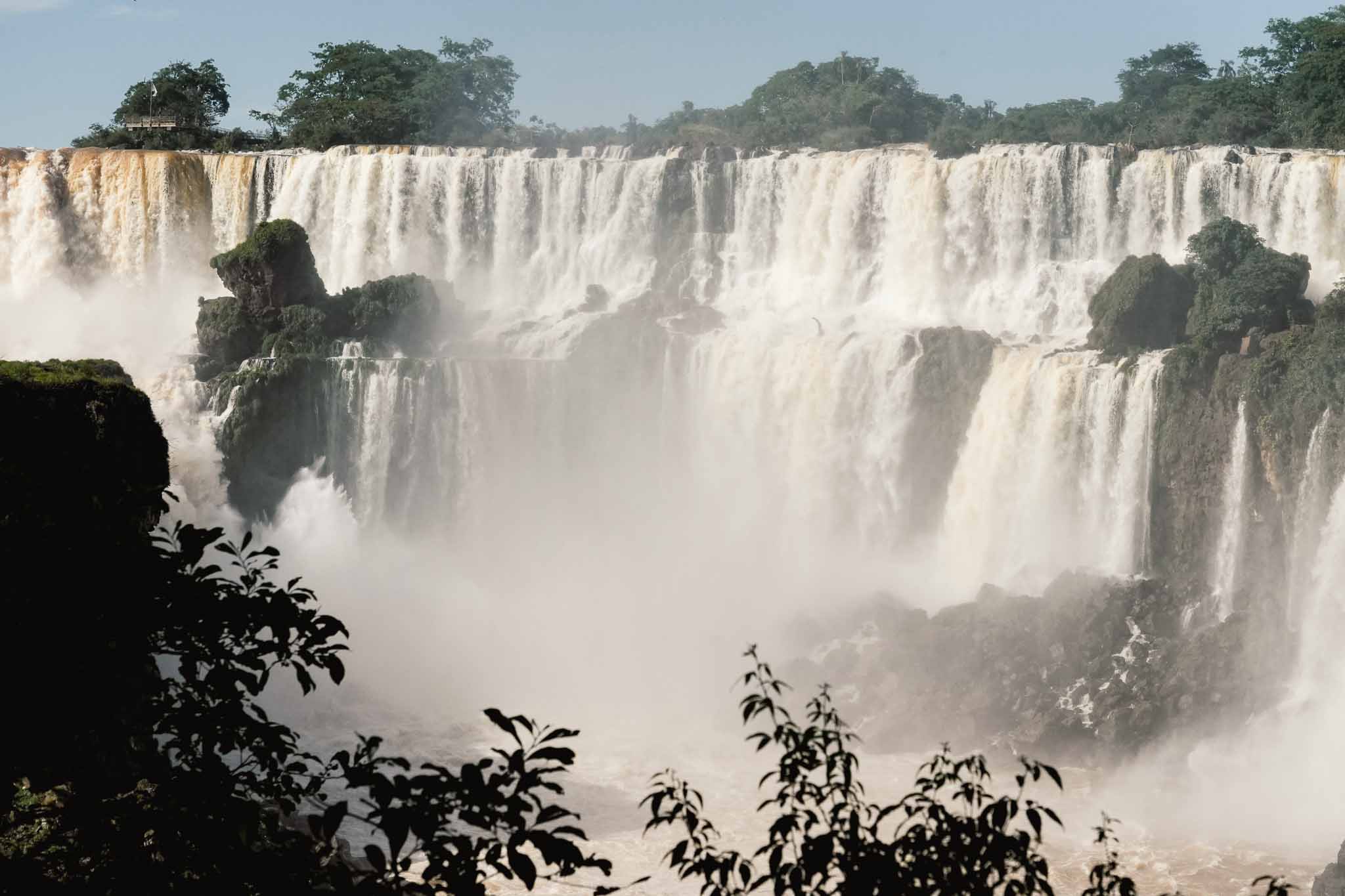
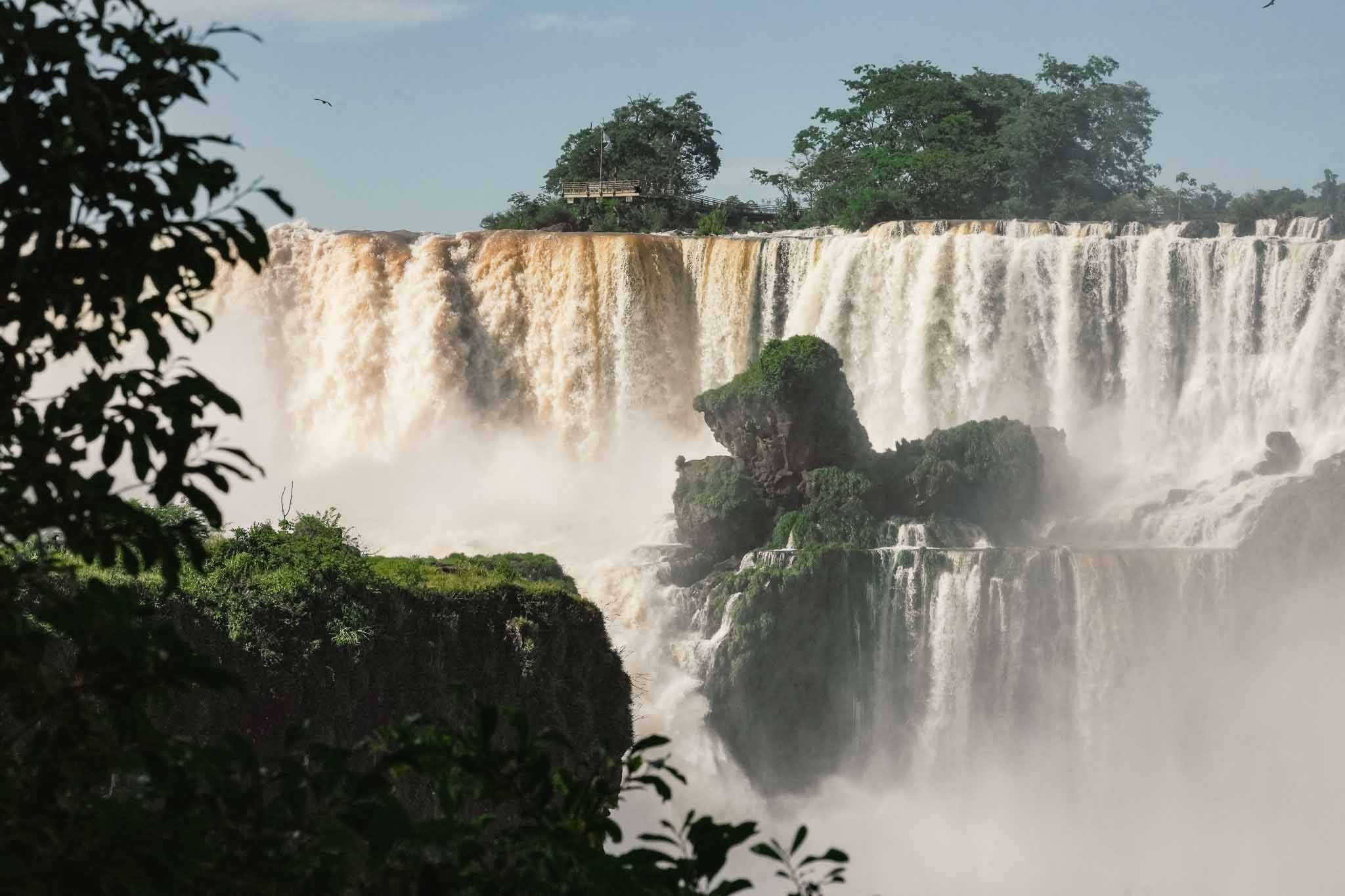
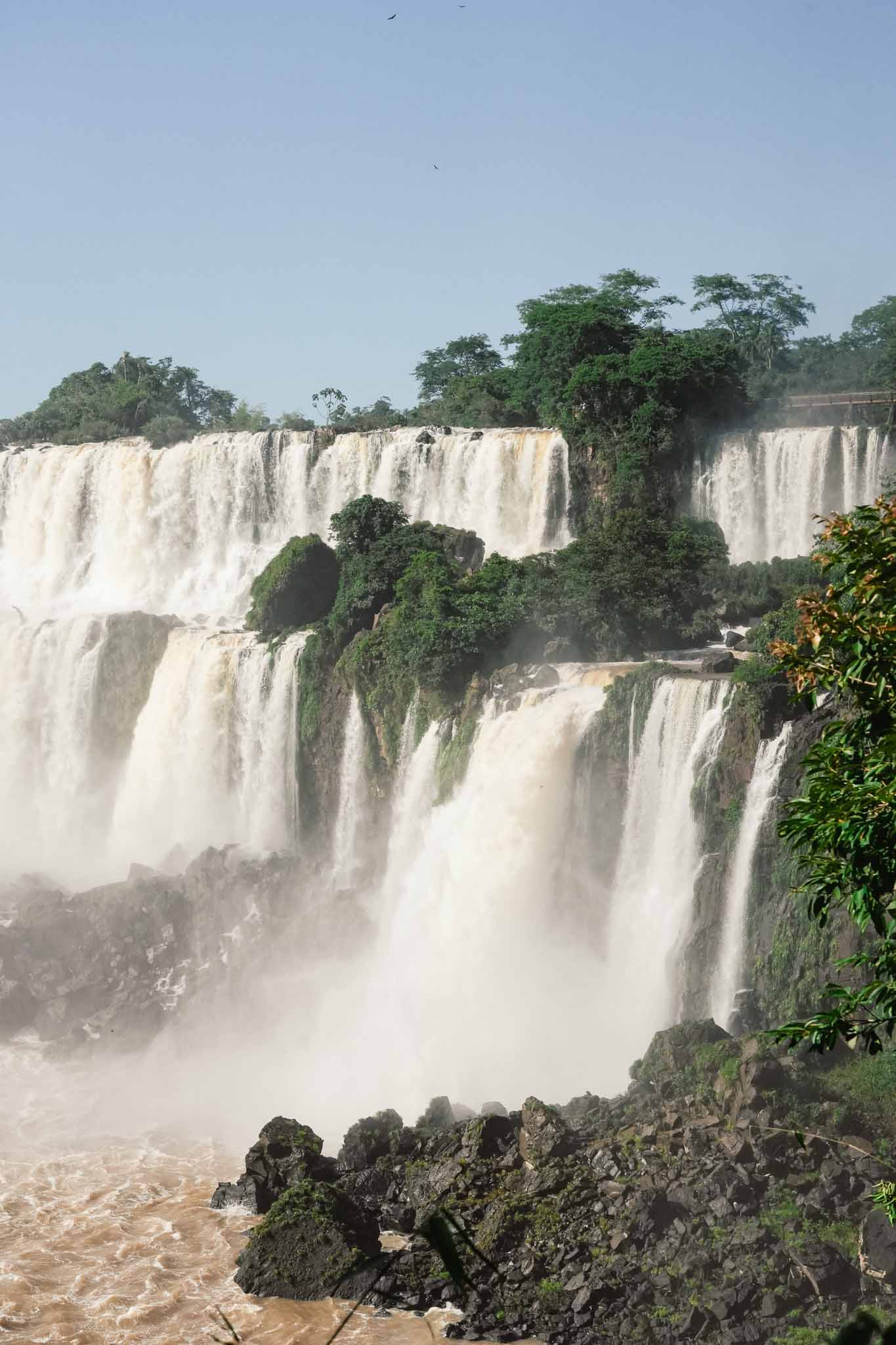
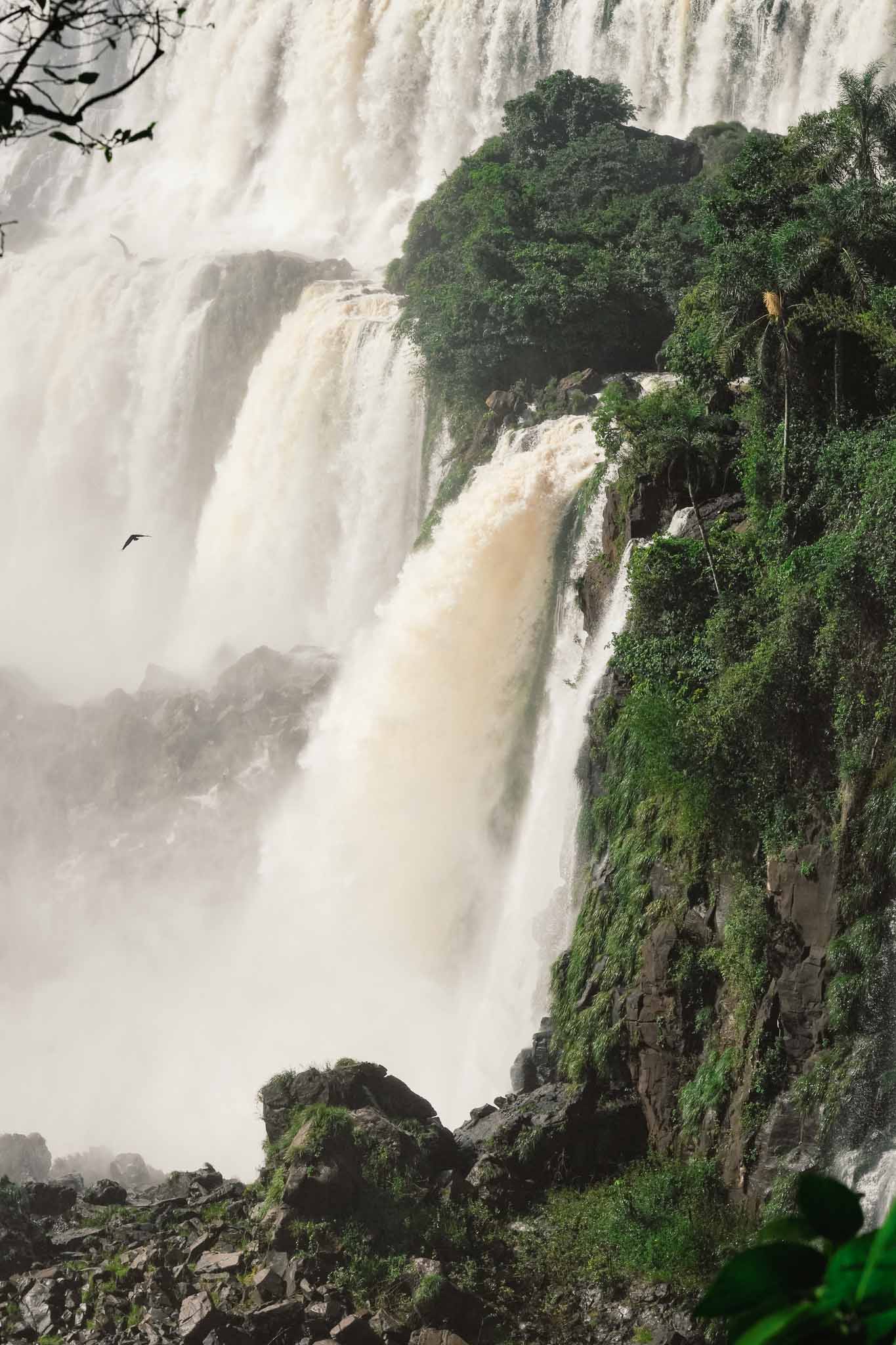
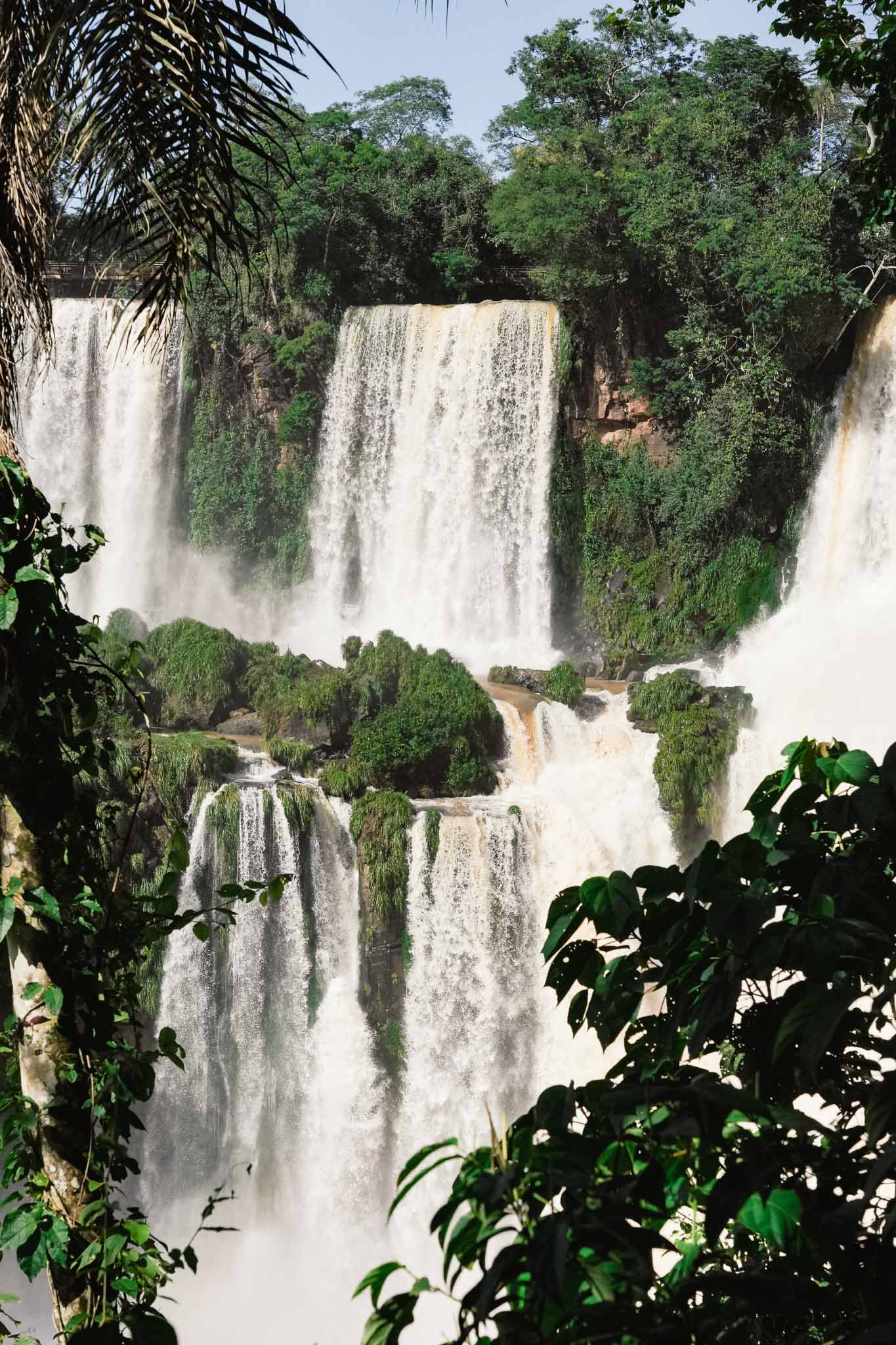
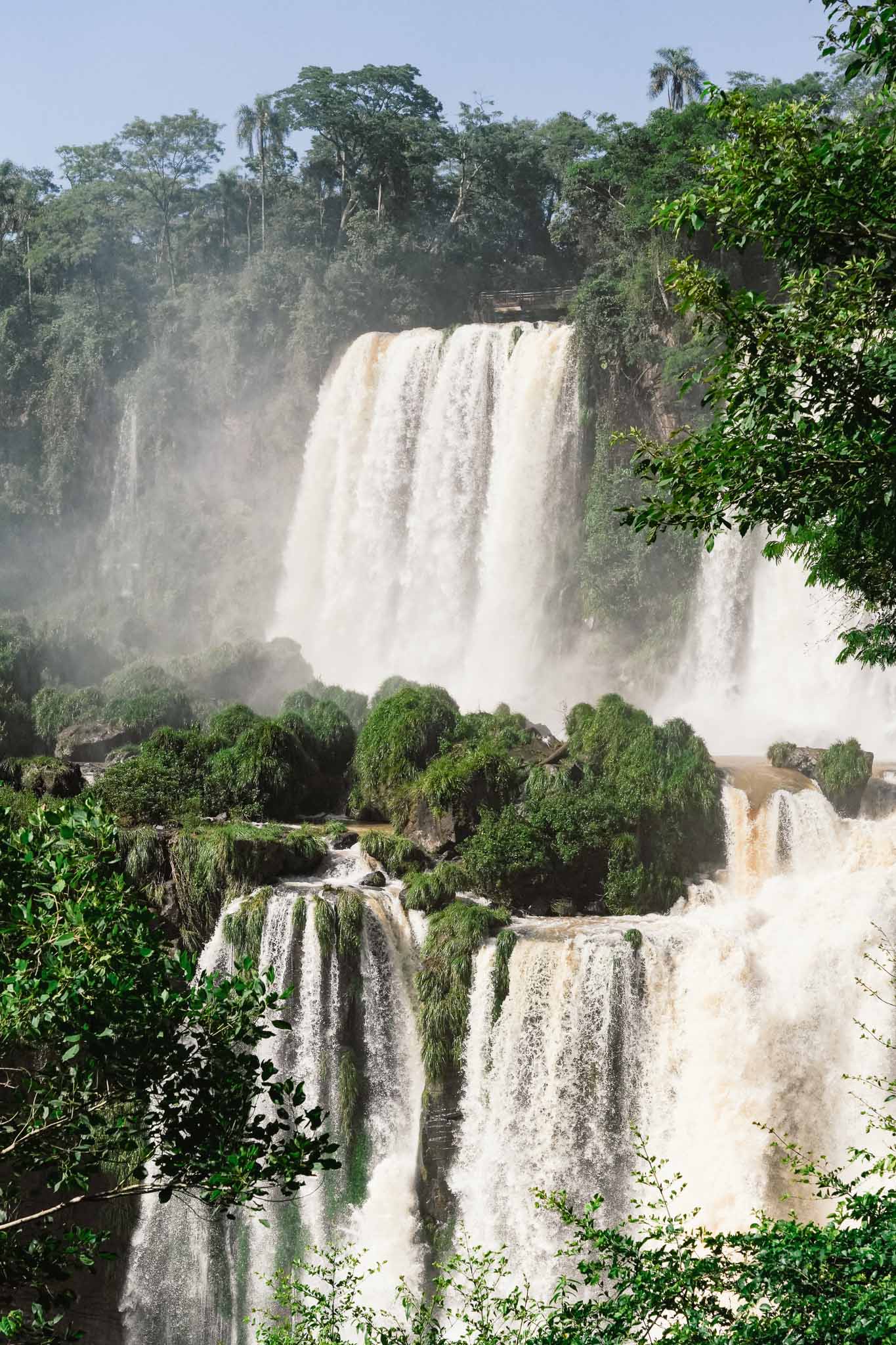
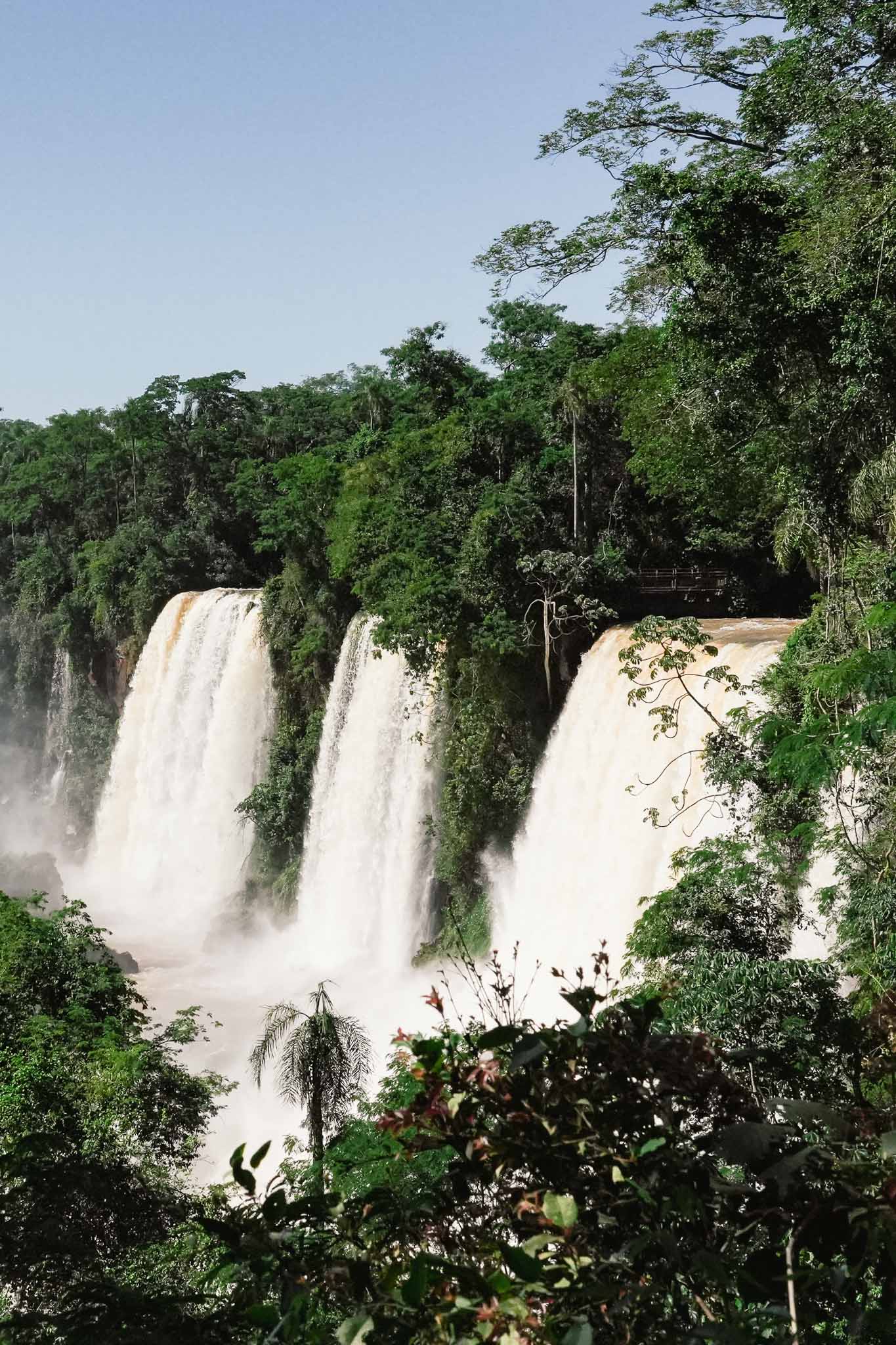
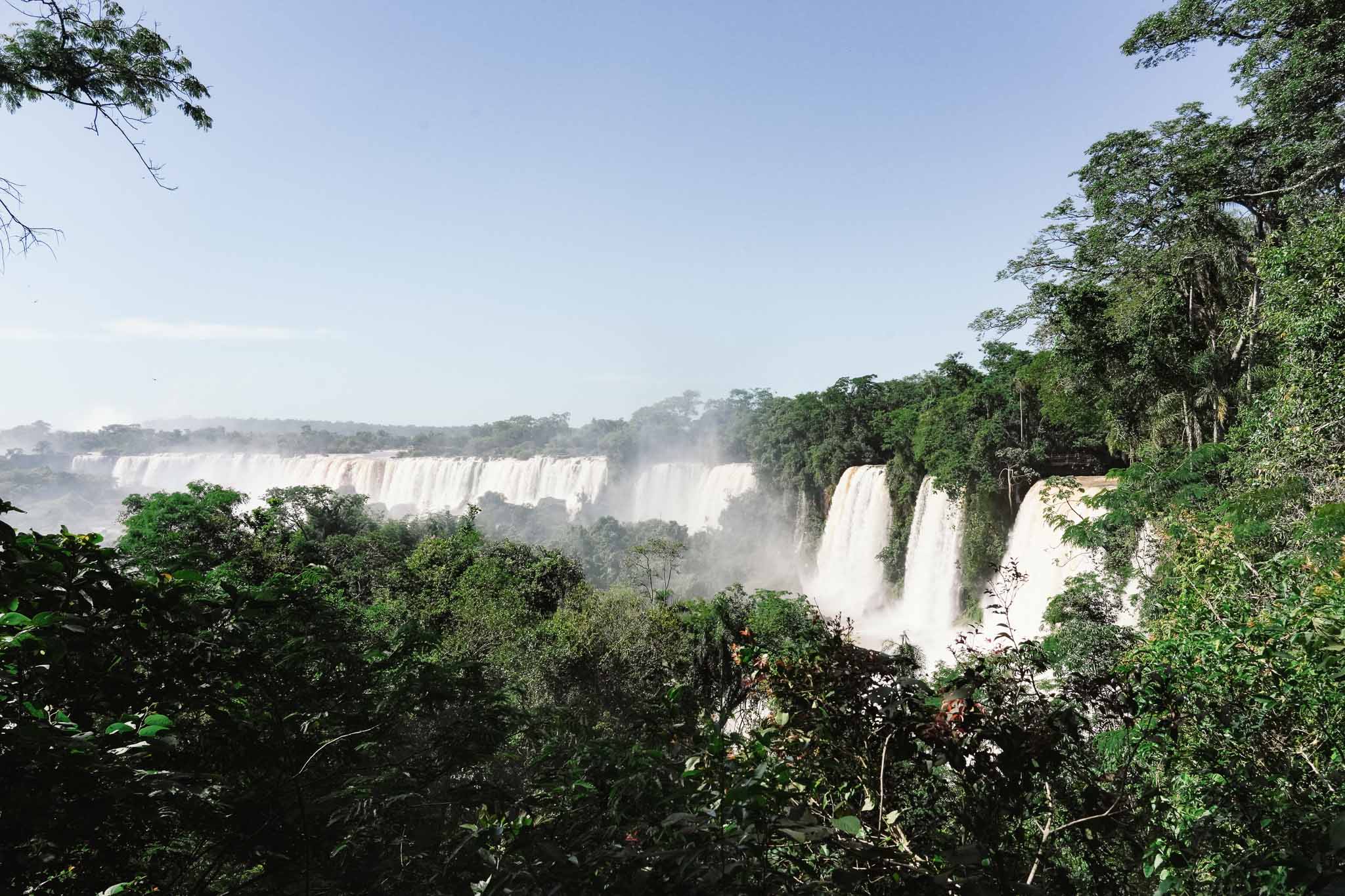
We continued to climb up the side of the falls along a series of paths that wound throughout the trees until we reached the top. Here we were able to walk along a steel footpath that they somehow managed to build along the top of the falls, where we were able to look down at the water falling 80 odd metres to the river below. We managed to get most of this whole area of Iguazú to ourselves, which was really special. We didn’t need to fight for position on the platforms for good photos and we didn’t feel like we were being rushed along by anyone, it was great.
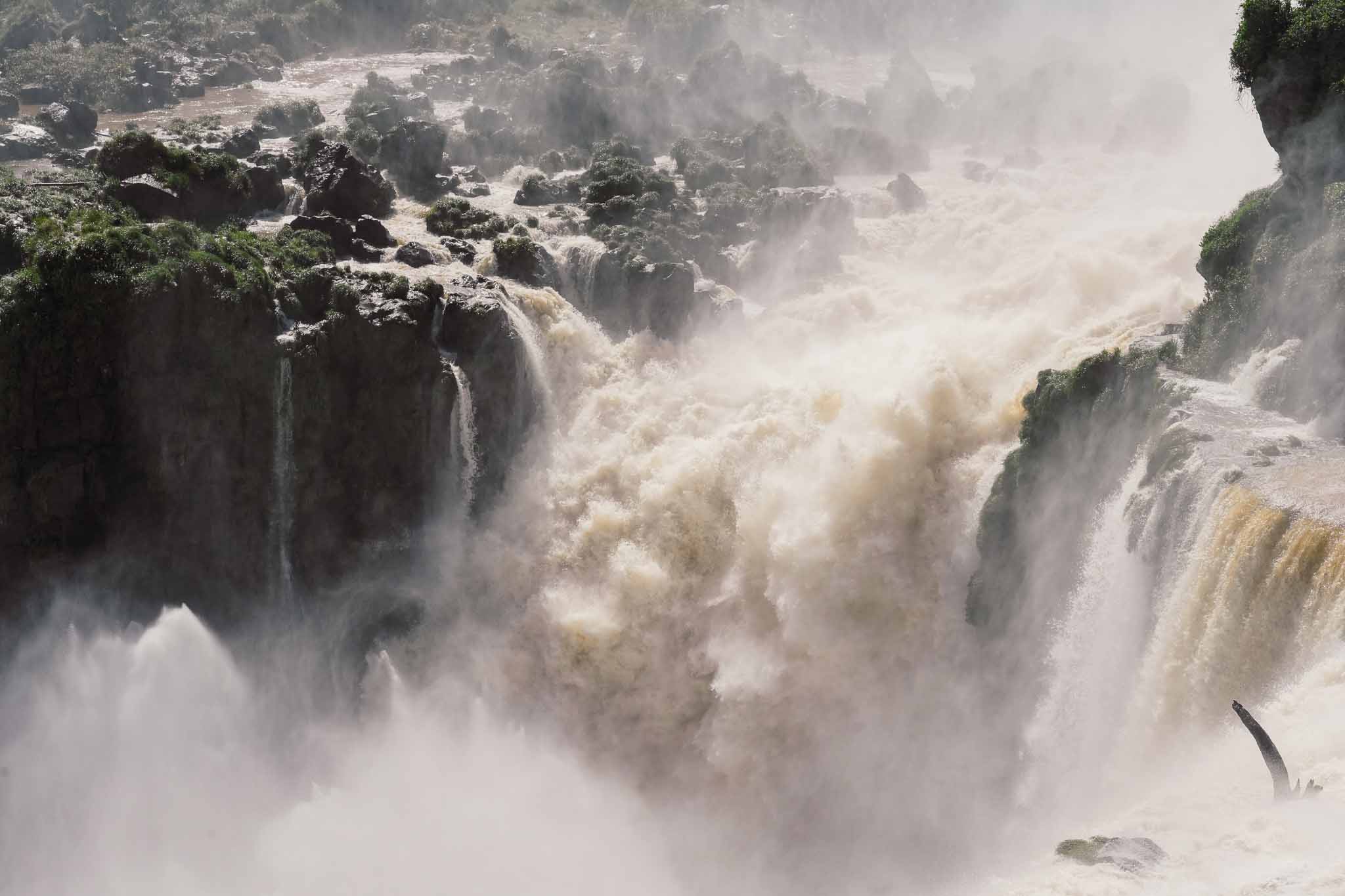
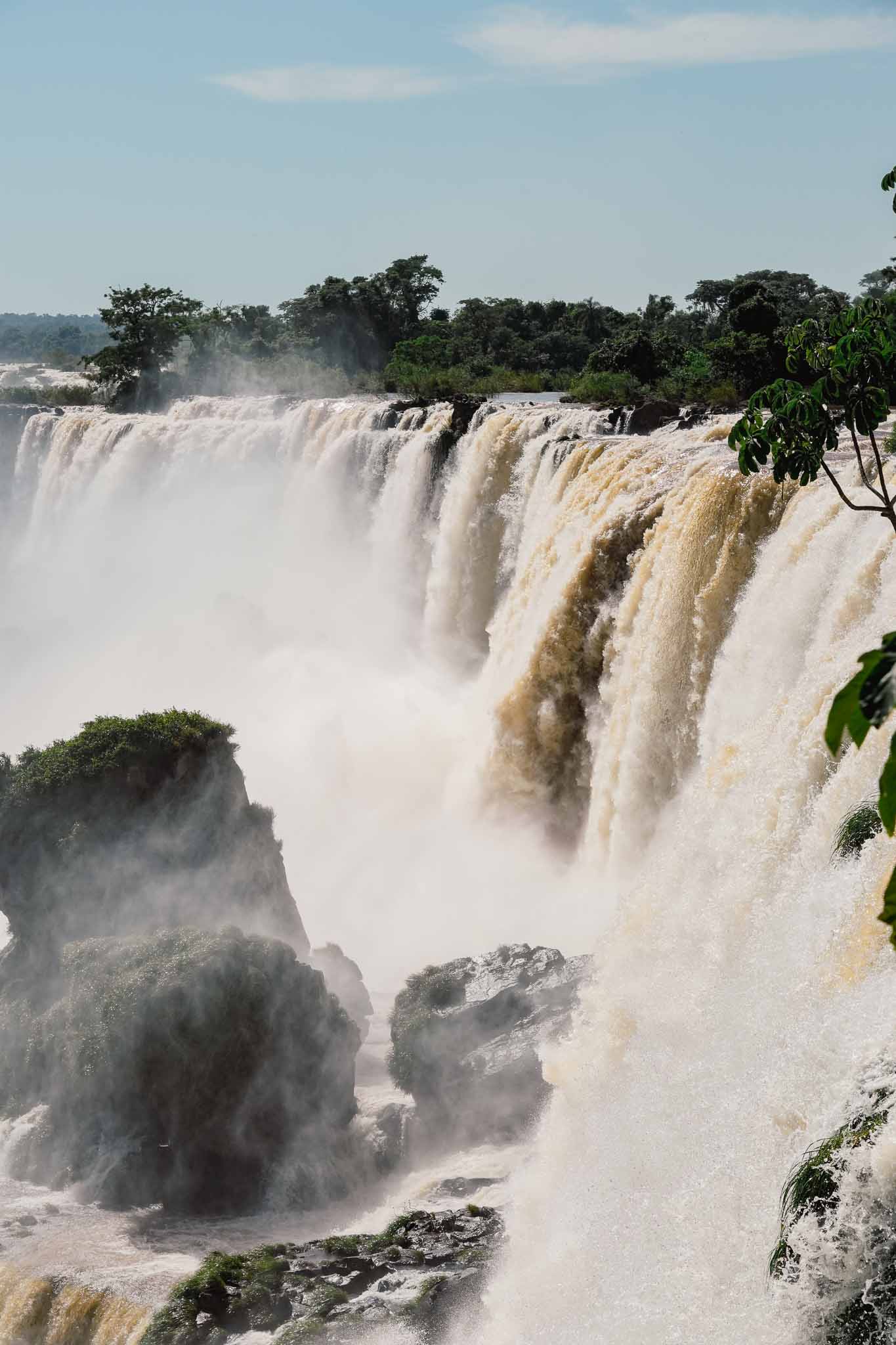
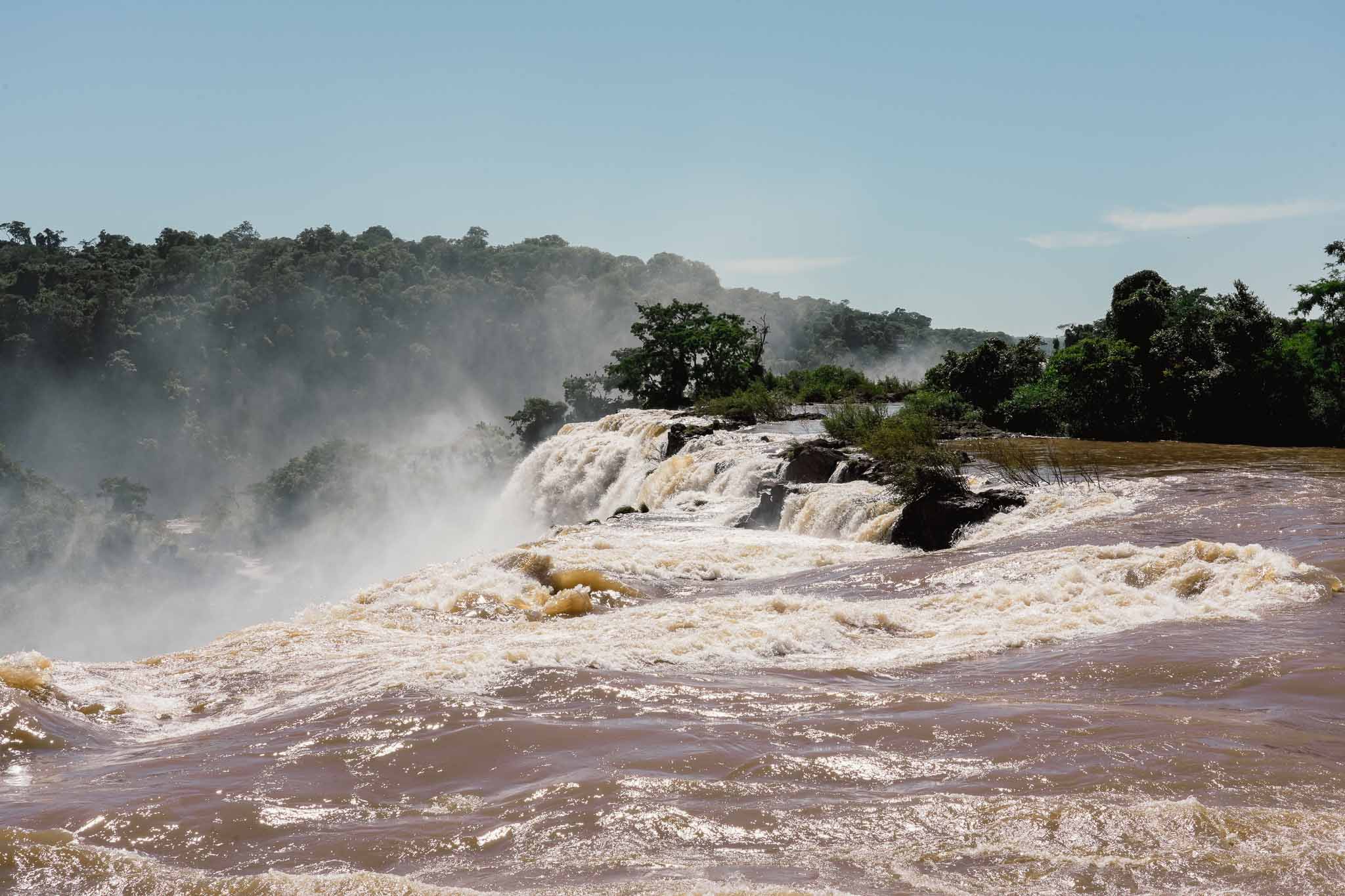
Then we walked up to where a train takes you to the uppermost part of the system a few kilometres away. The sheer amount of people here was startling to say the least. We somehow managed to squeeze aboard and make the twenty or so minute trip along the side of a road that would have been very walkable to reach the uppermost part of the national park. Here we zigzagged around other tourists as we made our way along a very long boardwalk through the upper part of the river to ‘Garganta del Diablo’ (Devil’s Throat). Here is where people were at their most densely packed and highly annoying, but for a good reason. This is probably the highlight of the entire waterfall system. It was actually shocking to behold. An absolutely jaw dropping volume of water falls down into an immense chasm, the bottom of which is obstructed by the spray of water created amidst the chaos and raw power. Words, or even photos for that matter, cannot do it justice. It’s beyond anything else I’ve ever witnessed. My default reaction was to laugh at how insane the destructive power of water can be. I was absolutely amazed, and soaked.
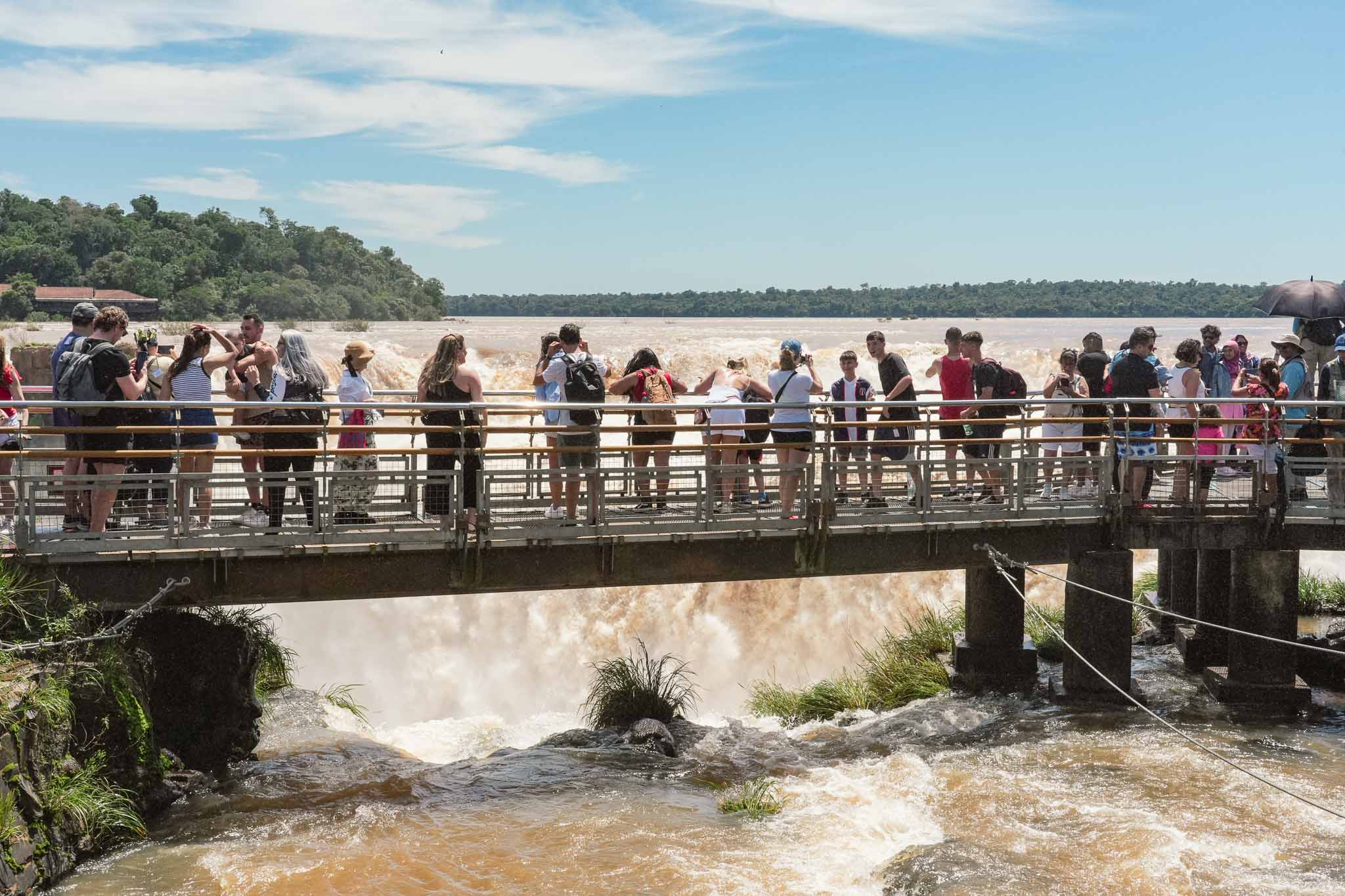
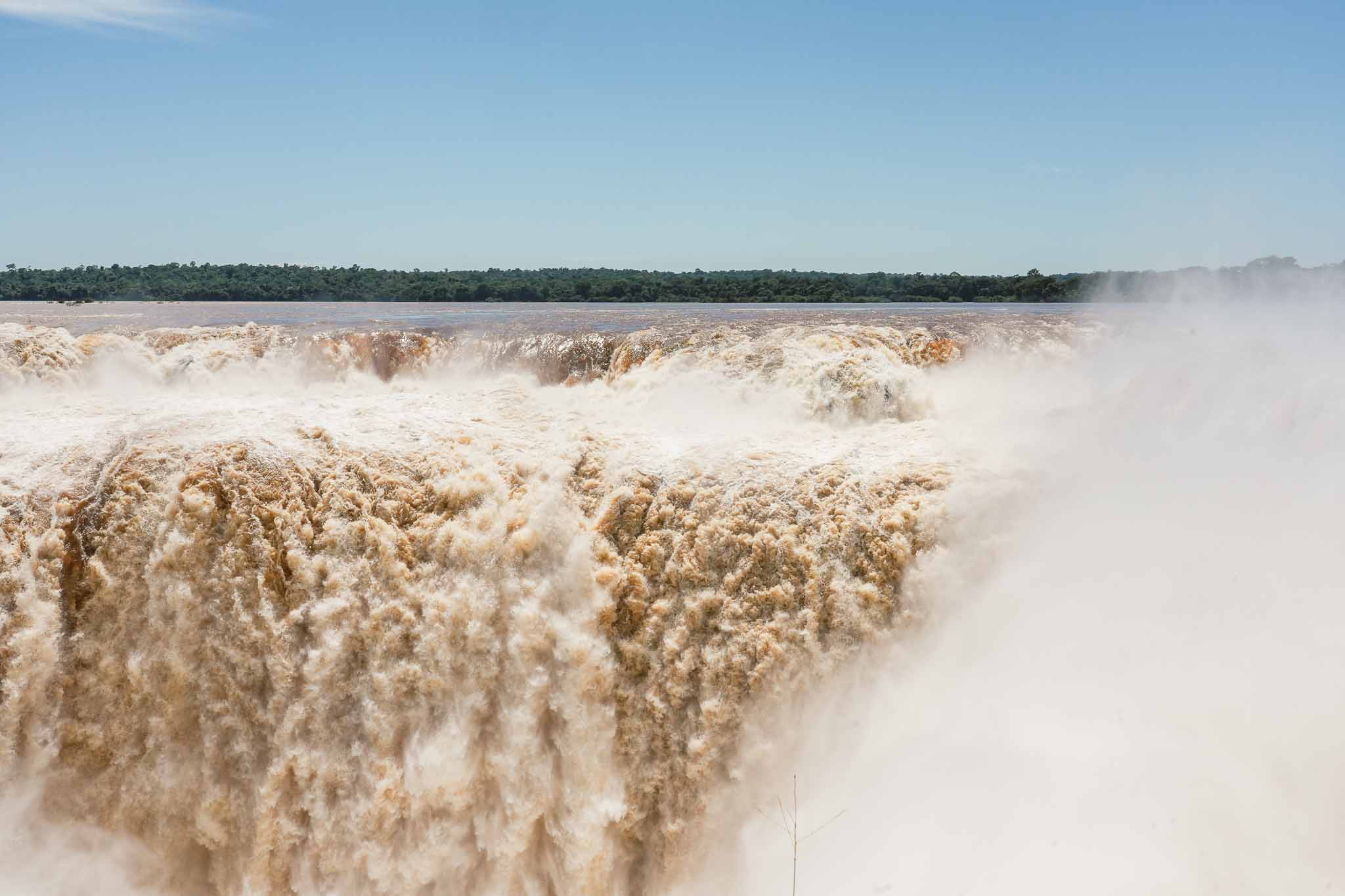
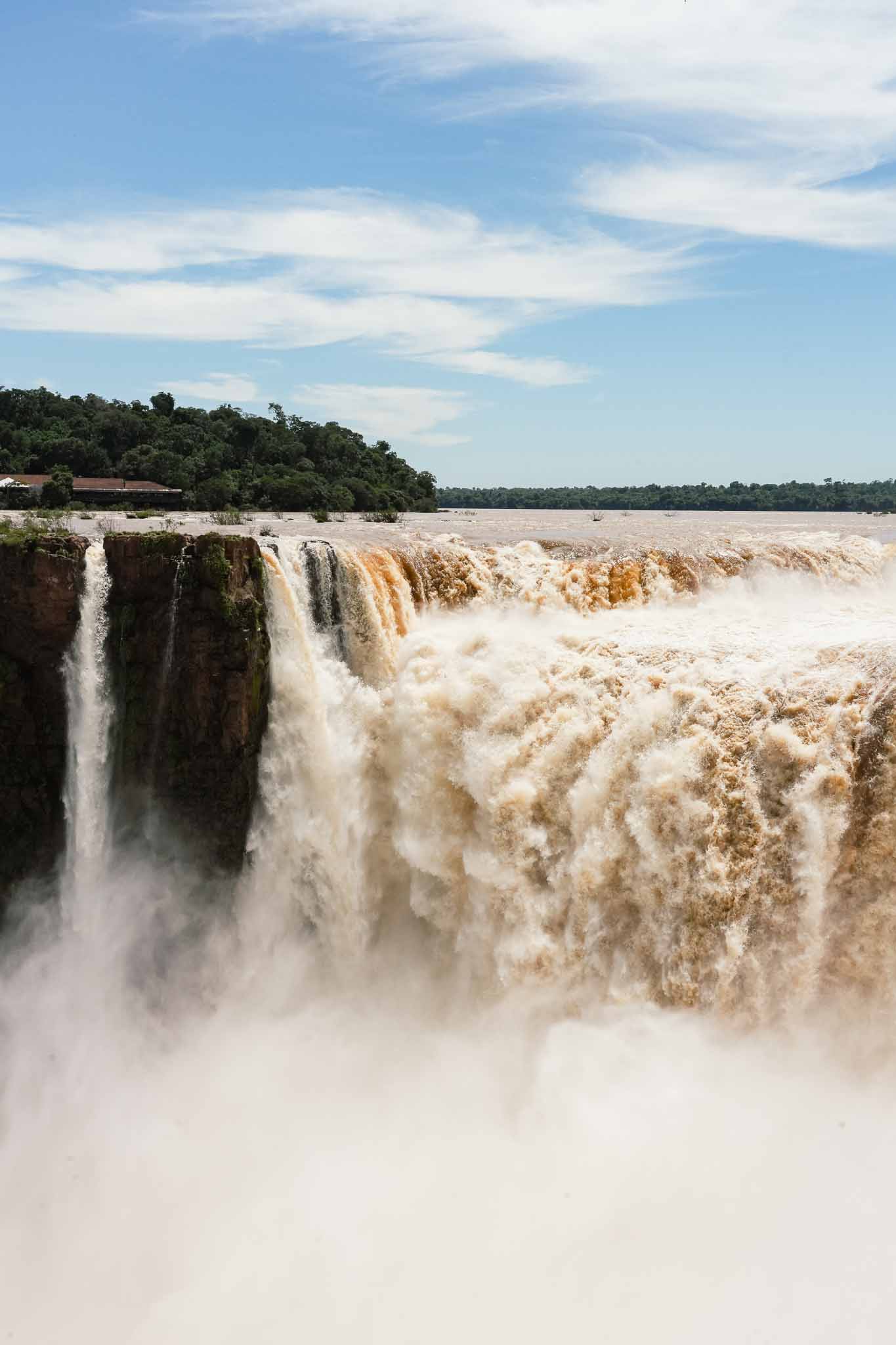
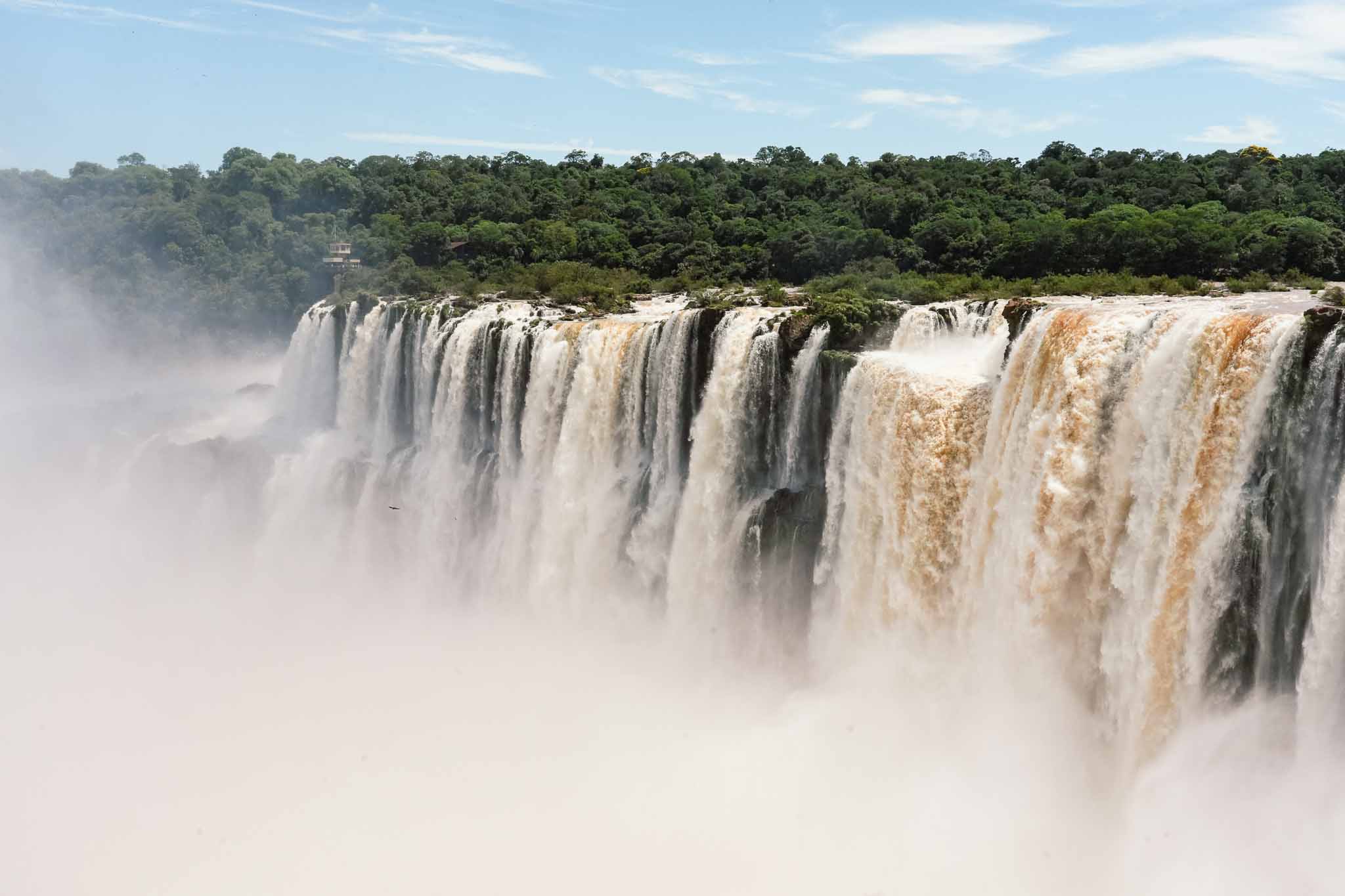
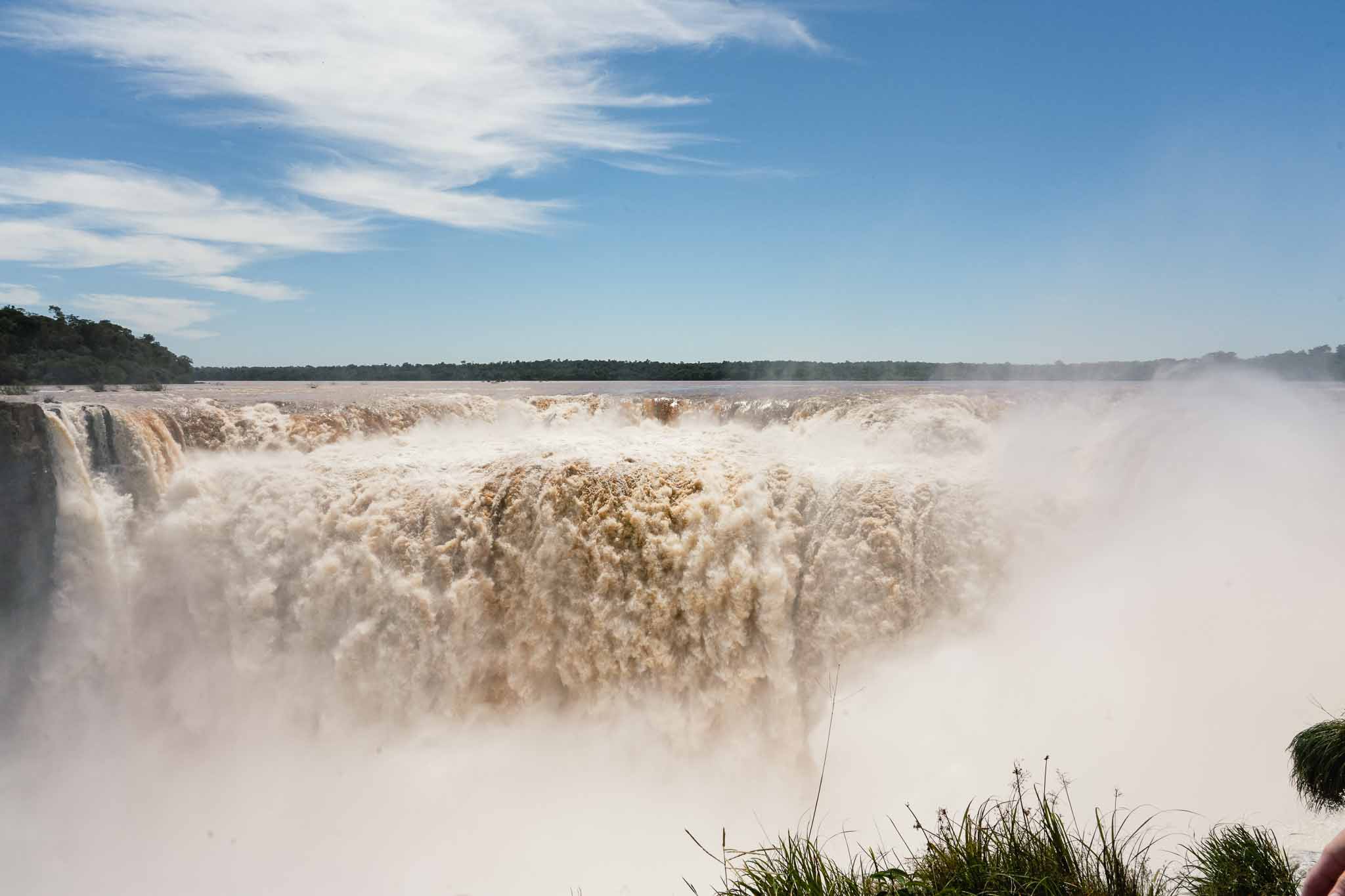
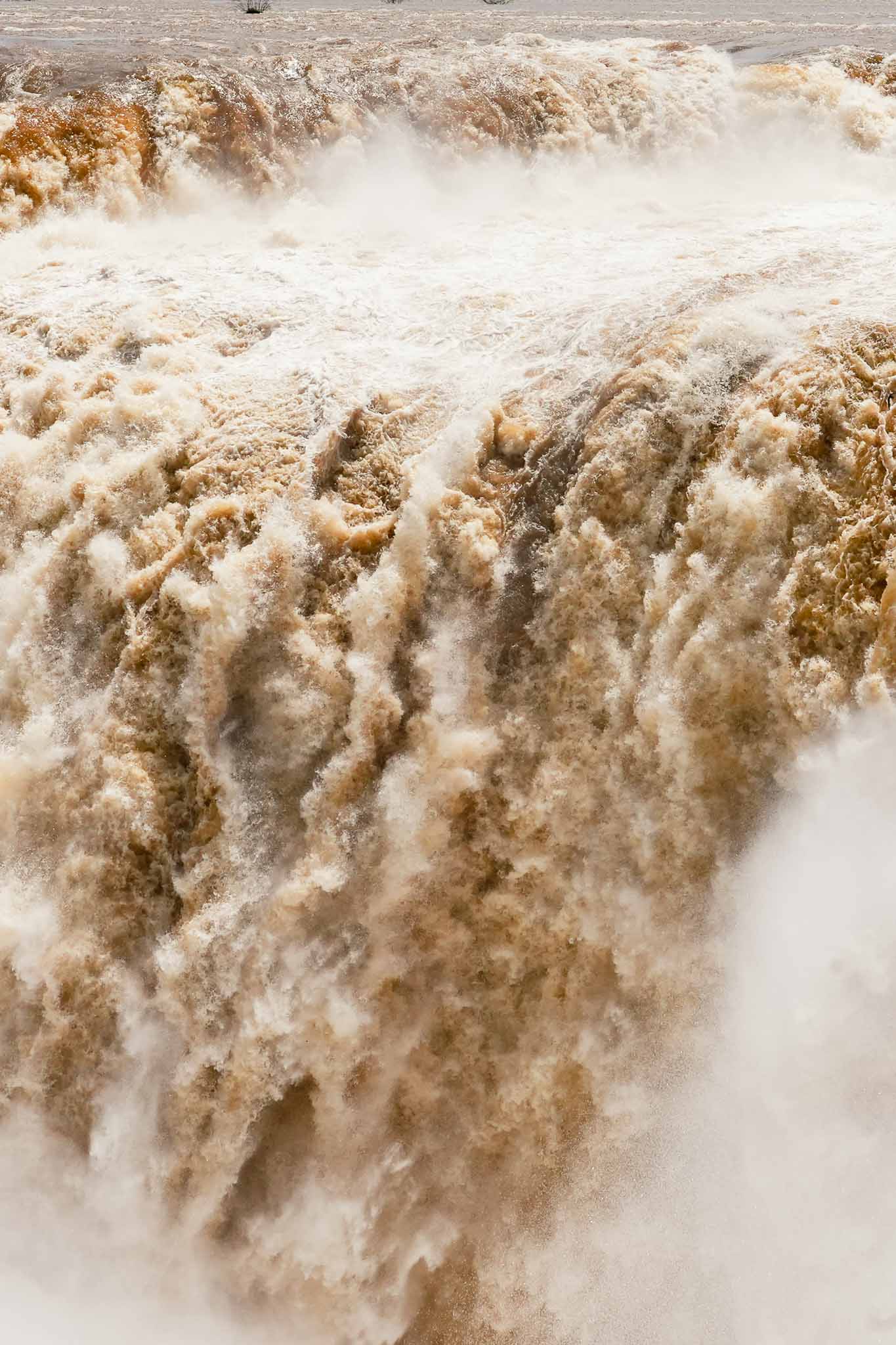
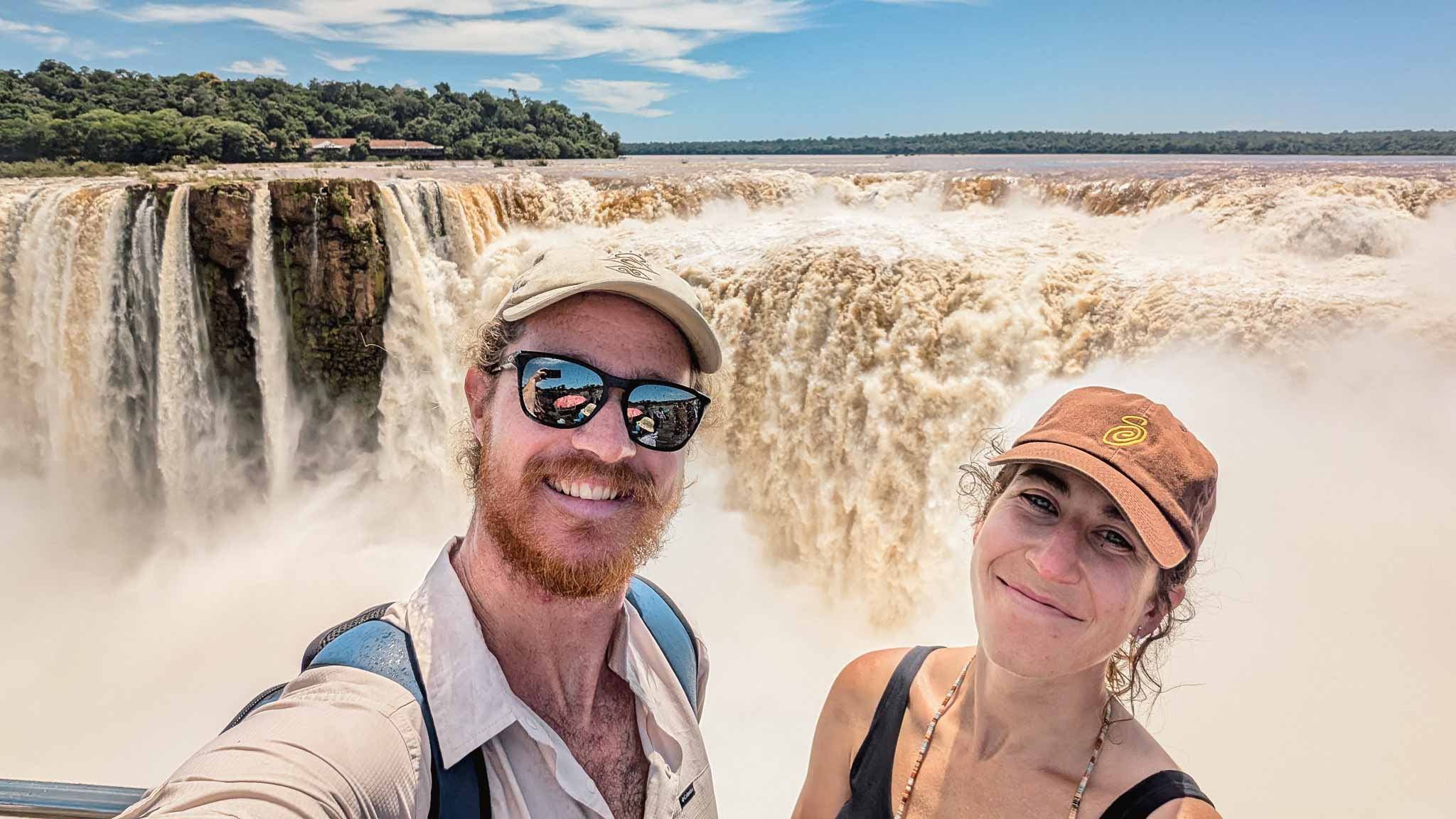
Upon our walk back to the train we contemplated whether or not to part with the money to take a boat trip along the river, pretty much underneath the falls. We eventually decided that it would be worth the $223AUD and were lucky enough to secure the last two tickets for the boat before the next one would leave in 3 hours time. We were part of a group of at least 40 people, and we all piled onto an open-topped truck type thing that took us 30 or so minutes through the rainforest, down to the river’s edge. We were given dry bags to put our important things in as we were told we’d probably get a bit wet, and were handed life jackets as we boarded a surprisingly modern and fast looking boat. Seated up the front, we cruised effortlessly against quickly flowing water towards the falls. We stopped at a good vantage point so we could all take some photos and then began to make our way toward one of the larger sections of the falls. I thought they’d stop the boat pretty far from where the water crashed down into the river, but they just kept going. And going. We ended up nearly fully beneath water falling from 80 metres above us, and it was so much fun. We got absolutely, completely drenched beneath the waterfall as more water than you could possibly imagine pelted down on top of us. How this is legal, I have no idea, but I’m not complaining. We retreated so everyone could take a breath before heading back under another two times, each time going a bit further inside.
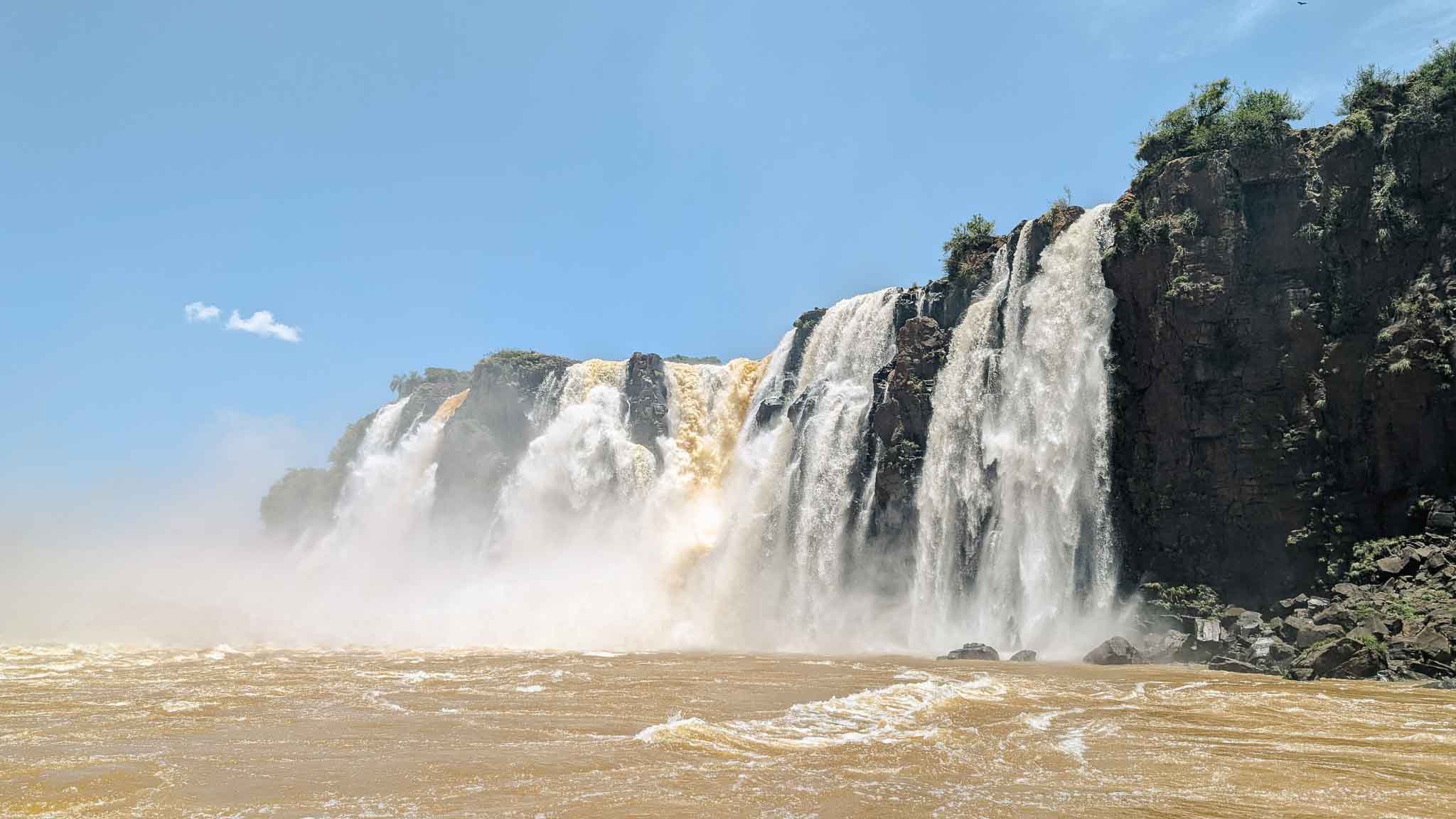
Even though this was a very expensive half hour on the boat, it was easily worth the money. The idea that we were even considering doing it or not seems insane to us now, it was so much fun. It took us barely any time at all to dry off while we caught the truck back to the dropoff point, and then we walked around in circles trying to figure out how to actually leave the park. By the time we eventually made it back to town we were pretty cooked. It turned out to be a pretty big day, we walked 25km either under the beating sun or sweltering beneath the jungle canopy. I can’t remember what we had for dinner that night, but I’m sure it was garbage.
The following day we jumped on a bus to take us to the border between Argentina and Brazil, and if any of my Argentine friends reading this would like to illegally enter Brazil to completely disappear and start a new life, do that here. This was the most unrestricted border crossing I’ve ever seen. Many people do day trips from Argentina to see the falls on the Brazilian side, and don’t need to go through customs because they’re returning to Argentina anyway. So when we got off the bus at the border, we had to actively seek out the immigration office, as there were no signs pointing us in the right direction, or even police we could ask where to go. After we eventually found immigration, we caught another bus into the city of ‘Foz do Iguaçu’, and checked into our accommodation where I received my first Portuguese lesson from the receptionist.
There’s really no polite way to say it, Portuguese is a retarded language. The Spanish that I’d picked up so far on our travels was only barely more than useless in Brazil. When Brazilians speak Portuguese they can sound remarkably like cartoon characters with their unusual pronunciations and oddly placed emphases. Portuguese has so many unconventional nuances compared to English, for example, ‘M’ at the end of a word is usually pronounced like an English ‘ng’. ‘Yes’ in English is ‘Sim’ in Portuguese, which is pronounced ‘Sing’, ‘Good’ is ‘Bom’ which is pronounced ‘Bong’. ‘Bread’ is ‘Pão’, which has such an unusual nasal quality that, unpronounced, renders the word unintelligible to Brazilians. Late into our Brazil trip, a Brazilian friend told us that if you don’t pronounce the nasal sound with pão, it sounds like pao, which actually means dick. No wonder Rachael was getting strange looks from the ladies in the bakery when she was trying to ask for cheese bread. An ‘R’ at the beginning of a word, or anywhere in the word before a consonant is pronounced like a ‘H’, a ‘CH’ is pronounced like a ‘’CK’ and an ‘L’ at the end of a word is more like a ‘W’. This means that Rachael’s name is pronounced sort of like “Ha-keow”, which is hilarious. Portuguese has 12 different vowel sounds, and uses the cedilla (ç) which is pronounced like an ‘S’, it has acute accents (á,é,í,ó,ú), circumflex accents (â,ê,ô) and tildes (ã,õ), which basically just means that it’s all very complicated and annoying and it’s completely understandable that most tourists don’t even bother to learn it. I, on the other hand, have found a new fascination with attempting to learn a different language, so I was eager to learn as much as I could during our time in Brazil.
It’s obvious that the Brazilian people love it when you at least try to speak their language. I don’t know how many times I was told ‘Você fala português muito bom!’ (You speak Portuguese very well!) which was always hilarious, as I obviously speak the Portuguese of a stunted 2 year old, but I never grew tired of hearing that my efforts to learn weren’t going unnoticed. I don’t know how many times I’ve heard in podcasts or YouTube videos, or read on the internet or in books that the best way to really learn a language is to just immerse yourself in it, but it’s absolutely true. If the only way you can communicate is in a language you don’t speak, you’re going to learn how to speak it pretty quickly. That being said, I’m so glad to be putting Portuguese behind me now that we’ve left the country, as I much prefer the easier, less unusual or silly sounding Spanish.
For our first afternoon in Brazil, we walked around Foz do Iguaçu, which was founded in 1910 and is home to about 260,000 people. We spent a while looking for a power adaptor to use with an Australian plug, as the heavily researched ‘universal’ adaptor that I bought prior to leaving home now proved to be useless in 4 countries in a row! I severely struggled speaking to anyone which was both really embarrassing and made me feel incredibly rude, so I took to Duolingo to try and work on some basics. Wasn’t really working for me.
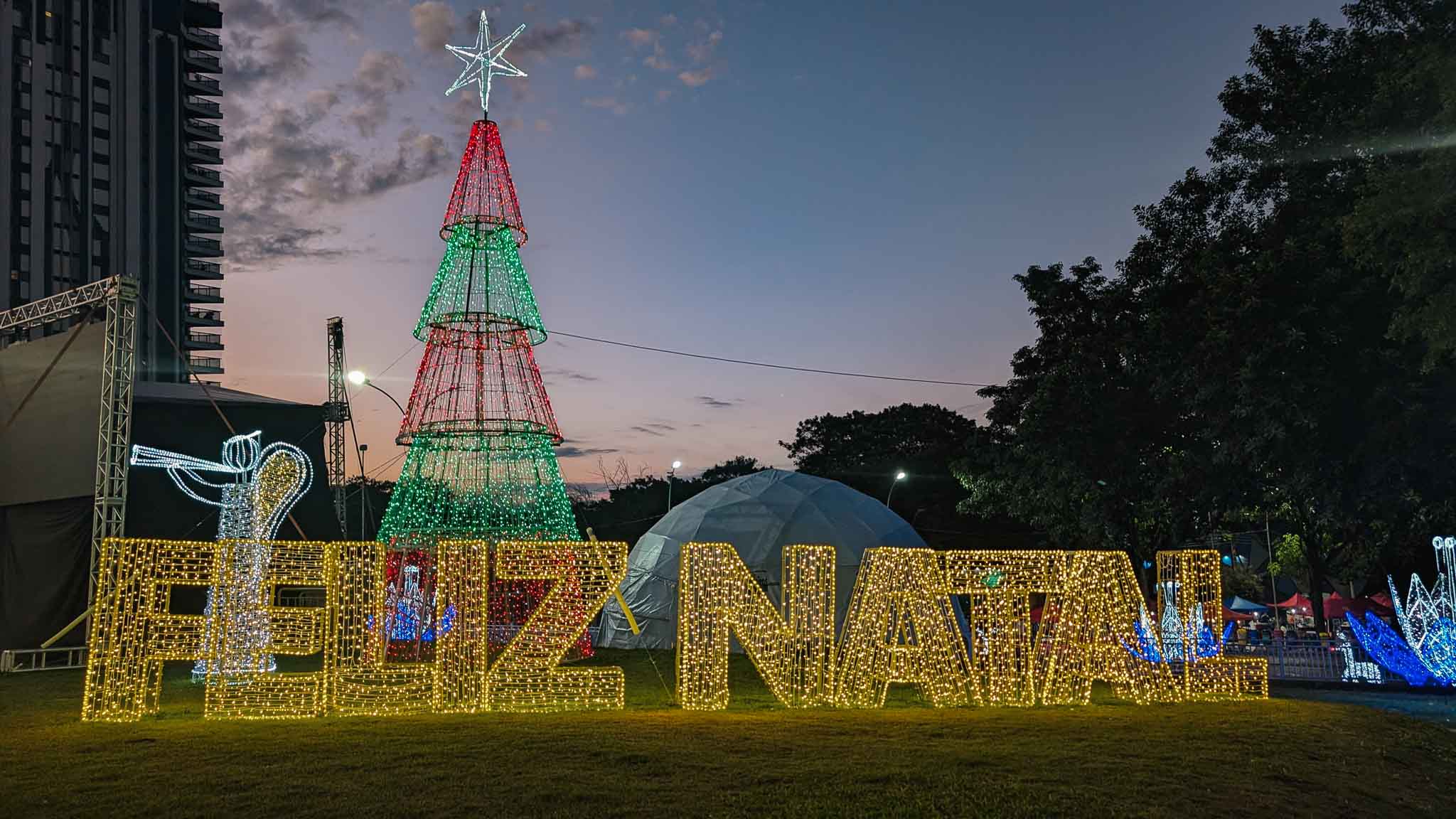
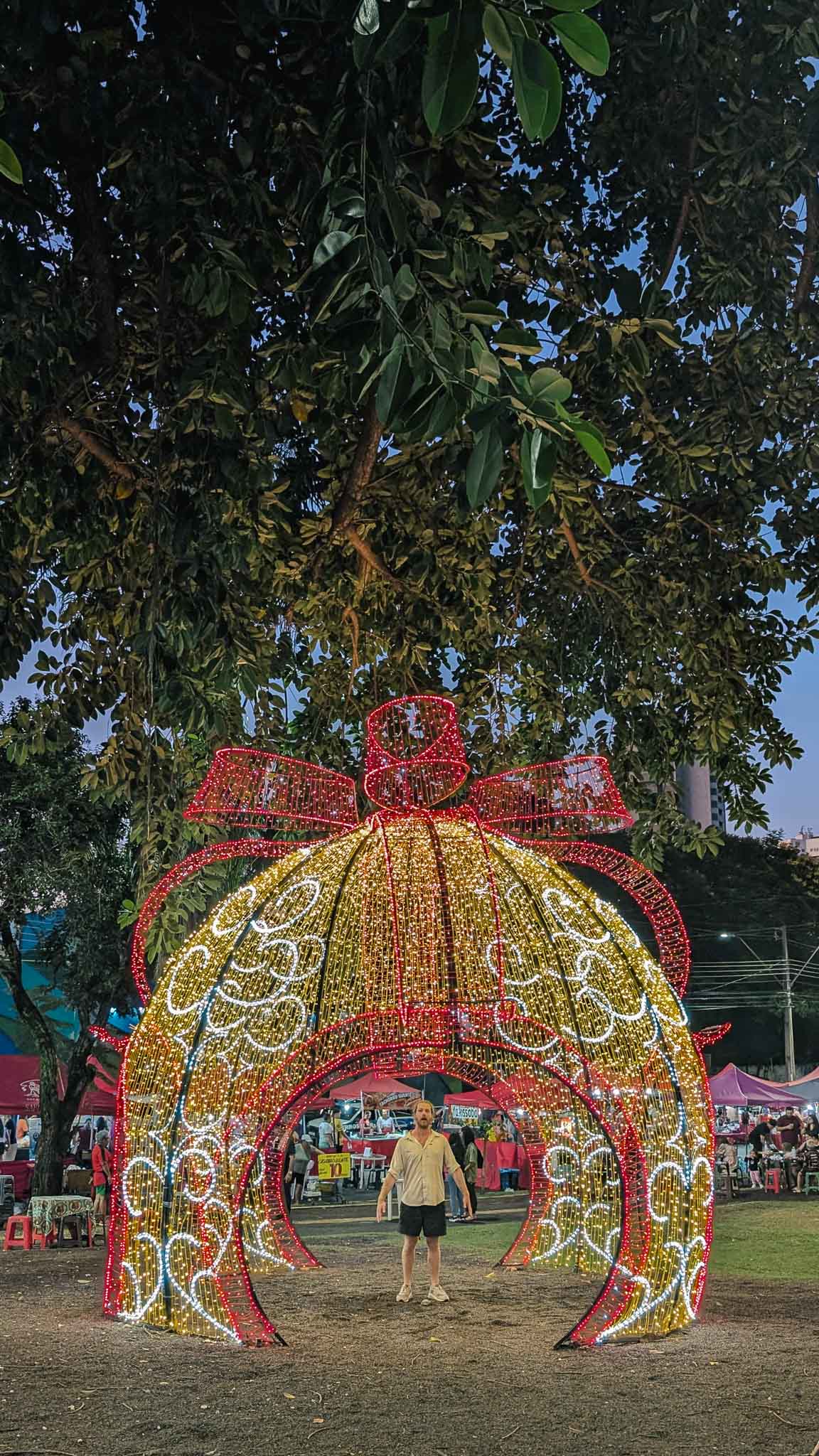
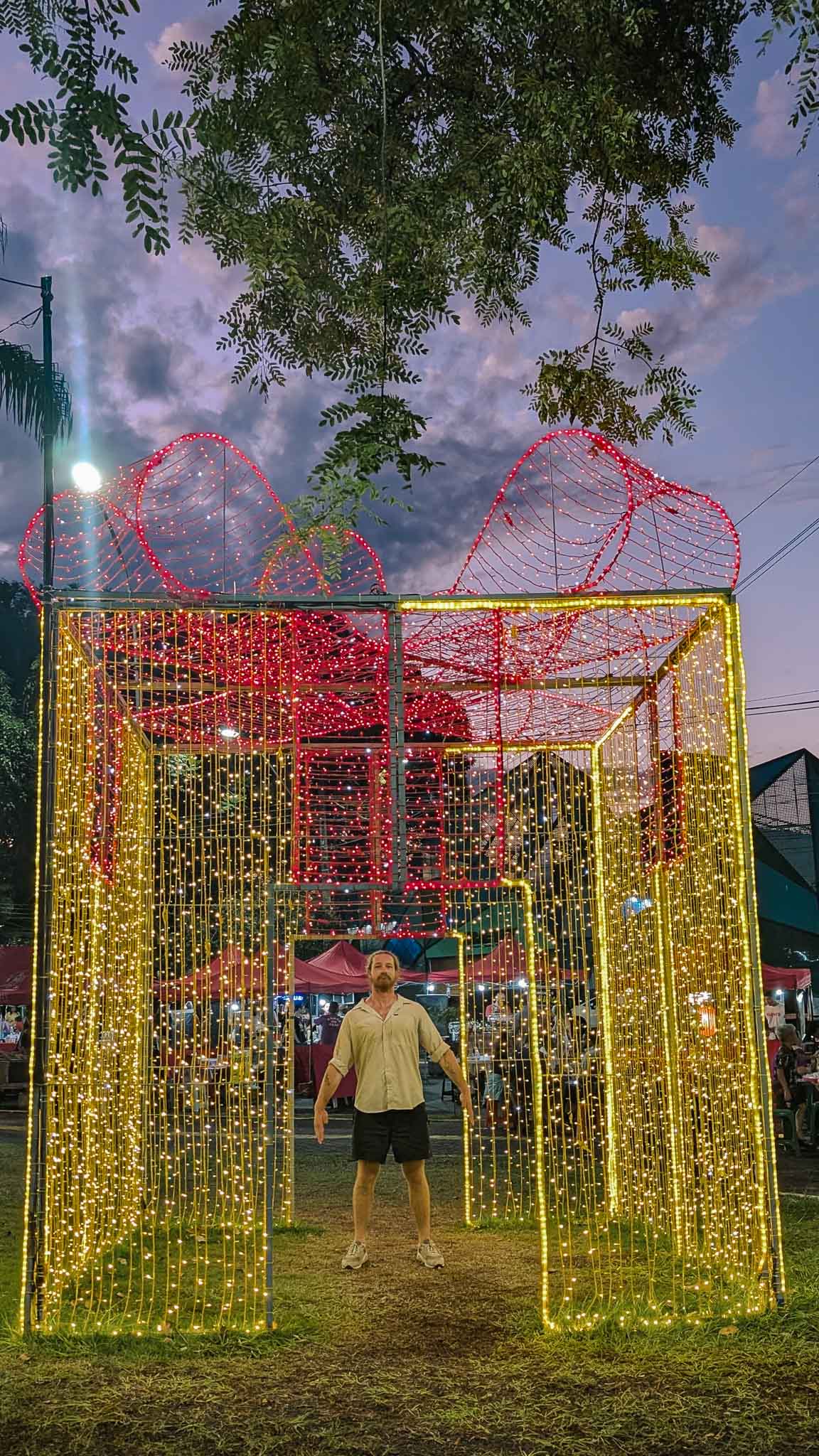
We ventured out and about the town at night to find some dinner, and stumbled upon a closed off section of road with heaps of food stands, mobile bars and breweries and giant temporary artworks and sculptures in celebration of Christmas, or ‘Natal’ in Portuguese (but pronounced ‘na-tau’. Remember, it’s dumb). Here I ate just about one of everything, drank at least two of everything, and as we sat on plastic chairs to enjoy our food we laughed about how cheap everything was here in comparison to Argentina and Chile.
The next morning, Rachael was in a state. This would be the start of a long and grueling couple of months of various ailments for the poor girl, as it seemed each time she began to make a recovery, something else would come along and hit her even harder. Whether it was a stomach bug or a cold, I don’t think she spent more than a handful of days over our two months here where she felt close to 100%.
We were supposed to check out early, leave our bags at reception and catch a bus to the Brazilian side of the falls, but that just wasn’t going to happen. Instead, I asked Gabi the receptionist if we could have a late check out, thank goodness she spoke English, and we waited a bit to see if Rachael’s condition would improve. We think it must have been dirty Iguazu water that made her sick, I guess we’ll never know. When it was time to check out, I decided that there was no sense in both of us missing out on seeing the Brazilian side of the falls, and we needed to catch an overnight bus that night so we were running out of time to see them. I parked Rachael on a lounge in the common area of our hotel, and ran across the road to try and talk to a bus company in Portuguese about how and where to catch a bus to see the falls. I deciphered the words ‘direto’ and ‘esquerdo’ (straight and left) and ran up the main road for about 5 blocks until I saw a sign for ‘terminal’ to the left, which just so happens to be the same word in Portuguese and English. I eventually found the platform for Iguaçu, and waited for the bus to turn up.
I was painfully aware for this entire solo outing that I was racing against the clock to get out to the falls and back with enough time to get to the interstate bus terminal so we could catch our overnight bus. I sat there for about half an hour, constantly calculating how much time was left, and just as I was about to call it quits the bus turned up and I jumped on. The painfully slow journey took over an hour to get to the entrance to the falls, where I managed to complete an absolute speedrun. I highly doubt anyone has ever spent so little time inside the Brazilian side of Iguazú as I have. I managed to board the transit bus, jump out, run around up and down the network of different paths, dodge two Coati’s eating a bag of chips (pictured below) and take a series of photos on my potato phone before getting back to the park entrance and perfectly timing it to catch the bus as it was leaving, all in about 40 minutes. That has to be a record.
This side of the falls was incredibly impressive, but it didn’t really hold a candle to the Argentine side. It was still awesome to see, and it really would have been great to stay a while longer, but I wasn’t going to miss the afternoon’s overnight bus, as it was quite expensive.
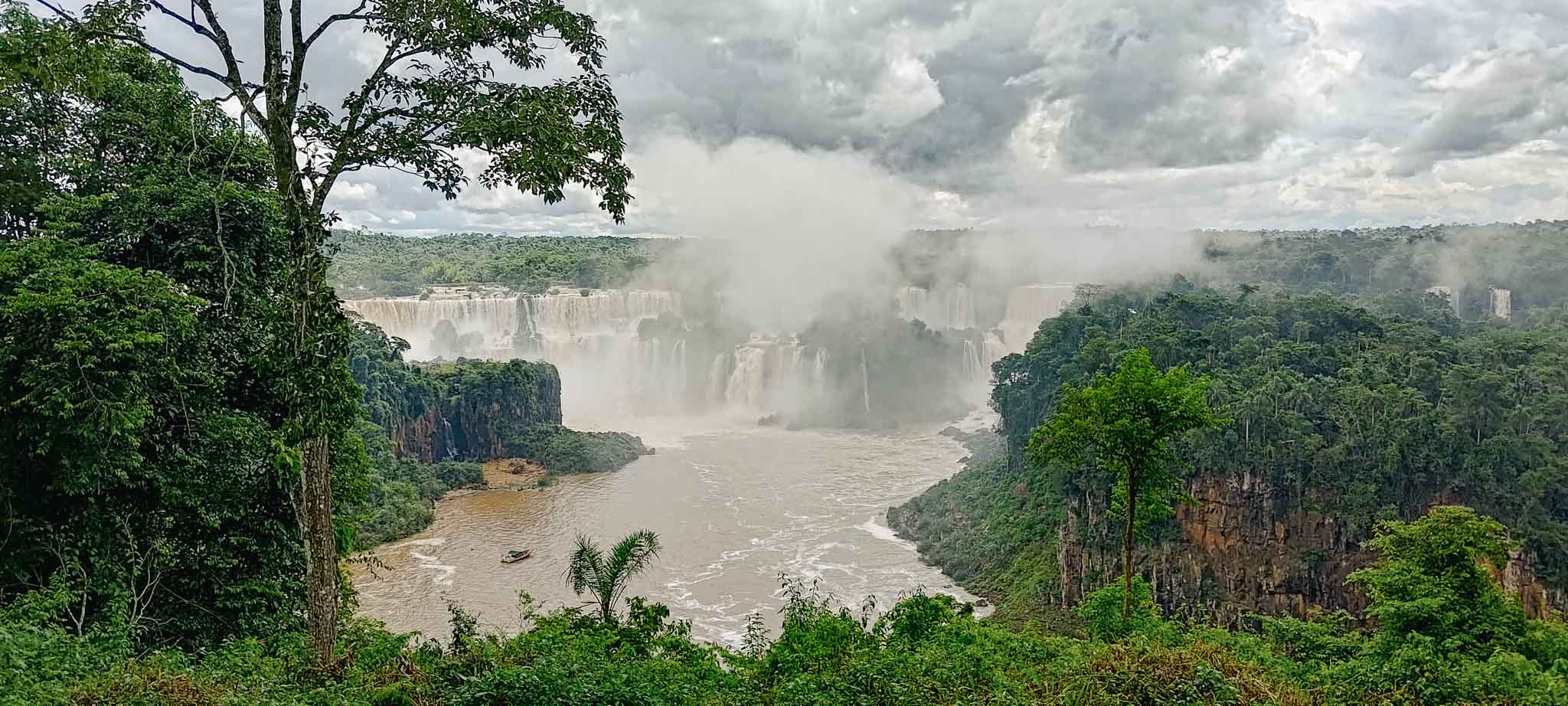
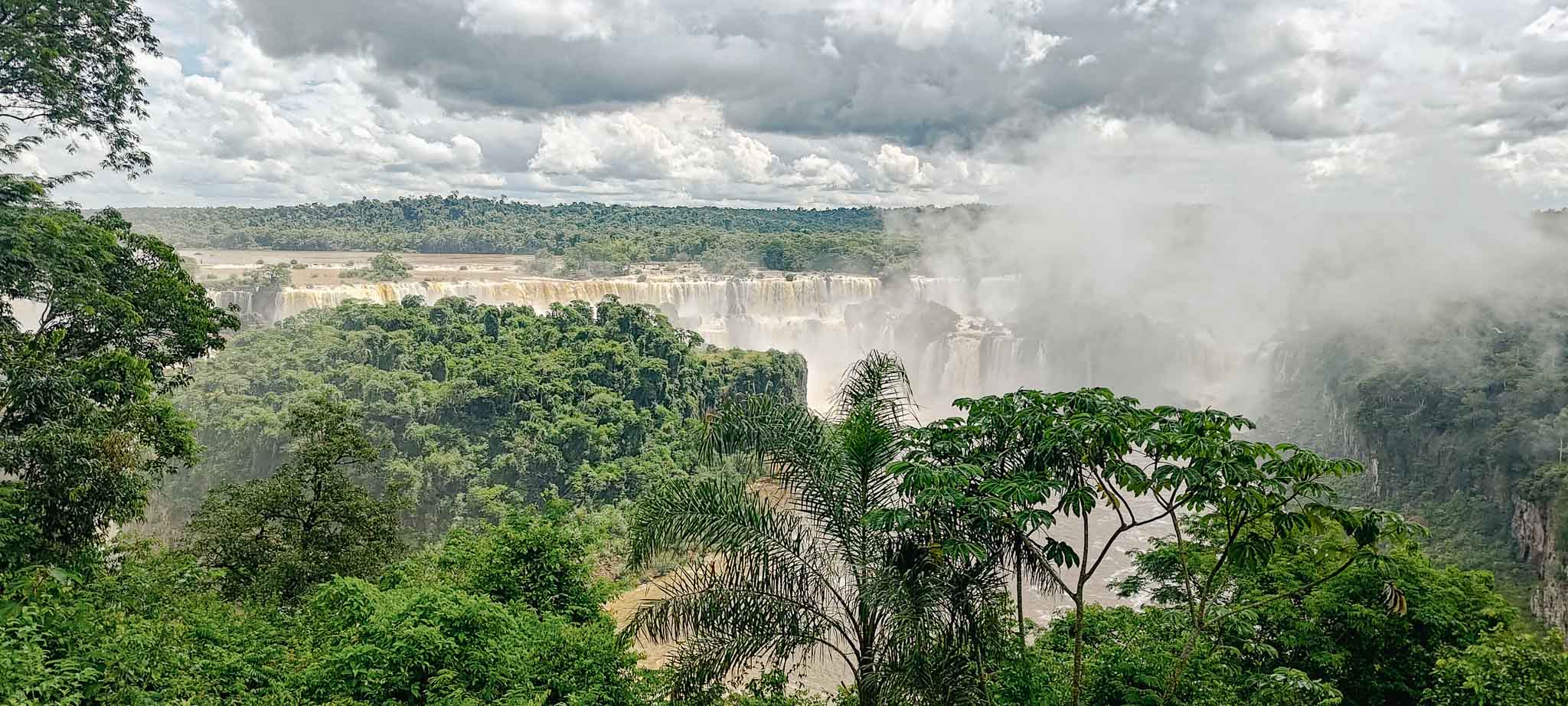
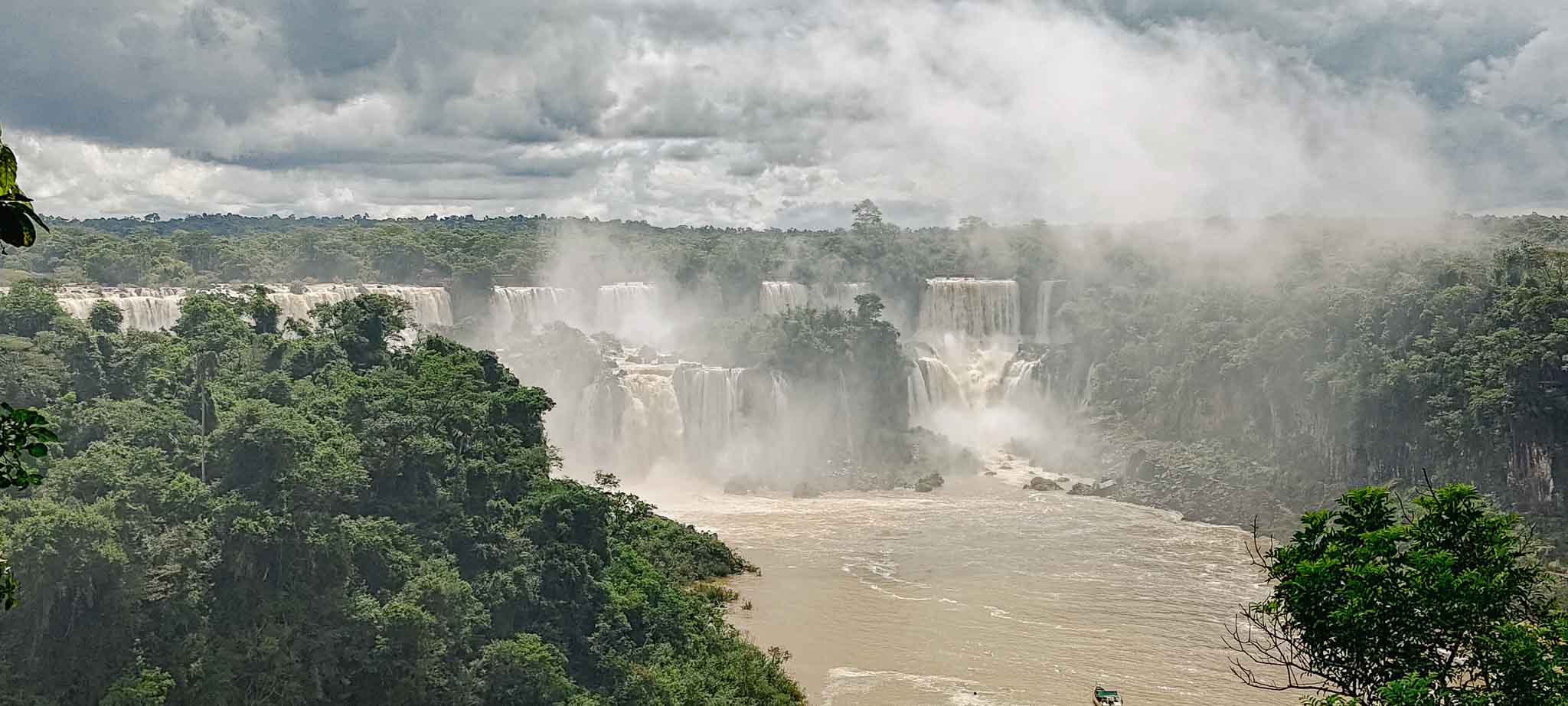
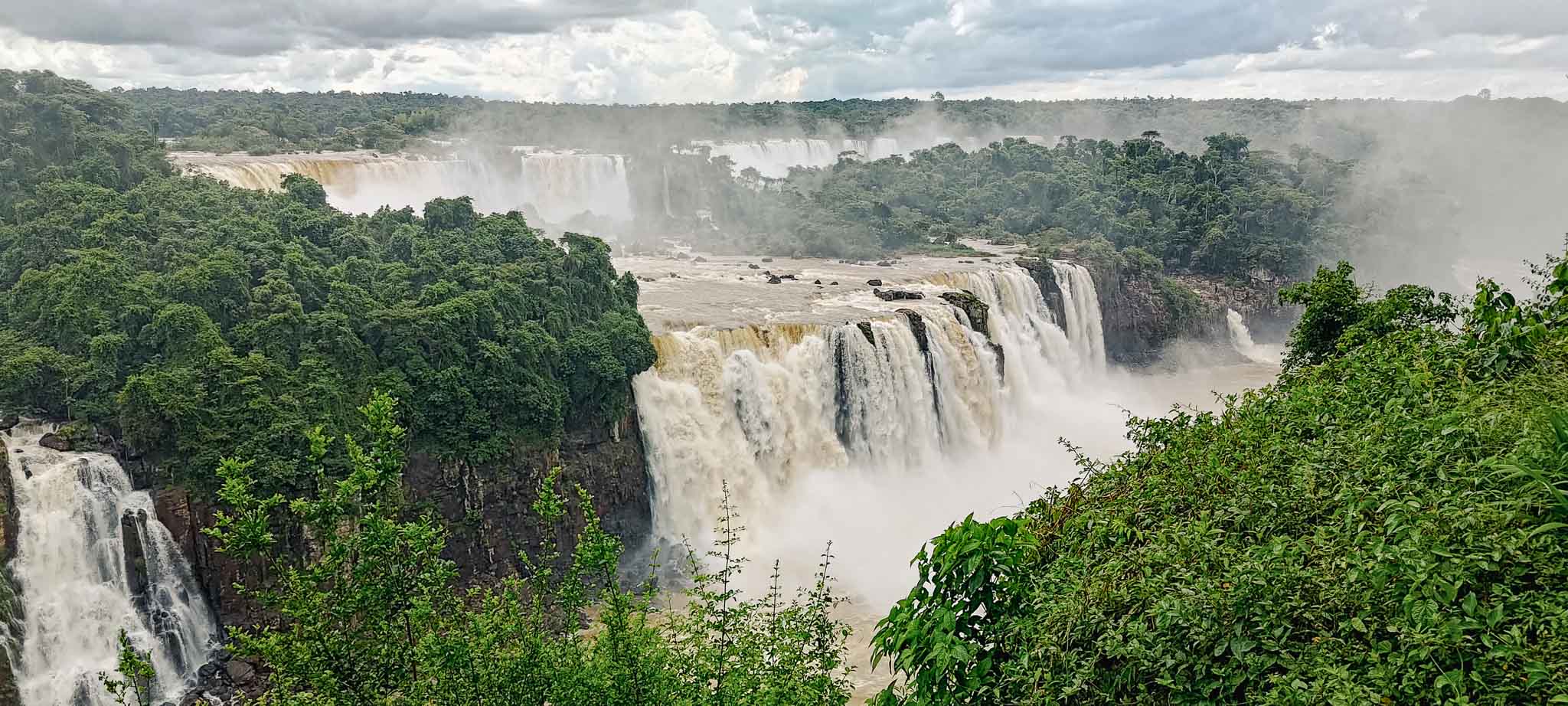
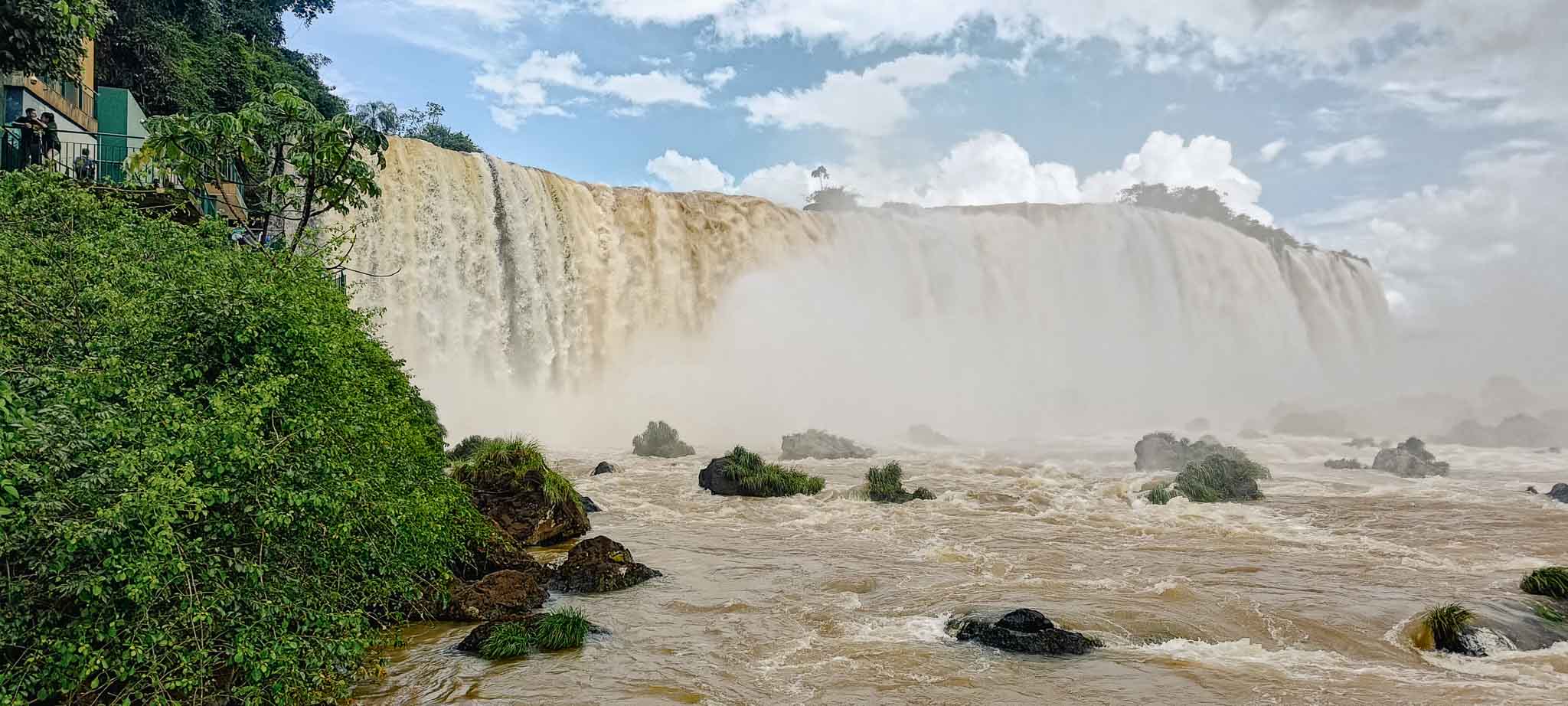
Again, the painfully slow bus took its time taking me back into town, and once I got off I ran back to the hotel to get Rachael off the lounge and ready to get an Uber to take us to the bus terminal. Turns out, I got the departure time of our bus wrong by at least two hours. That’s not really surprising at all, but it left me time to go out and get lunch which was a massive win. We walked down the road to an Arabian place where I ate two really delicious kebabs that tasted like victory. While Rachael watched me eat I recalled my adventure to her and played down just how cool it was to see the falls from the opposite side of the river, while talking up just how agile and nimble I was throughout the process.
We eventually made it to the bus terminal later that day, and settled in for what should have been a 14 hour overnight trip to take us to ‘Florianopolis’, a huge island off Brazil’s south-east coast. I could never have imagined the sheer amount of traffic that the Brazilian holiday period would entail. After 18 hours, about 6 of which were in completely stop-start traffic, we finally made it to Florianopolis, and what we found there was not at all what we were expecting.